
Window Tinting in Eugene: Improve Comfort and Cut Glare for Your Home or Office
Window tinting Eugene is a practical way to cut glare, block UV, and make south and west facing rooms noticeably more comfortable without sacrificing daylight. This guide lays out how different film technologies perform in the Willamette Valley, how to match measurable film specs to your goals, realistic cost and ROI ranges, and the permit and HOA checks you should run first. It also explains what to expect from a professional site assessment and installation, including how Tinting Oregon handles product selection, warranties, and on-site measurements.
How Eugene climate and building orientations create glare and comfort challenges
Key point: In Eugene the combination of low-angle winter sun, strong late-afternoon western exposure, and frequent patchy cloud cover produces contrast and glare problems that windows alone cannot fix. window tinting eugene is one of the few retrofit solutions that targets direct solar glare while leaving daylight and views intact when chosen correctly.
Why orientation matters: West facing rooms get the worst late-day glare and short, intense heat loads; south facing glass delivers steady solar gain across the year and stresses HVAC during shoulder seasons. Buildings with large, uninterrupted panes – think storefronts, sliding glass doors, and modern curtainwall offices – concentrate light and make direct-screen reflections and localized fading significantly worse than evenly fenestrated facades.
Occupant impacts you will see: Screen washout in home offices, hot spots at desk clusters, faded flooring along the sunny run of a retail display, and occupants shifting shades or closing blinds and losing daylight. Those are practical symptoms; the structural cause is mismatched glazing orientation and uncontrolled direct sun, not just glazing size.
- Practical check: Note time of day when glare is worst and which seats or screens are affected.
- Glass condition matters: Old, delaminated, or coated IGUs limit film adhesion and change expected results.
- Visible appearance tradeoff: Lower VLT films reduce glare more but will dim the space – spectrally selective and ceramic films preserve more daylight at similar thermal performance.
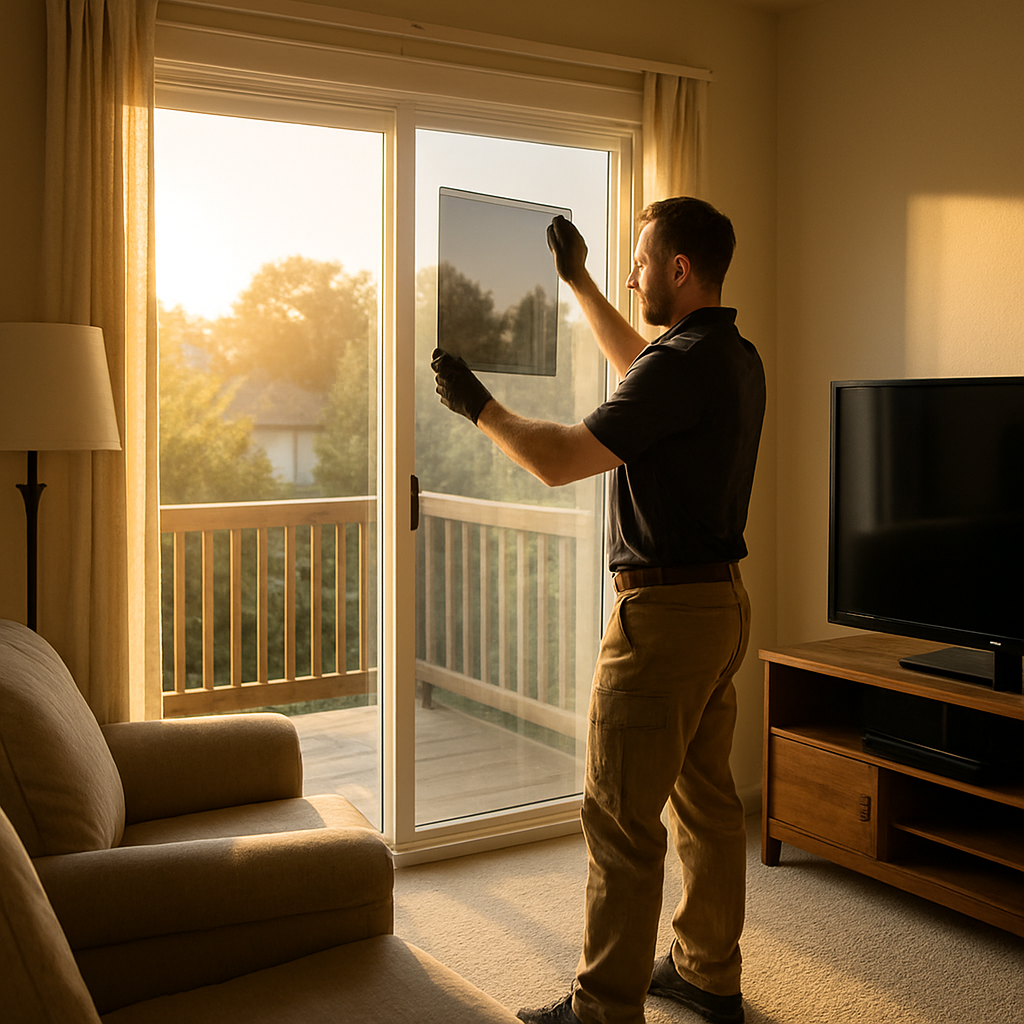
Concrete example: A west facing living room in South Eugene with a large sliding door opposite a TV often becomes unusable between 4 and 6 pm in summer. Applying a mid VLT ceramic film on the sliding door reduces direct reflections on screens and lowers perceived contrast so you can watch TV without shutting all window treatments – the tradeoff is a subtle darkening that most owners prefer to constant closed blinds.
Another use case: A small south facing office near campus gets steady solar load on the afternoon workstation bank, spiking thermostat cycles. A spectrally selective film reduces peak solar gain and monitor glare while keeping interior daylight sufficient for lighting controls to remain effective. Practically, that often reduces occupant complaints faster and cheaper than upgrading HVAC.
Judgment you should apply: Start by matching film choice to the specific orientation and human task, not to aesthetic preference alone. For west facing living rooms lower VLT or higher glare-rejection films work best; for south facing offices pick spectrally selective products that prioritize heat rejection with higher VLT. Expect tradeoffs between glare control and daylight level, and plan an on-site review to measure solar angles and glass condition before choosing a product.
How window film reduces glare, UV, and thermal transfer
Direct mechanisms: Window film works by changing how incoming sunlight is handled at the glass surface — not by turning your window into insulation. Films selectively block or redirect parts of the solar spectrum (visible light, ultraviolet, near-infrared) so you get less blinding reflection, far less UV, and lower solar heat load entering the room.
What the technical terms mean in practice
Practical specs to watch: VLT controls how bright the room remains after film; SHGC or total solar energy rejection describes how much of the sun's heat the film keeps out; UV blocking is almost always near complete with quality films. Those metrics predict outcomes you can feel: lower glare, reduced fading risk, and cooler windows during direct sun.
- Selective spectral rejection: Some films target near-infrared (heat) while passing visible light. The result is less warmth without a dark room — valuable for south-facing offices that need daylight for visual tasks.
- Reflection and absorption: Heavier metalized or reflective films throw energy back outside; they deliver strong heat rejection but change the look of the glass and can create exterior reflectivity issues for HOAs.
- UV cutoff and surface protection: A thin UV-blocking layer stops the high-energy wavelengths that cause fabric and wood to fade without contributing much to heating.
Real-world limitation: Film reduces solar heat gain but does not materially change the window U-factor that governs conductive heat loss at night. In Eugene winters that matters — you should not expect window film to replace insulation or to produce large heating bill savings when the problem is conductive loss. Films perform best where daytime solar gain and glare are the dominant problem.
Installation trade-off to accept: High-reflective films give strong thermal control but alter curb appearance and can cause neighbor complaints or HOA pushback. Spectrally selective and ceramic films are a better middle ground in most residential and office settings because they reduce heat and glare while keeping exterior appearance neutral.
Concrete example: A downtown Eugene boutique with large street-facing glass was losing color saturation in clothing displays and forcing staff to keep shades closed midday. Installing a low-reflectivity spectrally selective film preserved storefront visibility, cut UV-driven fading, and reduced the need to close blinds — customers still see merchandise, but colors stay true longer and staff report fewer heat complaints.
Target the dominant problem first: if you close blinds because of screen glare, prioritize lower VLT or anti-glare options; if you lose merchandise to sun damage, prioritize a high UV/IR rejection film.
VLT, TSER (total solar energy rejection), and UV cutoff. For guidance on energy implications see Energy Saver and schedule a site review with Tinting Oregon to match specs to your windows and orientation.Film categories and recommended products for Eugene homes and offices
Practical starting point: pick the technology that solves the single biggest problem in the room — glare, heat, privacy, or safety — before you worry about aesthetics. In Eugene that usually means choosing between spectrally selective/ceramic films for daylight retention and comfort, and thicker safety or decorative films where security or privacy is the priority.
Key tradeoff to accept: higher heat rejection with a neutral look costs more. Ceramic and spectrally selective films deliver the most daylight with strong infrared rejection but run at a premium. Budget dyed or traditional metalized films are cheaper up front, but they either darken the view noticeably or lose performance and color stability over time.
Recommended lines and realistic use cases
| Category | Sample products | When to use in Eugene | Practical downside |
|---|---|---|---|
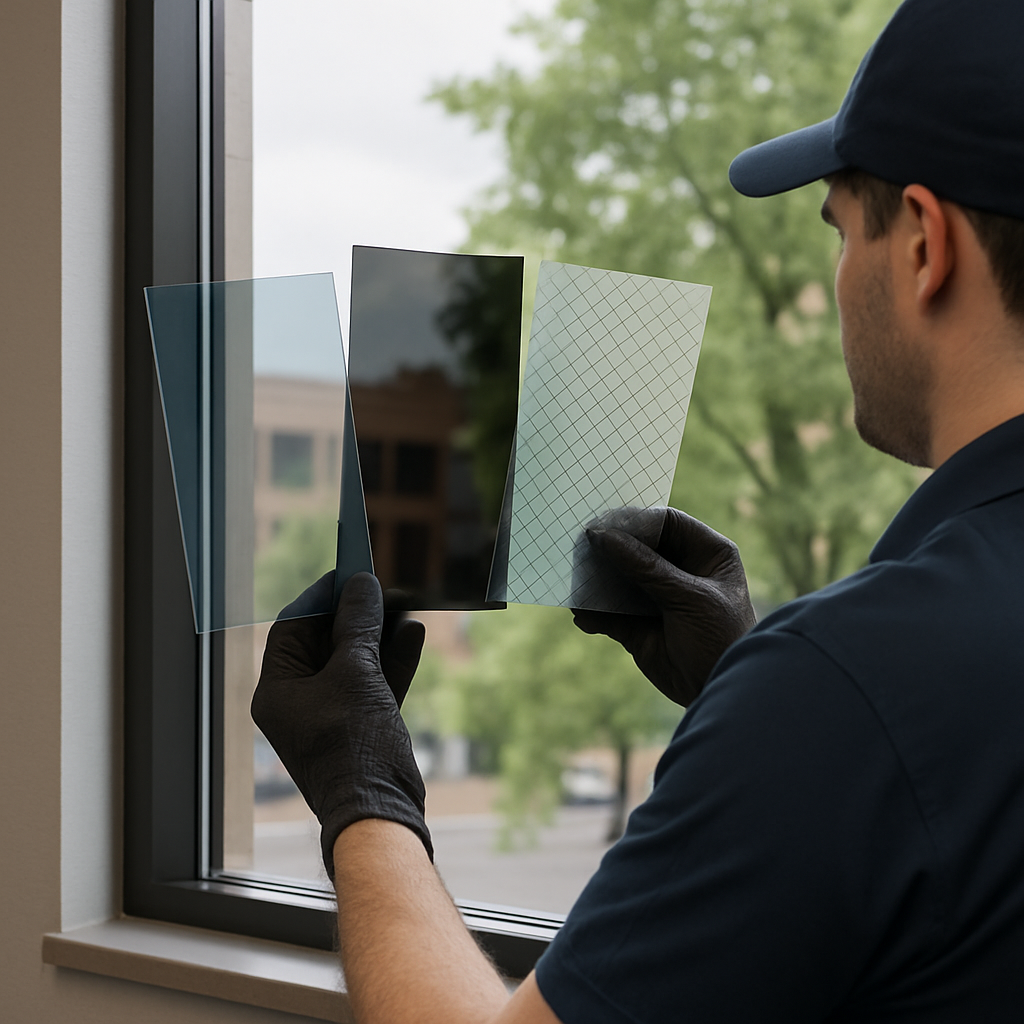
| Spectrally selective / nonmetalized | 3M Prestige Series, Vista Huper Optik | South-facing offices, living rooms where daylight and exterior color must be preserved | Higher cost; requires trained installer to meet spec performance |
| Ceramic / nano-ceramic | Llumar SelectPro, Huper Optik ceramic lines | West-facing rooms with late-afternoon glare and homes near busy streets where neutral appearance matters | Premium price; not necessary for every window |
| Dyed / economy solar films | Solar Gard SR Series | Budget residential projects or secondary windows where glare control is the main goal | Lower IR rejection; may fade and reduce curb appeal over years |
| Security / safety films | 3M Safety and Security, Madico armored films | Storefronts, ground-floor offices, daycare or multi-tenant lobbies requiring glass retention | Thicker films can change window operation and may require reinforcement or different glazing hardware |
| Privacy / decorative films | Patterned frosted films, printed vinyl from leading suppliers | Street-level residential rooms, conference rooms that need daytime privacy without blinds | Obscures view; choose patterns that meet daylight and branding needs |
Concrete example: A small non-profit office near downtown had staff complaining about washed-out monitors and frequent thermostat spikes. We specified a mid VLT spectrally selective film (3M Prestige equivalent) for the continuous south glazing; the office kept daylight for occupants and removed most direct glare without the dark, reflective look that would have triggered HOA scrutiny or hurt storefront visibility.
A practical limitation people miss: security film improves glass retention but does not prevent an aggressive forced entry without additional hardware. If burglary resistance is the real requirement, budget for laminated glazing or retrofit command hardware in addition to film — film alone reduces risk but is not a certified barrier against determined attack.
Bottom-line judgment: for most Eugene homes and offices a spectrally selective or ceramic film is the best first choice — it solves glare and most heat problems while preserving daylight and avoiding reflective exterior finishes that trigger HOA or neighbor complaints.
Selecting the right film: match goals to measurable film specs
Choose performance metrics, not colour swatches. If you care about comfort, privacy, or faded interiors, pick a film by the numbers that change those outcomes — not by how it looks in the showroom. For anyone researching window tinting eugene this means asking for VLT, SHGC (or TSER), and visible reflectance when you compare quotes for home window tinting Eugene or commercial window tinting Eugene.
Which specs map to which problems
Focus on three measurable specs. VLT (visible light transmission) controls perceived daylight and glare; TSER/SHGC describes how much solar heat the film blocks; visible reflectance tells you how the glass will look from the street and whether an HOA will object. Also confirm the film's UV cutoff (many quality films block ~99 percent) and whether the product is metalized or nonmetalized since that affects radio interference and exterior reflectivity.
- If glare is the problem: target a lower VLT for the specific window or choose an anti-glare/ceramic film that reduces specular reflection while keeping enough daylight for tasks.
- If heat and cooling load matter: prioritize TSER/SHGC reduction — spectrally selective films often give the best heat reduction per unit of visible light retained.
- If curb appearance or HOA rules constrain you: pick a low-reflectance, nonmetalized film and get manufacturer reflectance numbers in writing before ordering.
Practical trade-off to accept. You cannot maximize VLT and TSER simultaneously: higher visible light retention usually means accepting a smaller reduction in solar heat. In practice the best compromise for many Eugene homes is a spectrally selective or ceramic film that keeps VLT above 40–50 percent while cutting TSER significantly — it preserves daylight without the mirrored look that triggers complaints.
Concrete example: A third-floor dental clinic on Blair Boulevard was losing patient privacy and staff complained about glare at operatories. The solution chosen was a mid-VLT decorative/privacy film with documented TSER improvement and low exterior reflectance so daylight stayed usable while patient sightlines were blocked. After installation staff reported fewer screen reflections and patients kept natural light during procedures — the owner avoided the dark, mirrored finish that would have required HOA review.
Measure what you intend to change. Bring a light meter or ask the installer for a before-and-after lux reading at problem workstations, and use an IR thermometer to record surface temperature changes on the glass. Installers who offer a test panel and measured results are more likely to deliver the outcome you expect from window film installation Eugene or professional window tinting Eugene.
Request manufacturer data sheets showing VLT, TSER/SHGC, visible reflectance, and UV cutoff for the exact film code you will receive; do not accept generic product names without numbers.
Next consideration: Before committing to a full project, require a small sample or test panel installed for the worst-facing window during the problem time of day; measured lux and surface-temperature improvements on that panel are the best predictor of whether a film will meet your comfort and glare goals.
Process, timeline, and what Tinting Oregon provides during installation
Direct statement: A professional film job is a predictable sequence of inspection, prep, controlled installation, and verification — but the real difference is in the pre-install checks and aftercare documentation that prevent problems months later.
Typical workflow and realistic timeline
Booking to finish: For most residential jobs in Eugene expect a 7–21 day window from first contact to completion when no permits are needed; commercial installs or jobs requiring approvals commonly push that to 2–6 weeks. Weather, access, and permit turnarounds drive the schedule more than raw labor time.
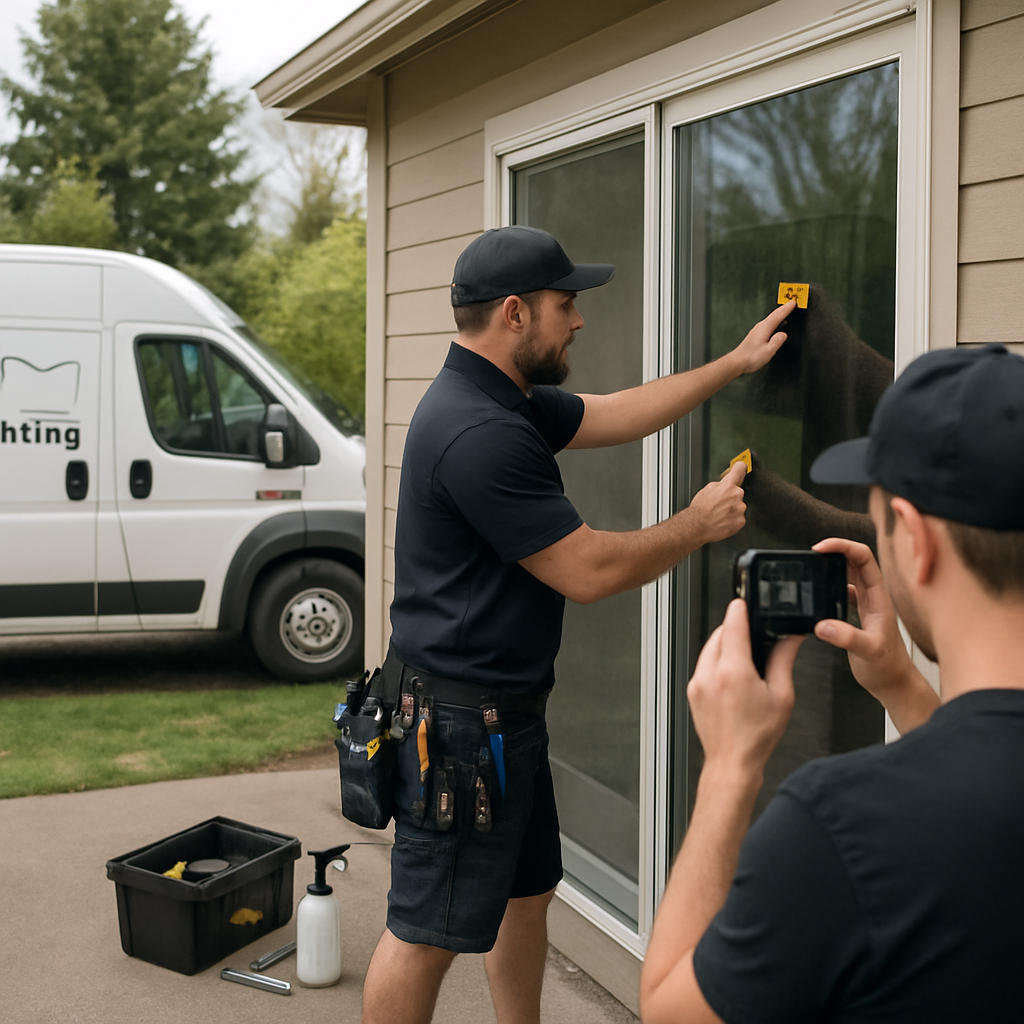
- Pre-install inspection (60–90 minutes): field check of glass type, edge condition, seal integrity, and measured problem times of day; we document issues with timestamped photos so you have a record.
- Selection and procurement (1–7 days): order the exact film code and request manufacturer datasheets and warranty terms; some specialty ceramic or security films have longer lead times.
- Day of install (per window): small single-pane windows are often completed in 15–40 minutes each; large storefronts or laminated safety film runs may take several hours to a day for a single façade.
- Cure and verification (24 hours to 30 days): initial film set is immediate, but adhesives finish curing over days to weeks depending on the product; we return for a final QA check and provide before/after lux and surface-temperature readings on request.
What Tinting Oregon provides on every job: a certified installation crew, manufacturer-authorized film codes, a written compatibility check for your insulated glass units, on-site photo documentation, and a printed care/warranty packet. We also supply a short list of post-install do's and don'ts so early cleaning or sharp tools don't void the warranty.
Practical limitation and tradeoff: If your windows show edge seal failure, clouding, or prior coatings, film adhesion and long-term appearance are compromised. We will flag those during inspection and recommend either glass replacement first or smaller scope patches; installing film over marginal IGUs is a short-term fix that often creates callbacks and warranty disputes.
Concrete example: A homeowner in Friendly Street scheduled a one-day install for eight large west-facing panes. Our crew arrived with manufacturer-labeled film, hand tools, and a mobile water filtration rig; prep and application took the team six hours. We left stamped photos, the film data sheet, and a care card noting a two-week spot-cleaning restriction — the owner scheduled a return visit for a free 30-day inspection.
Installer judgment that matters: Fast installations that skip glass-edge inspection are the most common source of failures I see in the field. A measured, documented assessment that becomes part of the job file protects both you and the installer from later disputes about preexisting glass problems.
Next consideration: Before scheduling a full job, request a documented site inspection and a written compatibility statement for your specific glass; if you want to move forward, contact us through Tinting Oregon contact so we can reserve a slot and outline permit steps up front.
Cost breakdown and ROI estimates for Eugene properties
Quick reality: window tinting eugene is rarely justified on energy savings alone for small residential jobs, but it becomes cost-effective when you stack benefits — reduced glare, slower upholstery fade, lower peak cooling demand, and better occupant comfort. Treat energy savings as part of the return, not the whole case.
Typical price bands and what you actually get
- Budget films (economy): Installed price commonly falls in the low single-digit to mid single-digit dollars per square foot; these control glare at the lowest cost but deliver limited thermal performance and shorter visual longevity.
- Mid-tier (spectrally selective): Mid-range pricing per square foot; these preserve daylight while meaningfully cutting solar heat and UV and are the best match for most Eugene living rooms and south-facing offices.
- Premium and security films: Higher per-square-foot costs reflect ceramic or laminated safety films and longer warranties; buy these when you need neutral appearance, superior IR control, or glass retention for storefronts.
Pricing factors that change the math: film model and warranty, total glass area, difficulty of access (ladders, scaffolding), number of panes and seal condition, and whether a permit or HOA approval adds administrative time.
Simple ROI framework you can use on-site
How to estimate payback: multiply installed cost by glass area to get upfront spend, then estimate annual value as the sum of measurable energy savings plus monetized benefits (furniture/flooring preservation, reduced occupant complaints, avoided HVAC runtime). Divide cost by that annual value for a plausible payback range — caveat: the energy portion varies widely with orientation and HVAC efficiency.
Practical limitation to accept: If insulated glass units show edge seal failure or severe fogging, film is a cosmetic stopgap and often shortens the practical life of the job. Replace bad glass first, then apply film; otherwise you risk callbacks and warranty disputes.
Concrete example 1: A mid-size living room in south Eugene has about 100 square feet of continuous glass. Choosing a mid-tier spectrally selective film typically produces a modest annual cooling-energy reduction and noticeably reduces TV glare; after accounting for slower fading of flooring and fewer blinds-closed hours, owners often see a payback period measured in several years rather than decades. This makes the investment attractive compared with the cost and disruption of full window replacement.
Concrete example 2: A small office suite with 400 square feet of glazed storefront installs a premium film for comfort and merchandise protection. The business sees reduced thermostat cycling, fewer tenant complaints, and longer display life. Even when direct energy savings alone would take many years to repay the install, the combined operational and retention benefits typically justify the spend within a standard lease term.
Trade-off judgment: If your primary objective is comfort and daylight retention, invest in a higher-quality spectrally selective or ceramic film. If the main goal is low upfront cost, expect shorter lifecycles and lower thermal benefit.
Local rules, HOAs, and safety considerations in Eugene
Bottom line: local approvals and safety rules often shape which films you can actually install — sometimes more than budget or performance does. Before you pick a product, verify municipal, HOA, and building-code constraints so you do not buy a film that will be rejected or force a costly rework.
City requirements: The City of Eugene treats visible changes to building facades differently depending on zoning and whether the work is exterior. Check City of Eugene Building Permits early. Practical items inspectors want to see are manufacturer reflectance numbers, film code, and confirmation the film will not interfere with required egress glazing or sprinkler/exit signage visibility.
HOA and historic-district realities: HOAs rarely ban all film, but they do object to mirrored or highly reflective finishes. Practical tradeoff: a film optimized for maximum TSER that uses metalization may be refused; a nonmetalized spectrally selective film often wins approval because it reduces heat and glare with a neutral exterior. Bring measured visible reflectance and a photo mockup to your architectural review — it short-circuits objections faster than sample swatches alone.
Getting approvals: a compact checklist
- Assemble the packet: include the film data sheet (VLT, TSER/SHGC, visible reflectance), warranty statement, and installer proof of license and insurance.
- Provide visuals: supply photos of the existing facade with a digital mockup or a small test panel so reviewers see the finished appearance.
- Submit early: give the HOA or city the exact film code and datasheet before purchasing; delays and denials usually stem from vague product names.
- Record preexisting glass condition: document edge seal and IGU condition in writing to avoid later warranty disputes.
Safety and code considerations: Security film helps glass retention but is not a substitute for code-compliant laminated glazing where full forced-entry resistance or blast mitigation is required. Also, some egress windows require certain visible markings or tempered glass; adding thick film can alter fracture behavior. Use a bonded, manufacturer-authorized installer and get a written compatibility statement for your insulated glass units.
Concrete example: A landlord of a downtown storefront wanted strong heat rejection and ordered a reflective metalized film. The historic commission flagged the exterior reflectance; the landlord switched to a nonmetalized spectrally selective film, submitted the film datasheet and a photo mockup, and gained approval within two weeks — the result preserved merchandise visibility while avoiding the mirrored look that would have triggered complaints.
Judgment call that matters: If you face an HOA or historic review, plan to prioritize low exterior reflectance and documented specs over absolute peak thermal numbers. In practice, a slightly less aggressive film that gets approved and stays in place delivers more value than the highest-performing product that the board forces you to remove.

Next steps for Eugene property owners and how to engage Tinting Oregon
Start with a documented site evaluation, not a price guess. For most Eugene properties the single best move is a short on-site survey that records glass type, orientation, problem times and photographic evidence of glare. That diagnostic visit is what separates effective projects from cosmetic fixes when you search for window tinting eugene or compare local window tinting services Eugene.
Practical engagement framework
Stepwise approach: follow clear milestones so decisions match outcomes rather than aesthetics. Tinting Oregon runs this sequence for residential and commercial jobs and you should expect the same: diagnostic survey, test-panel, formal quote with datasheets and compatibility letter, permit/HOA support if needed, scheduled install, and a documented QA follow-up.
- Book a timed site visit: pick a 60–90 minute slot when the problem sun angle occurs; include interior photos taken at the worst time.
- Request a test panel: require a small sample on the worst pane so you can see real VLT and glare change during the problem hour.
- Ask for data and compatibility: insist on manufacturer datasheets, visible reflectance numbers, and a written compatibility statement for your IGUs before signing.
- Confirm approvals and schedule: let the installer check City of Eugene permits and prepare HOA visuals if necessary.
A practical limitation to plan for: if your insulated glass shows edge failure or delamination, film will not bond reliably and may create callbacks. Budget the glass repair or selective replacement first — that simple step prevents wasted spend on a job that will degrade quickly.
Concrete example: A South Eugene homeowner booked a late-afternoon survey, supplied timestamped photos of a west-facing family room, and requested a mid-VLT ceramic test panel. After the two-week trial showed acceptable daylight and a measurable drop in screen reflections, Tinting Oregon provided a written compatibility letter for the IGUs, a firm quote for home window tinting Eugene, and handled the HOA submission with datasheets — the full install followed without unexpected approvals.
Judgment that matters: when approvals are likely to be restrictive, prioritize low-exterior-reflectance, nonmetalized films — they usually sacrifice only a small fraction of peak thermal performance but avoid costly rework or removal. In practice, an approved mid-range spectrally selective film delivers more long-term value than an unapproved top-performing metalized film.
Next consideration: schedule a documented test panel and demand manufacturer datasheets and an IGU compatibility letter before you pay a deposit — that one requirement prevents most failures and preserves your warranty rights.
