
Privacy Film for Office Glass: Affordable Ways to Improve Focus and Brand Privacy
Privacy film for office glass is the fastest, most cost-effective way to cut visual distractions, shield screens, and preserve daylight in commercial offices across Portland, Salem, Eugene, and Bend. This practical how-to walks through film types – frosted and decorative, perforated one-way, security, and switchable options – provides realistic cost ranges with a sample budget, and explains when DIY makes sense versus hiring Tinting Oregon for professional installation. If you manage facilities, run a small business, or own commercial space, this guide will help you pick the right film and installer to meet daylighting, lease, and budget constraints.
Why privacy film is the best affordable option for office glass in Oregon
Practical point: privacy film for office glass is the fastest way to add usable privacy without demolition, long lead times, or losing daylight. Replacing glass or installing full-height blinds usually costs several times more, requires building permits in some commercial buildings, and removes the soft, diffuse daylight that Oregon offices rely on.
Cost versus performance: applied films – decorative frosted, perforated graphics, and security films – cover a wide price spectrum, so you can meet a tight budget and still preserve VLT – visible light transmission. The tradeoff most clients miss is that higher privacy (lower view-through) usually means lower lateral sightlines; good designs solve that with banding or clear sight strips rather than full opacity.
Oregon-specific considerations
Daylight and glare: Portland, Salem, Eugene, and Bend have less extreme solar heat than the Southwest, but diffuse daylight and seasonal low sun angles create glare and screen reflections. Choose films that preserve VLT while softening contrast rather than dark tints that make interior lights necessary during the day. See industry guidance at IWFA resources.
- Advantage: lower upfront cost than glass replacement and faster schedule – most small jobs finish in hours rather than days.
- Advantage: easy to incorporate brand graphics with perforated or printable films for street-facing storefronts.
- Limitation: one-way perforated films rely on a consistent outside-to-inside light differential and can reverse at night under artificial lighting.
- Lease consideration: adhesive films are more permanent and look better; static-cling is cheaper and removable but will need replacement sooner.
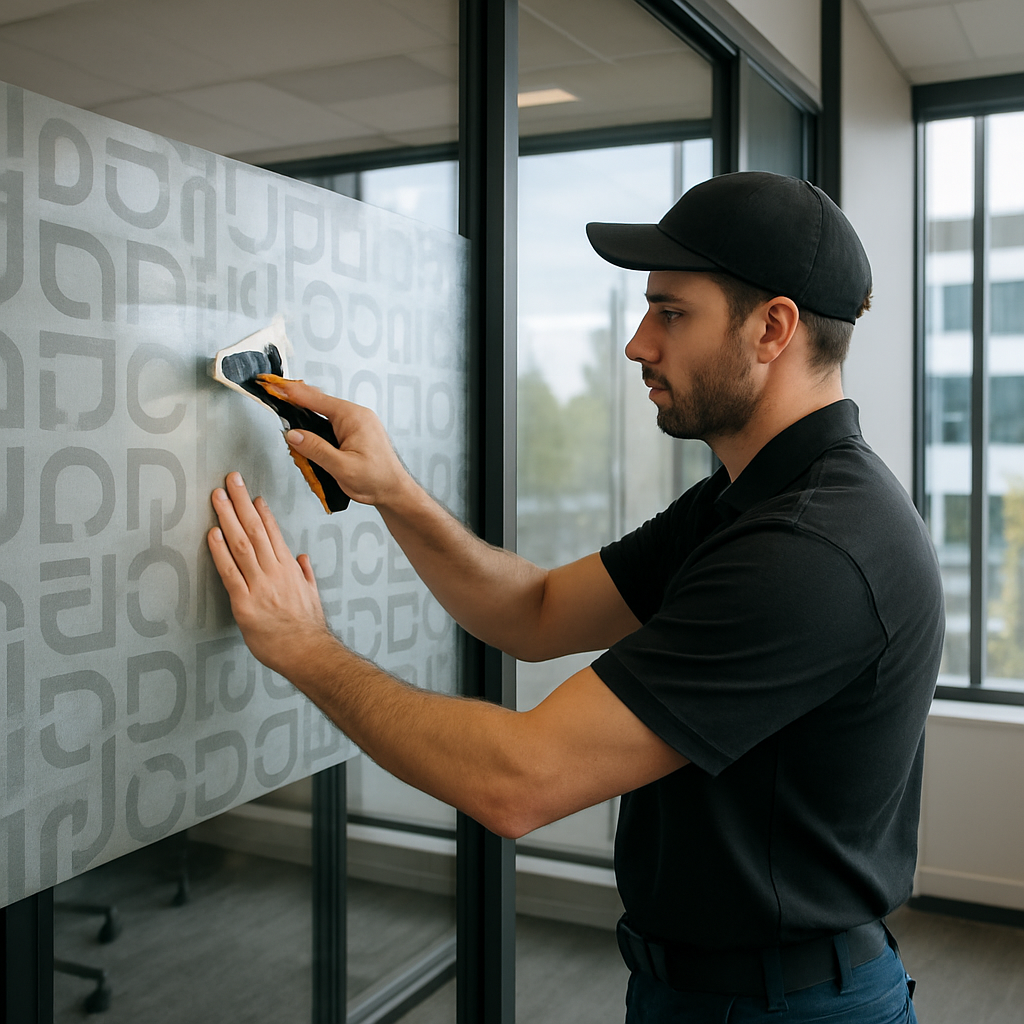
Concrete example: a Portland law firm applied 3M Fasara decorative frosted film to a 10 ft by 8 ft conference glass wall to hide screens and client documents while keeping daylight. The install was completed in a half day, immediately reduced visual distraction during meetings, and allowed the firm to place a frosted band at eye level for added privacy without blocking overhead sightlines.
Judgment: for most Oregon commercial needs decorative frosted or adhesive privacy films deliver the best value – they preserve daylight, scale easily across floors, and accept custom branding. Reserve security film or switchable film for locations where impact resistance or on-demand opacity is essential; those options work, but they are significantly more expensive and often unnecessary for routine office privacy.
Compare film types and match them to office use cases
Not all privacy film is the same. Choose by functional requirement — visual privacy, storefront branding, impact resistance, or on-demand opacity — rather than by appearance alone.
Common film types and the use cases they solve
- Decorative frosted/etched (for example 3M Fasara, LLumar Frost): Best for conference rooms, reception partitions, and open-plan banding. Preserves high daylight transmission while softening sightlines; minimal glare reduction. Good balance of cost, finish, and longevity when professionally installed.
- Perforated one-way and graphic films (Solar Gard, Vista): Best for street-facing storefronts where you want outward visibility and bold brand graphics. Performance depends on outside-versus-inside light levels – works well daytime, fails after dark unless you manage interior lighting.
- Security and thick adhesive privacy films (3M Safety & Security, Madico): Choose when you need impact resistance, fragment retention, or modest acoustic damping near public counters. Expect higher cost, thicker edges, and professional edge-sealing to avoid delamination.
- Switchable PDLC and electrochromic films (Polytronix Smart Film, SageGlass/View): Use for executive offices or rooms that require instant, controllable privacy. High upfront cost, electrical work required, and potential maintenance or replacement complexity over years.
- Anti-glare, low-e, and energy-efficient films: Combine privacy patterning with solar control when glare and heat gain are concerns. These add cost but can reduce HVAC and improve screen comfort in sunny perimeter offices.
- Removable static-cling films: Cheap and fast for short-term or leased spaces. Expect shorter life, edge lifting, and poorer optical quality versus adhesive films.
Practical tradeoff to remember: Perforated one-way films deliver brand presence but are hostage to lighting conditions; security films increase safety but add weight and complexity to glass edges and frames. For most internal office partitions, decorative frosted film delivers the best cost-to-performance ratio.
Concrete example: A mid-size Portland law firm applied 3M Fasara frosted bands on full-height conference glass. The result: privacy for meetings, preserved daylight, and fewer complaints about screen glare. The firm paid for professional adhesive installation to get crisp edges and a manufacturer-backed warranty rather than a cheaper static-cling alternative.
A final practical judgment: Start with decorative frosted or low-e decorative options for conference rooms and partitions. Use perforated graphic films for street-facing branding only if you can control interior lighting at night. Save switchable and security films for rooms where their unique benefits are actually required enough to justify the higher costs and installation complexity.
If you want a concise reference on film performance and standards, see the IWFA resources at IWFA and manufacturer product pages like 3M window films. For sample-driven decisions in leased spaces, bring physical samples to your site survey and compare them in the actual lighting conditions.
Cost breakdown and budget-friendly options
High-level reality: you can plan for a wide cost spread depending on film type and whether you hire a pro. Cheap-looking static-cling starts very low per square foot but fails early; pro adhesive decorative films cost more up-front and last longer with a manufacturer warranty.
Typical price bands (Oregon market): DIY static-cling decorative film: $1–$4 / sq ft (materials only). Professional adhesive decorative films (3M Fasara, LLumar Frost): $10–$18 / sq ft installed. Perforated storefront graphics: $12–$25 / sq ft installed. Security/safety films: $12–$30 / sq ft installed. Switchable PDLC smart film: $50–$120 / sq ft installed plus electrical.
What drives price up or down
- Labor and access: multi-panel jobs, high ceilings, or on-site scaffolding add significant labor hours.
- Film performance and pattern: more complex decorative patterns and branded graphics increase material cost.
- Removal and prep: older films or poor glazing conditions require extra prep time and sometimes removal fees.
- Warranty and manufacturer: factory-backed films (3M/LLumar) cost more but transfer warranty value and reduce life-cycle cost.
| Option | Installed cost / sq ft (typical) | Expected life (professional install) |
|---|---|---|
| DIY static-cling decorative | $1–$4 | 2–5 years |
| Professional decorative (3M Fasara / LLumar) | $10–$18 | 7–15 years |
| Perforated storefront graphics | $12–$25 | 5–10 years |
| Security / safety film | $12–$30 | 8–15+ years |
| Switchable PDLC smart film | $50–$120 | 7–15 years (electronics dependent) |
Concrete example: for an 80 sq ft conference partition (10 ft × 8 ft) expect roughly: DIY static-cling $240 (materials only); pro decorative at $14 / sq ft ≈ $1,120 total installed; security film at $20 / sq ft ≈ $1,600 installed. Annualized cost over expected life shows pro decorative is often the best value once you account for replacement risk and warranty.
Practical trade-off: pick DIY only for temporary needs or tiny panels. For visible, high-touch office glass, cheaper films show edge lift, bubbling, and inconsistent opacity—which creates more complaints than budget savings. Also budget for possible removal costs ($1–$6 / sq ft) when lease turnover is likely.
Next practical step: request a measured quote (ask for square-foot pricing, removal fees, and warranty language). If you want a local contact, Tinting Oregon conducts on-site samples and will include removal estimates—helpful when landlords require restoration at lease-end. See our guide on choosing when to hire a pro at Should I be Window Tinting my home or business?.
Daylight, sightlines, and preserving brand visibility while creating privacy
Direct assertion: You can keep most daylight and protect confidentiality at the same time, but it requires picking the right film and a deliberate layout rather than slapping a single opaque panel across a window.
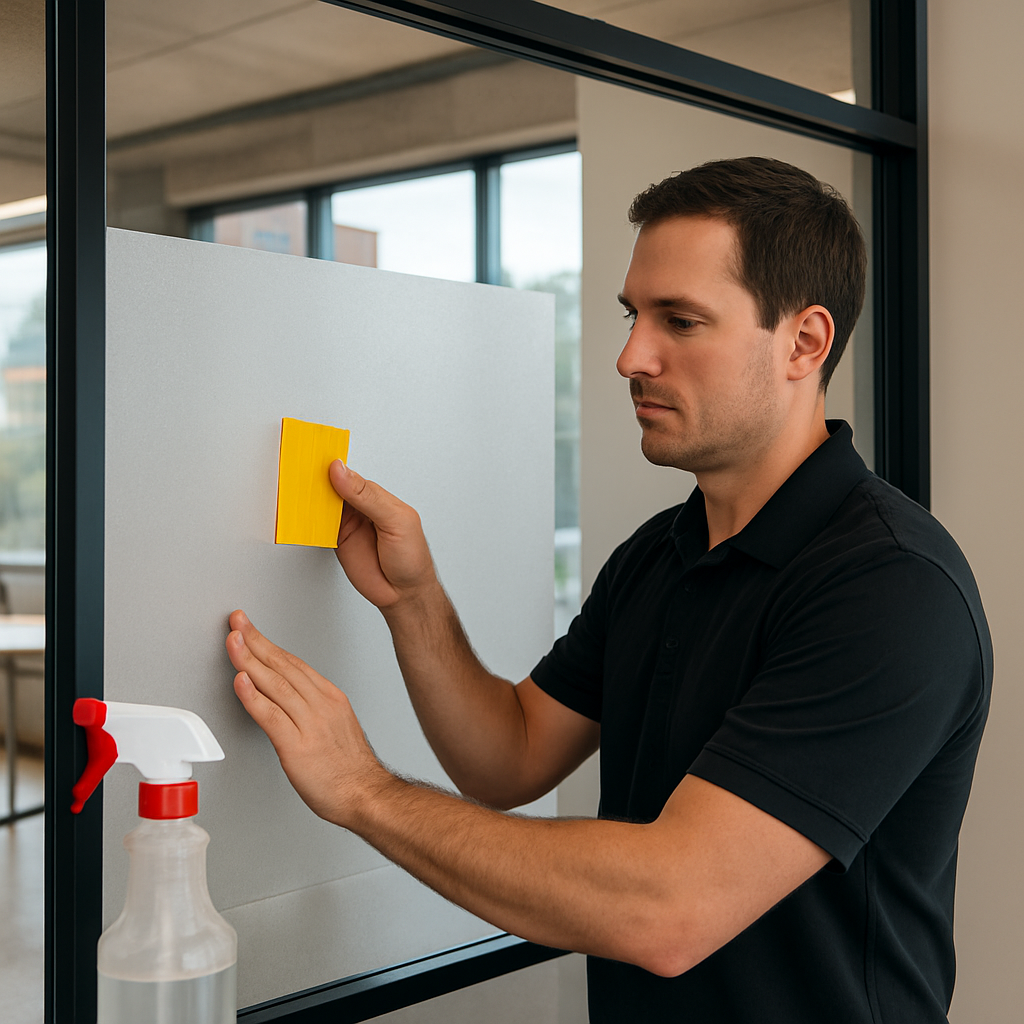
Key metric to use: Look at visible light transmission or VLT when comparing films. Decorative frosted films commonly sit in the 70 to 90 percent VLT range — they diffuse view without darkening space — while tinted or low-VLT privacy films cut daylight noticeably. Check manufacturer data on VLT and sample them on-site under your lighting conditions.
Design patterns that balance daylight, sightlines, and brand
- Lower banded frosted panels: frost the lower 36 to 48 inches to block screens and seated sightlines while keeping head-height visibility for natural connection and wayfinding.
- Full-height diffuse with clear sightline stripe: apply frosted film full height but leave a 6 to 12 inch horizontal clear stripe at 54 to 60 inches for receptionist interaction and brand signage alignment.
- Gradient or pattern density: use denser frosting near work surfaces and lighter patterns higher up to preserve daylight while controlling sightlines.
- Perforated exterior graphics for storefronts: use perforated graphic film for daytime branding and outward visibility, but pair with back-of-house lighting controls because performance reverses at night.
Practical tradeoff: Perforated one-way or printed window films work well for daytime brand visibility, but they rely on a light differential. In practice that means storefronts often lose the one-way effect after dark when interior lights are on. Plan for evening conditions by adding dimmable interior lighting, non-perforated logo panels behind the glass, or a secondary removable film.
Concrete example: A Portland co-working space applied 3M Fasara frosted bands up to 48 inches on interior partitions and a clear 8 inch stripe at 56 inches so people walking by could see heads and orientation without seeing screens. The result kept the open feel, reduced visual distraction for desk workers, and still allowed a vinyl logo to sit crisply inside the clear stripe.
Sightline rules of thumb: Use 42 to 48 inches for seated privacy, 54 to 60 inches for standing interactions, and align any clear stripes with consistent features like door hardware or signage. Misaligned seams and patterns across mullions look cheap and defeat brand control, so plan panel layouts during quoting.
When to combine films: If glare is the main problem but you want high daylight, combine a high-VLT frosted film with an anti-glare or low-e commercial window film on exterior glass. Low-e films add modest energy efficiency and UV protection without destroying daylight in Oregon climates where heat load is moderate. See manufacturer specs from 3M and guidance at the IWFA for performance numbers.
Takeaway: Decide first where people need to see and where they must not, then pick films by VLT and placement to match those sightlines. If you rely on perforated or one-way films for branding, plan for reversed performance after dark and budget a secondary solution.
Brand and product recommendations with pros, cons, and use cases
Direct recommendation: for most Oregon offices that need daylight, consistent appearance, and predictable warranties, start with decorative frosted films such as 3M Fasara or LLumar Frost. They hit the sweet spot between quality, longevity, and cost—better finish and edge durability than cling films and significantly cheaper than switchable or electrochromic glazing.
Top product fits — quick table
| Product / Brand | Pros | Cons | Best use case |
|---|---|---|---|
| 3M Fasara (decorative frosted) | Premium finish; many patterns; strong manufacturer warranty | Higher material cost than commodity frosts | Conference rooms, interior partitions, branded patterns |
| LLumar Frost / Impulse | Durable, uniform opacity; good for long runs | Fewer specialty patterns than Fasara | Large office floors, consistent corporate look |
| 3M Safety & Security films | Impact resistance; holds shards; improves data/privacy at public counters | Thicker, heavier; higher cost; needs expert install | Reception areas, clinics, street-level counters |
| Madico decorative & security | Good hybrid options—decorative with security thickness available | Mid-tier price; availability varies regionally | When aesthetics plus protection are both required |
| Solar Gard perforated / Vista perforated | Excellent for storefront graphics; maintains outward view | Performance depends on exterior vs interior light; reduced night privacy | Street-facing storefronts, marketing graphics |
| Polytronix Smart Film (PDLC switchable) | Instant on-demand privacy; modern look | High cost, electrical wiring and control required | Executive offices, boardrooms where active switching is needed |
| SageGlass / View (electrochromic) | Integrated glazing-level control; energy and glare management | Very expensive; usually for new construction or major retrofits | High-profile installations where budget permits |
Practical tradeoff: perforated one-way films look attractive on storefronts but fail when interior lighting is brighter than exterior light—expect loss of one-way effect in evening and under display lighting. If you need 24/7 outward privacy, pick opaque adhesive films or plan lighting so exterior remains brighter.
Installer vs product choice: choose adhesive professional-grade films when appearance and lifespan matter. DIY static-cling films save money short-term but typically show edge lift and haze after 2–5 years in commercial settings; that warranty gap matters for leased spaces where long-term aesthetics affect brand perception.
Concrete example: a mid-size Portland coworking operator replaced blinds with 3M Fasara on five conference rooms. The rooms retained daylight, client confidentiality improved, and the consistent frosted pattern reduced cleaning and maintenance complaints. The client chose professional install to secure the 3M warranty and avoid edge failure on large glass panels.
Where to read specs: check manufacturer performance pages before quoting—start with 3M Window Films, LLumar Commercial, and Polytronix Smart Film. For local installation logistics and warranty handling, see our guidance on when to choose professional tinting in Should I be Window Tinting my home or business?.
DIY installation versus professional installation: checklist for decision making
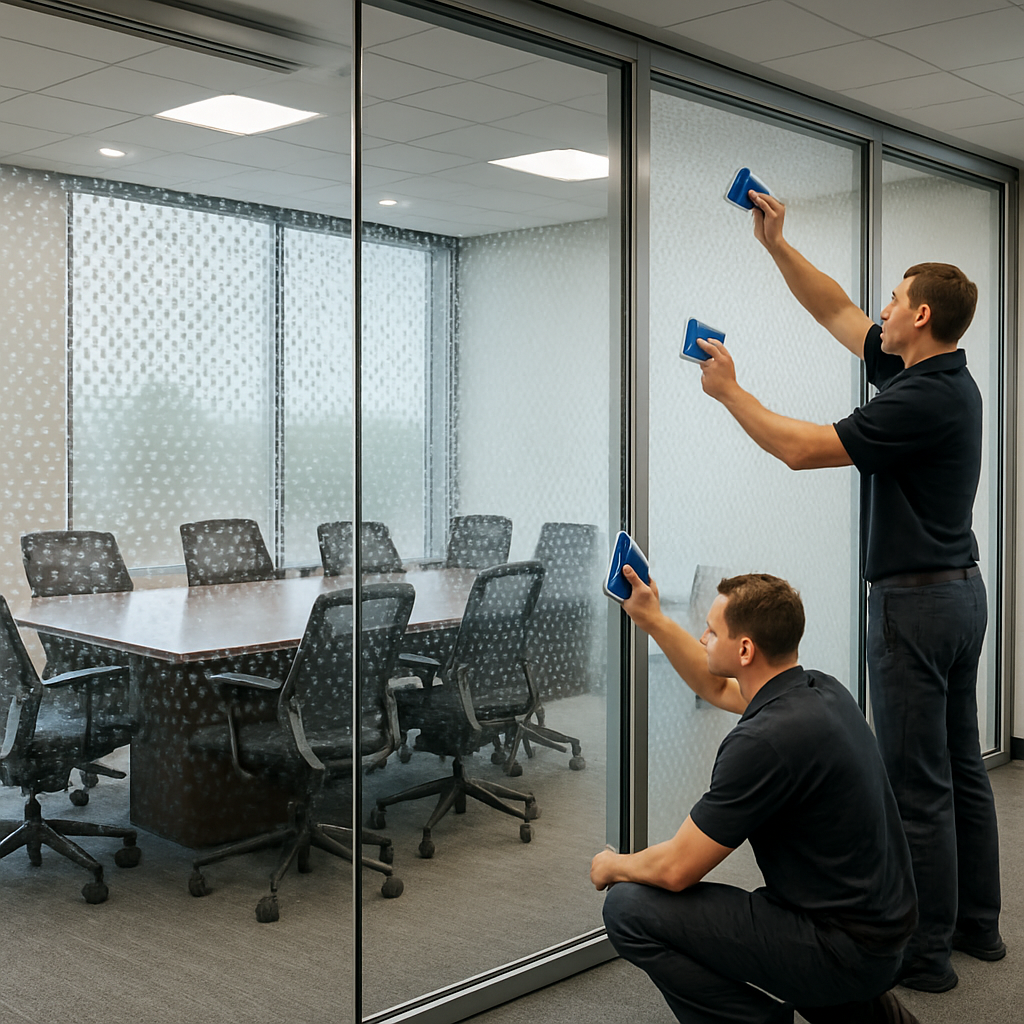
Clear rule: hire a professional when appearance, warranty, or safety matters. For any decorative, security, or switchable privacy film that will be visible to clients or exposed to heavy use, professional installation is not a nice-to-have; it materially extends service life and preserves manufacturer warranties.
Decision checklist
- Glass condition and coatings: verify the glass has no surface damage and whether it has low-e or other coatings. Some films do not bond well to coated glass and can delaminate over time.
- Film type and function: if you need security, acoustic benefit, or switchable privacy, choose professional installation. Static-cling decorative films are the only reasonable DIY option for short-term needs.
- Visibility and finish requirements: if seams, matched patterns, or precise opacity are important for brand aesthetics, hire a pro.
- Lease, code, and access: check landlord rules and whether exterior work or electrical wiring is required for switchable films; professionals handle permits and coordination.
- Removal plan: decide who will remove the film at lease end. DIY removals often leave adhesive residue and can damage seals.
- Installer vetting: when hiring, ask for manufacturer certifications, portfolio of similar projects, proof of insurance, and a written warranty that names the film brand.
- Project size and timeline: small single panels under 15 square feet and temporary applications favor DIY. Anything larger, phased, or floor-wide should be quoted and scheduled with a pro to avoid business disruption.
Practical tradeoff: DIY saves labor cost up front but usually shortens lifespan and can create costs later from rework, edge failure, and voided warranties. For commercial spaces the saving rarely offsets the risk when film selection includes higher-performance products.
Concrete Example: a Portland law office needed confidentiality on a street-facing conference room. They could have used static-cling film as a stopgap, but because the glass was laminated and visible to clients they hired professionals. The installer handled edge sealing, coordinated with the landlord, and provided a manufacturer-backed warranty, avoiding bubbles and early edge lift that the DIY attempt would likely have caused.
| Attribute | DIY static-cling | Professional adhesive install |
|---|---|---|
| Typical cost up front | Low | Medium to High |
| Aesthetic finish | Acceptable for low-visibility areas | Consistent, seamless |
| Warranty and longevity | Usually none or short | Manufacturer-backed |
| Risk of failure | High for large or coated glass | Low with correct prep and tools |
| Permits and coordination | DIY responsible | Handled by installer |
If you plan to use 3M Fasara, LLumar Frost, or any security/switchable film, budget for professional installation to preserve finish and warranty.
Next consideration: when you request quotes, include glass photos, exact panel dimensions, and note any coatings or interlayers. If you want a short primer on whether a DIY route makes sense for your space, see Should I be Window Tinting my home or business? and consult installer resources like the IWFA before attempting a large DIY job.
Local examples and project scenarios in Portland, Salem, Eugene, and Bend
Local conditions change the decision. In Oregon the building stock, daylight patterns, and typical lease constraints are as important as film specs — choose a product that fits the city environment, not just a catalog description.
Practical constraint: one-way or perforated films depend on a consistent light differential to work as intended. In Portland and Eugene, frequent overcast days reduce the effectiveness of daytime one-way privacy; rely on frosted or adhesive films for guaranteed interior privacy.
Scenario snapshots and what matters locally
- Portland — downtown law firm: Apply 3M Fasara decorative frosted film to full-height interior partitions to preserve daylight and block sightlines at eye level. This job typically completes in a half day for a single conference room; expect a 7–10 year professional finish and minimal disruption when scheduled after hours. Landlord permission is usually straightforward but confirm adhesive rules for historic storefronts.
- Eugene — street-facing tech office: Use Solar Gard perforated graphic film on the lower 4 feet of storefront glass to carry branding and maintain outward visibility. Test a 24-inch sample at midday: city foot traffic and campus lighting patterns mean contrast varies by season, so accept small visibility shifts as the tradeoff for strong exterior branding.
- Bend — medical clinic: Install 3M safety/privacy film in exam rooms and a thicker security film at the front desk to protect records and hold glass on impact. Cold, dry days in Central Oregon slow adhesive cure times; schedule installers with warm-room staging or plan an overnight cure window to avoid edge lift.
Cost/time tradeoff: Small, single-room installs in any city usually finish in hours and are cost-effective; whole-floor projects need phasing to avoid business downtime. In practice, clients who try to retrofit an entire open-plan floor in one weekend end up paying overtime and leaving visible seams — phase work by zone for better quality and lower net cost.
Lease and permit reality: Municipal or landlord rules vary. Salem has several state and government buildings where approvals take longer; budget two to three weeks extra for sign-offs and coordinate with facilities. Always get written permission for permanent adhesive films or security upgrades.
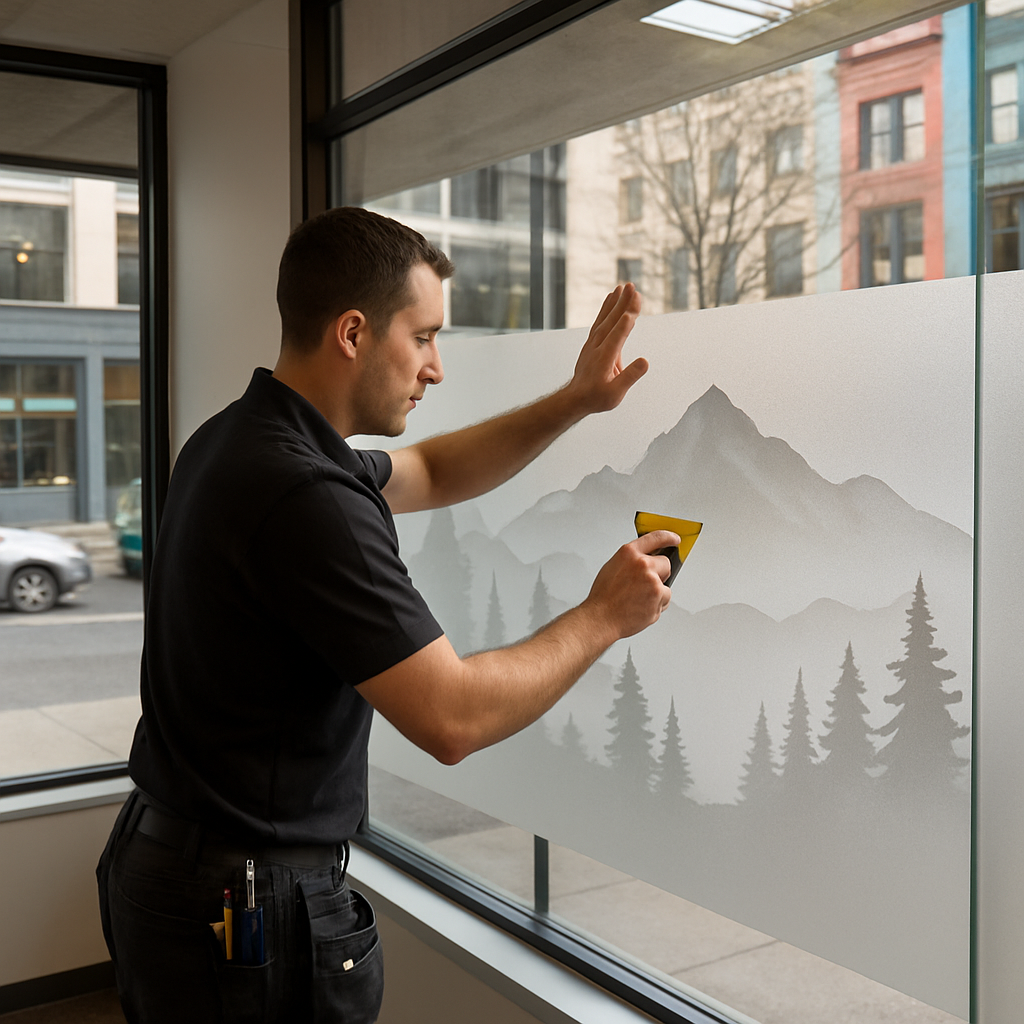
Concrete next step: Before you get quotes, take photos of each glass elevation, note interior and exterior lighting conditions, and confirm any landlord restrictions. That simple prep cuts estimate time and avoids surprises during installation.
Maintenance, warranties, and expected lifespans
Maintenance determines whether privacy film lasts as long as the warranty promises. Films are durable when cared for and fail early when ignored or cleaned wrong.
Practical reality: professional adhesive films properly installed and edge sealed routinely meet their rated life. Static cling and cheap vinyl often fail in 2 to 5 years from edge lifting, staining, or residue buildup. That makes installation choice a life cycle decision, not just a price decision.
Cleaning and routine care
- Daily habits: Use a soft microfiber cloth and plain water or a 50 50 mixture of water and vinegar for light cleaning. Avoid abrasive pads.
- Avoid: ammonia based cleaners and strong solvents. They etch adhesives and degrade decorative surface finishes.
- Stubborn marks: use a diluted isopropyl alcohol spot clean, test first on an inconspicuous area, and do not scrub edges.
- Do not: attempt to remove film yourself with heat or razor scraping on installed adhesive films. That causes edge damage and voids some warranties.
Limitation to plan for: edge lift is the most common failure mode in commercial settings. High humidity, frequent squeegeeing at edges, and door jamb impacts accelerate it. If your office has external doors that blow cold air across glass or a shower like cleaning routine, choose heavier adhesive films and professional edge preparation.
Warranties and what they really mean
- Ask for manufacturer backed warranty: many high quality films from 3M and LLumar include manufacturer warranties but only when installed by certified contractors. See 3M product pages for specifics at 3M Window Films.
- Look for coverage details: color stability, adhesive failure, bubbling, delamination, and optical clarity are typical categories. Warranties rarely cover physical damage or improper cleaning.
- Registration matters: installers often must register the job with the manufacturer to validate extended warranties. Keep the registration and the receipt.
| Film Type | Typical Lifespan (professional install) | Common warranty window |
|---|---|---|
| Decorative frosted films (3M Fasara, LLumar Frost) | 7 to 15 years | 5 to 10 years |
| Perforated one way and graphic films | 5 to 10 years | 3 to 7 years |
| Security and safety films | 10 to 20 years | 10 to 15 years |
| Switchable PDLC smart film | 7 to 12 years | 3 to 5 years limited electrical components |
| Static cling removable films | 1 to 4 years | usually not warranted |
Concrete example: A Bend clinic installed adhesive privacy film in exam rooms and registered the project with the manufacturer. After eight years there was minor edge lift on a south facing pane. Because the installer had followed manufacturer prep and registered the job, the warranty covered repair of the affected panels rather than full replacement.
Judgment you will not get from retail packaging: if you expect more than five years of service buy adhesive film and professional installation. DIY and static cling save money up front but cost more over time through replacement, inferior appearance, and absent warranties.
Next consideration: when you request quotes bring cleaning schedules and access constraints to the site survey so warranties and maintenance plans match real use. For guidance on installer requirements and local practices see IWFA resources and our hiring checklist in Should I be Window Tinting my home or business.
How Tinting Oregon approaches commercial privacy film projects
Straight to the point: Tinting Oregon treats commercial privacy film work as small construction projects, not curbside service calls. Every job follows a repeatable workflow so the finish, warranty, and schedule are predictable for property managers and facility teams.
Typical project workflow
- Site survey and constraints review: Measure glass, check for existing coatings or damage, confirm mullions and hardware, and note lease or landlord constraints. We bring sample swatches and perform a small test patch when the glass substrate is uncertain.
- Sample mockup and client signoff: Apply a full-panel mockup of the recommended film so decision makers can evaluate daylight, sightlines, and branding in-situ. This step removes most aesthetic disputes before procurement.
- Templates and procurement: Create accurate templates, order manufacturer-backed film (for example 3M or LLumar), and schedule lead times for custom graphics or switchable films.
- Phased scheduling and access planning: Plan installs around business hours with options for evening or weekend work. Larger floors are done in phases to keep operations running.
- Installation and quality control: Surface prep, precise squeegeeing, edge treatment, and post-install inspection. We register manufacturer warranties and provide care documentation.
- Closeout and punchlist: Final walkthrough, address any edge lift or bubbles within the warranty window, and hand off maintenance instructions.
Practical tradeoff to plan for: Off-hours installs reduce disruption but add labor cost. For adhesive security films or switchable privacy film, allow extra cure time and coordinate with electricians – these options are resilient but require more coordination than decorative frosted films.
Concrete example: For a Portland law firm we performed an on-site mockup of 3M Fasara on a conference partition, secured landlord signoff, and scheduled an evening install. The 80 square foot partition was completed in under four hours, the manufacturer warranty was registered that week, and the client received a one-page maintenance sheet for staff.
What most clients underestimate: Lead time for custom graphics and permit or landlord approvals. Expect 1 to 3 weeks from decision to install for standard decorative films, and 3 to 6 weeks for custom perforated graphics or switchable systems. Low bids that promise next-day installs often cut corners on templating and warranty registration.
Next consideration: If your project involves executive offices, exam rooms, or street-facing storefronts, prepare building drawings and glass elevations before the site survey to speed quoting and reduce surprises.
