
Solar Control Window Film: Keep Your Building Cooler Without Replacing Windows
Solar control window film offers a fast, lower-cost way to cut solar heat, block UV and reduce glare without replacing windows. This article explains how these films work, which performance metrics matter, and compares common film types and products with Pacific Northwest conditions in mind so Portland, Salem, Eugene and Bend property owners can make an informed choice. You will get practical guidance on selection, professional installation, typical costs, local rebates and realistic payback to decide whether a retrofit film is the right path for your home or building.
How solar control window film reduces heat, glare and UV
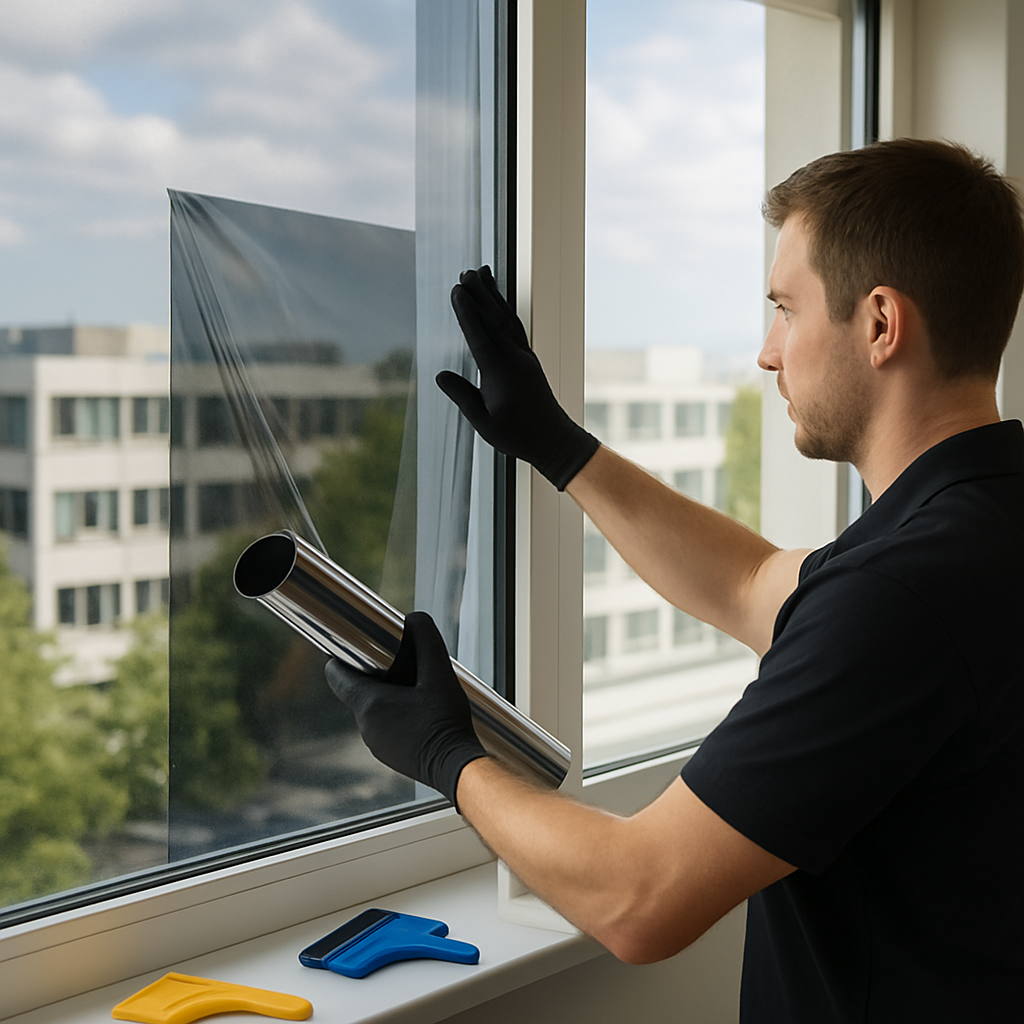
Direct and immediate effect: solar control window film controls solar energy at the glass, either reflecting or absorbing the portion of sunlight that produces heat while passing the visible light you want. That simple position—stop the heat at the glass instead of at the HVAC system—is why film is one of the fastest, lowest-disruption ways to cut afternoon overheating and glare without replacing windows.
How the films actually work and what to read on a spec sheet
Mechanisms: films rely on three actions: reflect near-infrared (NIR) back outside, absorb and convert some solar energy to heat that dissipates at the frame, and block ultraviolet. Spectrally selective films target NIR while leaving visible light alone; reflective and metallic films bounce back more energy but are more visibly dark or mirrored.
- Key metric – SHGC: solar heat gain coefficient tells you how much solar energy passes through the treated glazing; lower is better for cooling loads.
- Visible Light Transmittance (VLT): indicates daylight retained; higher VLT preserves daylight and views.
- UV rejection: most quality films block up to 99 percent of UV, protecting furnishings and reducing fading.
Tradeoffs you must accept: the best heat rejection often means lower VLT or higher reflectivity. In practice that matters: retail spaces and living rooms usually need spectrally selective or ceramic films to preserve brightness, while raw west-facing storefronts or sun rooms can tolerate darker reflective films for maximum cooling.
Practical limitation: metallic films can interfere with radio and cellular signals and sometimes with window-mounted sensors. If signal integrity or low reflectivity is essential, specify ceramic or nonmetallic heat rejection films even though they cost more up front.
Concrete example: we installed spectrally selective solar control film on a west-facing conference room in a Portland office. Occupants dropped blinds entirely, reported a sharp reduction in afternoon glare, and the facility manager required fewer thermostat overrides during peak hours. The film preserved daylight while cutting the window surface temperature and making occupant comfort consistent across the room.
Next consideration: match the film type to the room function and your tolerance for darker glass, then get on-site SHGC and VLT targets from a professional. For guidance on incentives that change the cost calculus, see Window Film Energy Rebates in Oregon and the IWFA technical resources at IWFA technical resources.
Types of solar control films and real product examples
Key point: Not all solar control window film is the same. Different film chemistries target different tradeoffs between heat rejection, visible light retention, durability, and appearance.
Primary film families and where each works best
- Spectrally selective films: Reduce infrared and near infrared while keeping high visible light transmission. Examples include LLumar ASPECT and Eastman VISTA. Best where daylight is important and you want heat control without a darkened room.
- Reflective or metallic films: High heat rejection and glare control. 3M Sun Control Series fits here. Use on west-facing storefronts or industrial facades where maximum solar heat gain reduction is the priority and exterior reflectivity is acceptable.
- Ceramic and nonmetallic films: High clarity, strong infrared blocking, and no signal interference. Madico Sunscape and Solar Gard Ultra Performance are representative. Good for offices, medical spaces, and apartments where aesthetics and connectivity matter.
- Low-E retrofit and insulating films: Thin metallized films that improve U factor modestly and reduce radiant heat loss. They help in colder months but will not replace high performance replacement windows.
- Safety and security films: Thicker polyester films that add impact resistance and can be combined with solar coatings. Use where storm, vandalism, or forced entry concerns exist in addition to heat control.
- Decorative and privacy films: Provide patterned privacy and some solar benefit. Use where aesthetics or privacy are primary and heat reduction is secondary.
Tradeoff to watch: Higher total solar energy rejected usually means lower visible light transmittance. In practice that tradeoff affects occupant satisfaction more in Portland, Salem and Eugene than in sunnier Bend, so choose spectrally selective films for daylight-rich climates and higher rejection films for intense sun exposures.
Concrete example: A Portland living room with large west-facing windows will usually fare better with LLumar ASPECT spectrally selective film because it blocks significant IR while preserving views and daylight. By contrast a Bend retail storefront with afternoon sun and cooling complaints often needs a 3M Sun Control reflective film to hit high TSER quickly; expect a brighter exterior reflection and confirm local design rules first.
| Film type | Real product example | Best use case / tradeoff |
|---|---|---|
| Spectrally selective | LLumar ASPECT; Eastman VISTA | Keep daylight, reduce heat; moderate cost |
| Reflective / metallic | 3M Sun Control Series | Maximum heat rejection; higher exterior reflectivity |
| Ceramic / nonmetallic | Madico Sunscape; Solar Gard Ultra Performance | High clarity, no signal interference; premium price |
| Safety / security | Solar Gard Armorcoat series | Adds impact resistance; thicker, more visible |
| Low-E retrofit | Select low-E films from major brands | Improves winter insulation marginally; limited cooling impact |
Next consideration: Match the film family to building orientation and occupant priorities, then verify manufacturer SHGC and VLT numbers on datasheets and potential rebate eligibility via Tinting Oregon rebate guide or Energy Trust of Oregon.
Performance metrics that determine real world results
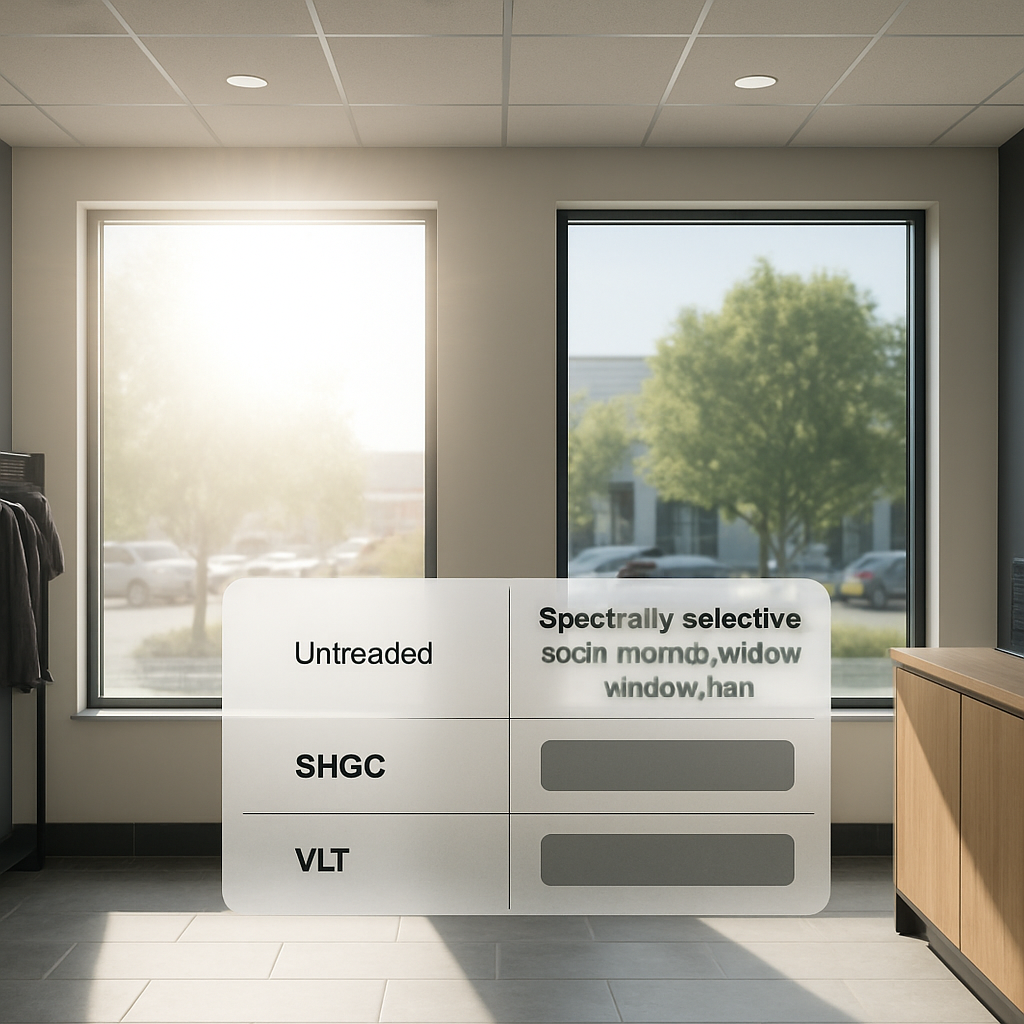
Start with SHGC and VLT — not marketing copy. The two numbers that actually predict occupant comfort and usable daylight are Solar Heat Gain Coefficient (SHGC) and Visible Light Transmittance (VLT). SHGC tells you the fraction of solar heat a window lets through; VLT tells you how much daylight remains. If an installer hands you a TSER or percent heat rejection number without the SHGC and VLT, ask for those two values before you decide.
How to read the common metrics
- SHGC: Lower is better for cooling. For retrofit work, compare the coated film SHGC against the current glass baseline, not an empty number.
- VLT: Higher preserves daylight. Aim for VLT targets appropriate to the room use – living rooms need more than storage closets.
- U-factor: Film can slightly improve insulation, but improvements are modest versus replacement windows. Treat U-factor gains as a bonus, not the primary goal.
- TSER / Total Solar Energy Rejected: Useful shorthand but can mask tradeoffs; TSER rises when VLT drops, so check both.
- UV rejection: Most quality films block >99 percent of UV. This is a straightforward protection metric for furnishings.
Practical targets for Pacific Northwest projects. For residential living spaces in Portland and Eugene favor spectrally selective films with VLT around 50 to 70 percent and an SHGC reduction of 30 to 50 percent versus the existing glass. For west-facing storefronts or Bend properties with stronger sun, accept VLT in the 30 to 50 percent range to chase higher SHGC reductions — but expect darker interiors.
Tradeoff that matters in practice. You cannot maximize heat rejection and daylight at the same time. Spectrally selective films deliver the best balance in most PNW cases because they reject infrared while keeping visible light. Reflective metallic films reject more heat but create glare, change exterior appearance, and sometimes cause signal interference with window sensors or nearby electronics.
Concrete example: A small Portland office with 200 square feet of west glazing upgraded from untreated double-pane (approximate SHGC 0.70) to a high-performance spectrally selective film (effective SHGC ~0.35, VLT ~60 percent). In comparable projects we see peak surface temperature drops of roughly 5 to 10 degrees F and measurable reductions in AC runtime – often in the 10 to 20 percent range when cooling is the dominant load and HVAC is otherwise sized correctly.
What to demand from your installer. Ask for manufacturer datasheets showing SHGC, VLT, U-factor, and UV percent for the exact film code you are quoting. Request an orientation map that lists different films by exposure (south, west, north) and a simple payback estimate using local energy costs. Rebate applications need those datasheet numbers, so keep them handy for programs like Energy Trust of Oregon and see our guide on qualifying for incentives in Oregon at Window Film Energy Rebates in Oregon: How to Qualify, Apply and Maximize Savings | Tinting Oregon.
Selecting the right film for Pacific Northwest climates and building types
Start with exposure not brand. Choose film based on which façades get direct sun, how much daylight you must keep, and whether exterior appearance or signal integrity matters. In Portland, Salem and Eugene the tradeoff is usually heat control versus preserving daylight. In Bend and Central Oregon the priority shifts to higher heat rejection for west and southwest exposures.
Practical film choices by city and building type
- Residential living rooms in Portland/Salem/Eugene: Choose spectrally selective or ceramic films that deliver strong infrared rejection while keeping visible light high. Aim for VLT in the 40 to 60 percent range so rooms stay bright and glare is reduced without heavy darkening.
- West facing rooms and apartments in Bend: Prioritize higher heat rejection with lower VLT or reflective films on west elevations. Ceramic high-TSER films are a good compromise when signal interference or exterior reflectivity limits exist.
- Commercial storefronts and offices: Prioritize glare reduction and UV protection while balancing daylight for retail displays. Anti-glare coatings and medium VLT films often improve comfort and merchandise preservation; choose low-reflectivity finishes on historic or design-sensitive facades.
- Ground floor retail, schools, and multifamily common areas: Add safety and security film options combined with solar control to reduce breakage risk while meeting code concerns.
- Historic or aesthetic-sensitive buildings: Use clear solar film or low-reflectivity decorative films to preserve exterior look while achieving modest SHGC reduction.
Key tradeoff to accept up front. Higher visible light transmittance keeps occupants happy but limits absolute solar heat gain reduction. If the project goal is maximum cooling load reduction, expect darker or more reflective films on the worst exposures and plan for occupant pushback about reduced daylight.
Practical limitation worth noting. Window film will not fix windows with failed seals or heavy edge degradation. Always inspect insulated glass units before selection because film applied to failing IGUs can accelerate delamination and void certain warranties.
Concrete example: A midcentury Portland living room with large south glazing that overheats in summer kept daylight and cut peak heat by choosing a spectrally selective ceramic film with about 50 percent VLT and high infrared blocking. Installation preserved view, avoided reflective exterior appearance that neighbors would object to, and qualified the project for an Energy Trust incentive after performance review. See the Tinting Oregon rebate guide for details on eligibility and application steps: Window Film Energy Rebates in Oregon: How to Qualify, Apply and Maximize Savings | Tinting Oregon.
A practical judgment. For most PNW properties spectrally selective or ceramic films give the best real world balance of comfort, daylight and aesthetics. Reflective metallic films still have a place on brutally exposed west facades in Central Oregon, but they often trigger design review and can reduce exterior appeal.
Next consideration: Schedule an on site assessment to verify glass condition and get measured VLT and SHGC targets before selecting film; this prevents wasted spend and identifies opportunities for rebate qualification.
Professional installation: process, warranties and what to expect from Tinting Oregon
Quality of installation determines performance. A correctly installed solar control window film performs close to the rated SHGC and TSER values; a sloppy job reduces heat rejection, creates bubbles, shortens life and can void warranties. Expect the installer to treat the glass and surrounding frame as part of the system, not just a surface to slap film on.
Typical professional installation workflow
- Site survey and measurement: Technician measures every pane, documents glass type and orientation, checks insulated glass unit seals and photographs problem areas.
- Film selection and paperwork: Choose the film by performance targets – SHGC, VLT and UV rejection – and confirm rebate eligibility. See the Tinting Oregon rebate guide for Energy Trust connections: Window Film Energy Rebates in Oregon.
- Surface preparation: Deep clean of both sides of the glass and removal of hardware or loose trim that interferes with an edge seal.
- Precision cutting and application: Films are cut to size, wet-applied, squeegeed to remove bubbles and trimmed to the bead line. For large commercial jobs, teams work pane by pane to maintain quality.
- Curing, inspection and registration: Film is allowed to cure; installer inspects, documents the job, and registers manufacturer warranty where required.
- Follow-up visit if needed: A short return visit is normal for touch-ups or to confirm adhesion after a few weeks.
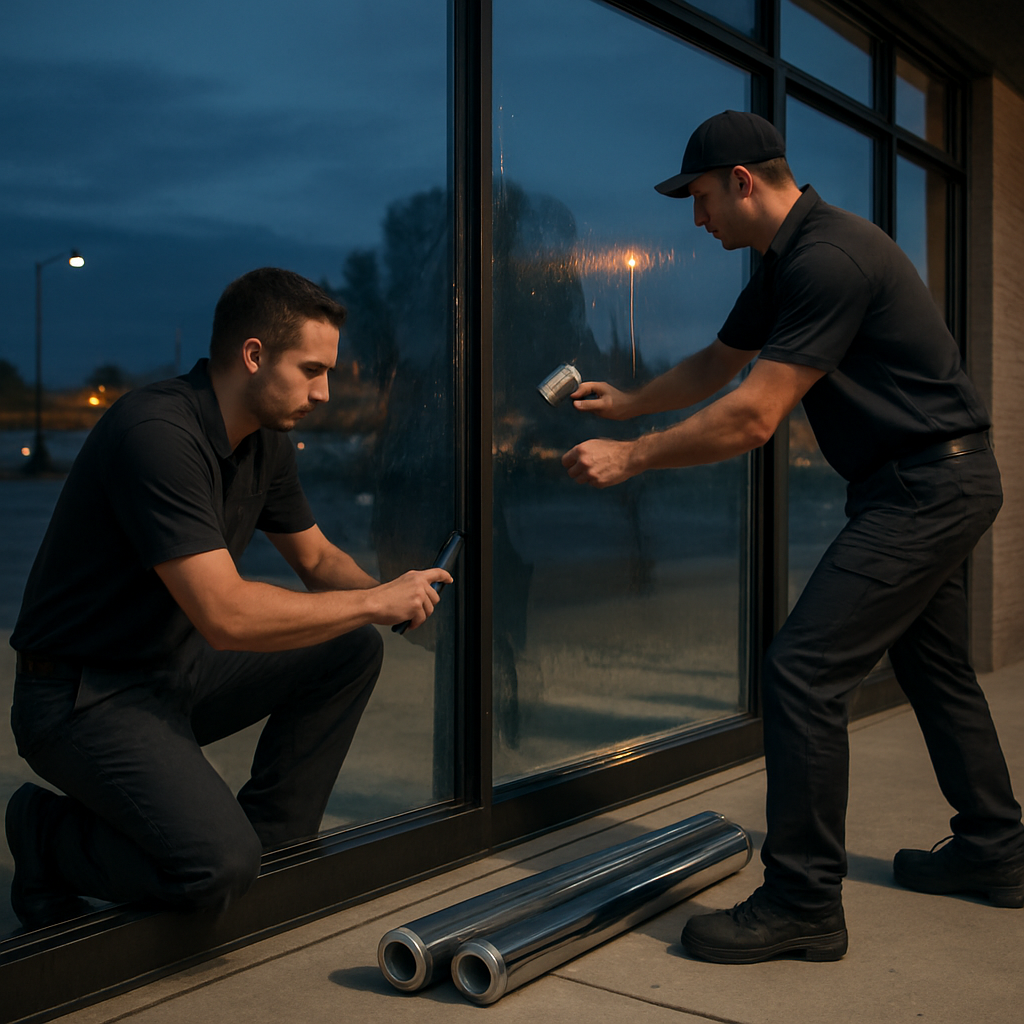
Practical tradeoff: Installers can work during business hours with minimal disruption for small residential jobs, but larger commercial storefronts often need after-hours work to avoid occupant disturbance. Choosing after-hours increases labor cost but reduces lost business time.
Warranties you should expect. There are two warranties: the manufacturer warranty for the film itself and the installer workmanship warranty. Manufacturer warranties commonly cover fading, discoloration and adhesive failure for 10 to 15 years on quality films. Tinting Oregon provides a workmanship warranty and will register the manufacturer warranty on your behalf; ask for the written warranty terms before work begins.
Limitation to plan for. Solar control film is not a fix for failed insulated glass units. If IGU seal failure or edge corrosion exists, film may accelerate visible delamination or trapping of moisture and you will need glass replacement first. Request a pre-install IGU inspection and photographs; if an IGU replacement is required, rebates and project economics change materially.
Concrete example: A four-room medical office in NE Portland had west-facing glare and overheating. Tinting Oregon did a same-week site survey, installed spectrally selective film across eight panes in a single evening to avoid patient disruption, registered a 12-year manufacturer warranty, and submitted rebate paperwork to the utility. The client saw reduced midday glare immediately and began tracking lower cooling runtime the following month.
Final judgment: For predictable performance and long life, pay for certified installers who take time on preparation and warranty registration. Cheap DIY kits will save money upfront but increase risk and usually cost more over the building lifecycle. Schedule the pre-install inspection first and then lock dates for installation and warranty registration.
Cost, rebates and calculating payback in Oregon
Short answer: installed solar control window film usually pays back faster on large west-facing glass or commercial storefronts and when you capture Oregon rebates; on small, shaded residential windows payback can be long unless your cooling load is significant.
How to estimate installed cost and what changes the price
Typical installed cost: expect about $8 to $14 per square foot for residential jobs and $10 to $18 per square foot for small commercial storefronts depending on film performance, glass area, framing complexity and access. Complexity factors – tinted or laminated glass, muntins, skylights, and very tall panes – push costs to the high end.
- Film performance: higher TSER/SHGC reduction and ceramic films cost more but keep VLT higher.
- Labor factors: scaffolding, lifts, or multi-story access add substantial line-item costs.
- Glass condition: failed IGUs or sealed-unit problems often require repair before film is eligible for manufacturer warranty and can negate rebates.
Rebates and timing – what actually matters
Key process note: most utility and Energy Trust of Oregon incentives require documentation and sometimes pre-approval or post-install inspections. Do not assume instant cash back; gather pre-install photos, manufacturer performance data, and an invoice showing labor and materials to qualify. See Energy Trust of Oregon guidelines at Energy Trust of Oregon and our rebate walkthrough at Window Film Energy Rebates in Oregon.
Limitation: some programs exclude highly reflective metallic films or require a minimum project size. Check eligibility before committing to an expensive premium film.
Simple payback formula and realistic examples
Payback formula: Payback years = (Installed cost – Rebates) / Annual energy savings. Include only verified energy savings; do not double-count comfort or UV benefits as energy savings.
| Project type | Installed cost (typical) | Estimated annual cooling savings | Rebate example | Simple payback (yrs) |
|---|---|---|---|---|
| Residential – 300 sq ft glass | $3,000 | $250 | $500 | 10 |
| Small commercial – 800 sq ft storefront | $8,000 | $1,600 | $2,000 | 3.75 |
| Large storefront – 2000 sq ft | $16,000 | $4,000 | $4,000 | 3 |
Concrete example: a neighborhood cafe in SE Portland with a 800 square foot west-facing storefront paid about $8,200 installed for spectrally selective film. With an Energy Trust-approved incentive of $2,000 and measured summer cooling savings near $1,500 per year the owner reached payback in roughly four years and reduced peak HVAC demand on hot afternoons.
Practical judgment: in the Pacific Northwest films that preserve daylight while trimming SHGC usually give the best cost-effectiveness for homes. For commercial properties with large, unshaded glass – rebates plus reduced peak demand often make film the obvious first retrofit before considering full window replacement.
Maintenance, longevity and signs it is time to replace film or windows
Key point: Proper care and honest inspection are the difference between getting 12 to 15 years from a quality solar control window film and watching a cheap film fail in five. Quality ceramic or spectrally selective films routinely meet manufacturer lifespans in normal Pacific Northwest use, but exposure, glass condition and installation quality determine how long they actually perform.
Cleaning and routine care
- Weekly to monthly wipe-down: use a soft microfiber and a solution of mild dish soap and water or a labeled ammonia-free glass cleaner. Rinse and dry with a squeegee or soft towel.
- Avoid abrasive tools: never use razor blades, steel wool, abrasive pads or harsh solvents; they scratch or lift the film surface.
- No pressure washing or high-temperature steam: directed high-pressure water can lift film edges and force moisture under the adhesive.
- Post-install wait time: do not aggressively clean new film for the first 30 days unless the manufacturer specifies otherwise; films need time to finish curing.
Practical limitation: Manufacturer care instructions vary. When in doubt follow the film product datasheet or the installer recommendation; generic household cleaners can void limited warranties on some films. For independent guidance see the IWFA technical resources at IWFA Technical Resources.
What shortens film life and the tradeoffs to watch
Failure drivers: prolonged edge moisture from failed insulated glass seals, roof or irrigation spray hitting glass, repeated thermal cycling on poorly supported panes, and substandard aftermarket films. The tradeoff is real: higher-performance ceramic films cost more up front but resist discoloration and scratching longer, reducing replacement frequency.
- Signs of adhesive failure: edge lifting, bubbling, wrinkling or visible peeling.
- Optical failure: cloudiness, yellowing or loss of clarity due to degradation or delamination.
- Seal vs film issue: condensation between panes indicates IGU seal failure not film failure and normally requires window or IGU replacement.
Concrete example: A downtown Portland storefront had reflective film blister after six years. Inspection showed intact IGUs but poor original installation with dirt trapped under the edges; the correct fix was remove and re-film with a ceramic product and improved edge trimming. A nearby multi-family building showed fogging inside the glass on several units; after inspection those windows were replaced because the IGU seal had failed.
When to re-film versus replace windows: choose re-film when the glass and seals are sound and failures are limited to the film surface or adhesion. Replace windows when IGU seals are compromised, glass is thermally stressed or frames are failing. In practice, if more than 15 to 20 percent of panes on a façade show IGU failure, replacement becomes more cost-effective and avoids repeated service calls.

Local examples, manufacturer references and next steps
Start practical: If you want usable numbers and a firm quote, the fastest route is an on-site assessment that pairs measured glass area and orientation with manufacturer datasheets. Don’t treat film selection as cosmetic alone — performance choices change payback, daylight and neighbor-facing reflectivity.
Manufacturer pages and independent guidance
Reference links: For technical datasheets and lab metrics, review 3M Sun Control product pages (3M Sun Control) and Eastman LLumar/Vista materials. For independent best-practice guidance consult the International Window Film Association (IWFA technical resources). Use these when comparing SHGC, VLT and UV rejection figures — manufacturers publish them so you can match targets to room types.
- Before you call for a quote: Measure or estimate glass square footage, note window orientation (N/S/E/W), and list the primary problem — heat, glare, fading or privacy.
- Bring building context: Tell the installer the age and condition of insulated glass units; failing seals change the recommendation and may push you toward replacement.
- Specify outcomes, not names: Ask for films that meet target SHGC and VLT ranges rather than requesting a brand by name; installers can match performance with the right product family.
Trade-off to expect: In Portland/Eugene favor spectrally selective films for daylight retention. In Bend and hotter west exposures a higher rejection or reflective film will cut peak cooling more but often increases exterior reflectivity and can trigger historic façade or planning reviews. Metallic films can also cause signal interference; choose ceramic/nonmetallic if Wi-Fi or window sensors are critical.
Concrete example: A west-facing Portland café replaced the storefront glass with LLumar ASPECT spectrally selective film after summer complaints. The film kept interior daylight while cutting peak glare enough to stop staff from lowering the blinds; HVAC setpoints were raised by 2°F during afternoons, giving a visible drop in cooling runtime without darkening the dining room. That result is typical when daylight matters most.
Next step checklist: Schedule an on-site estimate with Tinting Oregon, ask for manufacturer datasheets for the recommended film, and request a simple payback table that includes any Energy Trust incentives — see our guide on rebates (Window Film Energy Rebates in Oregon).
