
Window Tinting in Bend, Oregon: Local Solutions for Energy, Privacy and Security
Facing strong sun, big temperature swings, and rising energy costs, homeowners and businesses in Central Oregon are increasingly looking at window tinting bend oregon as a practical retrofit. This short guide explains which film types deliver energy savings, glare and UV control, privacy or security, how to evaluate installers and warranties, and what realistic costs and payback look like for Bend properties.
Bend climate and why window films matter here
Key point: Bend sits high and dry compared with the Willamette Valley, and that combination changes what window films will actually do for you. High altitude raises UV intensity, clear skies mean more direct solar radiation in summer afternoons, and large day-night temperature swings make both cooling and heat retention relevant.
How those climate factors change priorities
Practical implication: For most Bend homes and storefronts the priority is not only cutting peak solar heat gain but doing so without killing useful daylight or winter passive solar. That steers you toward solar control films with high optical clarity or selective spectrally selective films rather than simply dark reflective tints.
Trade-off to watch: A dark, reflective film will reduce afternoon overheating and glare, but it also reduces visible light transmission and can block beneficial winter sun. Low emissivity films improve winter U factor but give limited solar rejection on west-facing glass. You must match film type to orientation and use – there is no single best film for every window in a Bend house.
Concrete example: A two-story bungalow in Northwest Bend had a west-facing living room where afternoon sun faded hardwood floors and made TV viewing impossible. The owner chose a neutral, high-VLT solar control film during a residential window tinting Bend Oregon install; installers placed samples on the glass, and the chosen film noticeably reduced glare while leaving daylight. After installation the room stayed more comfortable in late afternoons and the homeowner reported shorter AC cycles during hot spells.
Local commercial note: Retail and office spaces along Reed Market Road and the Old Mill District face long stretches of afternoon sun. For those storefronts, commercial window tinting Bend Oregon focused on glare reduction and visible merchandising – choose films that preserve color and product visibility while cutting solar heat and UV.
What people get wrong: Many expect a single film to solve every problem. In practice you will mix film types – solar control on western exposures, low-E where winter heat loss matters, and privacy or decorative films on street-facing lower-floor glass. Expect a tailored plan from a professional installer, not a one-size-fits-all quote.
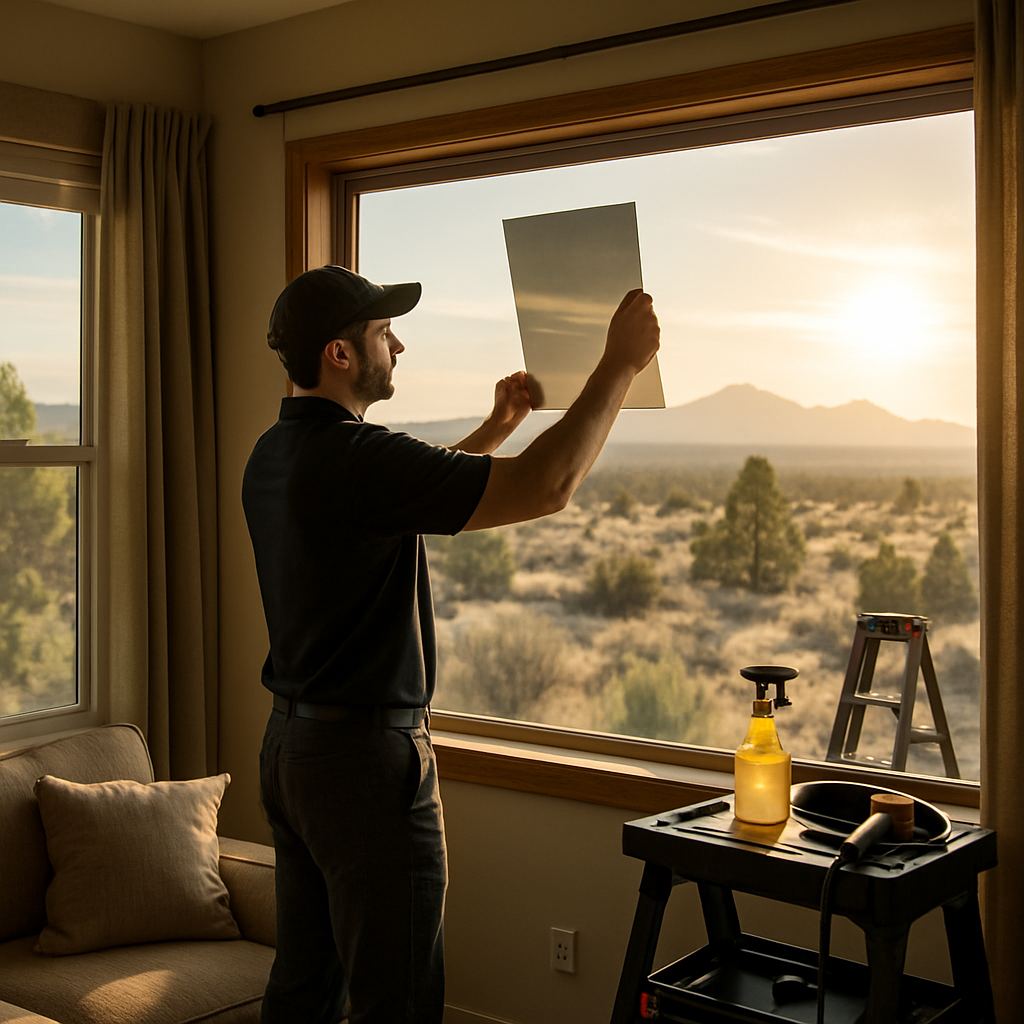
Next consideration: When you request quotes for window tinting Bend Oregon, ask each installer how they would balance solar rejection, visible light transmission, and winter performance for each orientation; that balance is the practical difference between a helpful retrofit and one that creates dark rooms or lost winter heat.
How window film improves energy efficiency and comfort
Direct effect: applied film shifts how glass handles solar energy and surface temperatures, which changes both HVAC loads and how occupants perceive comfort. Films work in three practical ways – they reflect or reject infrared and near infrared energy, absorb some heat and reradiate it, and control the amount of visible light that passes through. Look for spec sheets that list SHGC, VLT, and U-factor improvements so you get numbers, not anecdotes.
Where the improvement actually happens: reductions in solar heat gain lower room air temperature near glazing and drop surface temperatures on floors and furniture. That reduces thermal discomfort and hotspots that force people to lower thermostats. Films do not improve poorly insulated frames or fix leaky seals – if frames are the weak link, films alone give limited winter benefit.
Practical trade-off: darker is not always better. A high rejection reflective film can cut afternoon heat and glare, but it also reduces daylight and can eliminate useful winter passive solar gain. For living rooms and offices in Bend I favor spectrally selective films that maintain higher visible light transmission while rejecting IR – they cost more but avoid the common complaint that rooms feel cave-like after tinting.
Concrete example: a mid-size office on Reed Market Road installed a spectrally selective solar film during a commercial window tinting Bend Oregon job. The office kept color and product visibility in display windows, employees reported less screen glare, and the near-window workstations were noticeably cooler during late afternoons. The owner tracked energy use and saw short term reductions in peak cooling runtime, although total monthly HVAC draw depended on nighttime setbacks and other building systems.
What installers should document: insist on pre-install orientation notes and a film performance sheet showing SHGC or solar rejection percentages and the film's UV blockage. Use those numbers when comparing quotes. For guidance on realistic energy expectations see Energy Trust of Oregon and the Department of Energy page on window efficiency at Energy.gov.
A common misread: many property owners equate darkness with energy performance and choose cheaper dark films. In practice, a high-VLT spectrally selective film often delivers comparable or better heat control with less impact on daylight and resale appeal. Also note that security or decorative films are not substitutes for solar low-E films when your goal is energy savings.
Privacy and glare control options for Bend residences
Straightforward fact: privacy and glare are related but separate problems — you can have low glare and still no privacy, or strong privacy and terrible daylight. When evaluating window tinting bend oregon for a house, treat each elevation and room as its own design problem rather than buying one film for the whole house.
Practical film choices and what they really do
- Frosted or decorative film: provides opaque privacy for bathrooms, entry sidelights, and the lower half of street-facing windows while preserving diffuse daylight. It gives almost no solar heat rejection unless you pick a product with solar coating.
- Neutral solar films: reduce glare and infrared heat while keeping color and natural light. These are the best first choice for living rooms and home offices where view and daylight matter — think residential window tinting Bend Oregon jobs on TV walls or desks.
- Reflective one-way films: effective for daytime privacy on ground floor units but reverse at night when interior lights are on. They also change exterior appearance and can trigger HOA complaints in some neighborhoods.
- Dual-purpose low-reflectance privacy films: newer products combine a frosted look with modest solar rejection. Useful where you need obscured sightlines and some heat control without a mirror finish.
- Partial coverage strategies: tint only the lower third or apply a privacy band. You keep daylight and views above while solving direct sightline and glare near seating or work surfaces.
Trade-off to watch: reflective daytime privacy sounds attractive, but in practice many Bend residents regret the night-time reversal and the darker interior feel. If you need both privacy and daytime brightness, plan a two-layer approach – privacy film at eye level plus a high-VLT solar film on the upper panes.
Case in point: a ground-floor condo in Northeast Bend had persistent afternoon glare on a home office monitor and little street privacy. The installers applied a neutral solar film to the top two-thirds of the window and a frosted strip at eye height. The homeowner kept natural light, screen glare disappeared, and privacy was restored without a blackout effect.
Practical tip: ask for full-window mock-ups during the consultation and test them at the times you actually use the room – morning, midday, and late afternoon. Numbers on a spec sheet mean little if the room feels wrong when occupied.
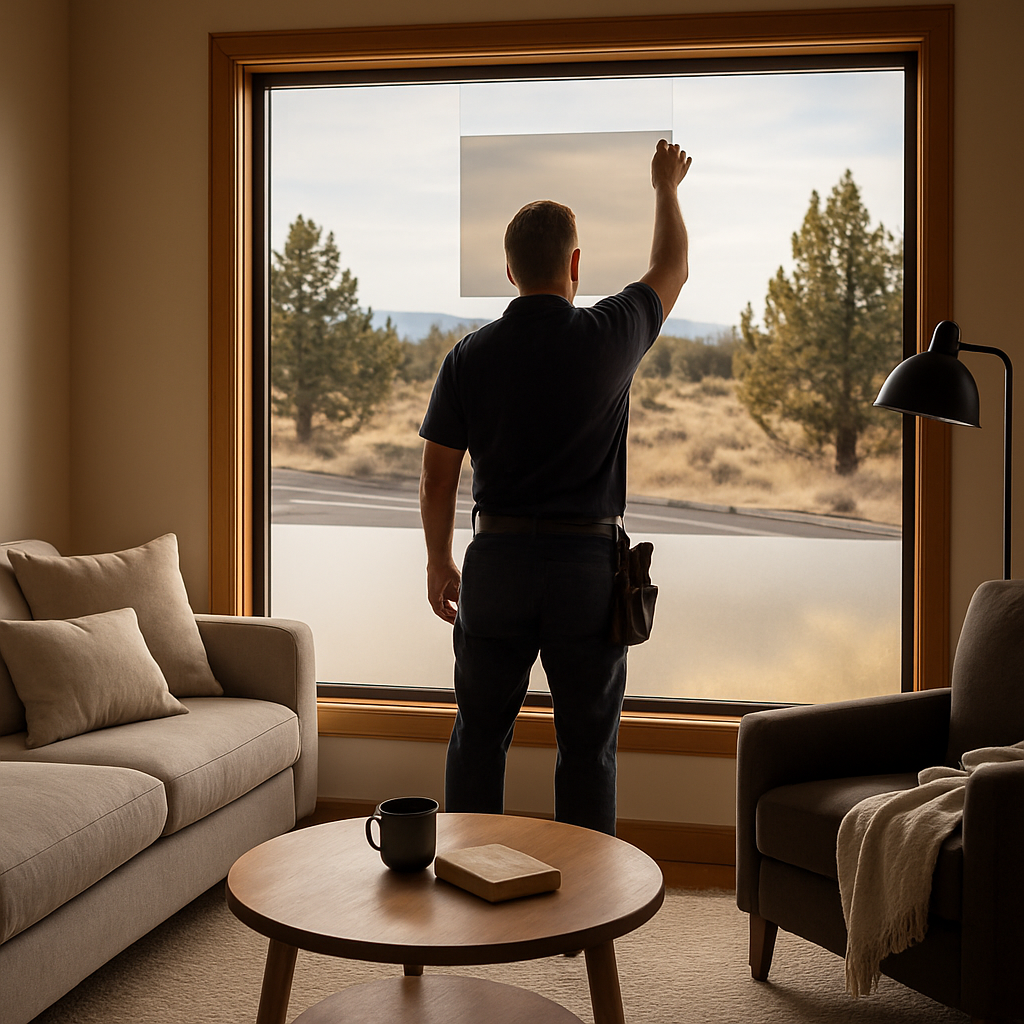
Judgment: avoid the cheapest dark reflective films when your priority is livability or resale. In Central Oregon the better outcome is usually a higher-clarity solar control film paired with targeted decorative privacy — it costs more up-front but preserves daylight, color, and neighborhood compatibility.
Security and safety films for homes and commercial storefronts
Bottom line: for many Bend properties, adding security or safety film is the quickest, most cost-effective way to reduce glass vulnerability without replacing windows. Professional window tinting bend oregon installers can turn ordinary panes into deterrents that hold shards together, delay forced entry, and reduce injury from shattered glass.
How the film actually helps: security films bond to glass and use high-strength adhesives to keep fragments intact when the pane is struck. Thickness ranges matter: 4 mil products give basic fragment retention, 7 mil and 8 mil hybrid films provide meaningful forced-entry delay, and heavier systems combined with mechanical anchoring approach laminated-glass performance. For storefronts you should not rely on adhesive alone — a properly installed retention system or channel bars is the difference between a nuisance delay and a real security upgrade.
Trade-offs and limitations: security film is a delay and deterrent, not a guarantee. Its effectiveness depends on glass type, sash/frame strength, and attachment method. Tempered glass tends to break into small pieces and can be harder to retain; annealed glass breaks into larger fragments that film holds more readily. If you manage a high-risk retail operation or expect ram-raid attacks, budget for laminated glazing or physical barriers in addition to film.
Concrete example: a boutique in downtown Bend had a late-night smash-and-grab attempt. The 8 mil security film installed across the storefront held the glass in place long enough for the alarm to trigger and police to arrive; the thieves left after failing to create a quick entry. The owner repaired the frame, added channel retention, and avoided a full window replacement and large inventory loss. For similar commercial work contact the commercial team at Tinting Oregon.
- Installer checklist: inspect frames and glazing (no film if frames will pull apart), confirm adhesive compatibility with existing coatings, specify edge sealing and mechanical anchors for storefronts.
- Performance proof: demand test reports or reference to industry protocols and testing guidance from the IWFA rather than verbal claims.
- Anti-graffiti option: use sacrificial clear films in high-vandal areas; they are inexpensive to replace compared with glass restoration.
Practical judgment: in Bend the usual sweet spot is a mixed approach — residential window tinting Bend Oregon jobs often use 4–7 mil film to improve safety and reduce glass injuries, while commercial window tinting Bend Oregon projects specifying 7–8 mil film plus frame anchoring get measurable burglary-delay performance. Do not buy film based on thickness alone; insist on documented anchoring details and a post-install inspection.
Important: if an installer does not evaluate the frame or refuse to specify a retention method for storefront glass, walk away. Adhesive-only installations are common, but they often fail the moment a pane is kicked or levered.
Choosing the right film and manufacturer examples
Pick the performance you need first, then the brand. For practical window tinting Bend Oregon decisions, start with the problem – reduce afternoon heat, preserve daylight, stop fading, or harden storefront glass – and use those requirements to narrow film families before you compare names and prices.
How to match film characteristics to your use case
Solar control films split into dyed/metalized, ceramic/spectrally selective, and low emissivity products. Ceramic or spectrally selective films give the best balance of heat rejection with high visible light transmission for Bend homes and offices. Low-E retrofit films target winter U-factor improvement on single-pane or older double-pane units. Security films are chosen by thickness and attachment method rather than brand hype. Automotive films need different adhesives and conformability – an automotive tinting shop is better for cars than an architectural installer.
- Orientation rule: use higher solar rejection on west and southwest glass, higher VLT on south-facing panes where winter passive gain helps.
- Daylight vs darkness trade-off: choose spectrally selective films when preserving color and resale value matters; darker reflective films solve heat but kill daylight and can trigger HOA complaints.
- Warranty and transferability: insist on a manufacturer warranty sheet and a written labor warranty – warranties vary and some are nontransferable at resale.
- Installer fit matters more than the logo: a well-installed mid-range film will outperform a poorly installed premium film every time.
| Manufacturer | Typical strengths | Best for |
|---|---|---|
| 3M | High optical clarity, spectrally selective options, documented safety films | Residential living rooms, offices needing glare control and clarity; security film upgrades |
| LLumar (Eastman) | Balanced solar control lines, neutral tints, architectural safety options | Retail storefronts and mixed-use facades where color fidelity matters |
| Solar Gard / Vista (Eastman) | Broad portfolio from dyed to high-performance ceramic; strong commercial presence | Large commercial retrofits and projects requiring varied performance on different elevations |
| Huper Optik | Ceramic and infrared-rejection specialty films with low reflectance | Owners willing to pay premium for daylight retention and long-term satisfaction |
Practical judgment: brand matters for warranty and documented lab data, but local installer experience with a manufacturer is the leading predictor of a good outcome. Many installers in Central Oregon stock certain product lines because they know how those films behave under high-UV, high-sun conditions; ask which films they actually install regularly and for local references.
Concrete example: a Bend homeowner with a west-facing family room chose 3M Prestige after seeing a daytime demo; the film maintained daylight and cut afternoon glare without drastically changing the exterior look. Separately, a driver used a professional automotive shop for car window tinting Bend Oregon to get a compliant, non-distorting film that conforms to curved rear glass and comes with a vehicle-specific warranty.
Choose a film by the spec sheet you can verify – SHGC or solar rejection percentage, VLT, and UV blockage – and then vet installers for documented experience with that product in high-UV Central Oregon conditions.
Installation quality, warranties, code and HOA considerations in Bend
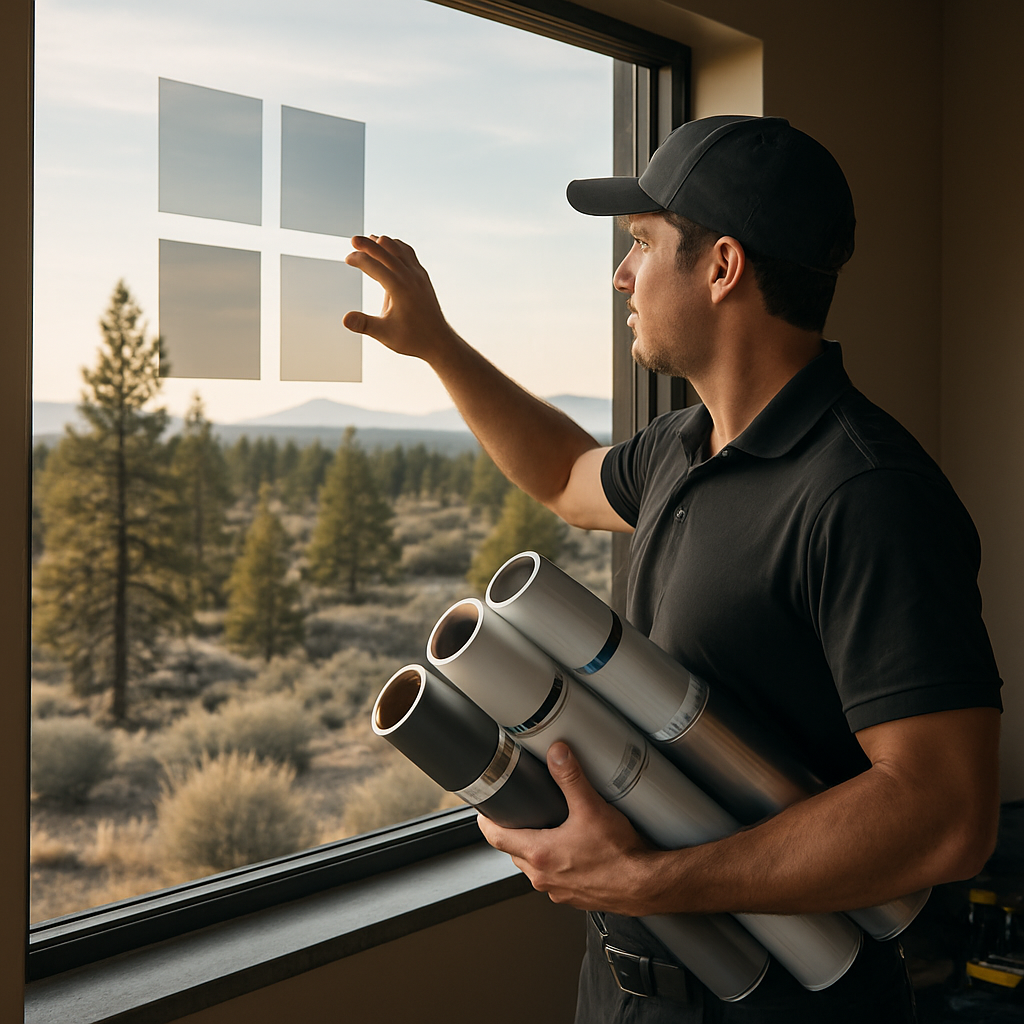
Installation quality is the decisive variable. A correctly chosen film will fail to deliver benefits if it is poorly cut, dirty at the bond line, or incorrectly sealed around edges. For window tinting bend oregon projects, expect the installer to demonstrate process control — surface prep, temperature-aware adhesion, and post-install inspection — before they ask for a deposit.
What separates a good install from a bad one
Critical workmanship items: proper glass cleaning, removal of silicone or surface contaminants, film acclimation, and controlled squeegee technique to avoid trapped moisture. For thick safety films, correct edge sealing and mechanical retention to the frame are not optional; adhesive alone often underperforms over time in high-UV, high-heat exposures typical of Central Oregon.
Mobile vs. shop installs: mobile crews are convenient and fine for straightforward residential jobs. For complex commercial storefronts, large curtainwall panes, or automotive curved glass, a shop environment lowers risk of distortion, dust contamination, and adhesive defects. If the installer insists everything is done on-site without a contingency plan for problematic panes, that is a red flag.
- Ask for these in writing: exact product code and manufacturer spec sheet for the film recommended.
- Warranty mechanics: who handles a claim, the response time, and whether labor warranty is provided separately from the manufacturer warranty.
- Post-install inspection window: a formal check at 30–90 days to confirm adhesion, edge curing, and optical performance.
- Service commitments: what cleaning products are allowed and what actions void the warranty (e.g., razor scraping, ammonia cleaners).
- Evidence of experience: local references and photos of similar Bend projects, not just generic portfolio images.
Concrete example: A condominium association in central Bend initially rejected a reflective film for curb appeal reasons. A professional commercial window tinting Bend Oregon installer provided the film product code, daytime and nighttime mock-up photos, a copy of the manufacturer warranty, and a one-page appearance report that the HOA accepted. The association approved the job because the documentation answered durability and visual-impact concerns up front.
Permits, local code and HOA realities
What typically requires a permit: interior retrofit films rarely need building permits, but exterior alterations, changes to fire-rated glazing, or structural anchoring for security systems can trigger reviews. For commercial jobs in Bend check with the City of Bend building department and have your installer produce a short technical memo for plan reviewers if needed.
HOA and historic districts: many HOAs care about exterior reflectance and perceived color shift. Present photo mock-ups and the manufacturer appearance sheet early in the process. In historic districts you may need design review; choose non-reflective, high-clarity films to reduce pushback and document the reversible nature of the retrofit.
Practical judgment: select an installer who treats approvals as part of the job — they should supply spec sheets, appearance photos, and a short letter for HOAs or permitting authorities. If you want a next step, schedule an on-site consultation that includes sample placement and written documentation you can present to your HOA or building official; see request a quote or contact Tinting Oregon for a consultation.
Costs, payback, and how to evaluate return on investment
Straight answer: costs vary enough that ROI is a calculation you must do per building and per elevation. In Bend, the math is driven by three things you can control: the film's documented solar performance (SHGC or solar rejection), the amount of conditioned space affected, and how much your cooling or heating strategy actually changes when those windows stop driving temperature spikes.
Price ranges to expect: for residential window tinting Bend Oregon jobs plan roughly $7–$20 per square foot for solar control films (higher for spectrally selective products). Decorative/frosted films sit lower; thicker security films and systems with mechanical anchors run $12–$30+ per square foot depending on attachment complexity. Automotive work (tinted windows for cars in Bend Oregon) is quoted per vehicle, typically a few hundred dollars for quality installs. Prices depend on glass count, muntins, curves, access, and whether the installer must route anchors or work from scaffolding.
A practical payback framework
- Measure area and orientation: total square footage of glass by orientation (west and southwest matter most in Bend).
- Get the spec sheet: insist on the exact product code and
SHGC/solar rejection percentage andVLTfrom the installer. - Estimate energy impact: model or use a simple rule — higher solar rejection on west glass reduces peak cooling loads most; small north or shaded panes give negligible savings.
- Apply local costs: multiply estimated annual kWh saved by your electric rate and include any heating impacts if you use electric heat.
- Include non-energy values: add avoided fading, improved comfort (reduced thermostat fights), security value, and potential insurance or rent upside.
Concrete example: a west-facing living room with 60 sq ft of glass — installed with a mid-range spectrally selective film at $15/sq ft — costs $900. If measured or modeled savings are 400 kWh/year at $0.15/kWh, energy savings are $60/year (15-year payback). If the same film reduces peak demand or shifts occupant behavior so annual savings reach 1,200 kWh, payback shortens to about 5 years. That gap is common: identical installs can have multi-year differences in payback depending on occupant habits, AC sizing, and shading.
Important trade-off: energy-only paybacks in Bend are often longer than homeowners expect because winters reduce cooling hours and many homes use gas heat. Do not judge investment purely on kWh—comfort, UV protection, reduced fading, and security are often the decisive returns that justify the install.
How to vet installer ROI claims: require a written estimate showing the film code and performance numbers, ask for a modeled savings worksheet or a reference to the study/method used, and request a 30–90 day post-install check with optional metered comparisons. For commercial projects, seek a simple monitored trial on a single facade before rolling film across a building.
If an installer gives only percent-savings claims without product codes or a measured baseline, treat the estimate as marketing, not a financial case.
SHGC and VLT, and a simple savings projection. Check for possible incentives through Energy Trust of Oregon and then decide based on combined energy and non-energy benefits. For a field assessment, consider requesting samples and a walk-through from a local professional such as request a quote.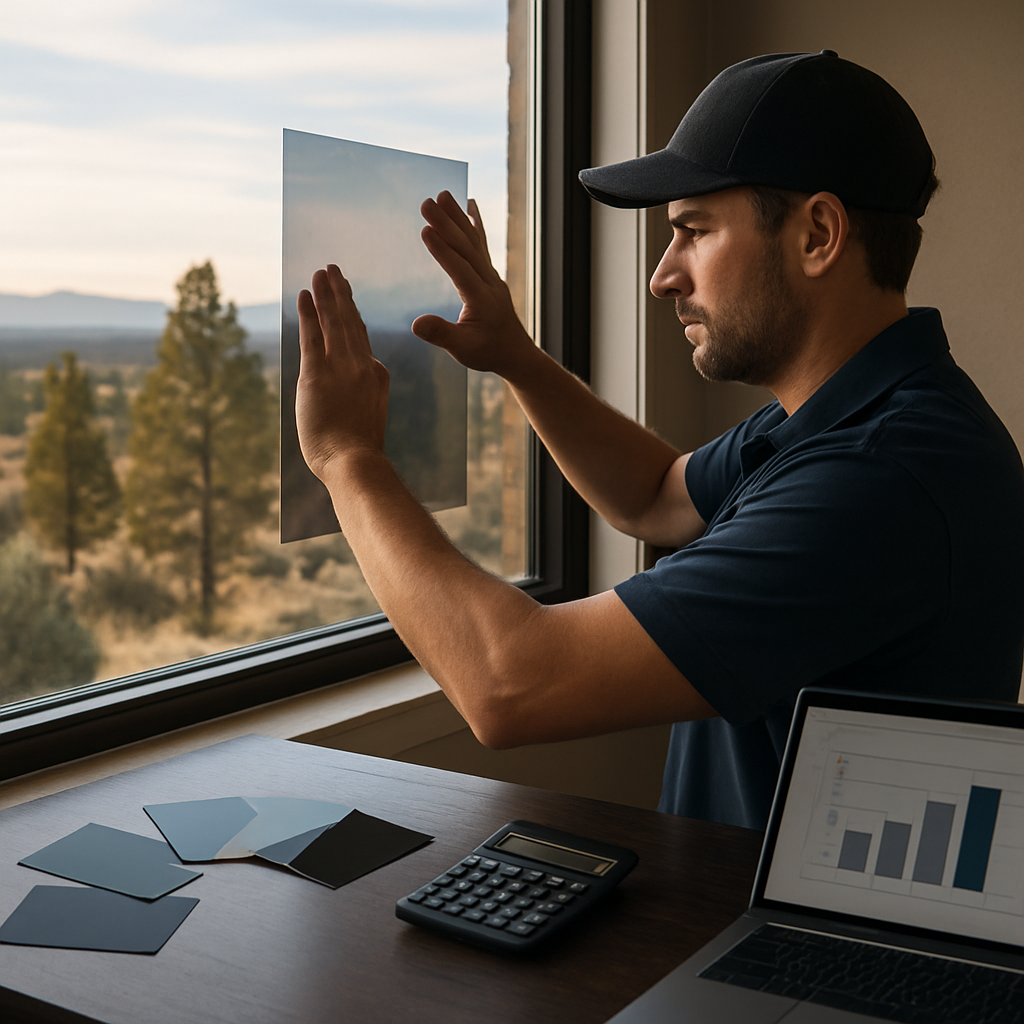
Final consideration: prioritize accurate inputs over optimistic percent claims. In practice the best investments in Bend are targeted: treat high-exposure west and southwest glass first, bundle comfort/security upgrades with energy-grade films, and insist on measurable specs so you can validate performance after installation.
Next steps for Bend property owners and how Tinting Oregon can help
Start where the sun hits hardest. For most Bend properties that means west and southwest elevations — those panes drive the discomfort you notice and the short-term cooling spikes your AC chases. Prioritize a targeted plan for those glass areas before you consider whole-house or full-faade work.
A practical 6-step path you can execute this week
- Book an on-site assessment: schedule a visit that includes sample placement on the actual windows during late afternoon sun. Ask the assessor to note orientation, fixed shades, and interior use so recommendations are window-specific.
- Require lab-backed specs: insist the quote include the exact manufacturer product code and a performance datasheet showing SHGC (or solar rejection) and VLT. If an installer gives only a flat per-square-foot price, push for line-item film choices by window grouping.
- Compare mock-ups, not promises: demand that installers place a full-size sample on at least one representative pane for a few hours so you can judge daylight, color rendering, and glare at the times you use the room.
- Clarify installation scope: get a written scope that lists prep work, edge details for safety films, expected cure times, and whether the job is mobile or done in-shop. Include a 30–90 day post-install inspection in the contract.
- Address approvals up front: if you have an HOA, retail frontage, or historic review, request a short letter and appearance photos from the installer to speed approvals. For storefront security installs ask for specified anchoring details for the frames.
- Pilot a single elevation for commercial projects: for multi-tenant or large façades, run a one-day pilot on a representative bay to verify visual merchandising, security performance, and measured comfort before committing to the whole building.
Concrete example: a Northeast Bend homeowner scheduled a sample placement on their west living room window through Tinting Oregon. The tech tested two spectrally selective films in late afternoon light, provided a written appearance memo for the HOA, and submitted a line-item quote recommending a mix of neutral solar film on upper panes and a frosted privacy band at eye level. Installation proceeded without objections and the homeowner kept daylight while reducing glare where it mattered.
Practical judgment: treat installer quotes like construction bids, not retail receipts. The useful proposals separate film types by orientation and list measurable performance numbers. A cheaper aggregated price often hides poor film placement or the wrong film on the wrong elevation — that is where you lose daylight or winter passive heat and end up redoing work.
If an installer will not place a sample on-site or refuses to put product codes and performance numbers in writing, do not proceed. That refusal predicts poor outcomes and limited recourse.
