
If you are searching for privacy window film installation near me, this guide lays out how long a typical job takes, what it will likely cost locally, and which film types actually deliver privacy, solar control, or security. Aimed at homeowners and facility managers in Portland, Salem, Eugene, and Bend, it gives realistic timelines, ballpark pricing, product recommendations, and what to expect on install day so you can decide whether to request an onsite estimate.
Typical Installation Timeline for Privacy Window Film
Straight answer: a small residential job booked with a local crew usually moves from first contact to finished installation in a few business days to a couple of weeks, while larger or custom commercial projects commonly stretch multiple weeks because of ordering, access, and safety requirements.
Phases and realistic timing
- Site survey and measurement — typically scheduled within 2–10 days of your request depending on installer workload; the tech will record glass type, frame condition, and obstructions that affect install time.
- Quote and selection — expect a written quote within 24–72 hours after survey; choosing stock privacy films lets you move faster, custom decorative or printed films add days to weeks.
- Ordering and lead times — stock films often ship within 48 hours; specialty ceramic, printed, or large-format decorative films commonly require 5–12 business days.
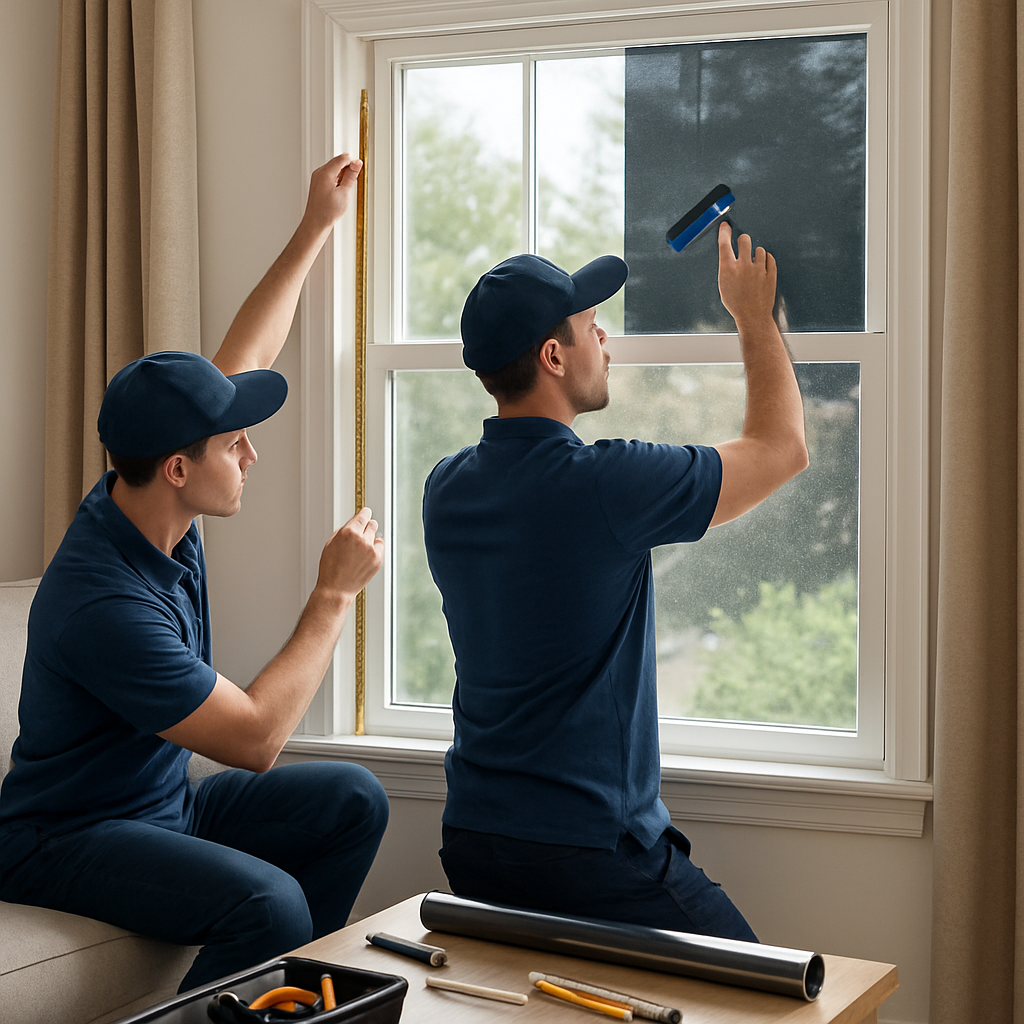
- On-site installation — a small home (6–12 typical windows) is often completed in half a day to a full day. Medium retail or office suites take 1–4 days. Large storefronts, phased high-rise work, or jobs requiring lifts can take multiple weeks of scheduled shifts.
- Curing and final checks — the film will look wet and streaked immediately; expect 24–72 hours for initial set and up to several weeks for edge drying and full optical stability on some films.
Practical trade-off: if you want a same-week turnaround search for privacy window film installation near me that advertises rapid service, but understand availability will limit film choices and may push you toward economy films rather than premium solar-control or decorative options.
Limitation installers watch for: insulated glass units and low-E coatings can be sensitive to dark films; professionals will delay or recommend lighter, non-metallic films to avoid thermal stress — that evaluation adds time but prevents damage and warranty issues.
Concrete Example: A downtown storefront wants frosted privacy on a 20-foot display. Site survey and permit check take two business days; the chosen custom printed frosted film needs ten business days to cut and print; installation requires one full day with a lift and two technicians. The client has visible results the day after install, but edges finish curing over the next three weeks.
What usually speeds or slows projects: easy access, stock film, and daytime scheduling speed things. Roof work, evening installations, high-reach glass, or jobs needing scaffold or permits are the main time drivers that push a job into multi-week planning.
If you want a faster preliminary estimate from a local installer, request a photo-based quote and an on-site measurement using the Tinting Oregon estimate form at Request an Estimate. For performance context on solar-control films, see the Energy Department guidance at Energy Saver – Windows and Doors.
Detailed Cost Breakdown and Local Pricing Examples
Straight numbers matter. Expect installed prices to cluster by film tier rather than a single flat rate — budget frosted films sit at the low end, full-performance solar/privacy films in the middle, and ceramic or combined privacy-plus-security films command a premium.
Cost components to watch
What you pay for — material, qualified labor, site prep (masking, trim protection), removal of existing film, edge sealing for exterior installations, and any access costs (lifts, scaffolding). Insist on a line-item estimate; installers who bundle everything hide where the extra costs will appear.
- Material vs labor: film material is typically 30–60 percent of the installed cost depending on film quality
- Access and complexity: high windows, angled glass, or historic frames increase labor far more than they increase material cost
- Removal and remediation: taking old film off or repairing glazing defects can add significantly and is commonly underquoted
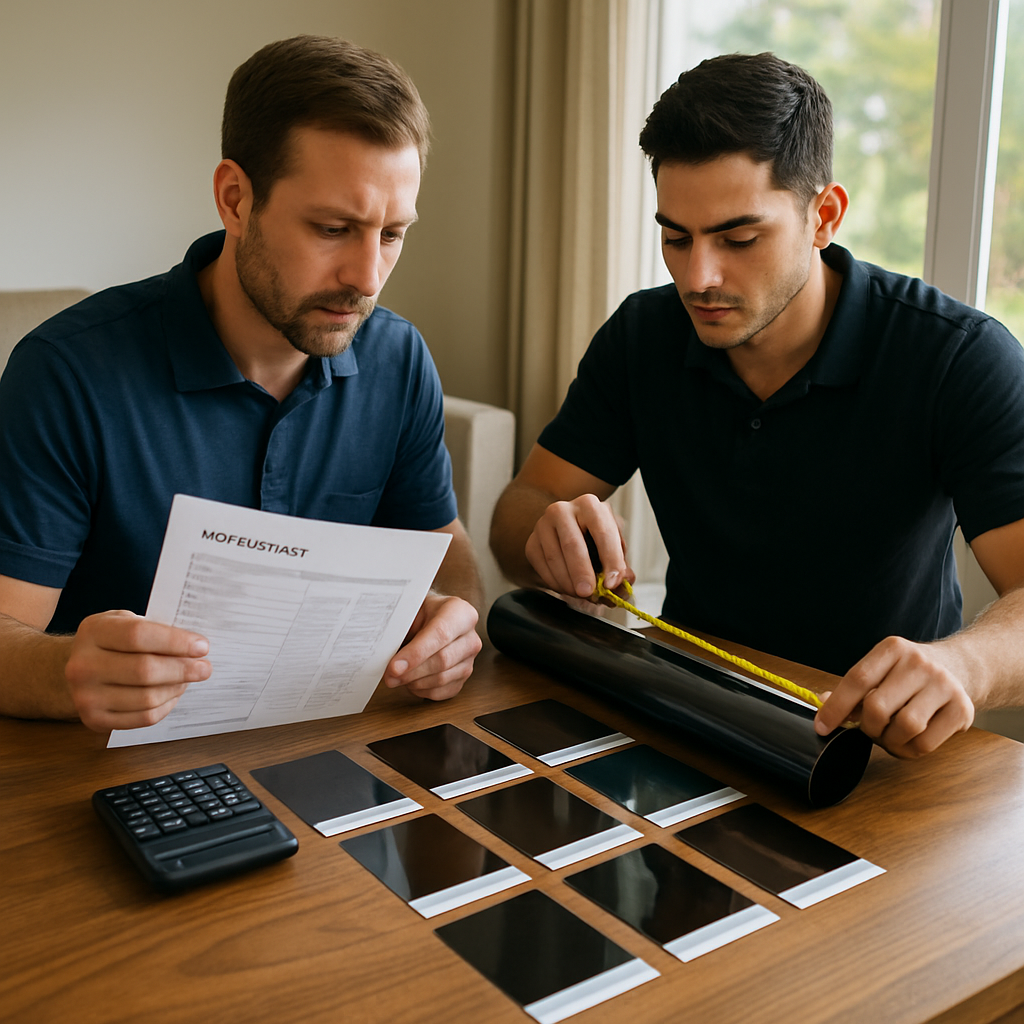
Local installed ranges (practical banding): economy privacy/frost films about $4–7 per sq ft, mid-tier solar/privacy films about $7–12 per sq ft, and premium ceramic/security/privacy films about $12–20 per sq ft. Use these bands to vet quotes — if a bid is well below the lower band, ask what corners they cut.
| Project | Area (sq ft) | Film tier & unit rate | Estimated total (installed) |
|---|---|---|---|
| Living room: three 4×6 windows | 72 | Mid-tier privacy/solar @ $9/sq ft (material+labor) | $648 (material ~$252 + labor ~$396) |
| Full retrofit: 10 typical home windows (example) | 350 | Mid-tier @ $9/sq ft / Premium ceramic @ $15/sq ft | $3,150 (mid) — $5,250 (premium) |
| Storefront: 20 ft x 6 ft display (single panel) | 120 | Premium privacy/solar @ $15/sq ft | $1,800 (plus any lift/scaffold fees) |
Concrete Example: A Portland bungalow with three 4×6 living-room windows (72 sq ft) chose a mid-tier LLumar-style privacy film. The installer quoted material at about $3.50/sq ft and labor at $5.50/sq ft; after a $150 old-film removal fee the job totaled roughly $800. Work completed in one day; client accepted a 5-year installer workmanship warranty and a manufacturer warranty for the film.
Practical trade-off: pushing for the absolute cheapest per-square-foot price usually sacrifices either film performance or installation care. For ground-floor privacy that also needs heat reduction, mid-tier films often deliver the best cost-to-performance in our local climate — premium films make sense where optical clarity, signal transparency, or security are non-negotiable.
When costs jump: expect significant adders for lift or scaffold rental ($150–$600/day common), large-format custom printing, or when the installer must coordinate permits or HOA approvals. Always ask whether removal of old film is included and how edge sealing is charged.
Further reading: use cost guides like the Angi window tinting cost guide to sanity-check ranges, then verify with a local on-site quote that reflects your glazing type and access constraints.
How to Choose the Right Privacy Film for Your Property
Start with the single clearest objective. If your priority is daytime visual privacy, choose a different film than if you want glare reduction, UV protection, or forced-entry resistance. Mixing objectives is possible, but every added requirement changes cost, lead time, and the installer checklist.
A simple decision framework
Step 1 — Rank objectives. List your top three needs (for example: privacy, reduce heat, preserve street appearance). Rank them; the top item should drive film selection. Privacy-first jobs tolerate more light loss and simpler frosts. Energy-first jobs need low-gain or ceramic films that preserve view while cutting heat.
Step 2 — Check glazing compatibility. Note whether windows are single-pane, insulated glass units (IGUs), or have low-E coatings. For IGUs, avoid very dark, metallic films without a professional assessment because of thermal-stress risk. If signal transparency matters (near antennas or modern door locks), favor non-metallic or ceramic films.
Step 3 — Pick the film family, then the finish. Choose between frosted/patterned for near-opaque daytime privacy, translucent privacy films that keep daylight, and dual-purpose solar/privacy films when heat and glare matter. Decorative printed or stained-glass look films are suitable where curb appeal is a goal but expect longer lead times and higher minimum costs.
| Objective | Film family to consider | Key trade-off or limitation |
|---|---|---|
| Bathroom or shower privacy | Frosted or etched decorative film | Very high privacy with minimal impact on daylight; exterior appearance changes |
| Reduce glare + maintain view | Mid-tier solar/privacy or ceramic non-metallic | Better clarity and performance; higher cost and slightly longer lead time |
| Storefront privacy with branding | Printed decorative film | Custom work increases lead time and price; may need permits for storefront signage |
| Security plus privacy | Thicker security film laminated with matte finish | Adds weight and optical haze; requires professional installation and often longer warranties |
Concrete Example: A small law office in Salem wanted street-level confidentiality without darkening the workspace. The installer recommended a translucent privacy film with modest solar control so interior monitors stayed readable and the reception area kept natural light. The job required a one-hour on-site compatibility check for the building's double-pane windows and completed in a single day.
Practical judgment: Clients often pick the visually darkest option thinking it equals better privacy. In practice, very dark or reflective films attract thermal and aesthetic problems on IGUs and reverse privacy at night when interior lights are on. Choose film based on when you need privacy (day vs night) and accept that some solutions trade exterior appearance for interior concealment.
If you are searching for privacy window film installation near me, prepare clear photos and state your top objective — installers can give a faster, accurate quote when they know whether privacy, solar control, or security drives the decision.
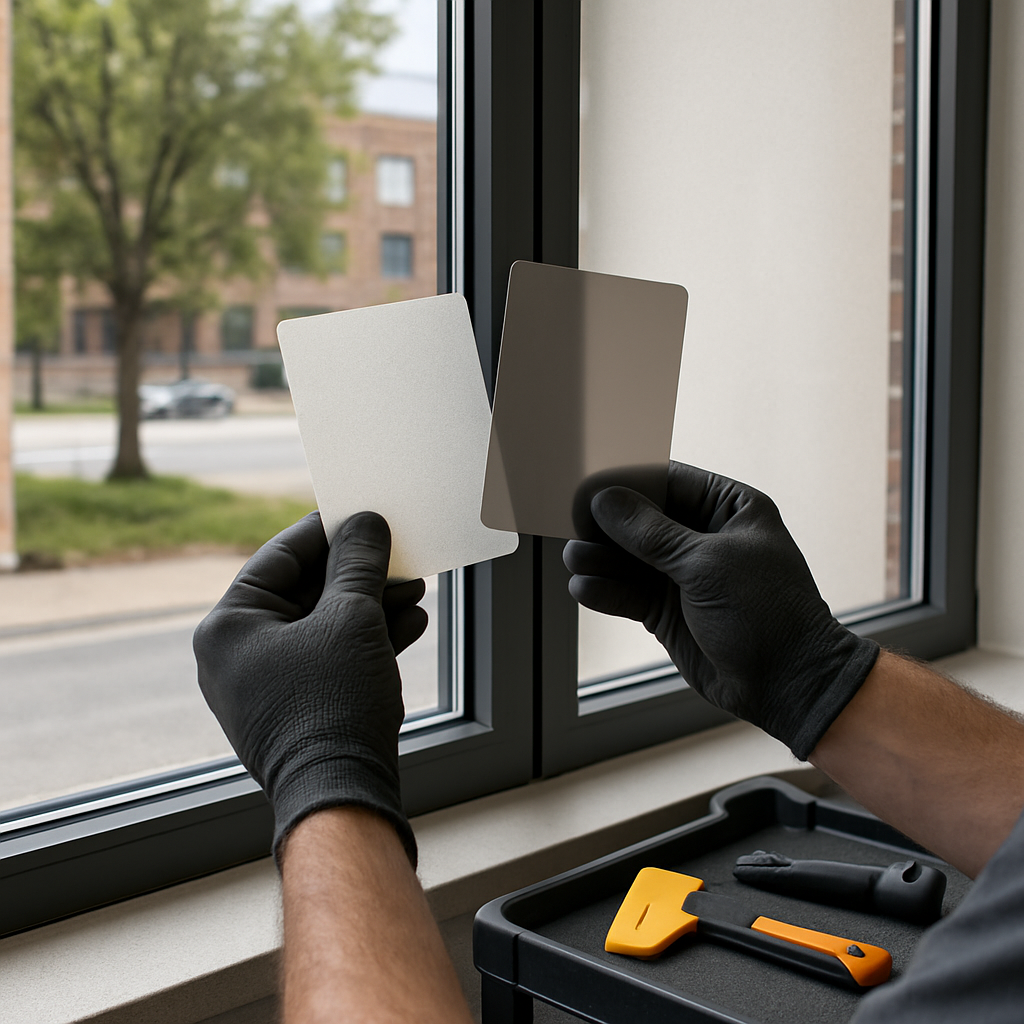
Next consideration: once you narrow the family of films, ask for swatches or small sample installations and a written note on warranty and expected visual change. For a fast preliminary quote, use the Tinting Oregon photo-based estimate at Request an Estimate.
What to Expect During Installation Day
Straight expectation: the crew arrives, secures the work area, applies film using a wet-squeegee method, trims and inspects edges, and leaves the site neat — most straightforward residential installs finish the same day, but the visible finish will continue to settle for days to weeks. This is a working job, not a cosmetic touch-up; expect tools, short periods of noise, and focused activity while the technicians work window by window.
Arrival, setup, and immediate checks
Arrival routine: crews typically start by confirming the scope, checking glass condition, and removing lightweight window treatments that interfere. They will protect floors and furniture, mask hardware, and take final measurements at the glass face rather than rely only on previous notes or photos. Good installers document existing glass flaws with photos before cutting film to avoid disputes.
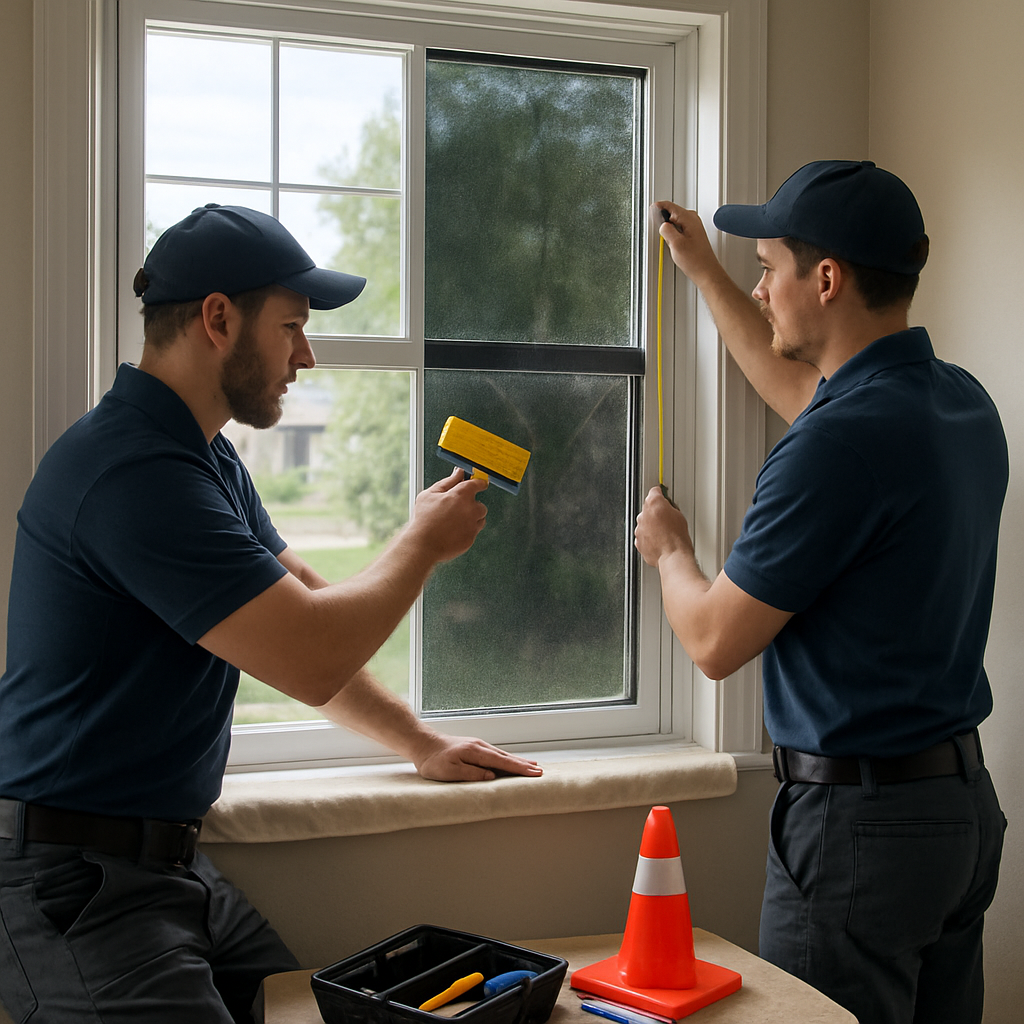
What installers do on each window: apply a slip solution, position the pre-cut film, squeegee out the installation fluid and trapped debris, trim precisely at the sightline, and perform edge finishing. Expect repeated squeegeeing and rechecks; those extra passes are not fussiness, they are how you avoid bubbles and premature edge lift.
What you should provide: clear access to windows, a powered outlet within 25 feet if heat guns or vacuums will be used, and a place for the crew to set down tools. Keep pets and small children out of the work area. If you need rooms available during work, tell the estimator so they can plan a phased schedule instead of blocking whole-home access.
Temporary effects and timelines: expect glossy reflection, slight waviness, and cellular streaks immediately after trimming; these optical artifacts are normal while adhesive redistributes and the film bonds. Direct sun and warm daytime temperatures speed surface settling but increase risk on thermally sensitive IGUs, so installers balance when to work on any particular pane. Trade-off: faster visible clarity versus added thermal risk on certain double-pane windows.
Installer quality signals: a professional crew will offer a test patch for suspect insulated glass, describe their edge sealing method for exterior exposures, and leave a written note of when you can safely clean the glass. If an installer skips a test patch on older IGUs or claims you can clean immediately with any product, treat that as a red flag.
Concrete Example: A condo in Eugene scheduled a morning install for three street-facing bedroom windows. Two technicians completed prep and film application in three hours, left a small test-patch on a fourth window that had a faint seal failure, and noted the building manager to schedule glass repair before tinting that pane. The occupants kept one bedroom closed during installation and had clear sightlines by the following afternoon while edge finish continued to normalize over several weeks.
Aftercare, Warranty, and Lifespan in Pacific Northwest Conditions
Straight point: long-term performance is driven more by installation quality and local exposure than by sticker price. In the Pacific Northwest, wetter winters, frequent condensation, and strong seasonal sunlight create specific failure modes—edge lift from trapped moisture, adhesive yellowing under heavy UV, and accelerated wear on south- and west-facing glass. Plan for maintenance and a documented warranty before the crew leaves.
Cleaning and daily care — wait until the film surface is firmly bonded and feels dry around the edges before the first cleaning. Use a soft microfiber, a mild detergent or manufacturer-recommended solution, and a gentle squeegee; avoid ammonia-based cleaners, abrasive pads, razor blades, or high-pressure washers that can nick seals or lift edges. Trade-off: aggressive cleaning shortcuts risk voiding workmanship commitments and create trouble spots that show months later.
Warranty clarity — get two written items: the material warranty from the film manufacturer and the installer workmanship warranty. Ask whether coverage is transferable, what conditions void protection (improper cleaning, exterior edge damage, or unsanctioned removal), and whether installer certification is required to maintain the manufacturer warranty. Register the product if the manufacturer requests it and keep installation photos and the invoice on file.
Lifespan realities — lower-cost privacy films will still perform as privacy screens, but they tend to show haze, edge discoloration, or delamination sooner under PNW conditions; higher-grade ceramic or non-metallic films resist optical change longer and are usually better at handling seasonal thermal swings. Expect actual life to vary by exposure and installation rigor—the cheapest option rarely ends up cheapest over multiple replacement cycles.
Maintenance and failure handling — when you notice bubbles, creeping edge haze, or peeling, photograph the issue and contact the installer immediately. Small edge lifts can often be re-sealed if caught early; widespread bubbling typically requires removal and reinstallation. If a film problem exposes an underlying glazing failure (for example a broken IGU seal), the fix may involve glass repair beyond the film warranty—insist on a written remediation plan before any work begins.
Pacific Northwest nuance — urban Portland and Eugene installations contend with pollution and airborne pollen that can work into edges; coastal or river-facing buildings need robust exterior edge sealing to keep moisture out. In the higher-elevation, high-sunlight conditions found around Bend, UV intensity and wide day-night temperature swings make non-metallic, low-expansion films a smarter choice to reduce thermal stress on insulated glass.
Concrete example: A Bend homeowner installed a premium privacy/solar film on large south windows. The crew performed a full perimeter edge seal because of daytime temperature swings. Three years later the owner noticed a faint edge haze on one pane; the installer verified the film material under warranty, re-sealed the perimeter, and replaced one small panel where glazing failure had begun—work the installer documented with before-and-after photos.
Judgment call for buyers: prioritize a clear workmanship warranty and documented test patches on any suspect insulated glass over chasing the lowest per-unit price. If you need an installer who will document compatibility, register the material, and stand behind both service and product, request an on-site estimate so those steps are written into the scope. Use the Tinting Oregon estimate request to schedule a compatibility check and get warranty details included in the quote: Request an Estimate.
Local Considerations for Portland, Salem, Eugene, and Bend
Local context changes the right choice. Climate, building age, permitting norms, and installer availability in Portland, Salem, Eugene, and Bend materially affect which privacy film you should pick, how long the job will take, and what extra steps an installer must take on site.
Portland
Portland note: older stock and historic districts are common, so expect a focus on compatibility and curb appearance. Installers frequently recommend non-invasive decorative frosts or translucent privacy films that preserve sightlines while meeting HOA or historic-board standards. Permit friction is real in designated historic areas; bring film samples and manufacturer specs to gain quicker approval.
Salem
Salem note: government and mixed retail properties make code and signage considerations important. For commercial storefronts you may need to show that a film will not be used as permanent signage or change glazing performance in a way that triggers building-review. When privacy is combined with branding, plan extra lead time for custom-printed or regulatory review.
Eugene
Eugene note: campus-adjacent storefronts and rentals create two practical constraints: installers must often coordinate with property managers and delivery windows around events, and reflective or highly dark films can cause unintended glare issues for neighboring buildings. If your property borders university lots, expect request-for-insurance or background-check steps before on-site work.
Bend and Central Oregon
Bend note: higher elevation and stronger seasonal sun push toward non-metallic ceramic films for longevity and signal transparency. Large contemporary glazing is common; installers will emphasize edge sealing and thermal-compatibility checks because wide temperature swings increase risk of IGU stress.
Practical trade-off: choosing a high-clarity, non-metallic ceramic film reduces thermal and signal problems but raises cost and lead time. If you favor quick, low-cost frosted privacy for daytime screening, expect faster scheduling but accept reduced solar performance and shorter lifespan in high-UV locations like Bend.
Concrete example: A Portland condo association allowed frosted privacy strips only after the installer provided two sample panels and the film datasheet demonstrating UV stability and removable adhesive. It took three business days to secure approval and another four days to schedule the crew. The result preserved the building facade and gave tenants daytime privacy without darkening the rooms.
Actionable next step: when you request a local quote, include clear photos, note the building type (historic, condo, storefront), and state whether signal transparency or HOA approval is required. Use the Tinting Oregon photo-based estimate at Request an Estimate and check potential incentives at Energy Trust of Oregon.
Why Work with Tinting Oregon for Local Installation
Local response beats remote promises. For anyone searching for privacy window film installation near me, hiring a locally based installer removes the usual friction: same-day or quick photo-quote response, on-site compatibility checks for double-pane or historic glass, and an installer who understands permit or HOA expectations in Portland, Salem, Eugene, and Bend.
What Tinting Oregon brings that matters
Practical advantage — Tinting Oregon keeps a stock of commonly used privacy and solar films and maintains technician teams trained on wet-apply techniques, edge sealing for exterior exposures, and test-patch protocols for IGUs. That matters because correct application and early testing prevent thermal stress or premature edge lift that low-cost, out-of-area crews often miss.
Project planning — We provide photo-based preliminary quotes and follow those with an on-site measurement that documents glass type, frame condition, and access needs. That upfront documentation reduces surprise adders like scaffold days or old-film removal fees when you compare final invoices.
Warranty and follow-through — Local installers are the ones who actually honor workmanship warranties, coordinate manufacturer claims, and return for minor re-seals or adjustments. If a warranty call requires returning within weeks to re-seal an exterior edge after heavy PNW rain, a local crew makes that practical; long-distance vendors often treat warranty visits like new sales calls.
Trade-off to understand — faster local scheduling sometimes means leaning on in-stock films. If your project requires a custom decorative print, non-metallic ceramic, or signal-transparent option, expect slightly longer lead times even with a local installer because those products are manufactured to order.
Regulatory and aesthetic judgment — We routinely present swatches and datasheets to HOAs and historic boards so approvals move faster; that saves you time and rework. For commercial storefronts, we also document whether a privacy film changes signage or reflective properties that could trigger building-review.
Concrete Example: A small retail shop in Eugene suffered severe afternoon glare that washed out product displays. Tinting Oregon performed an on-site audit, recommended a mid-tier solar/privacy film with low reflectivity, obtained the landlord's sign-off with a single datasheet, and completed the install within eight business days. The store kept natural light while glare was cut enough to restore display visibility and reduce A/C load on hot afternoons.
If your priority is quick scheduling and reliable follow-up in the Pacific Northwest, a local installer who stocks common films and performs IGU compatibility checks is the practical choice.
