
Office Privacy Window Film Ideas That Boost Productivity and Look Great
Glass walls and open plans boost daylight but also increase visual distractions and confidentiality risks. These office privacy window film ideas show which film types and design treatments actually improve focus, reduce glare, and reinforce brand identity while preserving daylight. You will also get straightforward guidance on performance tradeoffs, typical costs, and what to expect from a local site assessment in Portland, Salem, Eugene, and Bend.
How Privacy Window Film Improves Focus and Comfort
Direct mechanism: Privacy window film reduces visual distraction by interrupting sight lines without cutting daylight. In practice that means patterned or frosted films stop passersby from becoming a moving screen behind an employee, and solar control films lower glare on monitors. Research on open offices from Harvard Business Review and workplace experience studies from Gensler show that controlled sight lines and clear boundaries materially reduce interruptions and the subjective sense of being observed.
What film actually changes in the workspace
Light and glare control: Films can shift how light enters rather than simply block it. Reflective and low emissivity films reduce direct solar gain and screen glare; frosted and textured films scatter light so faces and screens are visible but details are obscured. The Department of Energy documents how solar control on glazing lowers cooling loads and improves occupant comfort during sunny hours.
Privacy versus acoustics tradeoff: Privacy films alter visibility but do not meaningfully absorb or block sound. If focus problems are noise related, treat glass with film plus acoustic measures such as ceiling baffles, rugs, or laminated glass upgrades. In short, film solves visual privacy and thermal comfort reliably but is an incomplete solution for acoustic privacy.
- Measurable benefits: fewer glare incidents and less screen repositioning during peak sun hours
- Confidentiality gains: frosted bands and opaque panels reduce visual eavesdropping in conference rooms and huddle spaces
- Worker comfort: solar control films reduce hot spots and can lower cooling discomfort complaints on perimeter workstations
- Nighttime tradeoff: highly reflective films can reverse their privacy effect after dark unless paired with interior blinds
- Durability caveat: cheap adhesive window film applied by non professionals often bubbles or peels sooner; manufacturer backed installation matters
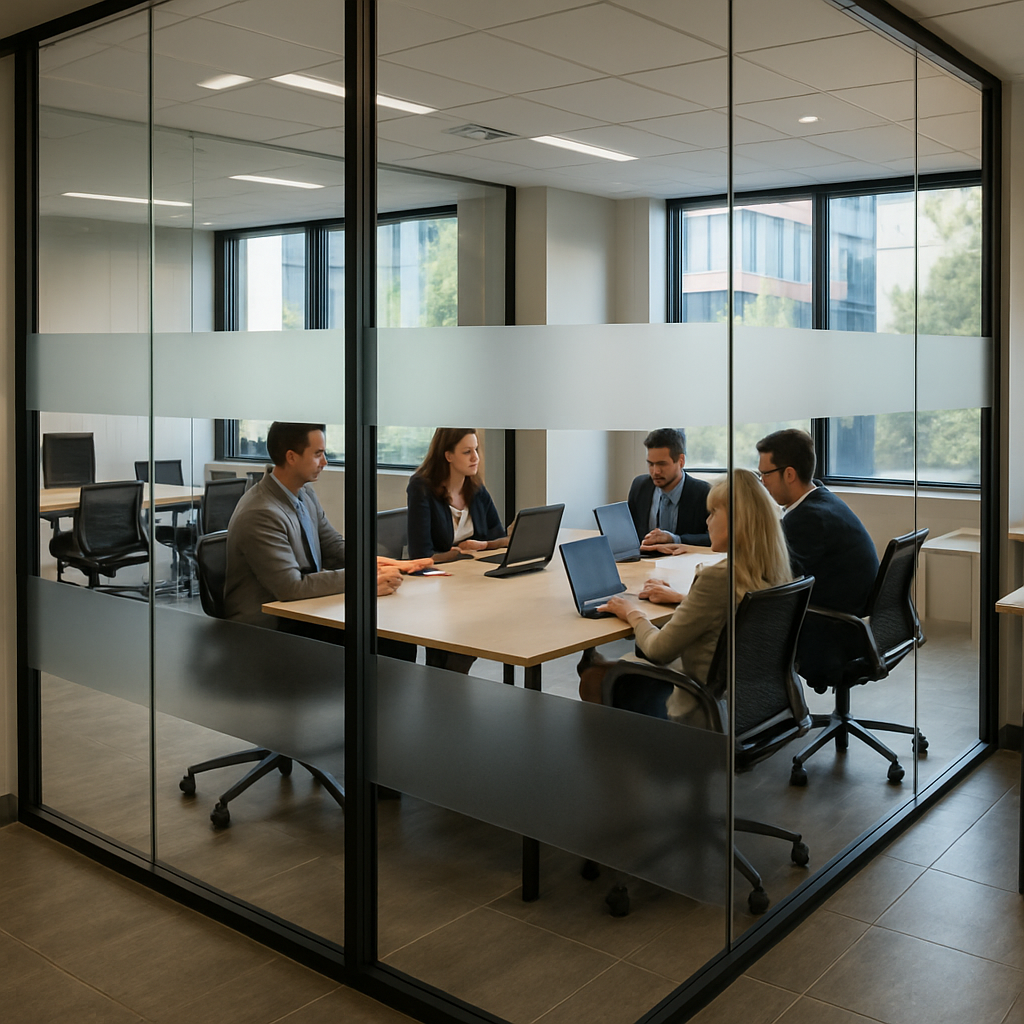
Concrete example: A downtown Portland law office installed frosted bands on glass conference walls and full frosted on client interview doors. Meetings keep full daylight while staff report fewer interruptions and partners are confident confidential conversations remain private. The office avoided replacing glass and achieved the change in a single weekend install.
Privacy film buys focused space and thermal comfort quickly, but it is not a substitute for acoustic upgrades when noise is the root problem
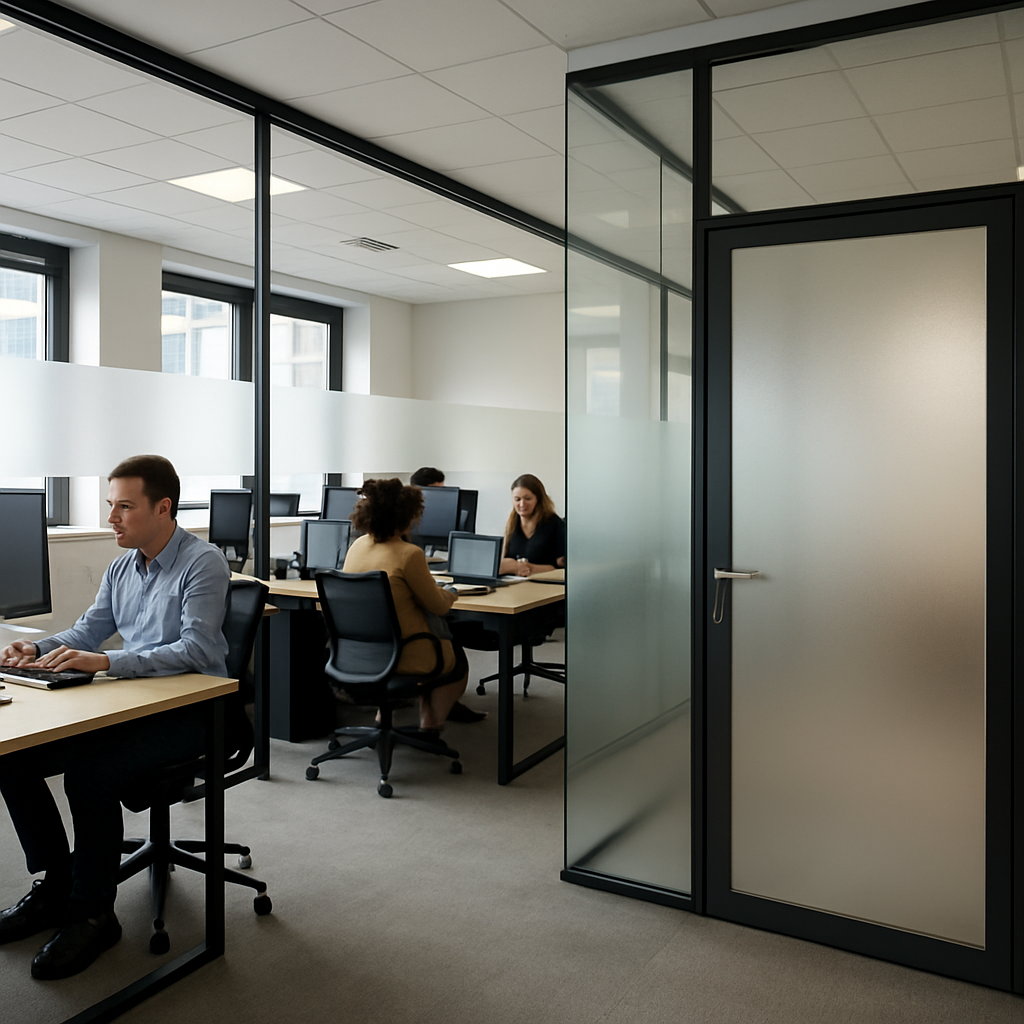
Privacy Film Types and Best Uses
Start with the outcome: pick the film that solves the problem you actually have — glare, confidential sight lines, solar heat, or brand expression — not the prettiest sample. Different films behave very differently in daylight, at night, and when paired with interior lighting; choose with those conditions in mind.
Quick mapping: film types and where they work
- Frosted / etched film: Best for conference rooms and glass doors where you need daytime privacy with daylighting. Tradeoff: provides privacy without full darkness but offers no solar heat control unless combined with a solar film.
- Gradient frosted film: Use on circulation edges of open plan offices to create visual buffers while keeping sight lines. Tradeoff: partial privacy only — ineffective for confidential meetings.
- Perforated one-way film (daytime privacy): Works on exterior-facing offices where you want outward view and daytime privacy. Limitation: at night, with interior lights on, privacy reverses; plan interior shades or layered treatments.
- Reflective / metallic solar films: Choose when solar control and privacy are both priorities on sunny facades. Tradeoff: reflective look can feel corporate and reduces nighttime privacy unless interior lighting is controlled.
- Blackout / opaque film: For secure storage rooms, testing areas, or imaging labs that must block sight completely. Consideration: these eliminate daylight and will change occupant perception of space.
- Custom printed decorative film: Use logos, wayfinding, or brand patterns on reception glass. Note: printed films are design-forward but add cost and lead time for proofs and color matching.
- Smart switchable film: Useful in executive or multi-purpose rooms where instant privacy is required. Tradeoff: high upfront cost and requires wiring and reliable controls; treat as a premium specification.
- Low-e / energy-efficient films: Select these when reducing HVAC loads and glare is a priority. They combine privacy options with measurable solar performance; see Energy Department guidance for expected savings.
- Acoustic or sound-damping films: Expect modest gains only. Reality check: film cannot substitute for proper acoustic panels or glazing; it helps a little with vibration and sound clarity but is not a soundproofing solution.
Practical pairing insight: Combine films rather than pick one. For example, pair low-e solar film on perimeter glazing with frosted bands on interior partitions to control heat and keep sightline privacy near desks. That pairing is cheaper and performs better in practice than a single high-performance multifunction film.
Concrete example: In a downtown Portland law office we installed 18 frosted bands at eye level on full-height glass conference walls, keeping the upper and lower thirds clear. This kept meetings private from passersby while preserving daylight and avoided the nighttime privacy issues you get with reflective films.
Common misunderstanding: People expect film to solve both acoustic privacy and visual privacy equally. In practice visual privacy is straightforward; acoustic improvement is limited. If confidential conversations matter, budget for acoustic treatments and layout changes in addition to film.
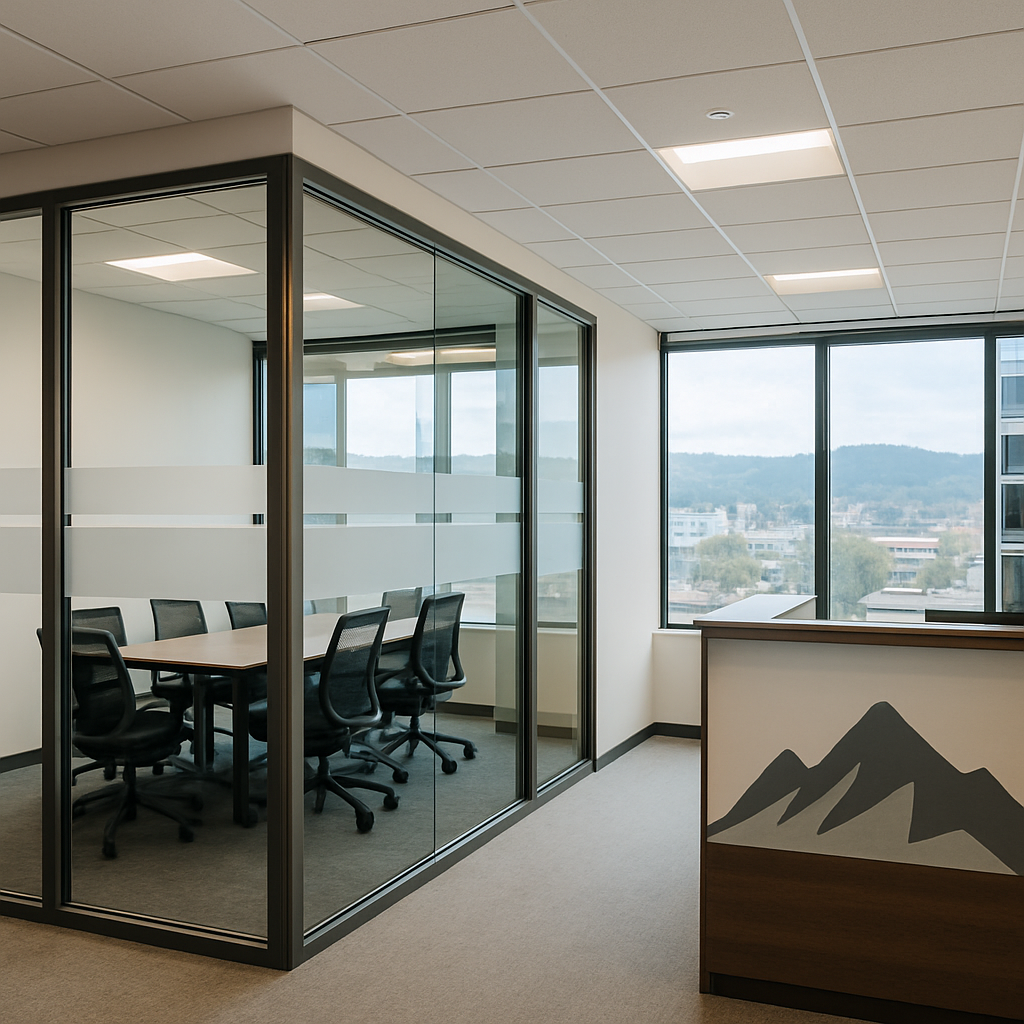
Design-Forward Ideas That Look Great
Concrete point: Use privacy film to compose the room visually, not to hide the glass. The best office privacy window film ideas treat glass as an architectural surface – you control sight lines, daylight, and brand presence with pattern, scale, and placement instead of blanketing windows with opaque material.
Practical design patterns that work in real offices
- Frosted bands and sightline channels: Place 18 to 30 inch opaque or frosted bands at seated eye level to block direct view across conference rooms while keeping daylight above and below.
- Gradient frosting: Use a vertical or horizontal gradient to soften glare near workstations while maintaining a view out. Gradients reduce the sealed feeling that full frosting creates.
- Large-scale geometric blocks: Swap tiny repeating motifs for a few large frosted blocks. At office viewing distances small patterns look busy and cheap; large shapes read as intentional and upscale.
- Custom printed logo panels: Integrate branding at reception or large conference walls using subtle, low-opacity printing to avoid overpowering daylight.
- Negative space and transparent strips: Keep narrow clear strips aligned to circulation paths so people can see motion without exposing seated workers to distraction.
Tradeoff to plan for: Heavier patterns increase visual privacy but cut transmitted daylight and can alter perceived color of interior finishes. If the goal is privacy plus daylight, prefer partial coverage, lighter frosts, or printed designs that use translucency rather than solid pigment.
Practical judgment: Many clients instinctively pick full frosted walls for confidentiality. In practice that hurts wayfinding and makes small offices feel claustrophobic. Partial treatments preserve daylight and reduce distraction while still offering confidentiality for most meeting types.
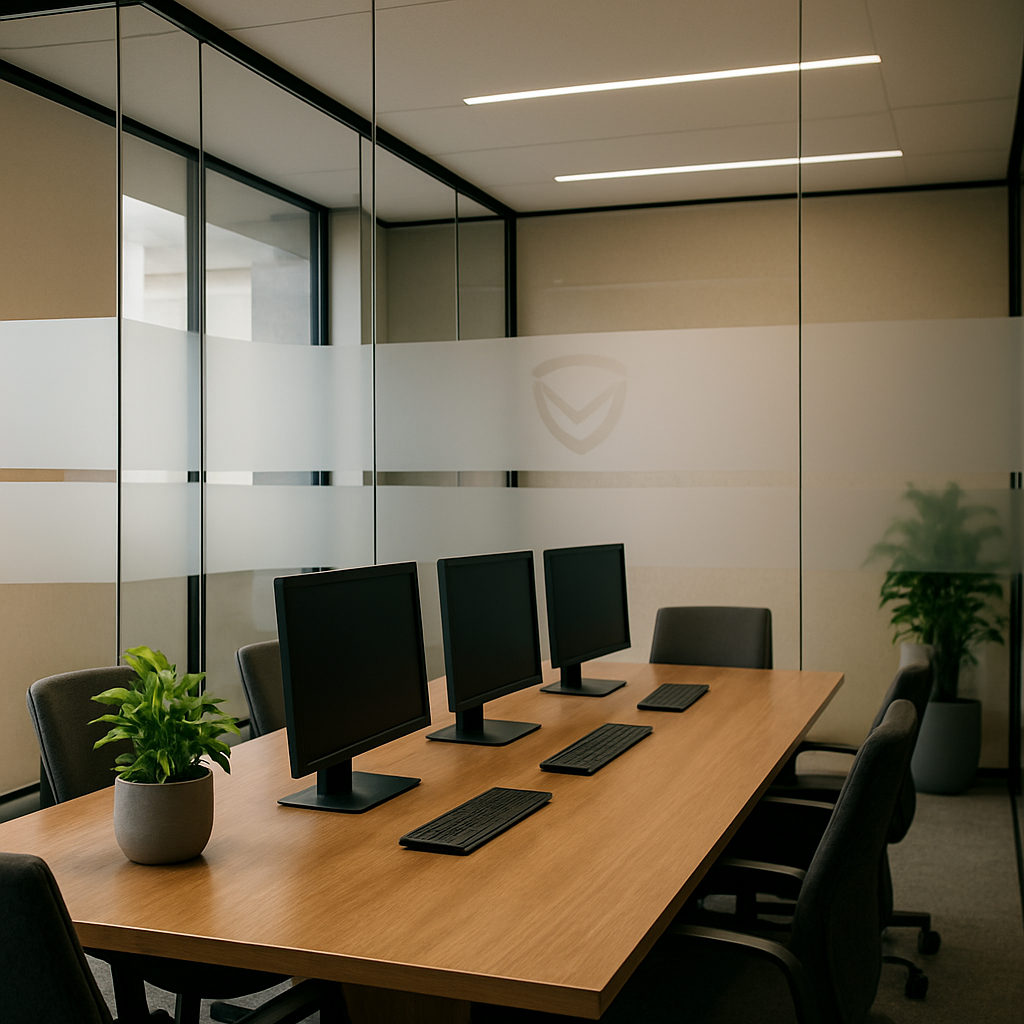
Concrete Example: In a downtown Portland marketing firm we used two 12 inch frosted bands at head height across a glass-walled meeting room, with a 40 percent opacity custom logo centered between bands. The room stayed bright, screens were glare free, and employees reported fewer interruptions during focused work. The client kept the logo subtle to avoid color casts on furniture.
A real limitation to budget-conscious projects: Custom printed films and metallic reflective films are noticeably more expensive and sometimes require longer lead times. If you need a fast, affordable refresh, patterned adhesive window film or neutral frosts deliver most of the benefit at a fraction of the cost.
Pair film choices with furniture, plants, and lighting for a cohesive look. For example, pair warm toned wood with soft frosts and matte finishes, or match high contrast logo prints with dark metal frames and low glare task lighting. Consider night time privacy when using reflective films; layer with interior shades for after hours.
If you want visuals and reassurance before buying, see practical examples and local project ideas at Privacy Film for Office Glass: Affordable Ways to Improve Focus and Brand Privacy. Next consideration: request a site mockup to verify scale and translucency before finalizing a design.
Functional Tradeoffs and Performance Considerations
Straight truth: every film choice is a set of compromises. Pick a film for maximum visual privacy and you often sacrifice daylight, view, or cost efficiency; pick one for solar control and you may create nighttime visibility problems or change the appearance of interior finishes.
How the most common tradeoffs play out in real offices
Opacity versus daylight and mental comfort: High-opacity films and blackout options remove distraction and guarantee confidentiality, but they also flatten daylighting and make spaces feel smaller. For open-plan areas where perceived openness supports collaboration, partial privacy such as frosted bands or patterned films usually produces better productivity outcomes than full opacity.
Solar control versus nighttime privacy: Reflective and metallic solar films cut heat and glare effectively and can lower cooling load, as Energy Department guidance explains. The downside is straightforward – when interior lights are brighter than exterior light, reflective films can behave like mirrors from outside and expose activities. Plan for layered solutions – interior shades or lower-reflectance decorative films – when spaces are occupied after dark.
- Acoustics are not solved by film: Glass privacy films do not add meaningful soundproofing. If speech privacy is a hard requirement, specify laminated or thicker insulated glazing or pair film with acoustic treatments.
- Custom printing adds cost and lead time: Branded or multicolor printed films look impressive but require template approvals and longer production times. Factor this into project schedules.
- Smart switchable film is a specification-level decision: It offers instant privacy without blocking daylight, but it requires wiring, has higher failure risk over time, and significantly raises replacement cost.
Practical insight: evaluate films against how the space is used hour by hour, not only during peak daylight. Offices with evening events or later cleaning shifts need different choices than 9-to-5 suites because of the reversed visibility dynamic at night.
Concrete example
Concrete Example: A downtown Portland law firm had confidential meetings in a glass-walled conference room directly facing a well-lit street. They chose frosted bands at eye height plus low-reflectance solar film on the lower glazing. The result preserved daylight and outward sight lines during the day, reduced screen glare, and avoided the mirror-effect that would have revealed interiors at night. For after-hours events the firm keeps a motorized roller shade available for complete blackout.
Judgment that matters: installers and decision makers often underweight operational patterns and overvalue single-number specs. Visible opacity percent or SHGC rating alone does not predict how occupants will experience privacy or comfort. Site context, interior lighting control, and hourly use patterns determine whether a film will succeed.
What to ask your provider next: request a site assessment that includes a simple light path sketch, an estimate of daytime versus nighttime visibility, and a warranty summary. If you want examples, see a local case study on Privacy Film for Office Glass.
Installation, Maintenance, Costs, and Warranty
Professional installation matters more than price. For commercial glass the installation method determines whether the film looks seamless, lasts a decade, and keeps manufacturer warranty coverage. Cutting corners on install or using consumer-grade adhesive films is the most common cause of visible defects, bubbling, edge lift, and early failure.
What to expect during installation
Typical timeline and process. A mid sized office job starts with a site assessment where a technician documents glass type, frame clearances, and exposure. After product selection you should expect a 1 to 3 day install window for a single conference room wall or small suite and 1 to 5 business days for larger projects, depending on square footage and custom print work.
- Site visit: light study, glass measurements, and a check for tempered or sealed IGU units that need special products.
- Preparation: remove old film if present, mask frames, and confirm edge treatments to prevent peeling.
- Install day: crews work zone by zone; professional teams can film a typical 8 by 10 conference wall in 3 to 6 hours.
- Cure time: wait at least 30 days before aggressive cleaning on some adhesive films to allow proper bonding.
Tradeoff to plan around. Scheduling after hours reduces disruption but adds labor premium. Also expect longer lead times if you choose custom printed film or switchable PDLC film because of manufacturing and electrical integration.
Maintenance, cleaning, and realistic longevity
Routine care is simple but specific. Use a soft cloth or squeegee and a mild soapy water solution. Avoid ammonia based cleaners and abrasive pads which strip protective layers and attack adhesives. Clean monthly in high traffic zones; quarterly is usually enough elsewhere.
- Do not use razor blades or abrasive scrapers on decorative surfaces.
- Edge care: inspect seal edges annually for lifting; small edge lifts caught early are inexpensive to repair.
- Removable films last less and will show edge wear sooner; choose permanent commercial films for high use areas.
What commonly gets misunderstood. People assume all films are interchangeable. In practice glass type, exposure, and whether glass is tempered or part of an insulated unit change product choice. The wrong film on an IGU can increase thermal stress and, rarely, cause glass breakage. A competent installer evaluates this on site.
| Film Type | Installed cost range per sq ft | Typical warranty (manufacturer) |
|---|---|---|
| Frosted/etched decorative | $8 to $20 | 5 to 15 years |
| Solar control reflective or low E | $10 to $22 | 10 to 15 years |
| Custom printed decorative | $20 to $40+ | 5 to 10 years |
| Switchable PDLC smart film | $60 to $150+ | 5 to 10 years |
| Blackout/opaque | $12 to $30 | 5 to 10 years |
Concrete Example: A downtown Portland law firm replaced a 12 foot glass conference wall with frosted band film. The crew completed removal of old film and install in one business day, the job was about 96 square feet, and the installed cost fell near the mid range because the pattern was standard, not custom. The firm received a 10 year manufacturer warranty and a 2 year installer workmanship warranty.
Warranty and questions to demand answers to. Ask whether the warranty covers adhesive failure, bubbling, discoloration, and delamination and whether it requires professional removal for claim validity. Also verify electrical and building code considerations for smart films. Membership in industry groups like the International Window Film Association signals the installer follows recommended practices; see IWFA benefits of window film for context.
Practical decision point: If you need branded or custom patterns, budget for longer lead time and higher per square foot costs. If your priority is long term performance and minimal disruption choose a reputable local installer and schedule work in zones or after hours.
Local Office Use Cases and Example Applications
Practical point: pick the film to solve the specific problem you see on-site, not the prettiest sample on a swatch card. Different spaces in the same office usually need different films — one conference room may need full visual block and brand printing, while the adjacent open-plan area needs low-opacity screening to reduce distraction but keep daylight.
Downtown Portland law offices — confidentiality with daylight
Concrete example: a mid-size law firm near the Portland waterfront replaced full-height blinds with 30 percent frosted bands on conference room glass and a fully frosted door. The result kept natural light flowing into the suite while eliminating sightlines during client meetings and reducing the complaints about slamming blinds during video calls.
Tradeoff to note: patterned frosted bands preserve daylight but do not stop views from extreme angles; if absolute confidentiality is required use full frosted panels or add a blackout film on the door only.
Co-working spaces in Salem and Eugene — flexible, reconfigurable privacy
Use case: coworking operators often need temporary quiet zones and phone booths without building new walls. Gradient frosted films, patterned bands, or removable adhesive films create privacy pockets that can be retasked as membership needs change.
Limitation: film does not add meaningful sound isolation. In practice these venues pair decorative film with soft furniture, acoustic pods, or ceiling baffles to get both visual and audible privacy.
Medical and dental suites in Bend — strict sightlines and durable finishes
Practical recommendation: use high-opacity frosted or opaque films on exam room doors and windows, plus UV-protective clear films on perimeter glazing to protect furnishings. Choose films rated for frequent cleaning with hospital-grade disinfectants to avoid adhesive failure.
Real-world caution: plain decorative film can delaminate if exposed to harsh cleaners; insist on manufacturer chemical-compatibility specifications before installation.
Open-plan tech offices — targeted screening and solar control
Application: install low-opacity frosted strips or geometric patterns on internal partitions to break sightlines at seated eye level, and use reflective or low-e solar-control films on south- and west-facing perimeter glass to cut glare on monitors and reduce cooling load.
Judgment: start with perimeter glazing when glare is the priority. In my experience perimeter solar films deliver the most measurable comfort improvement; decorative partition films are a close second for reducing visual distraction.
- Leased-space constraint: prefer removable or low-residue films when you need to return space to a landlord.
- Historic buildings: confirm local design or landmark rules before using reflective films on exteriors.
- Branding tradeoff: custom-printed films look strong in receptions but reduce daylight and are harder to retask than neutral patterns.
- Local testing: request on-site mockups during daylight so you can see the film at different times; this beats relying on a photo or sample strip.
Next consideration: before you specify, confirm landlord approvals and cleaning protocols — those practical constraints often decide whether removable films or permanent installations make sense for your local office.
How to Select a Provider and What to Ask Before You Buy
Start by treating the provider as the product. In commercial projects the installation quality, product sourcing, and service policies determine whether your film looks professional and lasts. Low bids often cut corners on surface prep, edge sealing, and manufacturer approved adhesives which creates visible failure modes within a year.
A practical vendor checklist
- Manufacturer and product name: Ask which manufacturer and film line they plan to use and request a spec sheet or manufacturer brochure. If they cannot name a product, treat that as a red flag.
- Warranty details: Get the warranty in writing and confirm what it covers – delamination, bubbling, fading, adhesive failure – and the remedy timeline.
- Mockup and sample availability: Request a small on glass mockup or removable sample so you can judge opacity, color, and daylight performance in your actual space.
- Removal policy and edge treatments: Ask how they remove old film, how they finish film edges, and whether any silicone or edge seal will be applied; removal cost should be clear up front.
- Insurance and certifications: Confirm general liability and workers compensation coverage and ask about membership or training from the International Window Film Association. See IWFA for standards.
- Local references and similar projects: Request project references in Portland, Salem, Eugene, or Bend for the same film type and comparable glass conditions.
Price is not the only quality signal. A significantly cheaper quote frequently omits site prep and uses lower grade adhesives that void manufacturer warranties. Expect professional bids to include pre-cleaning, small test patches, and labor for edge trimming; these steps matter for aesthetics and longevity.
What a credible site visit should include
- Light and glare assessment: The installer should observe the space at the time of day when glare is worst and recommend film gradings that preserve daylight while blocking sight lines.
- On glass samples or visual mockups: Prefer live mockups on a section of glass rather than only digital images so you can see real daylighting and interior sight lines.
- Surface and glass inspection: They should inspect for old coatings, etching, or tempered glass markings that affect adhesion and note any fire or safety code constraints.
- Timeline and disruption plan: Get a phased schedule and ask whether work can be done after hours to avoid business disruption.
- Removal and future service plan: Confirm how they will remove the film later and whether they offer periodic checks or rework if bubbles or peeling appear.
A real world use case: A downtown Portland law firm needed confidentiality without closing their glass conference room. The chosen provider performed an on site mockup of a frosted band, verified glare reduction in late afternoon light, scheduled overnight installation to avoid client meetings, and supplied a two year workmanship warranty. The result preserved daylight while preventing passersby from seeing meeting attendees.
Practical judgment: For mid size and larger commercial jobs, professional installation is worth the extra cost because it preserves warranties and avoids the common failures seen in DIY or cut-rate jobs.
If you want a deeper primer on how privacy film is used in offices and examples you can show a provider, see our guide Privacy Film for Office Glass: Affordable Ways to Improve Focus and Brand Privacy.
