
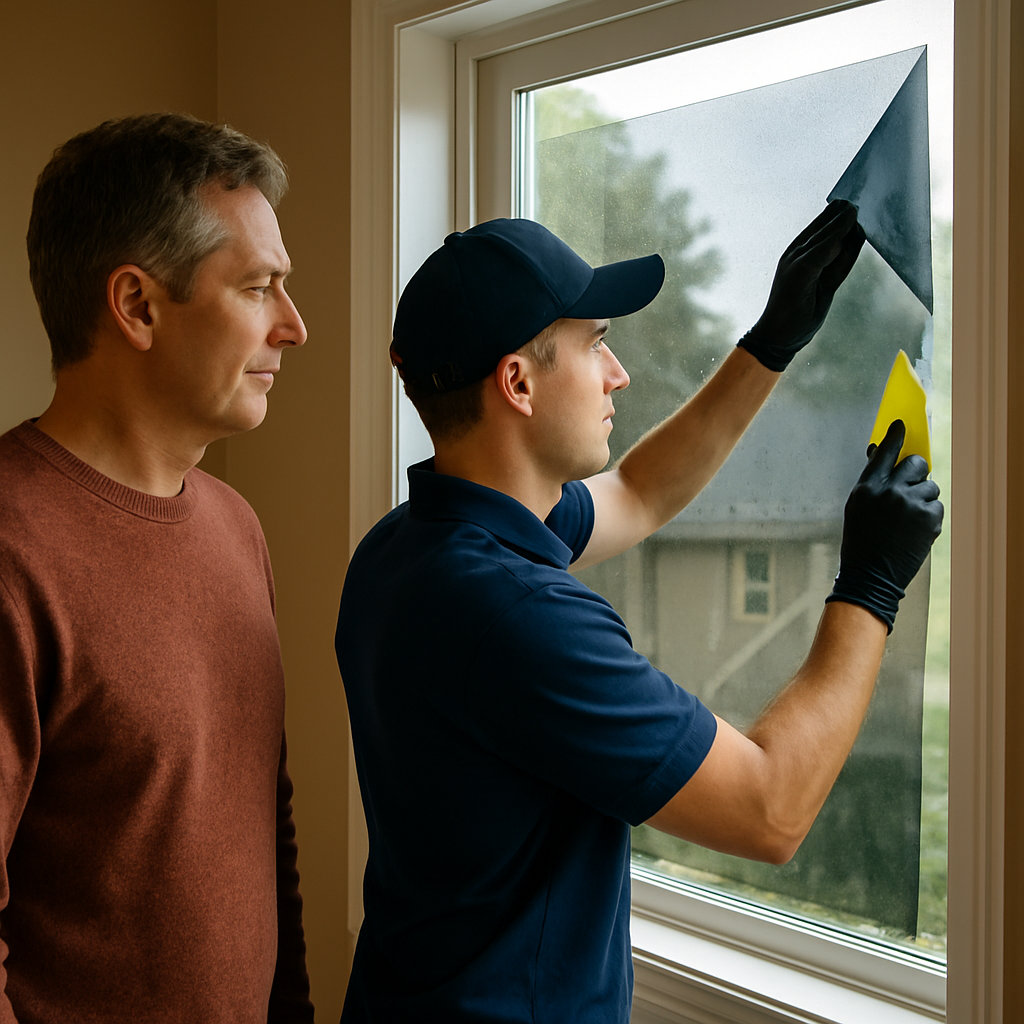
Albany Homeowners: When Window Tinting Makes Sense and What to Expect
Albany window tinting can be a straightforward retrofit that cuts afternoon heat, reduces glare on TVs and home office screens, and blocks UV that fades floors and upholstery. This article explains which film types work best in Pacific Northwest conditions, how to read VLT, SHGC, and U-factor numbers, and what a professional installation looks like so you can compare quotes with confidence. You will also get Albany-specific guidance on HOA and historic district rules, expected timelines and warranties, and a practical checklist for vetting local installers.
Why Albany homeowners consider window tinting
Practical point: Albany window tinting is most commonly chosen to control afternoon solar gain and glare on south and west facing rooms rather than to chase large heating bill reductions. The Willamette Valley sees strong low-angle sun in late spring and summer afternoons that heats living rooms and home offices; a properly selected film reduces that peak discomfort without requiring window replacement.
Everyday problems solved: Glare on TV and computer screens, hot spots in open-plan living spaces, UV fading on floors and upholstery, and street-level privacy for bungalows and duplexes. For homeowners who already manage insulation and draft issues, film is a low-disruption retrofit that targets the specific problem of solar-driven heat and light.
When tinting makes sense and when it does not
Key tradeoff: Film reduces solar heat gain and UV at a fraction of the cost of window replacement, but it does not fix thermal loss from failing seals or single pane windows. If windows have fogged insulating glass units or major drafts, replacement is the right first step. If the problem is sun driven overheating or fading, spectrally selective films deliver the best balance between visible light and heat rejection.
- Good candidates: West facing living rooms, home offices with monitor glare, sunlit dining rooms with faded wood floors
- Poor candidates: Windows with failed seals, severe frame rot, or planned whole-window upgrades to meet energy code
- Local constraints: Homes in Albany historic districts or HOAs should verify approval before installing reflective or dark films
Concrete example: A two-story Albany bungalow had its west porch converted to a family room where afternoon sun pushed surface temperatures and created glare on a TV. The homeowner chose a spectrally selective film similar to Llumar SelectPro or 3M Night Vision to keep visible light high while cutting solar heat. After installation the room stayed noticeably cooler by late afternoon and glare fell enough that they removed a heavy blackout curtain they had been using.
Judgment that matters: In practice the biggest mistakes are product mismatch and ignoring aesthetics or local rules. Cheap dark films look fine at first but delaminate sooner and make rooms feel dim. Reflective films can trigger HOA pushback in street visible facades. Spend more on certified, documented films and insist on on-site swatches and performance charts during the estimate.
Next consideration: When requesting quotes for window film installation Albany homeowners should ask for manufacturer data sheets, sample swatches in their actual windows, and references for nearby installations. For a local starting point see Tinting Oregon service details and vetting advice at Tinting Oregon.

How window film fixes specific problems and which results to expect
Direct fix for hot rooms: Window film reduces solar heat gain by cutting the portion of sunlight that becomes heat through glass. Spectrally selective films let visible light through while rejecting infrared energy, so a west-facing living room will feel noticeably cooler in the afternoon without becoming a cave. For Albany homeowners, that difference is usually experienced as lower surface temperatures on floors and furniture and fewer late-afternoon spikes that force AC use.
Glare and visual comfort: Films that keep high visible light transmission (VLT) but lower solar heat gain coefficient (SHGC) tame reflections on TVs and laptop screens while preserving the view. The tradeoff is real: cheaper reflective films reject heat well but create a mirrored exterior look that can trigger HOA or historic district complaints. If you care about daylight, ask for performance charts for VLT and SHGC rather than choosing by darkness alone.
UV protection and fading prevention: Most quality films block up to 99 percent of UV, which is the primary cause of fabric and wood fading. That is one of the few outcomes you can reasonably expect to be consistent across products. See manufacturer data at 3M window films and IWFA guidance at windowfilm.org.
Privacy and light management: Decorative frosts and etched films give permanent privacy without darkening, while tinted or reflective films provide daytime privacy but may reverse at night when interior lights are on. Practical insight – combine film with simple interior shades for reliable night privacy rather than relying on reflective films alone.
Safety and security: Safety films glue glass fragments together and slow forced entry or storm shattering. Expect added glass retention and lower shard risk, not bulletproof protection. For homes worried about wind-driven debris or break-ins, choose certified thicker safety films and request manufacturer test data.
Concrete example
Concrete Example: A West Albany bungalow with a sunlit home office swapped standard glass for a spectrally selective film similar to Llumar SelectPro. The homeowner reported reduced screen glare, a cooler desk area in the afternoons, and no noticeable loss of daylight — they kept their blinds open during work hours and pushed AC setpoints higher on warm days.
- Expected results: Reduced afternoon heat in sun-exposed rooms, noticeable glare reduction for screens, and furniture UV protection.
- Practical limitation: Darker films give stronger heat rejection but reduce daylight and can cause HOA or historic review issues in Albany.
- Installation caveat: Always inspect seals and frame condition first – films accelerate the visibility of failed edge seals in double-pane units.
Types of residential window films and real product examples
Clear fact: different films solve different problems. Pick by the metric that matters for your room – VLT for daylight and view, SHGC for solar heat, and UV reduction for fading protection.
Major film categories and what they actually do
| Film type | Typical VLT range | Typical SHGC change | Best use case | Concrete example |
|---|---|---|---|---|
| Spectrally selective | 40-70% | SHGC down 30-50% | West or south living rooms where view and daylight matter | Llumar SelectPro, 3M Night Vision |
| Reflective/metalized | 10-50% | SHGC down 40-70% | Maximum afternoon heat rejection on large untreated glass | SunTek High Performance |
| Low-e / insulating film | 60-80% | Primary impact on U-factor rather than SHGC | Improve winter performance on single or older double-pane units | Manufacturer low-e retrofit films |
| Security and safety | Varies | Little effect on SHGC unless tinted | Storm prone or ground-floor safety and glass retention | Eastman Armorcoat safety films |
| Decorative / privacy | 10-90% | SHGC varies by opacity | Bathrooms, entry sidelites, or HOA-restricted facades | Llumar decorative films |
Practical tradeoff: reflective films reject the most heat but also reduce outward visibility and often trigger HOA or historic district pushback. In Albany, where summers are mild, spectrally selective films usually give the better user experience – they lower heat without making rooms feel dim or reflective from the street.
Product examples and what their numbers mean in practice
- 3M Night Vision: higher
VLTwith good SHGC reduction, best where preserving natural color and view is important – see full specs at 3M window films. - Llumar SelectPro: spectrally selective series that balances daylight and heat control; useful for west-facing living rooms and home offices – see Llumar residential.
- SunTek High Performance: metalized option for aggressive heat rejection when view and reflectivity are secondary.
- Eastman Armorcoat security films: choose thickness ratings 8 mil to 16 mil for glass retention and shatter resistance in ground-floor windows.
- Low-e retrofit films: modest winter gains for single-pane or failed-seal situations but will not replace the R-value of new insulated glass.
Limitation to watch: if window seals are failing or you have heavy condensation, film can make the fogging more visible and will not fix thermal failure. Replace or repair glazing before applying film when the IGU is compromised.
Concrete Example: A homeowner with a west-facing living room in Albany replaced fading drapes and then installed Llumar SelectPro 50. The room kept most daylight (around 50-60% VLT) while afternoon surface temperatures dropped noticeably – manufacturer charts showed SHGC falling from roughly 0.60 to about 0.35, which reduced uncomfortable glare without darkening the space.
Before you decide, have an installer perform a quick VLT and orientation audit and request the exact SHGC and UV numbers for the film you are quoted. If you want a deeper read on performance categories and standards, consult the International Window Film Association at IWFA technical resources.
What to expect from a Tinting Oregon consultation and installation
A meaningful consult starts on site, not over the phone. Expect a technician to measure glazing, record orientation and shading, and bring physical swatches so you can judge visible light and appearance in place.
Before the visit and what the crew will do
- Pre-visit checklist: clear access to windows, note the rooms that overheat or have glare, and flag any HOA or historic review pending approval
- Measurements and inspection: glass type, frame condition, seal integrity, and any existing film or residue
- Performance modeling: technician will use manufacturer charts to show expected VLT and SHGC changes for candidate films and place swatches on the actual glass
- Written estimate: itemized line items for film model, VLT number, labor, warranty, and estimated install time
Practical tradeoff: mobile installations are convenient for occupied homes, but large multiwindow jobs sometimes benefit from shop conditions. If several windows must be replaced or surfaces need heavy prep, a shop job reduces risk of dust defects and speeds turnaround.
The installation day and timeline
- Site protection and camera of existing glass for reference – floors and trim are covered
- Onsite measuring and patterning – film is cut to fit each lite
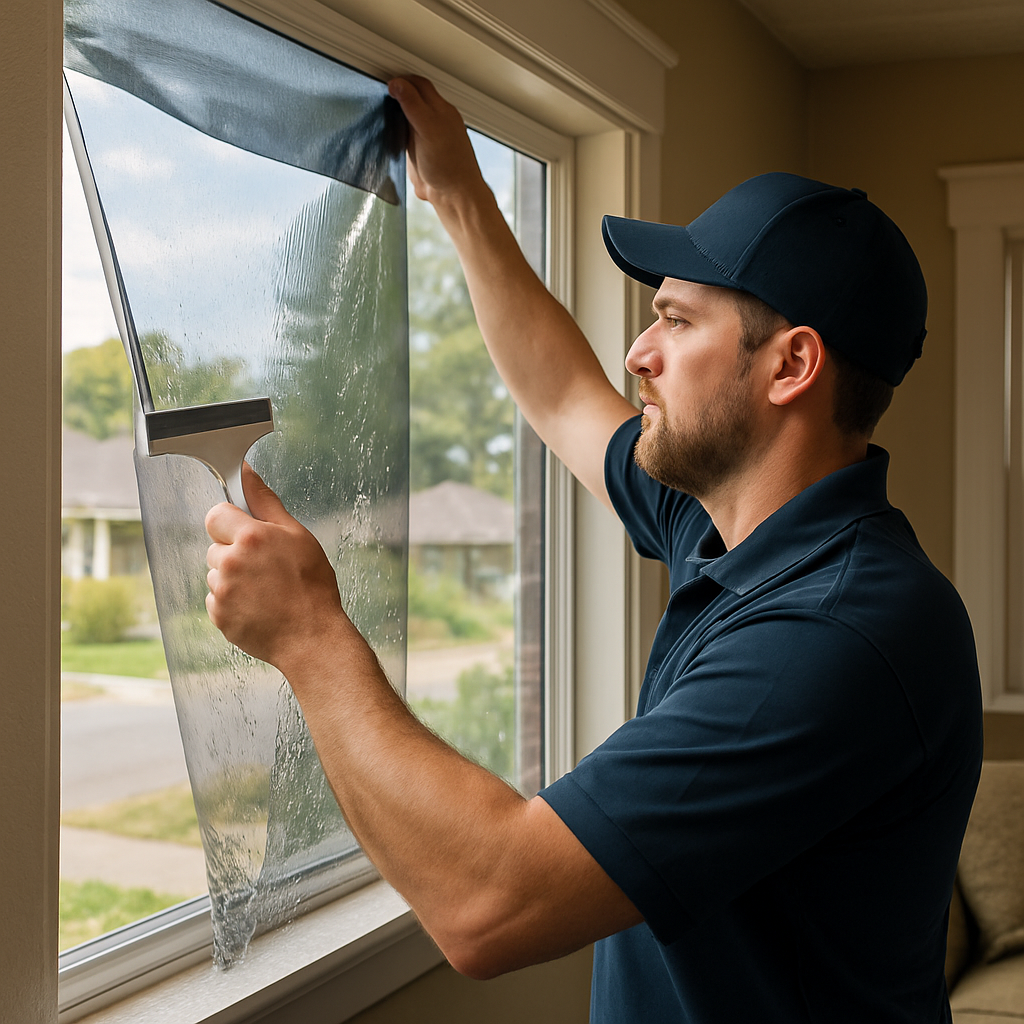
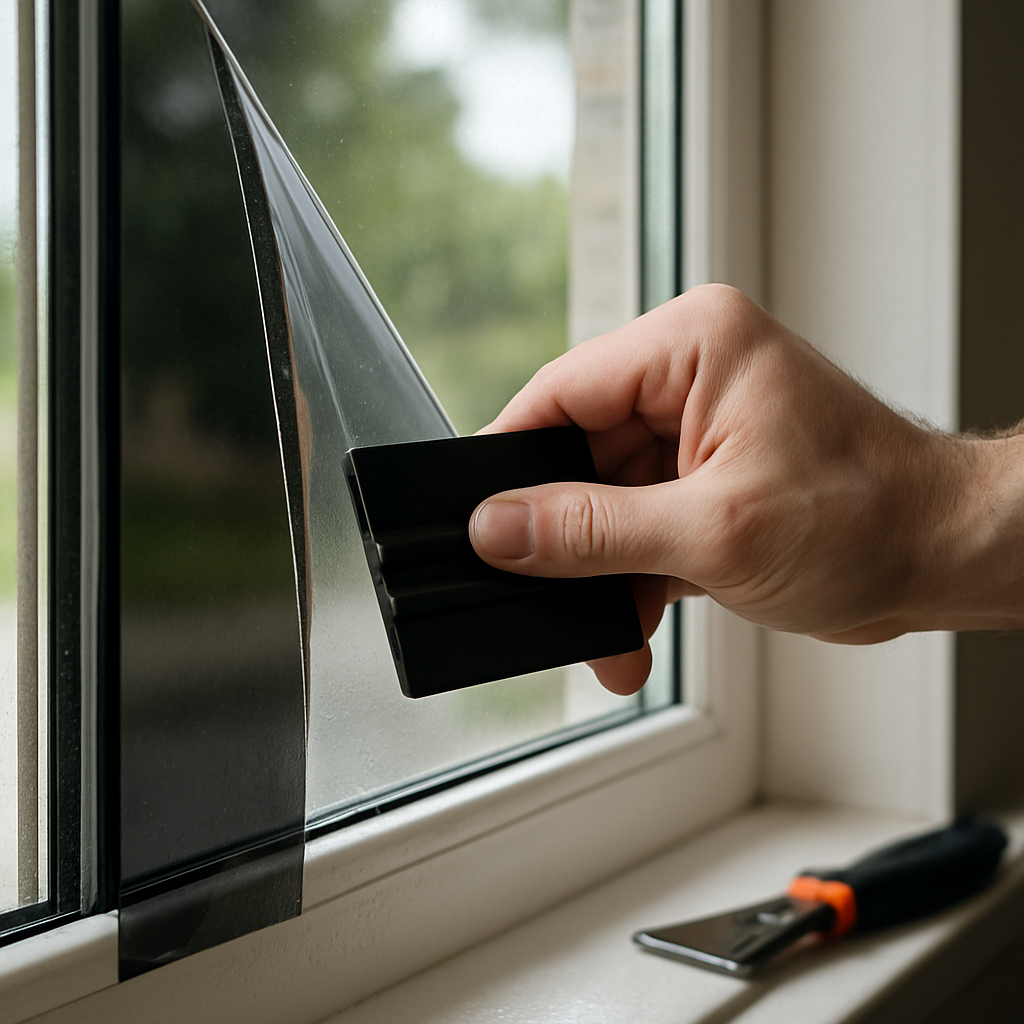
- Wet application and squeegee work – installers remove trapped water and level the film
- Edge finishing – interior films may be edge sealed where appropriate; security films get different attachment methods
- Curing and handover – visible drying in 24 to 72 hours; avoid cleaning for 30 days
Local limitation to plan for: Pacific Northwest humidity slows curing and can keep newly installed film wetter looking for longer. Expect 48 to 72 hours for initial drying and up to 30 days before you treat the film like normal glass.
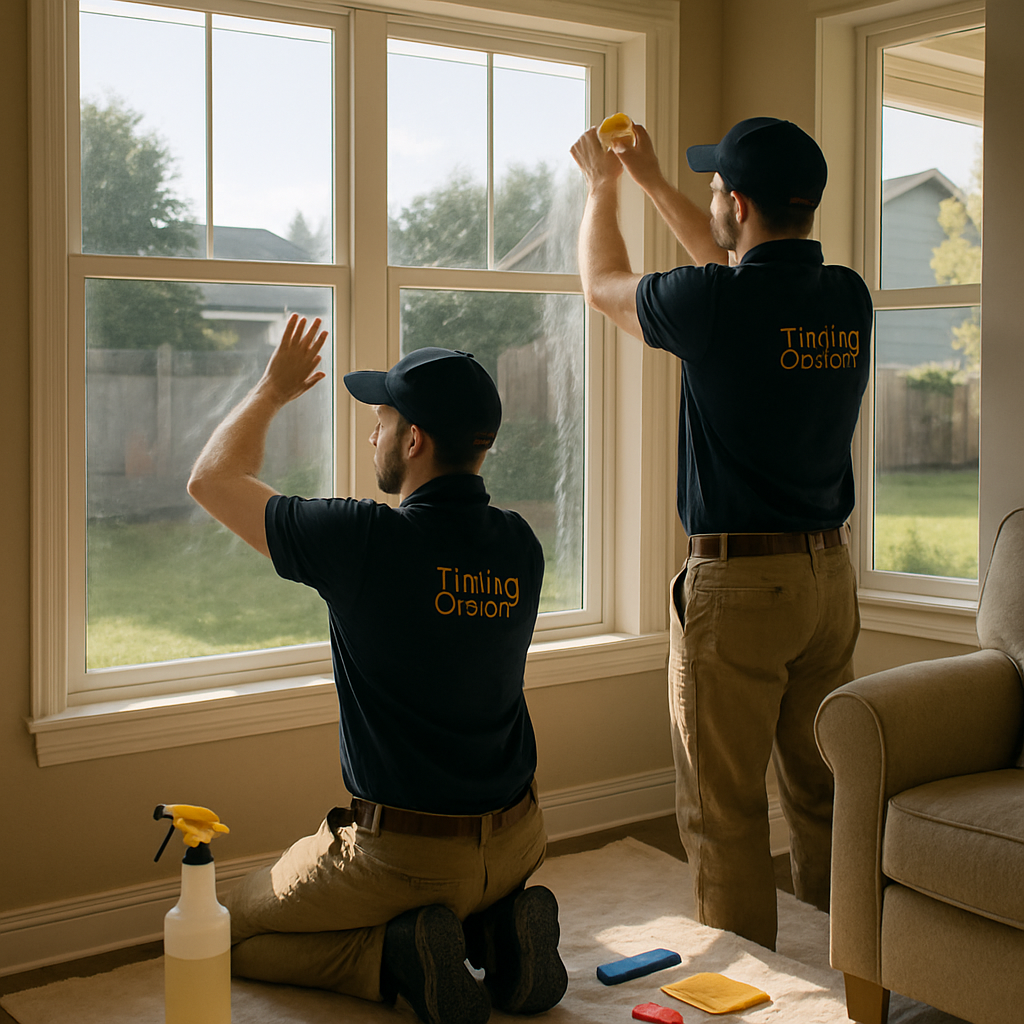
Concrete example: For a west facing living room with three large panes, a Tinting Oregon technician will place Llumar or 3M swatches on the glass, show charts that translate manufacturer SHGC numbers to relative heat reduction, recommend a spectrally selective film with 50 to 60 percent VLT to keep the view, and schedule two installers for a 4 to 6 hour job. They will leave a printed warranty, the data sheet for the film, and photos of the finished work.
What to demand in writing: the film brand and model, VLT and SHGC values, installer certification, length and type of warranty, and whether removal of old film is included. Low bids that omit a manufacturer data sheet or a written warranty are a red flag.
If you want the technical background for performance claims, ask the installer for the IWFA technical summary or the manufacturer technical data sheet such as those from 3M or Llumar.
Cost considerations, estimating value, and potential incentives
Straight to the point: expect wide price variation tied to film grade, glass area, and install quality. Low-end dyed films run in the low single digits per square foot; good spectrally selective or ceramic films are commonly in the mid-teens per square foot installed; security and laminated films push higher.
How installers price jobs
What you will see on a quote: honest quotes list three things separately – film model and performance data, labor and access charges, and warranty details. If an estimate bundles everything into a single line item, push for an itemized version.
- Film grade and model: ask for manufacturer data sheets from 3M or Llumar to compare VLT and SHGC directly; see 3M window films and Llumar residential films.
- Labor and access: multi-pane removal, scaffolding, or specialty cuts increase labor costs; mobile installs may be cheaper but confirm installer certification.
- Warranty and expected life: manufacturer warranty length and transferability matter; cheap films often carry short or no warranty.
Practical tradeoff: cheaper film saves money up front but degrades optics and adhesion faster in damp climates. In Albany the marginal cost of a higher-grade spectrally selective film usually pays off in better visible light with similar heat rejection and a longer usable life.
Estimating value and realistic payback
Value is local and targeted, not blanket: in Oregon you rarely get a fast energy-bill payback from whole-house film alone. The real value is targeted: west or south facing rooms, home offices with glare, and areas with fading furniture.
Concrete example: a west-facing living room with 200 square feet of glass. Choosing a mid-grade spectrally selective film at $12 per sq ft installed totals about $2,400. You may not recoup that on energy bills quickly, but you will cut afternoon peak heat, reduce glare for screens, and block up to 99 percent of UV that causes fading.
Judgment call homeowners miss: treat window film as a comfort and preservation upgrade first, an energy retrofit second. If the house has failing seals or very poor windows, replacement yields bigger heating season benefits than film.
Where to check for incentives
Incentives are limited but check anyway: Energy Trust of Oregon focuses on whole-home efficiency programs and does not routinely rebate stand-alone film installs, but film can contribute to a package that qualifies. Start at Energy Trust of Oregon and ask your installer to confirm current programs.
- Ask for manufacturer datasheets and a performance comparison so you can compare VLT, SHGC, and UV rejection across quotes.
- Request local references and photos of finished work for the same film model in similar orientations.
- Get warranty in writing including who handles removal or failure and whether labor is covered.
Maintenance, expected lifespan, and common issues in Oregon climates
Key point: In the Pacific Northwest the two maintenance variables that matter are moisture and proper curing. Albany homes do not bake in sun like Arizona, but high humidity, frequent rain, and temperature swings increase the chance of edge lift, surface spotting, and slower adhesive curing compared with dry climates.
Cleaning routine: Use plain water or a mild dish soap solution and a soft microfiber cloth or squeegee. Avoid ammonia, abrasive pads, and razor blades which damage protective topcoats and accelerate visible wear. Wait for the installer recommended cure window before routine cleaning; that window is often 7 to 30 days depending on film and season.
- Do: Blot spills, rinse with fresh water after hard water exposure, and dry with a microfiber towel.
- Do not: Use window cleaners with ammonia or rubbing alcohol during the first month.
- Inspect: Check edges and corners monthly during the first winter for signs of moisture ingress or edge lift.
Expected lifespan: Quality residential films from 3M or Llumar typically last 10 to 15 years in real-world Oregon conditions when installed correctly. Tradeoff: higher-performance ceramic or spectrally selective films cost more up front but tend to retain optical clarity and adhesion longer than basic dyed or metallic films.
Common failures and what they tell you: Bubbling or clear spots usually mean the film did not cure or the glass was contaminated during installation. Edge peeling points to poor edge sealing or persistent moisture at the sash. Scratches and wear are often surface damage from improper cleaners or mechanical contact rather than adhesive failure.
Installer response and warranties: Good installers will document preexisting glass issues and include a written warranty that covers adhesive failure and delamination for a specified period. Ask for manufacturer data sheets and proof of installer certification during the estimate process; see our vetting guide at Window Tinting Place Near Me: How to Vet Local Shops and Contractors for details.
Concrete example: A homeowner in west Albany had ceramic film fitted on a sunlit living room in late spring. Installer documented minor fogging on an older insulated unit before starting. The film performed well for three summers, then a lower corner lifted after two unusually wet winters; the installer re-sealed the edge and scheduled a warranty check rather than replacing whole panes.
Judgment you will not get from a salesperson: If insulated glass units show failing seals or visible fogging, film is a temporary fix at best and can hide deeper problems. In those cases budget for IGU replacement first. Film extends glass life in many cases, but it is not a substitute for structurally compromised windows.
Curing, seasonal timing, and moisture control
Seasonal tip: Plan installations for late spring through early fall in Albany when possible. Warmer, drier air shortens cure time and reduces the risk of trapped moisture at edges. If installation must happen in wet months, insist on documented surface prep and longer inspection windows.
If you see bubbling, edge lift, or delamination within the warranty period, document it with photos and contact the installer immediately. Timely action makes warranty work straightforward; waiting often increases repair scope.
Regulations, HOAs, and situations when window tinting is not recommended
Start here: check approvals before buying film. Many Albany homeowners assume residential window film is a simple retrofit, but local planning rules, historic-district guidelines, and HOA covenants can block or limit reflective and low-VLT films. Get written approval when required and treat the approval step as part of the project scope – installers charge for rework and removals when approvals are ignored.
Historic and municipal considerations. Properties in Albany historic districts commonly restrict exterior appearance and mirrored finishes. City planning or the historic preservation commission may require a pre-application review for visible exterior changes. Use technical resources like the International Window Film Association technical resources when preparing materials for a review board to show performance and appearance tradeoffs.
Practical tradeoff to expect. If aesthetics or neighborhood rules are strict, choose spectrally selective films with high visible light transmission rather than dark reflective films. Spectrally selective films give heat and UV control with minimal change to how windows look from the street – they are not as dramatic physically but they are much easier to get approved and work in practice.
Concrete example
Concrete Example: A homeowner in Albanys Monteith Historic District wanted afternoon heat control for a west-facing parlor. The historic commission refused a reflective silver film because it altered exterior appearance. The solution was a high-VLT Llumar SelectPro grade film presented with manufacturer data sheets and a photo mockup. The commission approved the spectrally selective option because the visible appearance stayed within guidelines and the homeowner achieved measurable heat reduction.
- When tinting is not recommended: windows with failed seals or visible delamination – film will hide symptoms temporarily and complicate future glass replacement
- When not suitable: stained, leaded, or decorative glass where adhesion and long-term appearance are unpredictable – consult a glazier for conservation-grade solutions
- Aesthetics-driven restrictions: HOAs or historic districts that ban low-VLT or reflective finishes – plan for higher-VLT spectrally selective films or interior solutions
- Lease or rental properties: if lease language restricts permanent alterations – verify permissions in writing and budget for professional removal on move-out
HOA submission checklist – what to include. Provide film spec sheet (brand, product name), VLT percentage, visible appearance photo or mockup, warranty terms, installer name and certification, and a proposed removal clause if approval is conditional. These items shorten review time and reduce the chance of a denial that forces removal.
