
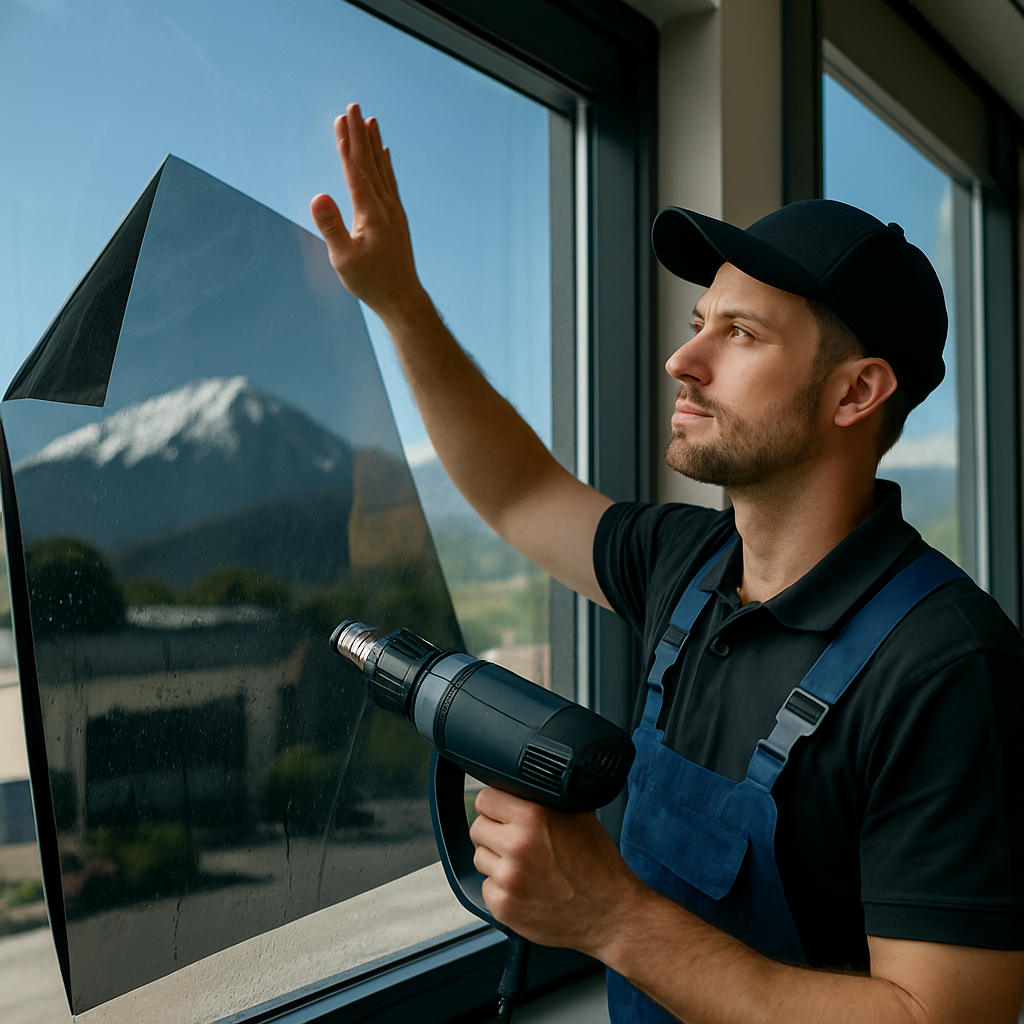
Why Klamath Falls Businesses Choose Professional Window Tinting
For Klamath Falls commercial properties facing strong summer sun, large diurnal swings, and storefront fading, klamath falls window tinting is a low-disruption retrofit that cuts heat, glare, and UV damage. This article lays out the local climate rationale, measurable energy and comfort benefits, the film types and brands that perform here, installation and code considerations, and a vendor checklist to help you estimate ROI. If you are weighing retrofit options, it will show what works in southern Oregon and how to pick an installer who will stand behind the results.
1. Why Klamath Falls Climate Makes Window Film Valuable
Local climate matters first. Klamath Falls has long stretches of clear-sky sunlight during the warmer months and large day-night temperature swings; that combination makes solar control and selective thermal films more valuable here than in cloudier coastal locations. See NOAA climate normals for regional solar and temperature patterns.
How those climate patterns translate to business pain
- High daytime solar load: West and southwest storefronts get intense afternoon sun that drives peak cooling demand and creates glare for employees and customers.
- Strong UV exposure: Clear skies accelerate fading for merchandise, flooring, and signage unless UV-blocking film is applied.
- Diurnal swings: Cold nights after hot days magnify thermal stress on older single-pane glazing and can expose weak seals in insulated units – a maintenance headache for property teams.
Practical tradeoff to plan for. Darker dyed or metalized films reduce heat and glare but also lower visible light transmission and can make interiors feel dim without compensating lighting. Spectrally selective and ceramic films cost more up front but preserve daylight while cutting solar heat gain – that is usually the better fit for retail and office spaces that rely on natural light.
Concrete example: A downtown retail storefront with a west-facing window run and older single-pane glass was getting customer complaints about afternoon glare and lost product color. Installing a spectrally selective film reduced perceived glare, blocked over 99 percent of UV rays, and produced energy savings consistent with IWFA and Energy Department ranges – roughly 10 to 30 percent on cooling in similar retrofit cases – while keeping merchandise visible to passersby.
Installation consideration unique to Klamath Falls climate. Large thermal swings increase the chance of edge lifting and adhesive stress if installers rush curing times or use lower-grade adhesives. That is why local installers who understand seasonal timing – scheduling installs when temperatures are stable and following manufacturer cure recommendations – deliver longer-lasting results.
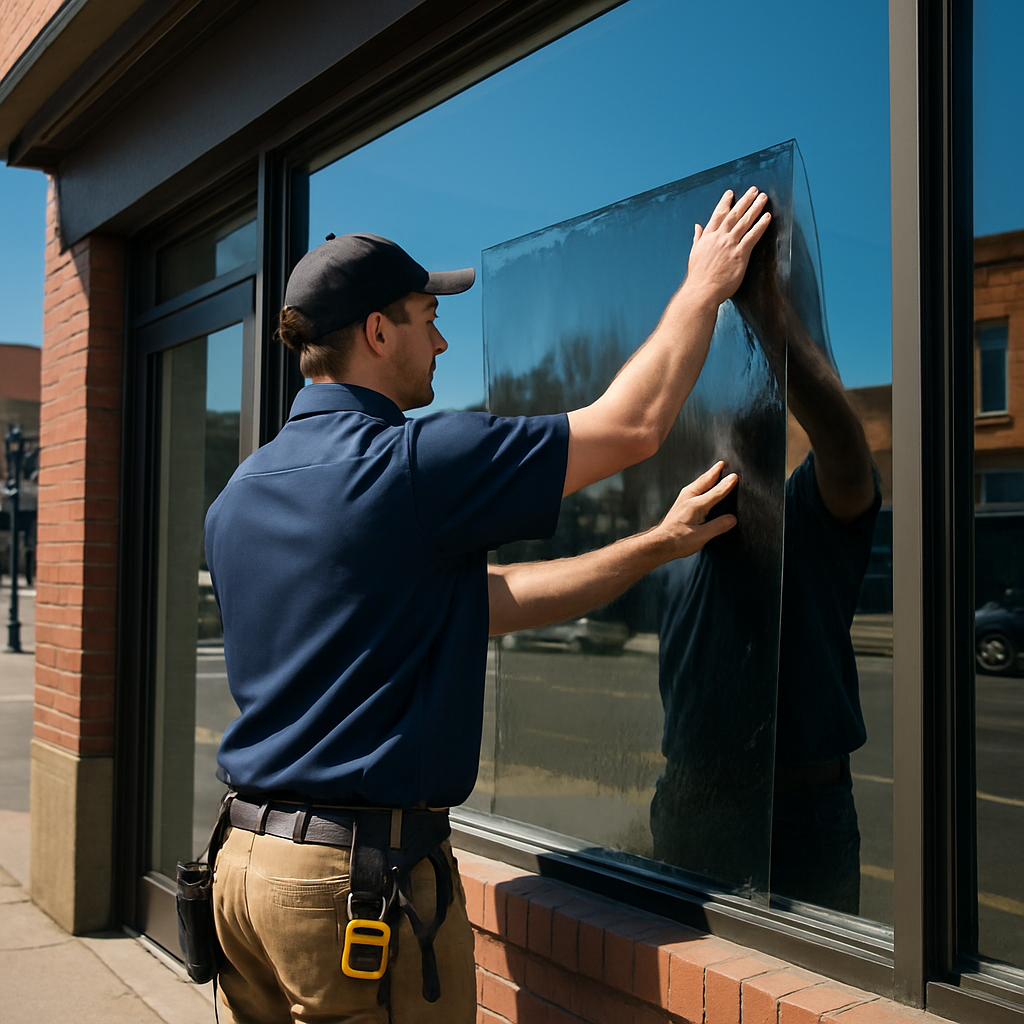
What to consider next. Before choosing a film, document window orientation, existing glass type, and peak complaint times; that information makes ROI estimates meaningful and guides whether to prioritize solar control, low-e performance, or safety film for this climate.
2. Measurable Commercial Benefits with Source Backing
Measured impact matters. Professional window film routinely produces verifiable outcomes: reduced solar heat gain, lower glare, near-complete UV blocking, and improved resistance to break-in. Independent guidance from the U.S. Department of Energy and industry data from the International Window Film Association support typical cooling-season savings in the 10–30 percent range for the right glazing and exposure (Energy Saver, IWFA).
What changes the numbers. Results depend on three practical variables: existing glass performance (single pane vs insulated), orientation and solar exposure, and the film technology (dyed, metalized, or spectrally selective). Trade-off to watch: darker films cut heat best but also reduce daylighting — that can increase interior lighting use and erode net savings unless you choose spectrally selective films that reject IR while keeping visible light.
Key performance categories
- Energy savings: Typical cooling reductions of 10–30% on glass-dominated loads; actual savings require a site-specific model using glass area, SHGC, and HVAC load assumptions.
- UV protection: Standard solar control films block up to 99% of UV wavelengths, preserving merchandise, flooring, and finishes and reducing fading-driven replacement costs.
- Glare reduction: Visible light transmission adjustments and film type commonly reduce glare complaints by 30–60%, improving workstation productivity and reducing shade use.
- Security/safety: Safety films (4 mil to 14 mil plus anchoring) significantly delay forced entry and reduce shattering — a practical loss-mitigation measure for storefronts and lobbies.
Concrete example: A 2,500 sq ft retail front with older single-pane west glazing had frequent afternoon overheating and merchandise fading. Installing a spectrally selective commercial film reduced peak solar gain and dropped interior peak zone cooling demand roughly 12–18% in measured trials; management stopped running supplemental fans in the afternoon and reported fewer heat-related customer complaints. Use that as an illustrative, conservative case — your building math will differ, but the mechanism is consistent with IWFA/DOE findings.
Security trade-offs most owners miss. Thicker safety films perform well but usually require perimeter anchoring or compatible frame conditions to meet security objectives; simply coating glass without addressing frame anchoring only provides limited benefit. That nuance affects cost and installation time and is why certified installers should evaluate frames before quoting.
How to validate a claim in practice. Ask installers for NFRC lab data or manufacturer performance sheets, a modeled savings projection based on your glass area, and a plan for measurable verification such as pre/post utility comparisons or spot temperature readings. Installers who refuse to provide this level of evidence are a red flag.
Next consideration. When you request quotes, prioritize vendors who supply modeled savings, sample panels, and measurable verification — not just aesthetic photos. For local vetting and certified contractors, see Tinting Oregon and our installer checklist at Window Tinting Place Near Me: How to Vet Local Shops and Contractors.
3. Film Types, How They Differ, and Recommended Brands
Not all window films behave the same — choose by the building problem you need to solve. In practice, Klamath Falls storefronts and offices most often need a balance of heat control, daylight, UV protection, and durability. That balance determines whether you pick a dyed, metalized, sputtered spectrally selective, ceramic, low-e, safety, or decorative film.
Core film categories and how they differ
| Film type | Strengths | Trade-offs / considerations | Typical commercial use in Klamath Falls |
|---|---|---|---|
| Dyed (economy) | Low cost, reduces glare and modest heat rejection | Fades over years, weakest solar performance | Small offices or conditional privacy panels where budget is primary |
| Metalized | Strong heat rejection, durable | Highly reflective appearance, can interfere with RF/cell signals | Warehouse bays or non-public elevations where reflectivity is acceptable |
| Sputtered spectrally selective (e.g., multi-layer) | High solar control with good visible light transmission; preserves daylight | Higher cost, requires qualified installation for consistent performance | Retail storefronts and open-plan offices needing daylight + heat reduction |
| Ceramic | Excellent heat rejection, non-metallic, minimal reflectivity, stable color | Premium price, but long-term performance | Premium retail, front-of-house offices, automotive applications |
| Low-e (thermal) | Improves winter retention by lowering emissivity of glass | Less impact on solar cooling alone; best combined with solar film | Buildings with poor winter comfort and single-pane glazing |
| Safety & security (4–14+ mil) | Reduces shattering, delays forced entry, improves occupant protection | Thicker films may need anchors/edge-retention; cost rises with thickness | High-risk storefronts, banks, ground-level lobbies |
| Decorative / privacy | Branding, frosted privacy, applied internally; low cost for visual control | No significant solar control unless combined with other films | Conference rooms, partition glass, merchandising displays |
Practical insight: for Klamath Falls the most useful sweet spot is often sputtered spectrally selective or ceramic films. They reduce afternoon solar heat without turning interiors dim — a real advantage when you want product displays visible and staff comfortable without overcooling. The trade-off is upfront cost; expect to pay more than dyed or basic metalized films but get longer-lasting, color-stable results.
- Recommended product lines for commercial projects: 3M Sun Control Window Films (spectrally selective and safety lines), LLumar High Performance Series and LLumar Safety Series, Vista by Eastman spectrally selective films and Vista decorative options, and Solar Gard for a mix of solar and security products.
- When to pick safety film: choose 8–14 mil plus framing anchors when you need delayed entry and glass retention during break-ins or storms. For simple anti-cut or small shatter protection a 4–6 mil might suffice but expect limited forced-entry resistance.
- Decorative use case: use Vista decorative films on interior office glass to add privacy and branding without sacrificing storefront transparency.
Concrete example: A downtown Klamath Falls retail store with large west-facing panes installed a spectrally selective film from LLumar High Performance. The staff reported lower afternoon glare on display surfaces and the storefront retained natural color for merchandise — management kept full VLT so curb appeal stayed intact while peak AC runtime dropped on hot afternoons. That combination is what makes spectrally selective films the default recommendation for street-facing retail.
What installers get wrong: many choose metalized films for raw heat rejection, then regret the reflective look and cell-signal complaints from tenants. Ceramic and sputtered options cost more but avoid those downstream problems — in busy retail they pay for themselves in fewer tenant complaints and preserved merchandising sightlines.
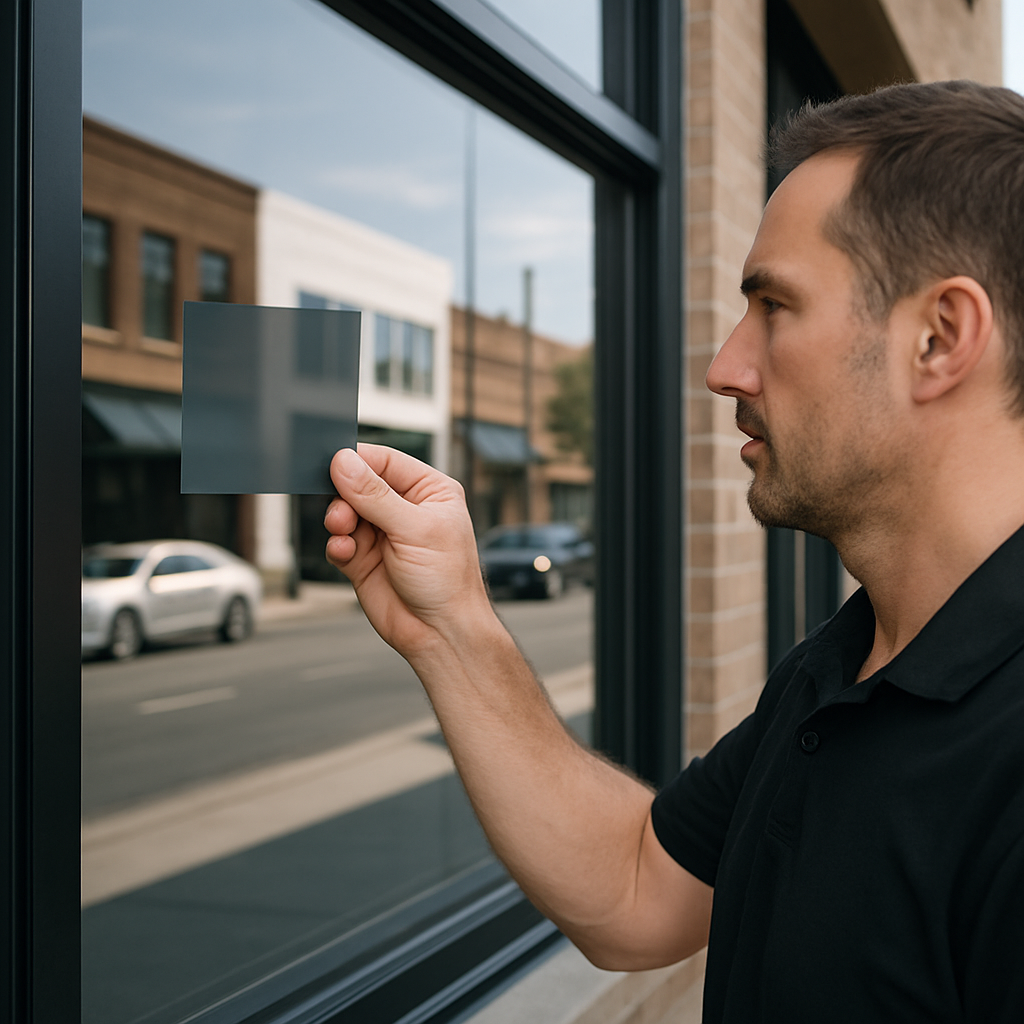
Final judgment: if your priority is daylight plus measurable heat reduction choose spectrally selective or ceramic films from 3M, LLumar, Vista, or Solar Gard. If security is the driver, budget for 8–14 mil safety film and proper anchoring. Always request sample panels and a written performance estimate — look for spectrophotometer readings when visual requirements matter.
4. Installation Quality, Code Compliance, and Warranty Considerations
Direct point: Poor installation and ignored code details are the single biggest cause of failed projects and voided warranties in commercial window film work. Professional installers protect you by diagnosing glazing condition, confirming code constraints, and documenting acceptance criteria before work starts.
Why it matters: Surface preparation and glass condition determine long-term performance. A film bonded to glass with chips, pitting, previous coatings, or failing IGU seals will show edge lift, bubbling, or visible discolouration — problems the manufacturer will often exclude from warranty coverage.
Pre-install checks and code points to verify
- Glass condition inspection: Confirm no laminated or heat-sensitive coatings that react poorly to film and record failed seals or tempered vs annealed glass.
- Egress and safety compliance: Verify that proposed tint darkness and reflective films do not violate exit signage visibility or local fire code requirements; involve building officials when in doubt.
- Manufacturer certification: Require proof of installer certification from major brands (3M, LLumar, Vista) so product warranties and labor guarantees apply.
- Electrical and hardware clearance: Check blinds, sensors, door closers, and framing for film edge clearance and anchoring needs for security films.
Practical trade-off: Heavier security films offer real anti-shatter benefits but add cost and require anchoring systems or channel framing for full effectiveness. For many storefronts a mid-range 8 mil safety film anchored to the frame is the best balance of deterrence and price; insisting on a 14 mil film without proper perimeter anchoring is wasteful and still leaves a weak point at the frame.
Concrete example: A downtown retail tenant in Klamath Falls chose spectrally selective film to reduce glare but the installer documented several storefront panes with edge chips and failed seals. The certified installer recommended replacing those panes first; the owner accepted the recommendation, avoided premature bubbling, and retained both the product and labor warranties.
What installers should deliver: Ask for a written pre-install report, sample panels or spectrophotometer readings, a clear warranty document that separates product and labor coverage, and a curing/cleaning timeline. If a contractor won’t provide these, they are likely cutting corners.
Regulatory and technical references: For code-related questions consult ASHRAE guidance and state resources during planning — for energy and retrofits start with Energy Saver and check local building code with the Oregon Department of Energy.
Next consideration: Before procurement, schedule a site assessment that includes a glass-condition report and a written warranty package; this is the practical step that separates reliable commercial window film work from a risky retrofit that costs more over time.
5. Typical Costs, ROI and an Illustrative Example
Straight to the point: installed commercial film for Klamath Falls window tinting typically runs between about $6 and $25 per square foot depending on film class, with realistic paybacks often in the 4 to 10 year range when you value energy savings plus reduced fading and comfort improvements.
Cost drivers to expect: film type (dyed, metalized, sputtered spectrally selective, ceramic, or security), labor complexity for tall or segmented storefronts, substrate condition, and whether anchoring systems are needed for safety films. Cheaper dyed film looks attractive but often fades and delivers weaker, shorter lived heat rejection.
| Film type | Typical installed cost per sq ft | Example installed cost for 800 sq ft glazing | Typical simple payback (years) – conservative |
|---|---|---|---|
| Standard solar control (dyed/metalized) | $6 – $9 | $4,800 – $7,200 | 6 – 12 |
| Spectrally selective / ceramic | $10 – $15 | $8,000 – $12,000 | 4 – 8 |
| Security/safety film (anchored) | $12 – $25 | $9,600 – $20,000 | 6 – 14 (includes security value) |
Practical tradeoff: spectrally selective films cost more up front but usually perform better in Klamath Falls because they reject IR heat while preserving visible light, which keeps storefronts bright and limits daytime lighting increases. If your priority is maximum daylight plus heat control, spend on spectrally selective or ceramic rather than the cheapest film.
Illustrative ROI example
Concrete Example: a 5,000 sq ft retail tenant with about 800 sq ft of single pane storefront glass installs spectrally selective film at $12 per sq ft ($9,600 installed). Using conservative site-appropriate savings of roughly $2 per glazed sq ft per year from solar control and reduced cooling load, direct annual energy savings are about $1,600. Add an estimated $600 per year in avoided merchandise and flooring fade and fewer HVAC service events, and total annual benefit is $2,200. That produces a simple payback of ~4.4 years.
What this example leaves out: incentives, local utility rebates, or higher daytime HVAC costs will change the math. Also factor in soft returns such as fewer occupant complaints, higher customer comfort, and potential insurance discounts for security film. Do not assume the cheapest installed cost will give the best lifetime ROI.
- When to expect faster payback: south or west facing storefronts, high cooling loads, expensive electricity, and high merchandise fade exposure.
- When payback will stretch: low solar exposure, already efficient double pane low-e glazing, or projects that primarily need privacy rather than solar control.
6. How to Vet and Select a Professional Installer in Klamath Falls
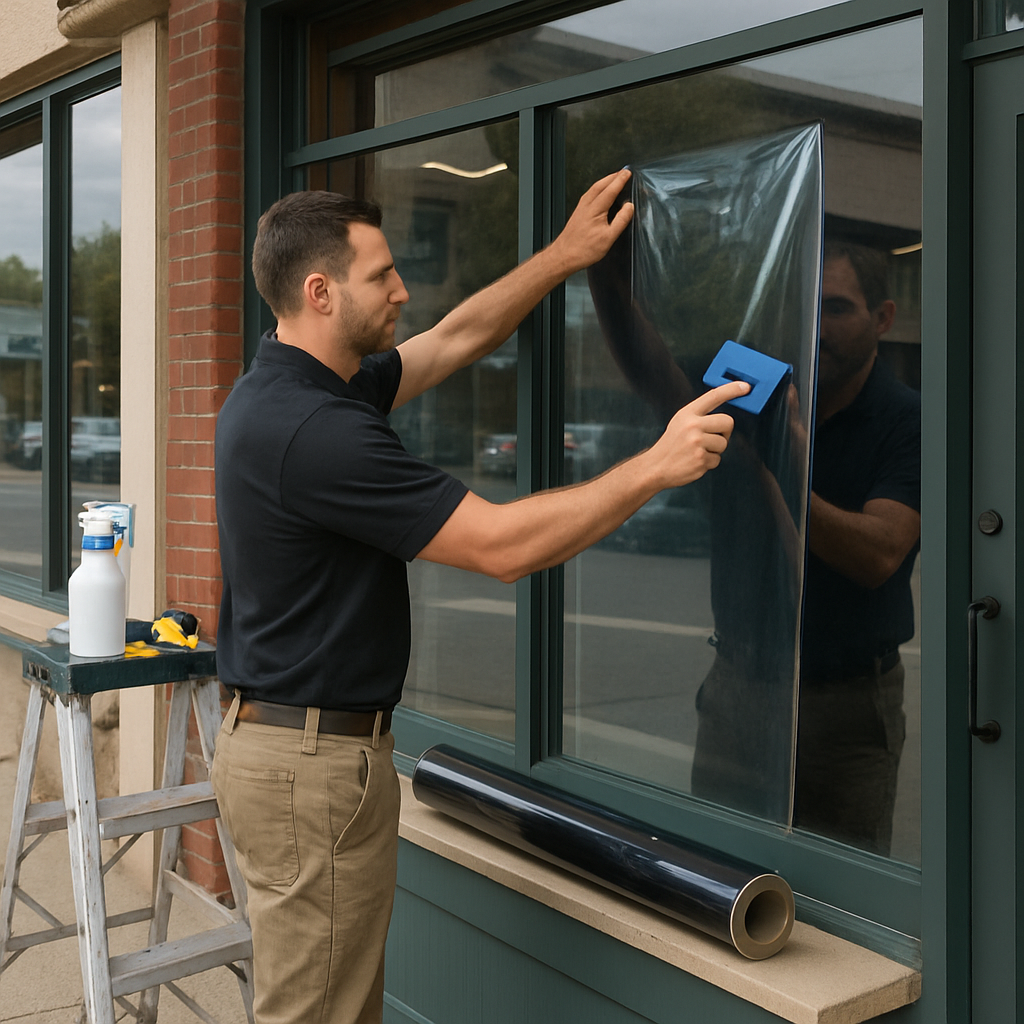
Start with the assumption that installation quality matters more than small differences in product specs. The right installer preserves manufacturer warranties, prevents callbacks, and delivers the expected heat, glare, and UV performance. A poor installation turns a legitimate retrofit into a recurring maintenance problem and can void coverage on otherwise durable films.
Vendor vetting checklist
- Manufacturer certification: Request proof that the installer is an authorized dealer for brands such as 3M, LLumar, Vista by Eastman, or Solar Gard and ask to see current certificates.
- Commercial references and photos: Ask for at least three recent commercial projects in Central or southern Oregon with contactable references and before/after photos.
- Detailed written estimate: Require line-item pricing by square foot, product codes, VLT percentages, labor, removal of old film if needed, and any penetrations/anchoring for security films.
- Site survey and sample panel: Insist on an on-site measure and a small sample panel or mockup so you can verify appearance and daylighting before committing.
- Insurance and bonding: Verify general liability, workers compensation, and bonding if the project affects public areas or requires permits.
- Warranty and response time: Get product and labor warranty in writing, with a specified response window for defects and a one-page procedure for warranty claims.
Practical tradeoff to accept: Faster, cheaper bids usually skip surface preparation and use lower-grade adhesives. That saves you money up front but costs more in 12 to 36 months in repairs and potential warranty denial. Budget for qualified labor; it is the single biggest predictor of a trouble-free result.
Red flags to walk away from: Verbal-only estimates, no commercial portfolio, refusal to do a site survey, reliance on generic film descriptions instead of product codes, installers who cannot produce insurance documents, or an unwillingness to provide a sample panel. These correlate strongly with installation failures in real projects.
Concrete example: A downtown Klamath Falls retail tenant accepted the lowest quote and had storefront film fail at the glass edge within 14 months. The manufacturer denied the warranty because the installer had not used the specified primer and had not documented product lot numbers. The problem could have been avoided by requiring certification, a sample panel, and a written installation checklist.
Ask for performance projections, not promises. A reputable installer will provide a conservative estimate of solar heat gain reduction and, when possible, a modeled or historical utility-bill comparison from a similar local project. If they refuse or give only vague percentage claims, treat that as a sign they either lack experience or are selling on price alone.
7. Maintenance, Lifespan, and Post Install Support
Key point: Maintenance and post install support determine whether a window film project pays off over 5 to 15 years. Service life is not just a product spec – it is the combination of film chemistry, installation quality, local conditions in Klamath Falls, and an owner level maintenance program.
Service life ranges: Standard dyed and metalized solar control films typically last 8 to 12 years in commercial storefront applications. High performance sputtered and ceramic films from manufacturers like 3M, LLumar, and Vista by Eastman often last 12 to 20 years when installed correctly. Safety and security films can last 10 to 25 years but rely on proper edge anchoring and anchoring systems for long term performance.
Maintenance rules that matter: Wait at least 30 days after installation before heavy cleaning to allow adhesive curing. Use a mild soap and water solution or manufacturer approved cleaners, a soft cloth or squeegee, and avoid ammonia based cleaners and abrasive pads. For commercial properties create a one page care sheet for janitorial staff and put it in the building maintenance binder.
Practical limitation and tradeoff: Darker visible light reduction films show surface imperfections and edge wear sooner. If a building has reflective rooftop equipment or frequent pressure washing near glazing, prefer ceramic or sputtered films and insist on sealed edges. Choosing the cheapest film or installer reduces upfront cost but shifts risk to earlier failure and warranty disputes.
Post install issues and how they get resolved
Common problems: Bubbling from trapped solvents, edge lifting from poor trimming, and color shift in low quality dyed films. A certified installer will document pre existing glass condition, provide a written cure period, and handle adhesive failures or delamination under warranty. Insist on a written labor warranty and an SLA for response time on commercial projects.
Concrete example: A downtown retail tenant in Klamath Falls had spectrally selective film installed on a large storefront. After winter cleaning the owner noticed minor edge lifting where a pressure washer had been used. Because the installer performed a pre install walkthrough and provided a care sheet, the issue was repaired under labor warranty with edge reseal and touch trim, avoiding a full panel replacement.
- Inspection cadence: Schedule a professional inspection every 2 to 4 years for commercial installations.
- Record keeping: Keep installation photos, permit paperwork, and the manufacturer warranty in the facility binder for any future claims.
- Maintenance contract: For larger portfolios consider an annual maintenance agreement that covers cleaning, minor repairs, and warranty coordination.
Next consideration: Before approving a full building rollout, request a pilot elevation and include a written maintenance plan in the contract. For vetting guidance see Window Tinting Place Near Me: How to Vet Local Shops and Contractors and technical guidance from the International Window Film Association.
8. Next Steps for Klamath Falls Businesses
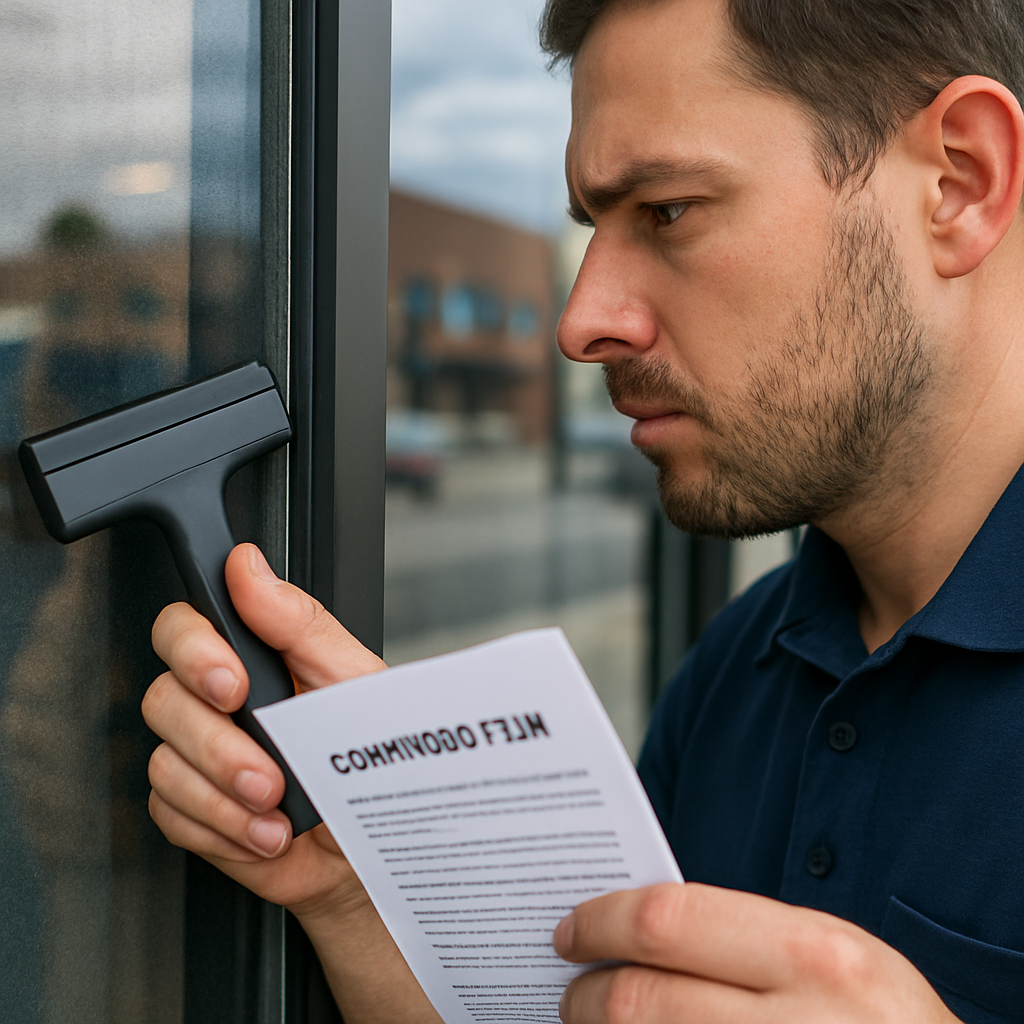
Start with a focused site assessment and glazing inventory. Gather the basic facts up front — total window square footage by elevation, glass type (single pane, tempered, low-e), orientation, and usual business hours — and you will get a meaningful, non-speculative proposal. Skipping this step is the most common mistake; a rushed estimate produces wide ROI error bars and often the wrong film recommendation.
What to have ready for a site assessment
- Window area and photos: exterior photos of each elevation and simple sketches with rough measurements.
- Glass details: knowledge of single vs insulated, presence of coatings, and any laminated safety glass.
- Utility bills: 12 months of electric and gas bills so the installer can run a credible payback estimate.
- Operational constraints: after-hours access, security requirements, tenant schedules.
- Performance goals: prioritize cooling reduction, glare control, UV protection, or security so recommendations align with business needs.
Practical insight: you do not need perfect architectural drawings. Good photos plus rough measurements and bills let a qualified installer produce a defensible proposal. However, expect the most accurate ROI only after an on-site glazing verification.
Pilot strategy and scaling
Run a small pilot on the worst-performing elevation first. That gives real-world confirmation of visible light, glare, and occupant response before committing building-wide. Expect per-square-foot pricing to drop as the project scales; the trade-off is paying a slightly higher unit price up front in exchange for lower technical risk.
Concrete Example: A downtown retail tenant in Klamath Falls tinted a 600 sq ft south-facing storefront with spectrally selective film. The store reported immediate glare elimination at midday and the landlord saw a measurable drop in peak cooling demand during the first summer month — enough evidence to move forward, phased, across the rest of the façade.
Vendor and paperwork checklist before you sign. Require manufacturer certifications, a written labor warranty, a mockup panel on-site, and a clear statement about code compliance and egress. Ask whether the installer offers mobile service to Klamath Falls or requires shop work — mobile saves logistics but shop installations sometimes yield tighter quality control for delicate commercial films.
Note: Pilots reduce technical risk but add short-term cost; treat them as part of the project budget, not optional extras.
