
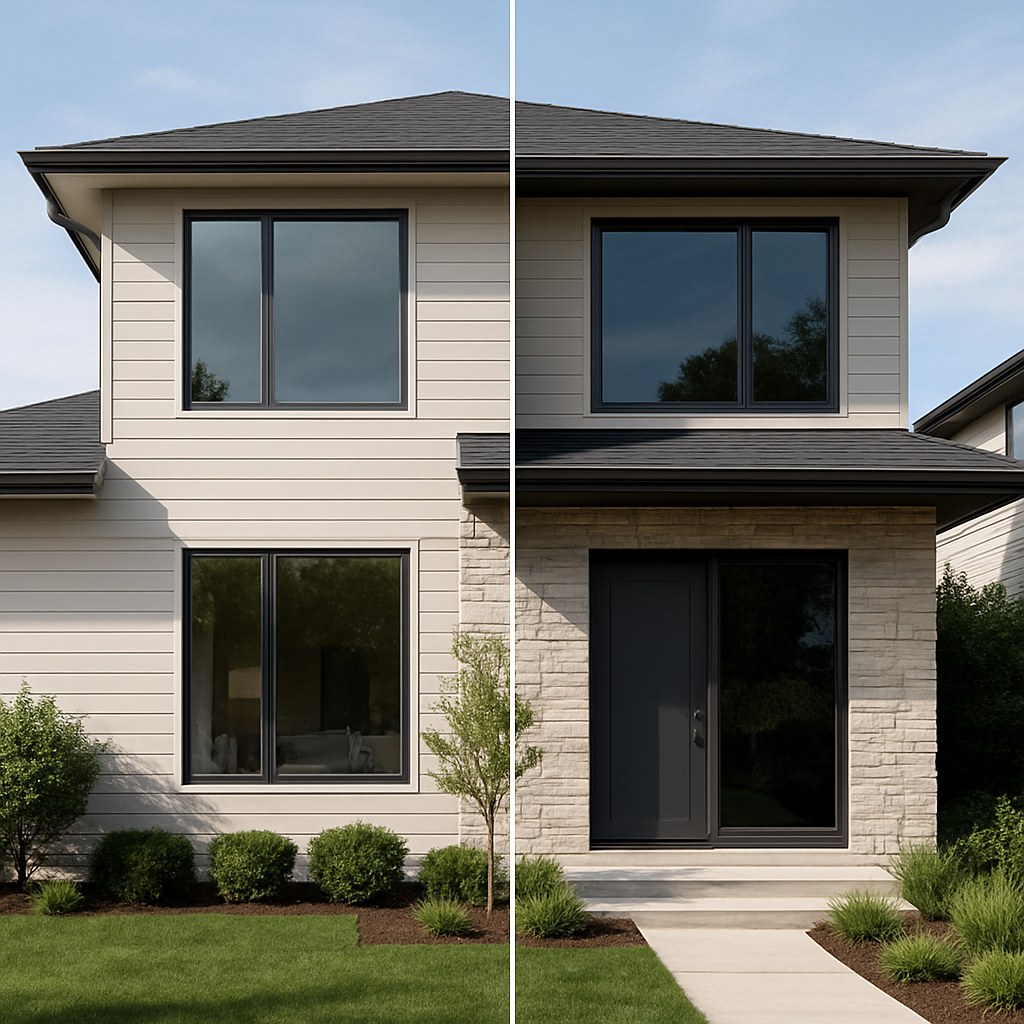
If your home overheats, furniture fades, or daytime privacy is lacking, home window tinting fixes those problems without the cost of full window replacement. This post breaks down the tangible benefits for Oregon homeowners, including energy and cooling savings, UV protection, glare reduction, improved privacy and security, and better curb appeal. You will get practical, climate-specific guidance for Portland, Salem, Eugene and Bend plus clear criteria for choosing the right film and installer.
1. Improved Energy Efficiency and Lower Utility Bills
Direct effect: quality home window tinting reduces the amount of solar heat entering through glass, which lowers daytime cooling demand and shortens air conditioner runtime on sun-exposed elevations. This is where most homeowners see the clearest, quickest payback from residential window film.
How film actually lowers cooling load
Window films work by lowering the solar heat gain coefficient (SHGC) at the glass: some films reflect sunlight, others absorb and re-radiate it away from the interior, and high-end ceramic films do both with less visible tinting. Trade-off: metalized or highly reflective films can be slightly more visible from outside and may change the look of windows; ceramic films preserve appearance but cost more.
What matters for savings: orientation, window area, and local climate. South and west facing windows that get direct afternoon sun drive the biggest cooling load in Oregon homes. In Bend and other sunnier, hotter locales, solar control films translate to larger seasonal cooling savings than in typically cloudy Portland neighborhoods.
Limitations to be honest about: window film is not a substitute for poor insulation, air leaks, or failed seals. If your windows are single-pane or the frames leak badly, film helps but replacing the unit may be the only way to fix winter heat loss or interpane condensation. Film performs best as a retrofit to reduce solar gain and improve HVAC efficiency, not as a cure-all.
Concrete example: A Portland single-family home with large west-facing living room windows installed a neutral ceramic film (for example, 3M Prestige or Huper Optik Ceramic). After installation the homeowners reported noticeably cooler afternoons and were able to raise the thermostat by a couple degrees during peak sun, reducing AC runtime and the frequency of thermostat adjustments. The comfort improvement was immediate even before any measured bill change.
Product note: for energy-focused installs look at energy-efficient window tinting lines such as 3M Prestige Series, Llumar CTX, or Huper Optik ceramic films. For a mix of savings and appearance, ceramic neutral-density films are the practical choice most installers recommend.
- Quick on-site check: map your sun-facing windows and prioritize large south/west exposures.
- Estimate approach: compare summer-to-winter usage on recent bills and target windows contributing to peak afternoon loads.
- Ask for an energy evaluation: request a solar-load focused estimate from a local installer to get an ROI projection tailored to your home and orientation — for example, schedule a consultation with Tinting Oregon.
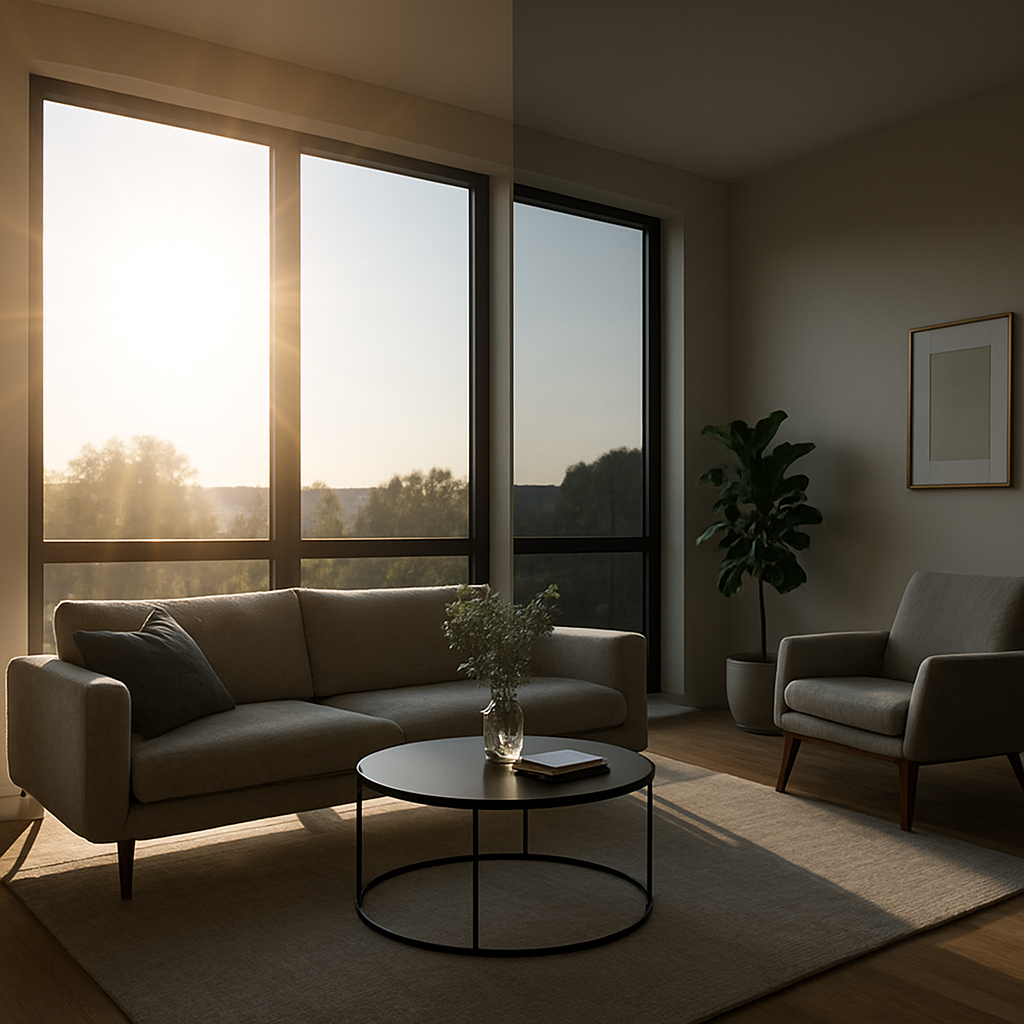
If your priority is utility savings, start with an orientation map and recent bills, then get a targeted, energy-focused evaluation. For more on the measured benefits of window film see the U.S. Department of Energy overview at Energy Saver.
Frequently Asked Questions
Most homeowner questions cluster around cost, visibility, and longevity. Below are precise answers you can act on — not marketing fluff — so you can decide whether to get samples, try a DIY kit, or schedule a professional estimate.
How much does residential window tinting typically cost in Oregon: Price depends on film class, total glass area, and installation complexity. Low-end dyed films and DIY kits show cheaper upfront pricing but produce poorer optics and no warranty. Professional installs using ceramic or solar-control films cost more but include workmanship warranty and sample testing; get an on-site quote for a realistic ROI. For a local estimate, request a survey from Tinting Oregon.
Will window film affect my view or make rooms darker: High-quality neutral-density and ceramic films reduce glare without the colored cast or loss of clarity common with cheap dyed films. Trade-off: the more you prioritize heat rejection, the lower the visible light transmission can be; pick a film by testing samples on the actual window rather than trusting specs alone.
Do window films void my window manufacturer warranty: Most manufacturers accept professionally installed film if the installation does not alter frame or glazing. Practical step: ask the window maker for their policy in writing and use a certified installer who will supply the needed documentation and warranty backing.
How long does window film last and what maintenance does it need: Expect durable films to remain functional for many years, but lifespan varies with exposure and film chemistry. Allow a recommended cure time before cleaning (commonly several weeks), then use nonabrasive cleaners. Keep records of the product and installer warranty for future service.
Can window tinting help with condensation or fogging between panes: Tinting cannot repair a failed insulated glass unit. Clarification: film may change surface temperature slightly and reduce interior-side dew in marginal cases, but trapped moisture between panes requires glass repair or replacement.
Are permits or HOA approvals required: Most single-family residential installs do not trigger building permits, but HOAs often have rules about exterior appearance and reflective finishes. Verify local codes and run exterior-look samples by your HOA before ordering reflective or highly visible films.
Will tinted windows be noticeable to neighbors or affect nighttime visibility: Reflective films are visually stronger during daylight; many low-reflectance films keep a natural look. Nighttime privacy reverses depending on interior lighting — plan interior lighting or combine film with blinds if nighttime concealment matters.
Concrete Example: A homeowner in SE Portland tried a low-cost DIY kit on a street-facing bedroom. The result had bubbles and slightly green optics; they ultimately hired a professional to replace it with a neutral ceramic film and paid more overall than if they had started with a pro install. That outcome is common enough that budget decisions should include potential rework costs.
Practical judgment: For most Oregon homeowners, professional installation is worth the premium when you care about optical clarity, warranty, and accurate performance claims. DIY is only economical on small, low-visibility windows where perfect optics and long-term warranty are not priorities.
