
If your living room overheats in summer, hardwood and upholstery are fading, or glare ruins movie night, residential window tinting is a cost-effective alternative to full window replacement that tackles heat, UV, privacy, and safety. This guide explains which film types work best in Oregon – solar control, low-e, security, and decorative options – plus realistic performance numbers, typical costs, and what to expect during a professional installation. You’ll also get a practical checklist for comparing local installers across Portland, Salem, Eugene, and Bend so you can move from research to a site-specific decision.
Why residential window tinting is relevant for Oregon homes
Regional fit: Oregon is not a one-climate state. Coastal and Willamette Valley homes see long, low-angle afternoons in summer that deliver significant solar gain through south and west glass, while nights and shoulder seasons still demand heat retention. Residential window tinting targets the summer heat and glare without the cost and disruption of full window replacement, and it often preserves daylight better than heavy blinds or awnings.
What homeowners are actually trying to solve: In Portland, Salem, Eugene, and Central Oregon the most common drivers are reducing glare for home offices and TVs, stopping UV-driven fading of floors and upholstery, improving privacy on close-in urban lots, and adding a measure of safety to ground-floor glazing. Choose film based on the dominant problem: solar control films for heat and glare, low-e films for winter insulation, security films for forced-entry resistance, and decorative films for privacy or curb appeal.
A necessary trade-off: Darker, dyed films give more immediate heat and glare reduction but cut daylight and can alter color rendering. High-performance ceramic or spectrally selective films cost more but let you keep high Visible Light Transmission while rejecting heat. Also be realistic: films work best on intact insulated glass units (IGUs). If seals are failing or the glass is delaminating, film can make problems more visible and is a poor long-term investment.
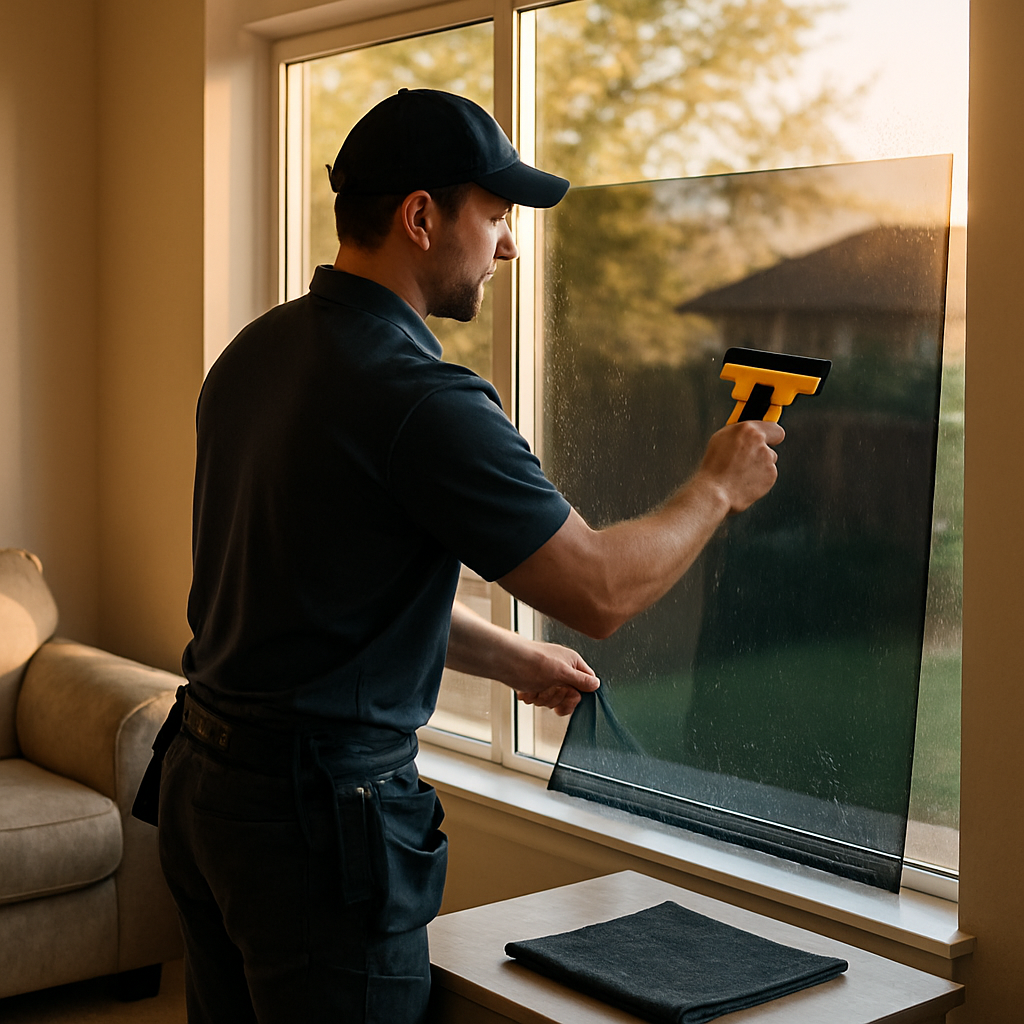
Concrete example: A Craftsman in northeast Portland with a west-facing sunroom was overheating in late afternoon and the homeowner wanted to keep the view. Installing a mid-range ceramic solar control film preserved bright daylight while noticeably lowering surface temperatures and glare; the installer completed the two-story job in one day with minimal interior disruption. For a local consultation and sample options see residential window tinting services.
Practical limitation to check now: If you live in a designated historic district or under HOA rules, reflective or mirrored films are often prohibited. Confirm aesthetic restrictions before budgeting. Also ask your installer to inspect IGU seals and low-e coatings on-site; some low-e surfaces interact poorly with metalized films and produce spotting or adhesion issues.
Judgment you won't hear from sales copy: For most Oregon single-family homes with intact glass, solar control film is the highest-value retrofit for afternoon comfort and fading protection — faster and cheaper than window replacement and less intrusive than exterior shading. But when windows are failing, replacement is the responsible move; film is a bandage, not a fix. Check available incentives when calculating ROI via Energy Trust of Oregon or federal guidance at Energy.gov.
Frequently Asked Questions
Practical reality: homeowners ask a handful of repeatable, decision-making questions before they commit. Below are direct answers that cut past marketing and give actionable guidance you can use in a quote or on-site conversation.
- Will window film make my rooms noticeably darker? It depends on the film's Visible Light Transmission (VLT). High-VLT ceramic films keep rooms bright while trimming heat; darker dyed films cut both light and glare. Ask your installer to show samples on the actual window so you can judge daylight and color rendering in the real room.
- Can films be used on double-pane insulated glass units (IGUs)? Most films are compatible, but you need a hands-on inspection. Failed seals, trapped moisture, or detached spacers make film a short-term fix. If you have existing condensation between panes, replace the IGU first.
- How long will installation take for a typical house? Small homes (about 10 15 windows) often finish in a day or two; complicated access, transoms, or second-story work stretches the calendar. Your installer should give a day-by-day schedule and note any lift or scaffolding charges up front.
- Does a film void my window warranty? Not usually, but read the window manufacturer's fine print. Use a professional installer and documented methods; that reduces the chance of a warranty claim being rejected for improper application.
- Are there rebates in Oregon for window film? Programs change. Check Energy Trust of Oregon and your local utility before budgeting; some incentives require pre-approval or specific film performance data.
- Can I DIY with a kit? DIY kits work for small, simple windows but carry real risks: miscuts, trapped moisture, and edge failures are common. Mistakes that look cosmetic often become warranty headaches. For multi-window jobs or high-value glass, professional installation is usually the more economical choice.
- Does security film stop break-ins? Security film increases resistance by holding shards together and slowing entry, but it does not make glass impenetrable. For serious intrusion resistance, combine thick films with reinforced frames or laminated glazing.
Concrete Example: A Salem homeowner used an over-the-counter kit on a large west-facing picture window. The film wrinkled under afternoon heat and peeled at the edges within two summers, forcing removal and a professional reinstallation that cost more than a single-quality install would have. Buying a mid-range ceramic film and professional fit initially would have been cheaper over three years.
Practical trade-off to accept: cheaper dyed films give fast glare relief but age faster and can change views; higher-cost spectrally selective or ceramic films keep natural color and last longer, but you pay upfront. Choose based on whether you value immediate cost savings or long-term performance and clarity.
How installers should prove competence: request recent residential references in your city, written SHGC/VLT numbers for the exact film proposed, a clear warranty document that names the manufacturer, and proof of insurance. If an installer refuses to show performance data, treat that as a red flag.
Next steps: arrange a site visit with an installer who brings film samples and performance sheets, check current incentives at Energy Trust of Oregon, and decide whether you prioritize daylight retention, maximum heat rejection, or security—each choice points to a different film family and budget.
