
Commercial Glass Tinting: Improve Comfort and Curb Appeal for Your Business
Commercial glass tinting is a high-impact retrofit that reduces glare, cuts cooling costs, blocks damaging UV, and sharpens storefront appearance. This article lays out the measurable benefits—solar control, privacy, security, and decorative options—then gives practical guidance on film types, realistic cost and payback ranges, warranty and code considerations, and where to find local incentives. You will come away with a clear checklist for evaluating projects in Portland, Salem, Eugene, and Bend and what to ask a prospective installer.
Why commercial glass tinting matters for Oregon businesses
Direct impact on comfort and operating cost: Commercial glass tinting solves the specific glazing problems common across Oregon commercial properties: afternoon glare on west facing storefronts, solar heat gain on south exposures during summer, and fading of merchandise from UV. It is a retrofit that usually costs a fraction of full window replacement while delivering measurable reductions in glare and UV damage and improving tenant comfort.
What owners actually gain: Films marketed as solar control window film and UV protection window film provide three practical outcomes you can count on in real projects — lower peak cooling demand on affected zones, far less product fading, and immediate glare reduction for screens and displays. Security and privacy films add protection and wayfinding capability without expensive storefront remodels.
Practical tradeoffs and limitations
Orientation and glazing matter: Not every façade yields the same return. West and south exposures with large single pane glass usually show the most immediate benefit. North facades and deeply recessed glazing rarely justify the expense. Also note that some low emissivity coated insulated glazing units interact poorly with certain metallized films, so a glazing audit is essential before ordering product.
Daylight versus heat control: Heavier metallic films cut heat and glare but also reduce visible light transmission and can change storefront appearance. For most Oregon commercial spaces I recommend spectrally selective films as the first option because they reject heat while keeping natural light and storefront visibility.
Concrete Example: A retail shop in the Pearl District installed spectrally selective commercial window tinting on a long west wall to address afternoon glare and fading. After installation the manager reported fewer customer complaints about glare, display colors remained stable between seasons, and an energy model showed an estimated 8 to 12 percent reduction in cooling load for those conditioned zones, consistent with IWFA technical guidance.
- Where tinting is most effective: Large, unshaded glass on south and west facades and single pane storefronts.
- Where to pause: Historic storefronts, specialty coated IGUs, or projects needing maximum visible light where decorative privacy film may be better.
- Design opportunity: Decorative glass tinting and privacy glass film are underused ways to enhance curb appeal and signage while adding functional benefits.
- Security option: Safety and security window film often delivers comparable protection to replacement glass for a lower capital outlay and shorter downtime.
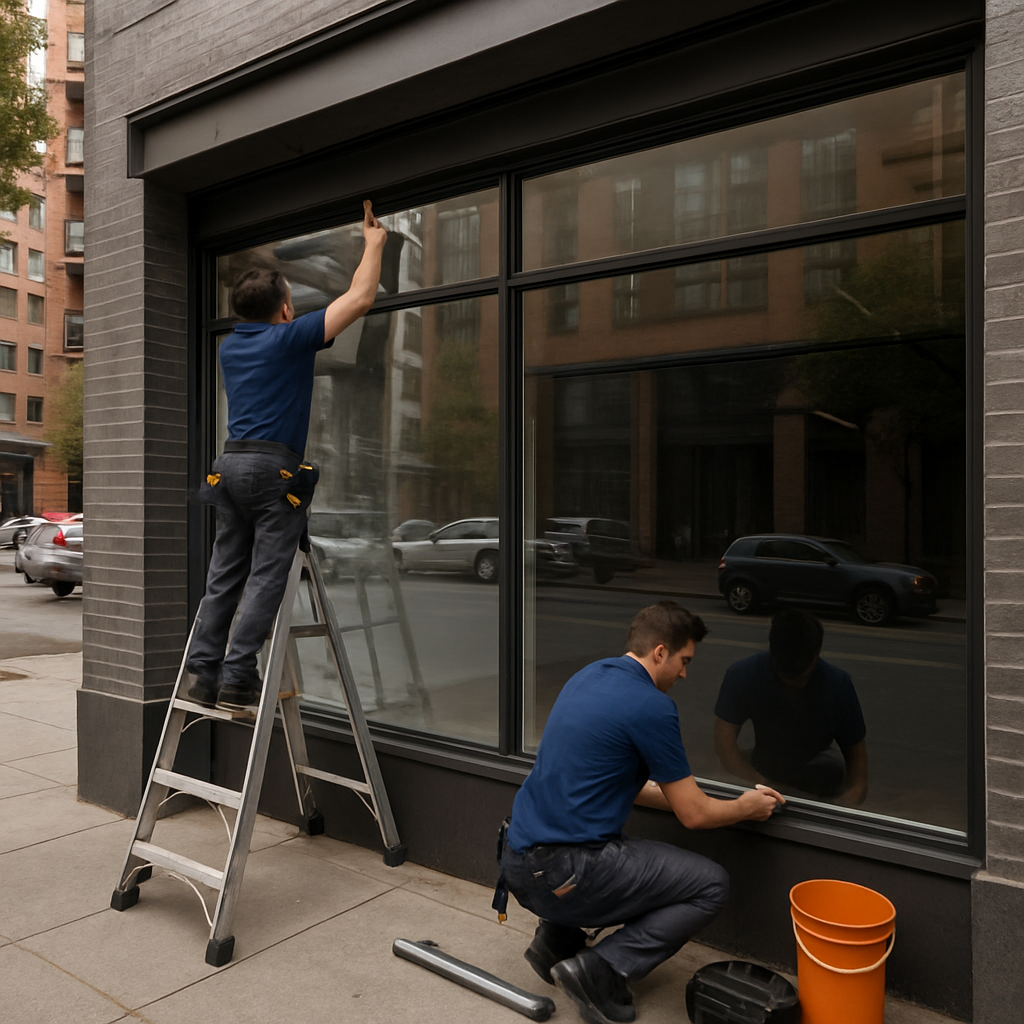
Next consideration: Before selecting film, schedule a site glazing audit that maps orientation, existing IGU coatings, tenant priorities, and maintenance access so you pick the film family that balances daylight, energy performance, and storefront appearance. For a practical guide on film types see Tint Film Types and Uses.
How window film improves comfort and reduces energy costs
Key mechanism: Commercial glass tinting reduces the amount of solar energy that enters a building by lowering the window assembly solar heat gain coefficient (SHGC) and reflecting or absorbing infrared energy. That reduction directly lowers peak cooling load and cuts glare without changing HVAC equipment.
Performance metrics that matter: Focus on SHGC, visible light transmission (VLT), U value, and UV blockage. SHGC and IR rejection drive cooling savings. VLT determines how much daylight remains. UV blockage protects interiors from fading. Ask vendors for these numbers and compare manufacturer datasheets from 3M or LLumar rather than marketing language.
Practical tradeoffs and design choices
Tradeoff: Lower SHGC often comes with lower VLT. That is fine in conference rooms or retail display windows that overheat, but not good for art galleries or storefronts where accurate color and brightness matter. The middle ground is spectrally selective films such as 3M Prestige or LLumar SelectPro that reject heat while keeping VLT higher, at a higher installed cost.
- Where tinting gives the biggest bang for the buck: West and southwest facades, single-pane or older double-pane glazing, and large storefronts with extensive glass runs
- When tinting is a weaker option: High-performance coated insulated glazing designed for low SHGC already, or historic/landmark glass where changes are restricted
- Operational consideration: Films reduce cooling loads but have negligible effect on heating loads during winter; expect seasonal variation in ROI
Concrete example: A downtown Portland retail storefront with large west-facing windows replaced a portion of glazing shading measures with a spectrally selective commercial window tinting film. Tenants reported reduced afternoon glare and cooler floor-level temperatures; building management tracked lower peak demand on several hot days. The project also prevented merchandise fading that had required earlier shelving changes.
Measurement insight: Do a simple before-and-after: measure interior glass surface temperature and tenant comfort complaints for a week, then compare after film installation. If you want modeled estimates, use manufacturer performance data plugged into simple cooling load calculations or consult U.S. Department of Energy guidance.
Judgment for procurement: Prioritize a measured glazing audit over off-the-shelf assumptions. A vendor that brings an infrared gun, records orientation and existing SHGC, and proposes a spectrally selective option when appropriate will deliver reliable comfort gains and sensible energy savings. For a practical checklist on commercial proposals see Office Window Tinting: Modern Solutions to Reduce Glare and Boost Productivity.
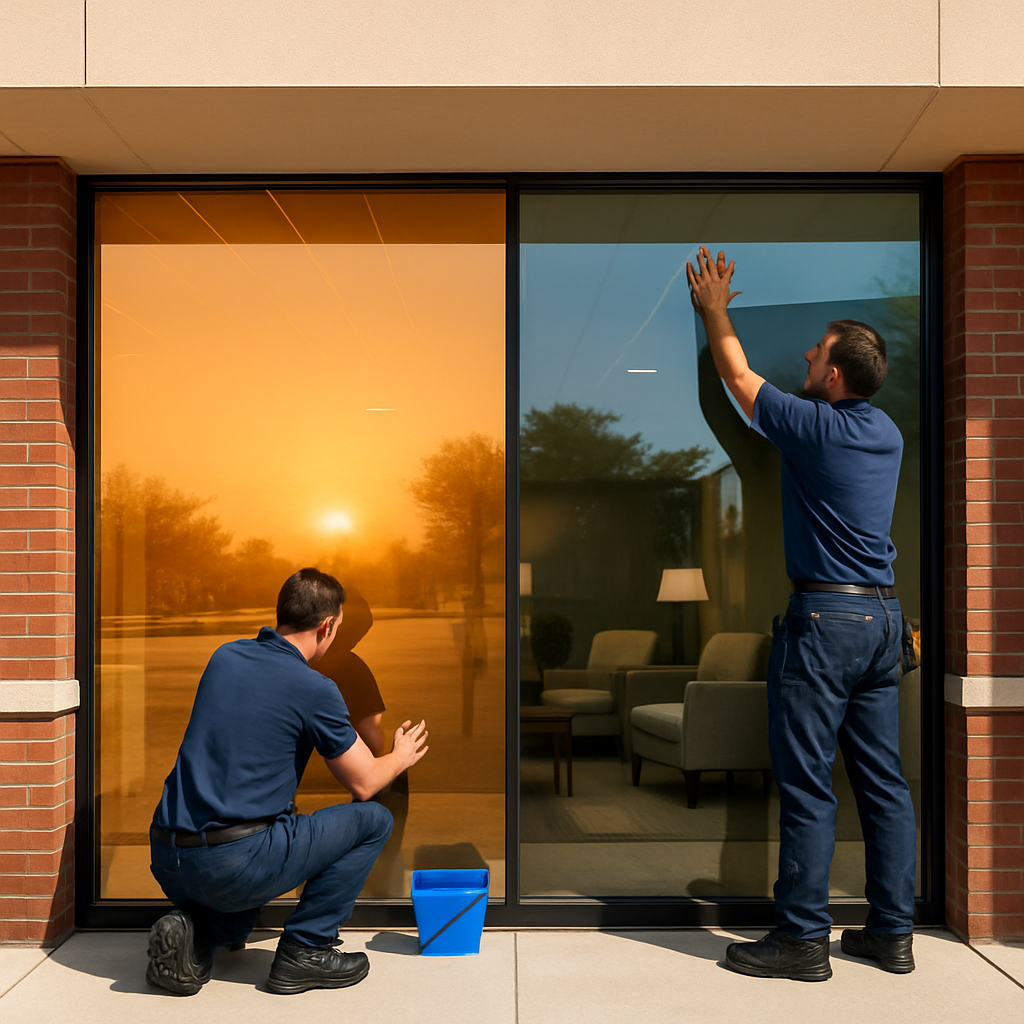
Types of commercial window films and recommended product lines
Choose film by function first. For commercial projects the practical categories are solar control, safety and security, decorative/privacy, and protective specialty films. Pick the primary performance need, then evaluate appearance, VLT, and compatibility with your glazing.
Solar control films
What they do. Solar control films reduce solar heat gain, cut glare, and block up to 99 percent of UV. For tenant-facing spaces where daylight matters, prefer spectrally selective or ceramic films over older metallized films because they reject heat without turning interiors dark or creating a mirrored exterior look.
- Recommended: 3M Prestige Series for high performance with low reflectivity and good visible light transmission
- Alternative: LLumar SelectPro for a balance of cost and heat rejection on south and west facades
- Tradeoff: metallized films are cheaper but often reflective and can conflict with storefront aesthetics or neighboring businesses
Safety and security films
What they do. Safety films hold glass shards together on impact, deter smash-and-grab thefts, and reduce injury risk from accidental breakage. For true forced-entry or blast mitigation you need thicker, anchored systems – film alone helps but is not a structural retrofit.
- Recommended: 3M Impact Protection Film for retrofit anti-shatter performance and documented manufacturer warranties
- Recommended: LLumar Platinum SR for laminated-like retention and clarity in storefronts
- Consideration: security films increase glass stiffness and occasionally require edge-retention or channel systems for certified blast protection
Decorative, privacy, and brand films
What they do. Decorative films change appearance, create privacy bands, and provide a branded look without replacing glass. They do not reliably provide the solar control of spectrally selective films unless specifically combined with solar film laminates.
- Recommended: 3M Fasara series for pattern, frost, and custom cut branding
- Recommended: LLumar Frost for simple frosted looks with easy removal for rebranding
- Limitation: decorative film can be damaged by abrasive cleaners and may need replacing more frequently in high-touch areas
Specialty films. Anti-graffiti clear films are sacrificial layers that save storefront glass in high-traffic urban corridors. Choose a film designed for quick removal and re-application rather than a permanent coating when graffiti or vandalism is a recurring problem.
Compatibility and thermal risk. Not every film suits every insulated glazing unit. Films that block solar heat can increase edge stress on single-pane or heat-strengthened IGUs and, in rare cases, cause cracking. Always run a glazing audit and request manufacturer thermal stress guidance before large installs.
Concrete example: A downtown Portland retailer replaced reflective metallized tint with 3M Prestige Series on west-facing display windows. They dropped afternoon heat and glare while keeping merchandise colors accurate and sidewalk visibility high. The higher upfront cost paid off because sales impact from faded or poorly lit displays was avoided.
Practical judgment. For most occupied commercial spaces in Oregon, spectrally selective solar films are worth the premium because they preserve daylight and storefront visibility. Use lower-cost metallized films only for warehouses or back-of-house glazing where appearance is secondary.
Next step. For product datasheets and performance numbers check manufacturer pages such as 3M Commercial Window Films and the IWFA technical resources at IWFA technical. For local examples and film use cases see Tint Film Types and Uses.
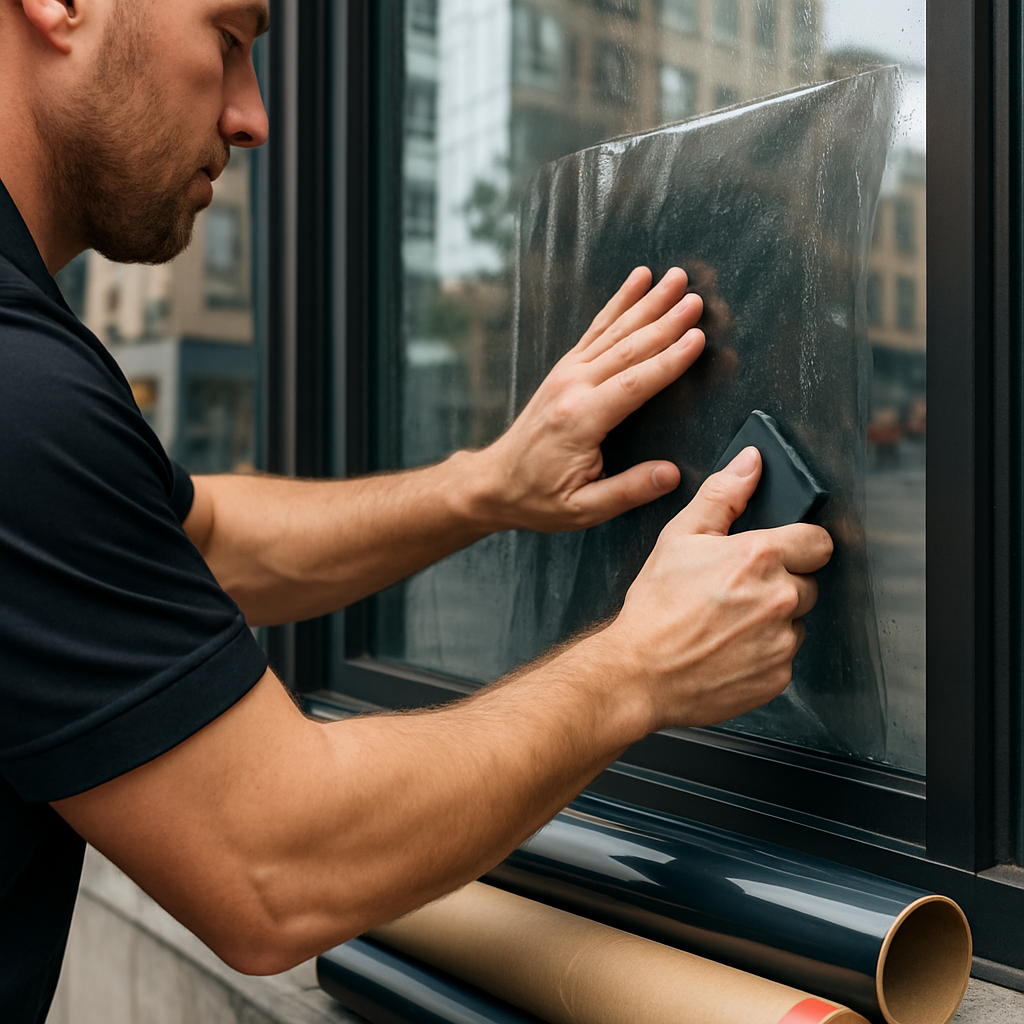
Curb appeal and brand-driven uses for commercial properties
Design-first impact: commercial glass tinting is one of the fastest, least disruptive ways to change how a building reads from the street. A well-chosen film can sharpen signage visibility, create consistent storefront rhythm, and give a brand surface for graphics or frosted privacy without replacing glass.
Trade-off to plan for: decorative and privacy films improve appearance but can reduce direct sightlines and change how interiors look after dark. In practice you must balance daytime daylighting with nighttime storefront transparency — and check local design guidelines for historic districts before committing.
Design tactics that work
- Privacy banding: add frosted or acid-etched style bands to ground-floor glazing so passersby see displays above and customers get privacy at eye level.
- Branded frosts and cut graphics: use decorative glass tinting for logos and messaging; it's removable and much cheaper than etched glass or custom glazing.
- Accent tinting: apply light, spectrally selective tints on upper panes to reduce reflections and harmonize a mixed-material façade without darkening interiors.
- Anti-graffiti window film: clear protective films protect storefronts in high-traffic urban corridors and are sacrificial — replace the film, not the glass.
- Integrated glare control for signage: choose films that cut reflection where backlit signs or display windows lose contrast to daylight.
Concrete Example: A mid-sized restaurant in Eugene replaced heavy blinds with a soft bronze spectrally selective film on its street-facing windows. The result preserved daylight while lowering evening glare on tables and made exterior signage more legible. Decorative frosted bands around the logo provided privacy for diners and a branded look without structural work — installed as a single-day retrofit.
Practical judgement: many owners default to dark films because they equate darkness with privacy. That is usually the wrong move for retail and hospitality. Spectrally selective and decorative films give the same UV protection and visual polish without killing natural light; reserve dark, reflective films for back-of-house or storage areas.

Next consideration: before you order film, ask for on-glass mock-ups and swatches and get a site visit from a professional glass tinting installer. See sample applications and product recommendations in our film types guide — Tint Film Types and Uses.
Cost, incentives, and realistic ROI for Oregon commercial projects
Straight numbers first: installed commercial glass tinting typically runs between $5 and $15 per square foot in Oregon for retrofit work. Prices cluster in that band because labor, access, film class, and finishing options dominate cost more than the raw material price.
Cost drivers and practical tradeoffs
- Film selection: spectrally selective ceramic films cost more but keep visible light while cutting heat; cheaper metallized films cost less but can tint noticeably and may degrade faster.
- Access and logistics: single story storefronts are inexpensive to service; multistory facades, lifts, or after hours work add large labor premiums.
- Glazing condition and complexity: damaged seals, laminated IGUs, or patterned glass require prep or exclude certain films, raising cost or forcing replacement instead of tinting.
- Scope and finish: decorative printing, privacy banding, or edge sealing increase per square foot cost but add brand or security value.
Practical tradeoff: buy the cheapest film and you save upfront but increase replacement risk and warranty friction. For commercial properties, pay attention to manufacturer warranties and installer certification; that is where long term value actually lives.
| Film category | Typical installed cost per sq ft | Typical energy savings per sq ft per year | Realistic simple payback (years) |
|---|---|---|---|
| Spectrally selective solar control (example 3M Prestige) | $7 – $12 | $0.40 – $1.25 | 6 – 15 |
| Security and safety film (example 3M Impact Protection) | $5 – $10 | $0.00 – $0.10 (energy minimal) | N/A for energy; payback via avoided losses or insurance benefits |
| Decorative / privacy film (example 3M Fasara) | $3 – $8 | $0.00 – $0.20 | N/A for energy; payback through tenant value and branding |
Incentives matter but expect limits: check Energy Trust of Oregon and Portland General Electric for current commercial rebates or technical assistance. Incentive programs often require a pre-approval, documented baseline, and measured savings estimates. Do not assume instant rebates; factor application lead time into project scheduling.
Concrete example: A 1,000 square foot south facing storefront in Portland installs 3M Prestige at $9 per square foot for a $9,000 installed cost. If modeled savings are $0.80 per square foot per year, energy savings equal $800 per year and simple payback is about 11 years. If an incentive covers 20 percent of installed cost the effective payback drops to about 9 years, and if you include reduced merchandise fading and improved tenant satisfaction the net business case improves further.
What people miss: energy payback alone undercounts the business value. Security films deliver risk reduction and potential insurance savings that rarely appear in raw energy models. Decorative films increase lease rates and reduce fit out costs for tenant privacy. Treat these as real value streams when calculating ROI.
How to get a realistic ROI estimate
- Request a site audit: get measured glazing area, orientation, HVAC type, and a baseline energy profile from a qualified installer.
- Ask for modeled savings: require installer to show expected savings ranges and the manufacturer performance data for the proposed film.
- Check incentives early: submit any required pre-approval to Energy Trust of Oregon or Portland General Electric before work begins.
- Include non energy benefits: quantify potential reductions in fading, theft risk, tenant complaints, and increased rent when calculating total ROI.
Next consideration: before signing a contract, compare at least two proposals that include measured glazing data, manufacturer specs, and a clear statement about incentives and timeline. If you want a deeper primer on film types and uses see Tint Film Types and Uses: From Glare Reduction to Heat Control.
Installation, warranties, maintenance, and code considerations
Key point: Installation quality drives performance and warranty eligibility for commercial glass tinting. A poor install creates edge lifting, trapped moisture, optical distortion, and in worst cases thermal stress that can lead to glass breakage.
What a proper commercial install looks like
On site survey and glazing audit: A competent vendor will inspect existing glazing, note insulated glass unit type, spacer condition, and any low-e coatings, then apply a sample panel so the owner can verify visible light and color.
- Preparation and staging: Protect floors and furniture, schedule work outside peak hours for occupied spaces, and plan for minor drying time.
- Field test: Apply a small test film to confirm compatibility with the specific IG unit and glass tempering.
- Manufacturer certification: Require installers certified by the film manufacturer so that any warranty remains valid.
Warranty realities: Manufacturer warranties vary by product and surface. Many premium films from suppliers such as 3M commercial window film product pages include limited lifetime or 10 year warranties on delamination and UV rejection, but warranty registration and proof of certified installation are commonly required.
Practical limitation: Low cost installers may offer a short installer warranty but cannot extend manufacturer coverage. Choosing a cheaper crew usually raises the real cost – either through early failures or denied manufacturer claims.
Maintenance that keeps films performing
Cleaning rules: Use mild detergent and a soft cloth. Do not use ammonia based cleaners, abrasive pads, or sharp tools. Cleaning frequency depends on exposure – storefronts in high traffic urban areas need monthly checks, interior office glazing often needs quarterly cleaning.
Tradeoff: Dark metallized films hide dirt poorly and show streaks; spectrally selective films keep more natural light and are easier to maintain in customer facing spaces. Anti-graffiti films reduce replacement time – they sacrifice a small amount of clarity for a clear protective sacrificial layer that is cheaper to replace than full film.
Code and permit considerations: Some films change rated properties of glazing used for egress or fire separation. Historic district storefronts and certain energy code provisions may require review. Always consult a local code official and provide film technical data sheets from the manufacturer – the International Window Film Association has useful technical guidance at IWFA technical resources.
Concrete example: A downtown Portland restaurant installed decorative privacy glass film on a second floor to reduce street visibility while keeping daylight. The installer ran a test panel, confirmed no conflict with the building egress windows, registered the film with the manufacturer, and scheduled quarterly cleanings. That preparation prevented warranty disputes and avoided a permit delay when the landlord required documentation.
- Ask for these deliverables: Signed manufacturer warranty registration, installer certification, a glazing compatibility report, and a maintenance schedule.
- Do not accept: Verbal warranty promises or installs where the vendor declines a sample application on suspect IG units.
Next consideration: Before you sign, compare written warranties and ask for a local reference with a similar installation type – that is where you will see how the film and the installer perform over time.
Selecting a commercial window film provider in Portland, Salem, Eugene, and Bend
Straight rule: pick the installer who can demonstrate relevant commercial experience, local presence across your cities, and manufacturer registration rather than the lowest per square foot price. Pricing is easy to compare; the hard part is scheduling, correct film selection for your glazing, and reliable warranty administration.
Vendor selection checklist
- On site glazing audit: a written glazing performance report showing current VLT, SHGC, and IGU construction. Insist on measured or manufacturer-verified numbers, not guesses.
- Manufacturer certifications: proof of training and registration with film makers such as 3M or LLumar so warranties are valid.
- Local project references: at least two commercial projects in the same city and similar use case, with contactable references and photos.
- Sample mockup: a small sample area installed on-site so tenants can assess daylight, glare, and appearance before full rollout.
- Written proposal: clear line items for film type, square footage, staging hours, traffic control, penetrations, warranties, and removal policy.
- Service level and response: guaranteed response times for repairs or warranty callbacks in Portland, Salem, Eugene, and Bend.
- Incentive support: ability to prepare paperwork for Energy Trust of Oregon or Portland General Electric programs if incentives apply.
- Insurance and safety: proof of liability insurance and worker hazard controls for occupied buildings and high access work.
Practical tradeoff: choosing a single vendor to cover multiple Oregon markets simplifies coordination and warranty management, but not every single-supplier bid has the local crews available. Verify they maintain field crews or vetted subcontractors in each city, and ask for the exact crew lead who will be on site.
What to challenge on proposals: if a quote promises precise energy savings, ask for the modeling or the baseline assumptions. Real world savings vary with orientation, HVAC controls, and tenant behavior. Prefer proposals that show projected SHGC changes and conservative payback ranges rather than flat percentage guarantees.
Concrete Example: A downtown Portland retailer needed solar control plus anti-graffiti protection after repeated storefront damage. The selected provider performed a small mockup of a spectrally selective film and a clear protective overlayer during overnight hours, supplied city reference projects, and managed a rebate application. The overnight install sequence kept the store open during the day and minimized lost sales.
Request a site mockup and a written glazing report up front. That single step prevents most selection mistakes.
