
Energy-Efficient Window Film: The Smart Upgrade for Oregon Homes and Offices
Windows are one of the easiest places to cut energy waste, and energy efficient window film is often the fastest, lowest-cost retrofit for Oregon homes and offices. Below you will find how film reduces heating and cooling costs, reduces glare and UV damage, and which film types suit Portland, Eugene, and Bend climates. Expect realistic savings examples, product recommendations, and the practical questions to ask before you schedule an on-site assessment.
Why energy efficient window film is especially relevant in Oregon
Key point: Oregon is not a single climate. Coastal and Willamette Valley locations spend more on heating than cooling overall, while Central Oregon sees long, clear-sky days that drive intense solar gain. That mix makes energy efficient window film a high-leverage retrofit: it addresses intermittent cooling peaks, year-round UV damage, and localized comfort problems without replacing the whole window.
Where film delivers the most value
Orientation matters. South- and west-facing glass produce the problems film fixes: afternoon overheating, glare on screens, and faded finishes from UV. In Portland and Eugene, west-facing rowhouses and storefronts often need glare and heat control more than full window replacement. In Bend and Central Oregon, strong daytime sun makes solar window film and heat rejection window film necessary even when nights are cold.
Tradeoffs to weigh. Films that reject heat best often lower visible light. Spectrally selective and ceramic films preserve daylight while cutting solar heat, but cost more. Insulating films such as 3M Thinsulate provide measurable winter benefit on single-pane windows but add little to modern low-e double glazing. Choosing the wrong film for the glass and orientation is where projects fail in practice.
Practical insight: Don’t pick a film by its headline SHGC alone. Consider visible transmittance, exterior reflectance (important for storefront aesthetics and historic districts), and whether a metalized film could cause radio interference. A balanced selection protects interiors and occupants without making rooms feel dim or altering curb appeal.
Concrete example: In a Portland rowhouse with harsh west-facing afternoon sun, a professionally installed spectrally selective film such as 3M Prestige preserved daylight while noticeably reducing glare for evening screen use. In a Bend vacation rental, a ceramic film reduced hot spots on sunny afternoons, improving guest comfort and reducing hours the thermostat ran during shoulder-season days.
What most people misunderstand: Many assume any dark tint will solve both summer and winter problems. In practice, aggressive dark films solve summer heat at the cost of daylight and passive solar heating in winter. For Oregon projects, the best outcomes come from matching film type to the specific problem – glare, UV fading, summer cooling, or winter insulation – not from choosing the cheapest or darkest option.
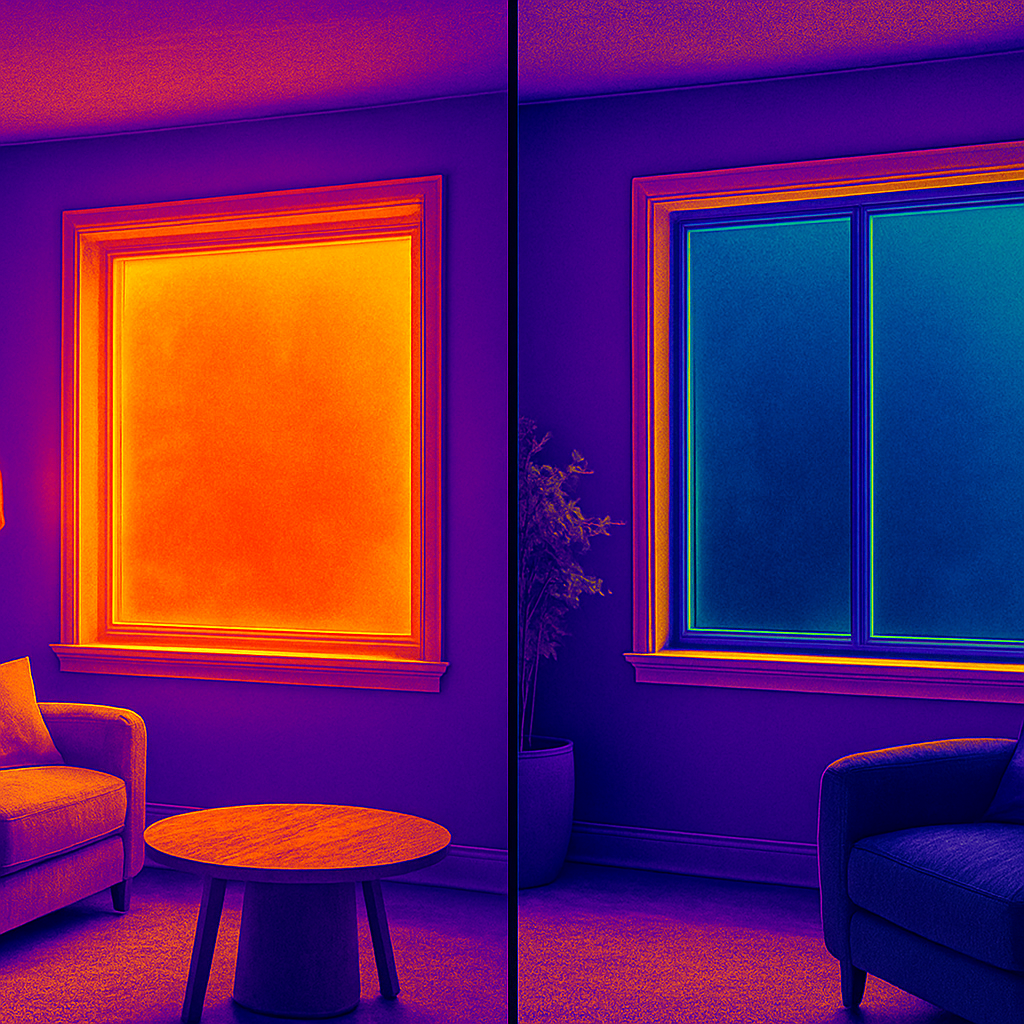
How energy efficient window film works and the metrics that matter
Straight to the point: energy efficient window film changes how your windows handle three parts of incoming energy — visible light, infrared heat, and ultraviolet — and the practical value of a film project comes down to a handful of measurable metrics, not marketing claims.
How the films actually change window performance
Films use one of two basic physical approaches: they either reflect and scatter solar energy away from the glass (common in metalized and multilayer sputtered films) or they absorb and then re-radiate heat at a lower intensity (typical for some ceramic and polyester films). Insulating films such as 3M Thinsulate add a low-emissivity surface that reduces radiative heat loss in winter — a different function than the solar rejection most people focus on. All films also include UV-blocking layers that protect interiors.
The performance numbers you should read and why they matter
- Visible Transmittance (VT): how much daylight passes through. Higher VT keeps rooms bright; lower VT can cut glare but make spaces feel dim. Balance VT against the need for glare reduction and daylighting.
- Solar Heat Gain Coefficient (SHGC): the fraction of solar energy admitted. Lower SHGC reduces cooling load. Spectrally selective films can drop SHGC significantly while preserving VT, which is why they are popular for Oregon homes that want daylight without overheating.
- U-factor: measures conductive heat transfer. Most retrofit films move U-factor only slightly unless the product is explicitly insulating (for example, low-e films designed to improve winter performance). Don’t expect a standard solar film to match the winter performance of a new insulated window.
- UV rejection and fade control: expressed as a percentage. This is the simplest win: most quality films block well over 90 percent of damaging UV, protecting finishes and fabrics.
- Visible light reflectance / exterior appearance: matters for curb appeal and historic districts; high exterior reflectance can be unacceptable for storefronts or period homes.
Practical limitation: Manufacturer lab ratings (NFRC or vendor data) are measured on specific glass assemblies. Real-world impact varies with orientation, shading, and how the building is used. Expect less cooling benefit on a deeply shaded facade and more on sun-drenched west windows.
Concrete example: In a small Portland design studio we recommended a spectrally selective film (a 3M Prestige family member) over the west glazing. The film preserved daylight (VT stayed above 50 percent per the product sheet), noticeably reduced late-afternoon glare, and cut the air-conditioning runtime on hot days. The owner kept the daylight benefits without replacing the windows.
Common misunderstanding: People assume any dark tint equals energy efficiency. In practice, aggressive dark films reduce visible light and passive solar gain in winter but do not always deliver proportionally better SHGC reductions. Ceramic and sputtered multilayer films are more effective where you want a daylight-preserving, energy saving film.
Types of window film and specific product examples for Oregon projects
Start with the problem, not the brand. For most Oregon projects you will choose between four practical film families: spectrally selective/multilayer, ceramic/non-metal, metalized/sputtered multilayer, and insulating low-e films. Selecting the right family delivers the expected comfort or energy outcome; picking by price or darkness is where projects underperform in the field.
Which film for which real need
- Daylight with heat control: Spectrally selective films keep VT high while lowering solar heat gain – good for living rooms and studios that need daylight and glare control. Representative products: 3M Prestige Series, Solar Gard Ultra Performance.
- Maximum signal stability and neutral look: Ceramic films sacrifice a bit more cost for near-neutral appearance and no metal coating. Use where aesthetics and electronic equipment are priorities. Representative products: Huper Optik Ceramic, LLumar CTX.
- High heat rejection on a budget: Metalized or sputtered multilayer films give strong SHGC reductions but increase exterior reflectance and can affect RF signals. Consider for industrial offices or nonhistoric storefronts. Representative products: Solar Gard multilayer offerings, some LLumar VISTA lines.
- Winter insulation and year round U-factor improvement: Low-e insulating films reduce radiative heat loss on single-pane or older double-pane windows. Use in homes where replacing windows is not feasible. Representative product: 3M Thinsulate Climate Control.
| Film Type | Typical Strengths | Key Oregon Considerations | Representative Products |
|---|---|---|---|
| Spectrally selective / multilayer | Good SHGC drop with high daylight retention | Best for west and south exposures in Portland and Eugene where daylight matters | 3M Prestige Series, Solar Gard Ultra Performance |
| Ceramic / non-metal | Neutral appearance, stable color, minimal RF impact | Preferred for historic-feel facades and tech offices; pricier but preserves view | Huper Optik Ceramic, LLumar CTX |
| Metalized / sputtered multilayer | Strong heat rejection per dollar | Watch exterior reflectance and potential signal interference; suitable for nonhistoric storefronts | Solar Gard multilayer, LLumar VISTA |
| Insulating low-e films | Improves U-factor and reduces night heat loss | Valuable on single-pane and older glazing in cold Willamette Valley winters | 3M Thinsulate Climate Control |
Practical tradeoff to plan for. A film that excels at blocking solar heat will often change exterior appearance or reduce daylight. In Oregon that tradeoff matters: too much visible light loss removes passive solar benefit during winter shoulder months and makes north-facing rooms feel dim. Prioritize based on orientation and occupant use rather than chasing the lowest SHGC on the spec sheet.
Concrete example: A Salem retail owner installed Solar Gard Ultra Performance on south-facing display windows to limit merchandise fading and lower the HVAC runtime near storefront glazing. After installation the staff reported fewer hot spots at midday and the buyer avoided expensive UV-filtering glazing replacement. The project preserved display visibility while improving comfort for customers and lowering localized cooling demand.
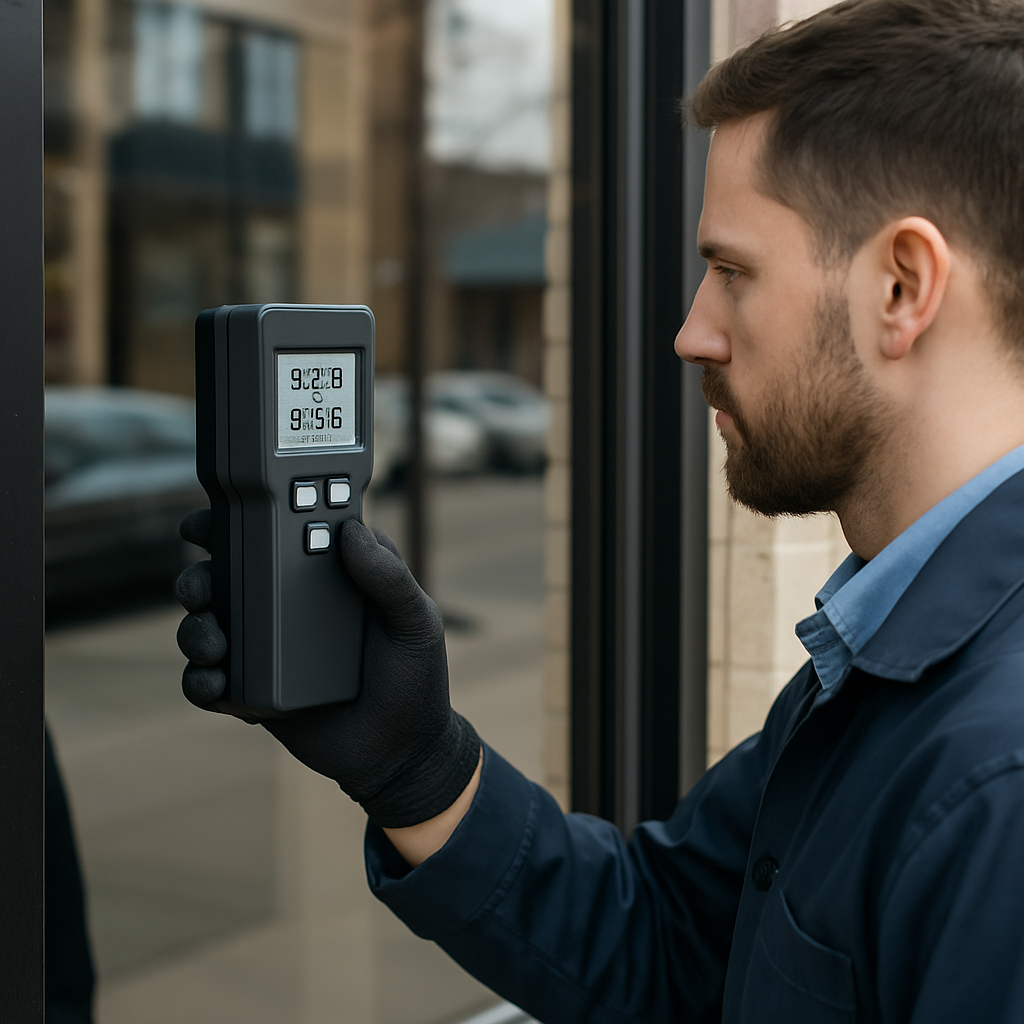
One judgment most installers understate. Lab ratings do not equal on-site performance unless glass type, frame shading, and orientation are verified. A spectrometer check and glass inspection before quoting separates projects that meet expectations from those that disappoint — and that is a service Tinting Oregon performs during assessments. For manufacturer specs see 3M Window Film and for technical guidance consult the Efficient Windows Collaborative.
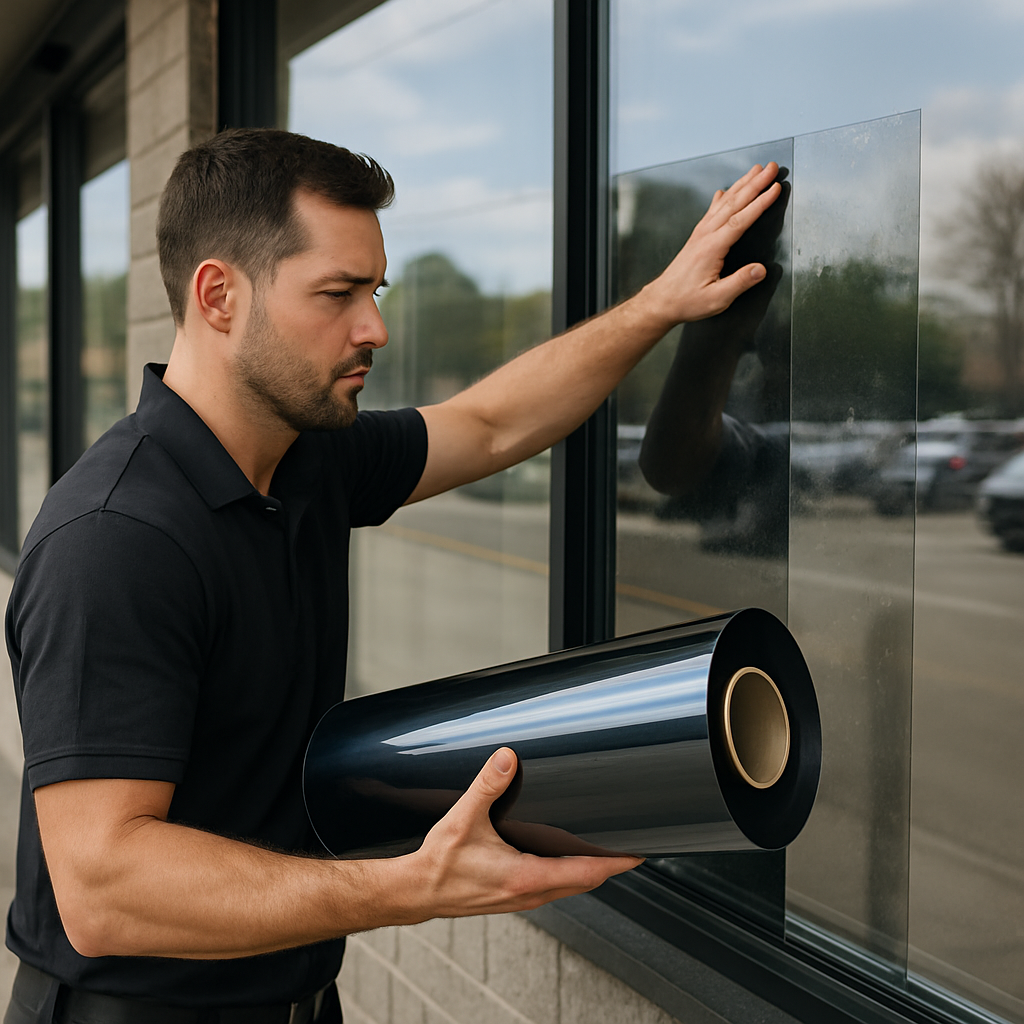
Next consideration: Match film technology to the dominant seasonal load on each elevation rather than applying a single film type building wide.
Energy savings, payback, and local incentives in Oregon
Straight answer: a properly specified energy efficient window film job will often pay for itself through lower HVAC runtime and reduced interior fade damage faster than window replacement, but the economics depend entirely on glass area, orientation, and how the building is used. Do not treat film as a one-size-fits-all energy measure; it is a targeted retrofit that works best where solar gain or continuous daytime cooling drives costs.
Realistic payback examples you can model
How to read these examples: costs shown are installed estimates for commonly used products and conservative annual energy and interior-protection value. Incentives or different film choices will change results materially.
- Portland rowhouse: 50 square feet of west glazing treated with a spectrally selective film; installed cost about $800. Estimated annual benefit combining reduced peak cooling and slower fabric fading about $180, yielding a simple payback near 4.5 years. This is a comfort-first retrofit where daylight retention mattered.
- Eugene small office: 250 square feet of south and west glazing fitted with a mid-range ceramic film; installed cost about $3,500. Higher daytime HVAC use and occupant comfort gains produce roughly $1,000 in annual savings, putting payback around 3.5 years. Offices with regular business-hours cooling see the fastest returns.
- Bend vacation rental: 120 square feet of mixed exposures treated with ceramic film to retain light and cut solar hotspots; installed cost about $1,800. Estimated annual benefit including lower cooling use and less interior damage about $600, with a payback near 3 years. Short-term-rental owners value guest comfort and reduced maintenance along with energy savings.
Important tradeoff: projects focused only on the lowest installed price tend to underdeliver. Ceramic and spectrally selective films cost more up front but retain daylight and curb appearance, which preserves passive winter gain and avoids tenant complaints. If your building has high daytime HVAC loads, the higher upfront cost often produces a shorter real payback because energy reductions are larger.
Incentives and the paperwork trap: Oregon programs such as those administered by Energy Trust of Oregon can improve economics for qualifying residential and commercial projects, but most incentives require pre-approval, specific documentation, and proof of professional installation. Projects completed without prior coordination frequently become ineligible for rebates.
One practical judgment: if your primary concern is winter heat loss, buy an insulating low-e film rather than a standard solar control film. For mixed heating and cooling loads typical in the Willamette Valley, a balanced spectrally selective option usually gives the best overall ROI. For Bend and other high-sun areas prioritize higher SHGC reduction without sacrificing daylight.
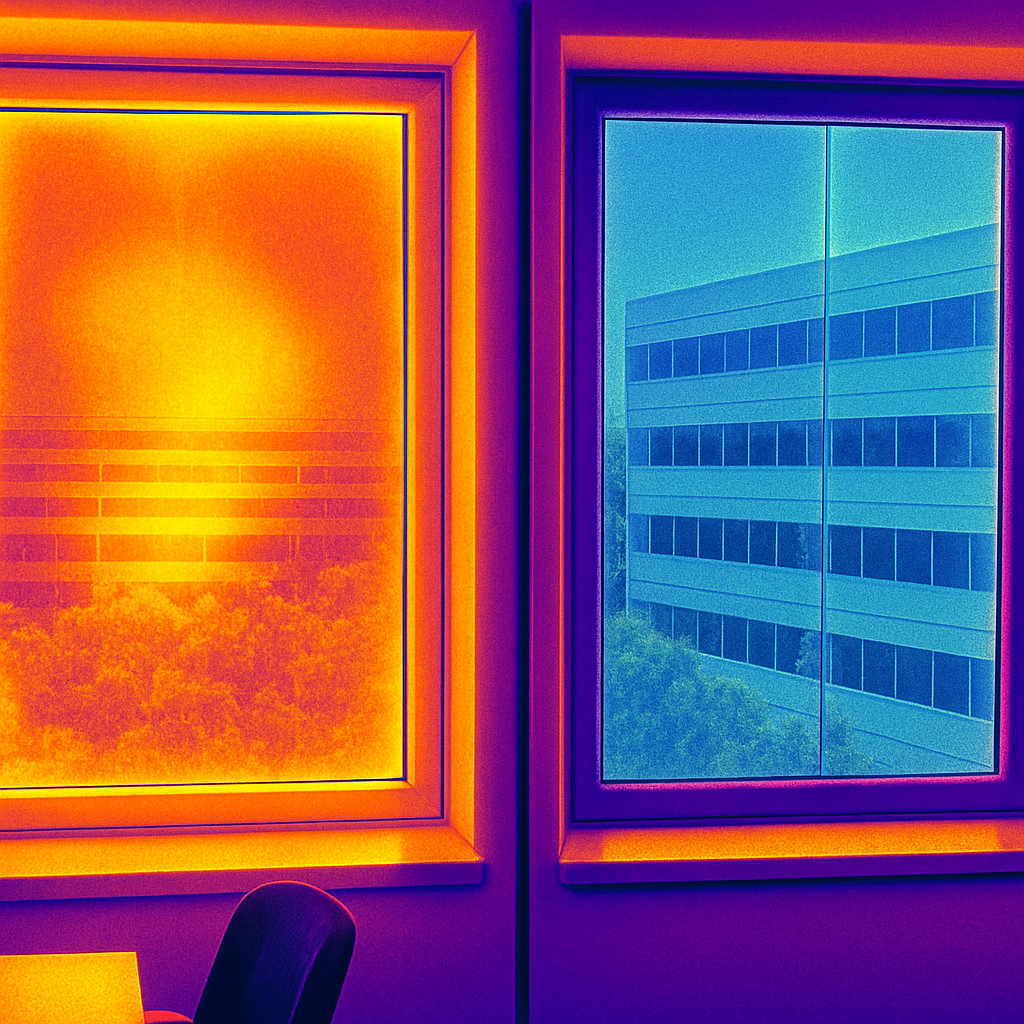
Next consideration: schedule an on-site measurement that records glass type, orientation, and usage patterns so savings estimates map to your building. If you want help running numbers for your property and checking applicable rebates, contact Tinting Oregon at Tinting Oregon contact or see service areas at Tinting Oregon service areas.
Installation process, timeline, quality indicators, and warranty expectations
Direct point: A well-specified and professionally fitted job is what turns an energy efficient window film from a sticker into a durable energy measure. Preparation, glass verification, and controlled on-site technique determine whether you actually get the comfort and energy outcomes the manufacturer promises.
Practical installation workflow
- Pre-assessment and photos: Technician documents glass type, frame details, existing seal condition, and takes photos. This is the record you need if a warranty claim ever arises.
- Product choice and measurement: Final film selection tied to orientation and daylight goals, with precise templates cut to the glazing. Good installers measure on-site rather than quoting from plans.
- Site prep and protection: Drop cloths, masking, and safe access for tall units. Movers of furniture and concealed protection for floors matter in offices and homes alike.
- Application technique: Clean, moisture-balanced application using squeegees and edge finishing. Properly trained crews remove all residue and align film to avoid puckers or trapped bubbles.
- Cure, inspection, and handoff: Installer documents batch/lot numbers, registers manufacturer warranty, photographs finished panes, and reviews care instructions with the client.
| Phase | What happens | Scheduling note |
|---|---|---|
| Assessment | Glass type check, photos, and tailored product recommendation | Book while weather and access conditions are known |
| Measurement & prep | Precise templating and material staging | Usually scheduled before installation to avoid delays |
| Installation | Application, edge finishing, immediate quality check | Most residential and small commercial jobs are completed in a single mobilization |
| Final inspection & paperwork | Warranty registration, client walkthrough, care guidance | Do not accept work without visible warranty registration and photos |
Practical tradeoff: Speed vs. permanence. Rushing installations reduces labor cost but raises the chance of trapped moisture, uneven adhesion, and callback work that voids workmanship guarantees. If a low bid promises an unusually fast schedule, expect corners were cut.
Quality indicators to insist on
- Batch and lot documentation: Each film roll has a lot number. Photographs of lot tags tied to the installed panes are the baseline for valid warranty claims.
- Edge finish and seal: Smooth, consistent edge trimming without ragged corners; no adhesive weeping. Poor edge work is the most common workmanship failure I see in the field.
- Uniform adhesion and optical clarity: No persistent clouding or large bubbles after initial settle time; color and reflectance should match the approved sample.
- Pre-install diagnostics recorded: Notes on tempered glass, pre-existing seal failures, or scratches. Installers who skip this step leave owners with surprise exclusions later.
Warranty realities: Manufacturers typically cover film defects (delamination, excessive fading, adhesive failure) under long-term warranties, while installers provide a separate workmanship warranty. Neither covers damage from pre-existing seal failure, impact, or misuse. Insist on seeing the manufacturer warranty document and the installer workmanship certificate before payment.
Maintenance that preserves coverage: Use pH-neutral cleaners, soft microfiber cloths, and avoid abrasive or ammonia-based products. Some warranties require registration within a set window after installation and periodic documented maintenance—skip those steps and you weaken your claim.
Concrete example: A Portland design studio had a west-facing retrofit using a spectrally selective film. The crew recorded roll lot numbers, photographed every pane after application, and registered the warranties on-site. Six months later a small discoloration was replaced under manufacturer coverage without argument because the installer had preserved the documentation trail.
One professional judgment: In Oregon’s variable conditions, plan installations for moderate humidity and temperatures when possible. Adhesive cure and initial adhesion behavior change in cold, damp weather; that influences long-term performance more than most owners expect. If you want help coordinating timing, inspection, and warranty registration, schedule an assessment with Tinting Oregon contact.
Keep this in mind: Documentation and workmanship matter as much as product selection. The right paperwork and a disciplined install are what convert energy efficient window film into a reliable, long-term upgrade.
Maintenance, durability, and code or historic district considerations
Straight fact: the long-term performance of energy efficient window film depends more on proper care, correct substrate selection, and conscientious permitting than on the sticker price of the film. Neglect any of those three and the film will fail early or create unexpected headaches.
Everyday maintenance that actually extends service life
Routine care: clean treated glass with a pH-neutral cleaner and a soft microfiber cloth; avoid ammonia, bleach, abrasive pads, and razor blades. Wipe from the center outward and never pry at the film edge. For high-use storefronts plan a light cleaning every 1–2 weeks and a gentle deep clean quarterly.
Cure and handling window: newly applied film needs time to adhere fully. In Oregon locations with cool damp weather, adhesive cure can take longer — expect 30 to 90 days of gradual settling. During that time avoid heavy scrubbing and keep ventilation consistent to prevent trapped moisture from delaying adhesion.
Durability risks to watch for: edge-lift or peeling, hazing, and localized delamination are the primary failure modes. Coastal salt spray, repeated thermal cycling from direct sun followed by cold nights (common in Central Oregon), and pre-existing seal failures accelerate these problems. If you see small bubbles at the perimeter or discoloration near the frame, document it and call the installer before it grows.
Compatibility tradeoff: not every film suits every pane. Low-e coatings, heat-treated or tempered glass, and windows with failing seals can change how a film behaves and how warranty claims are adjudicated. Installing insulating low-e film can improve winter comfort on single-pane glass but may offer little on modern double-pane low-e units and in some cases complicate the glass manufacturer's warranty. Insist on an on-site glass inspection before purchase.
Permits, historic districts, and code traps — practical steps
Reality check: visual impact drives most historic district and storefront code objections, not the energy savings. Reflective or highly visible exterior films trigger scrutiny because they change a building's appearance; interior, neutral-appearance ceramic films are less likely to draw objections.
What to do before you buy: obtain photos and material samples and submit them to your local historic commission or building department if your property is listed or in a designated district. For commercial projects check with local code officials about fire-rating or egress glass rules — some jurisdictions limit applied films on certain exit glazing.
Concrete example: A homeowner in a Portland historic district installed a reflective exterior film without prior approval and received an order to remove it. The quicker route would have been submitting a sample of a neutral interior ceramic film like Huper Optik with exhibit photos and a short permit packet prepared by the installer. Tinting Oregon routinely prepares those materials and coordinates with commissions to avoid costly rework.
Installer responsibility: demand documentation. A competent installer provides pre-install photos, glass-type notes, manufacturer lot numbers, and a permit-ready spec sheet showing the film color, exterior reflectance, and UV performance. That paperwork matters for warranty claims and for convincing a historic review board that the visual change is minimal.
Judgment most owners miss: interior films are usually the safer choice for compliance and longevity in Oregon's mixed climates — they reduce visual change to façades, lower exposure to weather, and make warranty administration cleaner. The tradeoff is limited access for exterior grime on very tall storefronts, which may justify exterior-rated film only after verifying local approval.
Next consideration: prioritize a pre-install inspection that documents glass condition and zoning/historic constraints — that single step prevents most warranty denials, permit reworks, and early failures.
Real-world examples and customer scenarios with recommended next steps
Direct point: Choose film based on the lived problem you need fixed, not the cheapest roll. Energy losses, occupant complaints, and fade damage are distinct outcomes that require different film families and installation priorities—matching those correctly is where owners get measurable results from energy efficient window film.
Concrete example 1: Portland family room: a household fighting evening glare and overheated seating areas opted for a spectrally selective film (a 3M Prestige-class product). Installed for roughly $900–$1,200 for the primary west-facing panes, the immediate benefits were consistent evening comfort and reduced complaints about glare; the owners kept daylight and avoided window replacement.
Concrete example 2: Salem law office: staff reported frequent screen glare and frequent AC spikes during business hours. The firm chose a neutral ceramic film like LLumar CTX across the south and west façade (installed cost in the low thousands). The priority was stable light for monitors and fewer HVAC runtime spikes during peak sun hours—this case favored durability and low-reflectance appearance over maximum darkness.
Concrete example 3: Bend vacation rental: the owner needed UV protection for hardwood floors and to keep daytime interiors cool for guests without darkening rooms. A ceramic option such as Huper Optik delivered preserved views and UV blocking; installed cost sat in the mid-thousands. The owner gained fewer guest complaints and lower short-term cooling loads during sunny shoulder-season days.
Practical insight: For rental or commercial properties prioritize operational impacts over lab-optimal specs. A film that slightly reduces VT but is extremely durable and easy to maintain will reduce tenant calls, turnover hassle, and cleaning costs—often a larger financial win than chasing the absolute lowest SHGC on paper.
Limitation to plan around: If your glazing is modern, low-e double-pane, expect limited winter insulation gains from standard solar films. In those cases, focus on solar heat rejection and UV blocking rather than expecting a big U-factor improvement.
Recommended next steps before you call Tinting Oregon
- Create a quick window inventory: Photograph each facade, note orientation (north, south, east, west), and record which rooms report the most discomfort or fading.
- Prioritize outcomes: Rank the top three goals (for example: glare reduction, daylight retention, UV protection, tenant durability). This shapes product selection more than price alone.
- Request targeted documentation: Ask your installer for NRFC or manufacturer datasheets for the specific film model and sample swatches so you can evaluate VT and exterior reflectance in person.
- Check incentives with pre-approval: Before work begins, ask Tinting Oregon to confirm whether your project qualifies for Energy Trust of Oregon or utility incentives and to prepare the required paperwork.
- Schedule an on-site measurement: Insist on a glass-type check and lot-number photo as part of the assessment so warranty claims are straightforward later.
Final judgment: If your goal is tangible comfort improvement and fewer tenant or occupant complaints, pick a film and installer who document glass type, provide sample swatches, and register warranties on the spot. That process matters more than the advertised maximum SHGC reduction; it is how you turn energy efficient window film into a reliable, predictable retrofit. When you are ready, request an on-site assessment at Tinting Oregon contact or check service coverage at Tinting Oregon service areas.
