
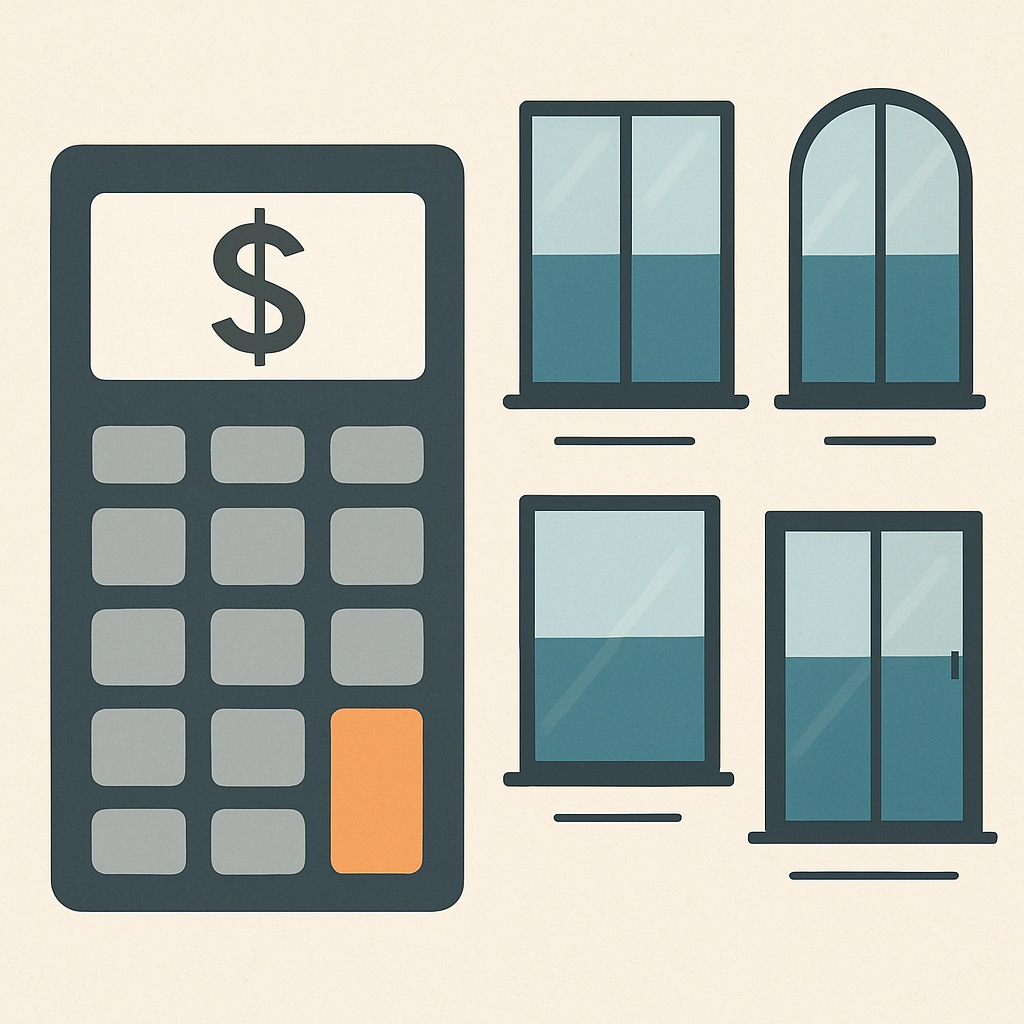
Window Tint Cost Per Window: Pricing Examples for Different Window Types and Sizes
Understanding window tint cost per window prevents sticker shock and gives you a realistic budget before the installer shows up. This article gives concrete pricing examples by window type and size, compares common film categories and brands, and explains the cost drivers you should expect in Portland, Salem, Eugene, and Bend. It finishes with a practical on-site estimate checklist so you can get apples-to-apples quotes from Tinting Oregon or any local installer.
How Window Tint Pricing Works: Cost Components
Straight answer up front: window tint cost per window is not a single line item — it is the sum of material, labor, preparation, and company overhead. Understanding how those pieces fit explains why two installers can give very different numbers for the same pane.
What makes up the price
Material: This is the film itself plus any edge-seal products. For installed work the customer-facing portion of material usually represents roughly 35–55 percent of the total price on residential jobs. Premium films (3M Crystalline, 3M Prestige, Huper Optik) push the number toward the high end.
Labor: Cutting, fitting, squeegeeing, and finishing take time and skill. Labor typically accounts for 25–45 percent of cost; complex cuts, tempered glass, or onsite trimming climb toward the upper range. Labor is where installers express real quality differences — neat edges, no bubbling, proper shrink when needed.
Preparation and disposal: Removing old film, cleaning aggressive adhesives, and hauling waste add real cost. Expect 5–15 percent extra on average; removal-only jobs can double the prep line for a particular window.
Overhead, warranty handling, and profit: Trucks, certifications, insurance, and warranty administration add 10–20 percent. Lowball quotes often skimp here — you pay later in callbacks or shorter warranties.
Per-window versus per-square-foot pricing
When installers charge per window: Small, uniform windows in a typical home are often priced per window because it simplifies bidding and scheduling. Per-window prices usually include an implicit average area and can be convenient for quick estimates of a bathroom or bedroom bank of windows.
When per-square-foot makes sense: Large picture windows, storefronts, and irregular shapes should be priced by area. Per-square-foot pricing is more transparent for large panes and specialty films, and it prevents oversized windows from being underquoted or small windows from being overcharged.
- Minimum charges: Many shops enforce a per-window minimum or a minimum job value to cover travel and setup.
- Mobilization fees: High-rise work, lifts, or rope access are billed separately and can multiply labor costs.
- Film removal: Always confirm whether removal is included or priced per window/hour.
Concrete example: A 3 ft x 5 ft (15 sq ft) mid-range ceramic install quoted at $12/sq ft comes to $180 per window. Using a practical internal split — material 40% ($72), labor 40% ($72), overhead 15% ($27), prep/disposal 5% ($9) — shows how labor and film quality explain the majority of the price.
Practical trade-off to accept: If you want the cheapest per-window number, expect lower-grade film or faster installs that may void certain manufacturer warranties. Paying a premium for a certified installer and a named brand usually saves money over time because fewer reworks and better warranties reduce long-term cost.
If you want reference material: Read the US Department of Energy notes on window film performance at Energy Saver and our film comparisons at Window Film Comparison before choosing materials.
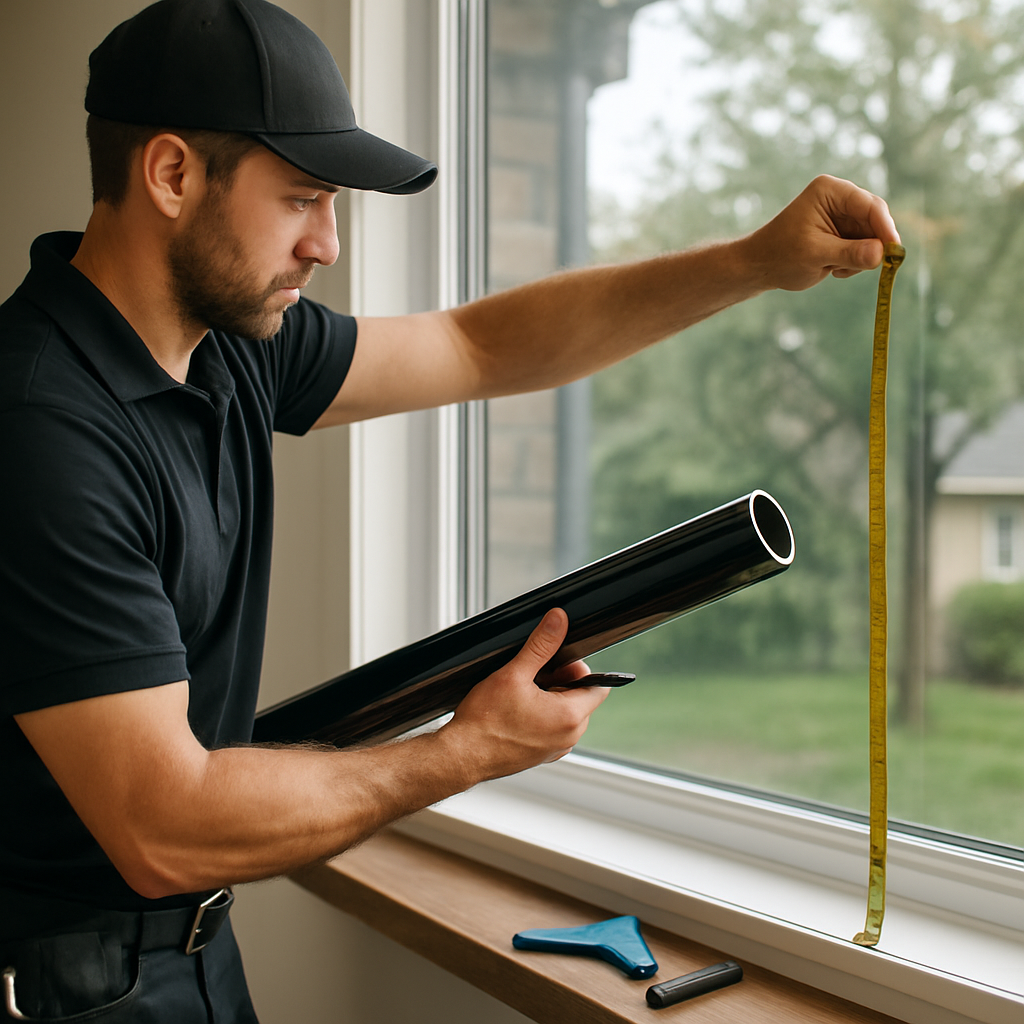
Installed Cost Ranges by Film Type and Brand
Straight to the point: installed window tint cost per window tracks closely with film category first and brand second. Below are practical installed price bands you will see on local quotes in Oregon, expressed as installed price per square foot so you can scale to any pane size.
| Film category | Typical installed price per sq ft | Representative brands / notes |
|---|---|---|
| Dyed and basic metalized | $6 to $12 | Llumar basic series; budget option for glare and privacy |
| Ceramic and spectrally selective | $12 to $25 | Huper Optik, Llumar CTX, mid to high performance for heat control |
| Premium branded solar control | $18 to $35 | 3M Prestige, 3M Crystalline; higher VLT with superior heat rejection |
| Security and safety films | $15 to $35+ | Thicker multi-layer films, require stronger edge treatment and anchors |
| Decorative and printed films | $10 to $30 | Custom patterns and frosted films vary with print complexity |
Practical insight: those ranges are for installed work only and assume normal access from the floor. Expect the installer to add line items for lift rental, rope access, or film removal on older windows. In my experience a quoted per-window figure that hides access or removal in fine print is the most common cause of mid-job price increases.
Tradeoff to accept: cheap dyed films buy a low upfront price but degrade faster and offer minimal heat rejection. Premium films cost more up front but reduce callbacks and often carry longer manufacturer warranties. For tenants or short-term fixes, standard dyed or metalized films make sense; for owner-occupied homes and offices aiming at energy performance, spend up front on ceramic or branded solar control.
Concrete example and use case
Concrete example: a 4 ft by 6 ft picture window is 24 sq ft. Quoting ceramic film at $18 per sq ft yields an installed cost around $432 for that pane. In a real-world job I handled for a Portland office, choosing a branded spectrally selective film increased the single-pane cost by about 35 percent compared with dyed film but eliminated visible iridescence and reduced interior heat hotspots noticeably.
Brand judgment: 3M Crystalline and 3M Prestige command a premium because they maintain clarity and deliver predictable solar performance across visible light levels; that matters in storefronts and high-visibility rooms. Llumar and Huper Optik cover most residential and commercial needs reliably and usually undercut 3M on price for similar specs.
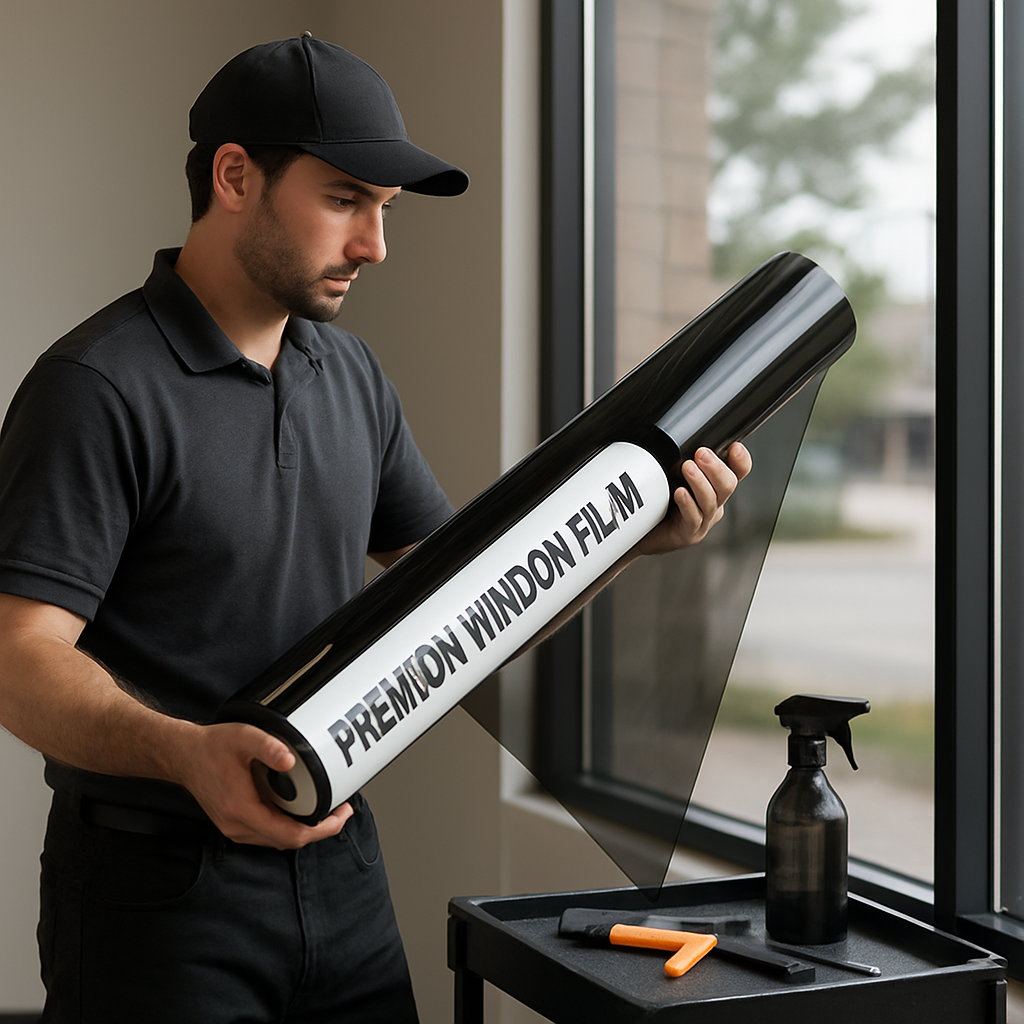
If you want to compare performance as well as price, review manufacturer tech sheets before accepting the lowest per-square-foot rate. See 3M Window Films and our Window Film Comparison for side by side specs that matter when choosing between price bands.
Pricing Examples Per Window Type and Size with Sample Numbers
Direct point: installers quote real projects as line items, not abstract rates. Below are plausible, itemized sample quotes you would see on a site visit in Oregon — each entry lists the glass area, film choice, installed price, and a short note on what pushed the figure up or down.
Sample per-window quote breakdowns
| Window type | Dimensions | Glass area | Film used | Installed price | What is included |
|---|---|---|---|---|---|
| Small bathroom single-hung | 2.5 ft x 3.0 ft | 7.5 sq ft | Llumar basic dyed | $85 | Material, 30 minutes install, standard cleaning |
| Medium casement | 3.0 ft x 4.0 ft | 12.0 sq ft | Huper Optik spectrally selective | $220 | Material, careful template cuts, interior trim work |
| Large picture window | 5.0 ft x 6.0 ft | 30.0 sq ft | 3M Prestige series | $780 | Premium film, edge seal, extended warranty registration |
| Sliding patio door | 6.0 ft x 7.0 ft | 42.0 sq ft | Mid-grade ceramic | $560 | Edge finishing, heavier film handling time |
| Storefront single pane | 4.0 ft x 10.0 ft | 40.0 sq ft | Security laminated film | $1,600 | Reinforced anchors, permit-level documentation |
Practical insight: small windows trigger minimum charges that inflate the per-square-foot cost. A 7.5 sq ft pane at $85 looks expensive per sq ft, but the installer still needs the same setup, cutting, and finishing time that a larger pane requires. Expect per-window minimums or a small-job surcharge.
Tradeoff that matters: you can lower the quoted number by selecting dyed or basic metalized films, but that usually increases the chance of visible degradation and shortens the effective life of the installation. If appearance and long term clarity matter, paying for a premium film and a certified installer is often cheaper over a 10 year window of ownership because you avoid reworks.
Real use case: a property manager in Eugene had five mid-size casement windows quoted. The low bid used dyed film at $80 per window but excluded removal of old adhesive. The manager accepted a Huper Optik install at $220 per window that included removal and a 10 year warranty. Tenants reported reduced glare and there were no callbacks in the first two summers, which validated the higher upfront spend for operational simplicity.
What to watch for in these numbers: security and laminated films frequently add discrete line items such as anchors, structural edge treatments, and additional inspection time. For large commercial panes, access and safety requirements can add several hundred dollars per pane even when the per-square-foot material price looks reasonable.
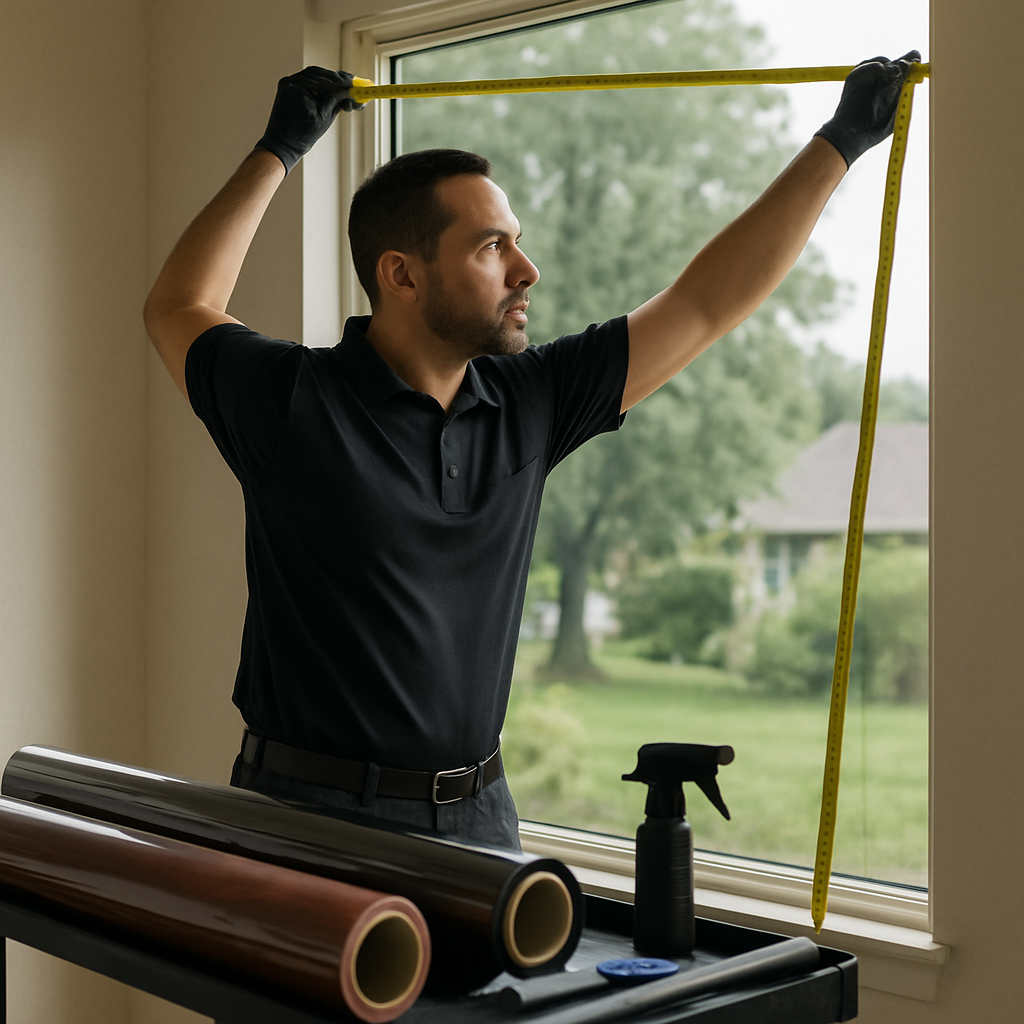
For residential comparisons see residential window tinting and for commercial scenarios review commercial window tinting. If you are pursuing energy incentives, check program rules at Energy Trust of Oregon before locking in a film selection so you know which products qualify.
Commercial and Specialty Scenarios: Security, Decorative, and High-Rise
Immediate point: Security films, decorative graphics, and high-rise installs are not incremental choices — they change the contract, the risk profile, and the installer workflow. Expect different line items, different warranties, and different approval needs than a typical residential job.
Security / safety films: what actually raises price
Key drivers: The headline cost isn’t the film thickness — it is the anchoring method, edge treatment, and compliance documentation. A thick laminated film slapped on glass without perimeter attachment gives appearance but not performance; full security installations usually require structural anchors or channel systems and often a structural engineer sign-off for critical locations.
Practical trade-off: You can buy thicker film to reduce shattering, but if the frame can detach or the film peels at the edges the system fails. For true forced-entry mitigation budget for anchors and inspection — that is where most commercial projects spend money.
Concrete example: A downtown retail tenant required upgraded security after an attempted smash-and-grab. The installer quoted a laminated security film plus perimeter anchors for six storefront panes; the final invoice combined material plus specialized edge anchors and an on-site inspector fee into a single project price of about $3,400. The extra cost paid for a documented installation that satisfied the landlord and insurer, avoiding a longer and more expensive glass replacement.
Decorative and printed films: hidden complexities
What matters: Custom printing, multi-color patterns, and glass frosting look simple on a mockup but add time in cutting, alignment, and post-cure inspection. Expect set-up fees for digital printing, proof approvals, and possible rework if patterns don’t match mullions or blinds.
Limitation to watch: Decorative films can affect required signage, emergency egress visibility, or ADA sightlines. If your storefront or lobby has code-required markings, confirm the installer understands local rules or you'll spend extra to redo panels.
Concrete example: A boutique in Eugene replaced clear panes with a custom frosted print for privacy and branding across ten windows. The job included a proofing fee and minor alignment adjustments on-site, ending in a final bill near $1,800. The owner accepted the extra cost to avoid permanent etched glass and to preserve the ability to remove or update the design later.
High-rise logistics: why price jumps nonlinearly
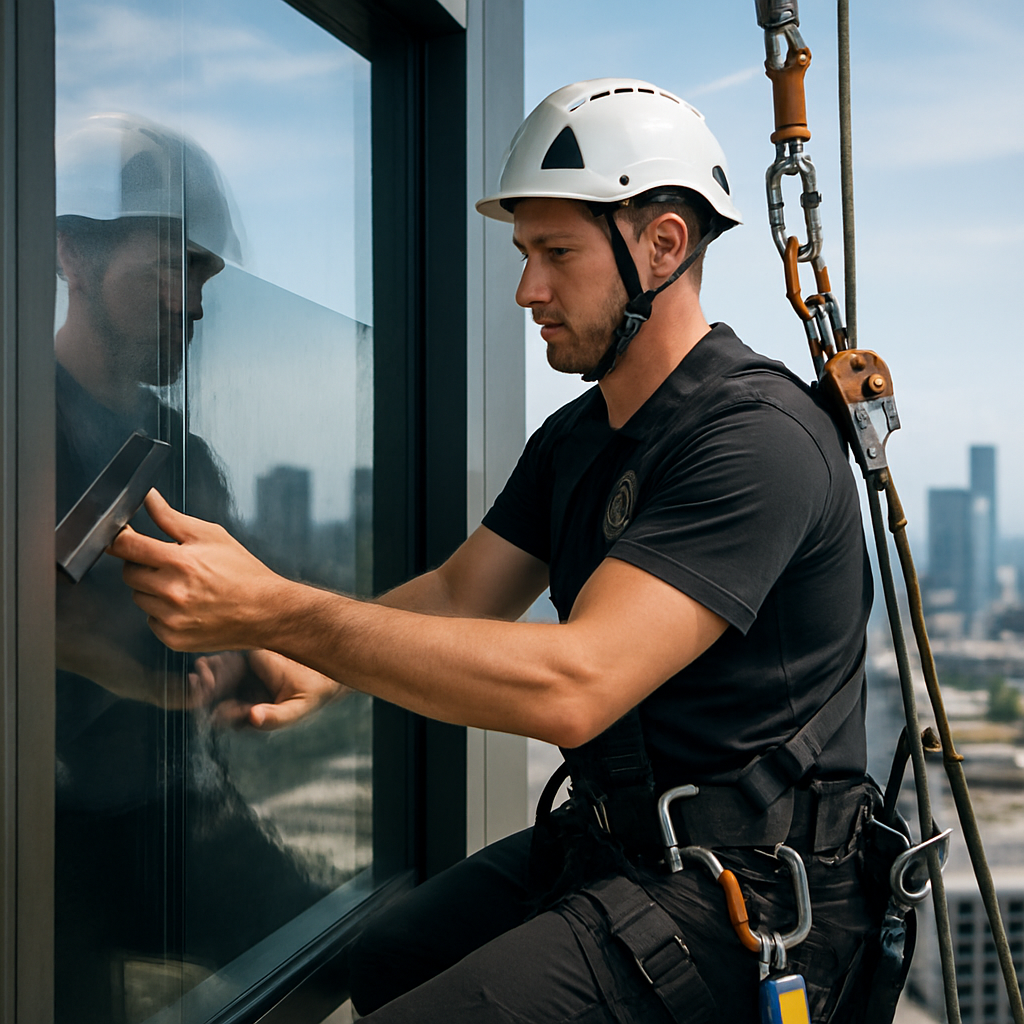
Reality check: High-rise work is not a per-window multiply — it is a logistics problem. Rope access, swing stages, lift rental, site safety plans, and building permit coordination add mobilization and scheduling costs that are charged separately from material and install time.
Judgment call: For mid- and high-rise projects, the primary lever to control cost is reducing mobilizations. Batch the work, do full-floor runs, and avoid partial-day access windows. Single-pane fixes performed across multiple days are the fastest way to inflate your per-window price.
Concrete example: A property manager on the 18th floor scheduled film for a bank branch. The rope-access crew required a full-day mobilization plus two days of installs; the building also required a safety watch. The client chose to cluster eight panes into one mobilization, which lowered the per-pane premium compared with spreading the work over separate access days.
- Ask before you sign: Does the quote include anchors, permits, and a mobilization fee for lifts or rope access?
- Negotiate scope: For decorative or security work, bundle windows and require a written mockup and installation plan.
- Confirm warranty boundaries: Ensure the installer documents whether warranty covers anchor failure and who handles rework if anchors need retrofit.
Additional Line Items and Hidden Costs to Watch For
Start here: most price surprises are not mysterious — they are separate invoice lines you did not spot on the estimate. Read quotes with the same attention you give a lease: look for small, specific charges that can add hundreds to your final bill.
How these extra charges show up (and what they mean)
- Site-prep or substrate work: often listed as a one-time flat fee. It covers fixing heavy dirt, glazing compound removal, or interior protection; if your windows are older this line can be substantial.
- Adhesive remediation or old-film stripping: described as an hourly service or per-window line item. When previous film has cured, removal requires solvents and scraping; that is labor intensive and frequently excluded from quick estimates.
- Perimeter finishing or edge-seal work: labeled as finishing, trim, or seal; thicker or laminated films need more edge treatment and sometimes mechanical anchoring.
- Access, mobilization, or lift time: shown as mobilization, lift rental, or daily rope-access fee. It is billed separately from install hours and can dwarf material cost on vertical or high-elevation jobs.
- Print/proof and setup fees for decorative work: listed as proofing, artwork setup, or color-match. Custom graphics carry non-refundable setup charges.
- Warranty registration or documentation fee: some installers charge to register the job with the manufacturer or to produce serialized warranty paperwork.
- Revisit or rework hourly rate: presented as a future hourly line. If the contractor adds this, insist on a warranty window that covers small touch-ups without extra labor charges.
Practical trade-off: you can often accept an itemized charge if it reduces uncertainty — for example, paying a defined adhesive-removal line is better than an open-ended discovery rate. But be wary of estimates that leave removal, access, or finishing as undefined contingencies; those are precisely where costs escalate.
Concrete example: a small retail owner received a $1,250 quote for a storefront run. On install day the crew reported baked-on adhesive and added a $320 removal charge plus a $95 single-day lift fee, pushing the final invoice to $1,665. After the owner pointed to the original scope, the installer absorbed the lift fee and reduced the removal charge to $200 because the owner agreed to let them bundle nearby windows into the same mobilization.
Contract language and tactics that prevent surprises
- Require an itemized per-pane line: include measured glass area, film brand/series, unit price, and whether removal is included.
- Define mobilization and access charges explicitly: ask for the cost per mobilization day and whether multiple floors or buildings will be treated as separate mobilizations.
- Set firm change-order rules: any mid-job extra work must be approved in writing with a capped hourly rate.
- Ask for warranty scope in writing: who pays for rework, what conditions void the warranty, and whether registration fees are included.
Next step to avoid surprises: request an itemized on-site estimate and attach photos of the windows when you submit a request. If you want an apples-to-apples comparison, ask each bidder to use the same film brand and to confirm whether removal, edge work, and mobilization are included before you make a decision. For a formal site visit, use our contact form: contact.
How to Get an Accurate Quote: On-site Estimate Checklist
Direct point: an accurate on-site measurement and a repeatable spec packet are the single best defenses against an inflated final bill. Phone estimates set expectations but do not replace a physical walk-through when you care about the true window tint cost per window.
Before the visit – assemble one packet
- Create a single reference sheet: a numbered window schedule (A1, A2, etc.), rough dimensions, and interior/exterior photos for every pane so all bidders quote the same items.
- Note glass technicals and context: annotate panes that are tempered, laminated, low-E, insulated, or have existing film; include floor/height and whether blinds or mullions obstruct work.
- State performance goals: choose heat rejection, glare reduction, privacy, or security as primary objective rather than asking vendors to pick for you.
- Access and timing constraints: list availability windows, whether lifts/rope access are allowed, and any building rules or insurance requirements.
- Attach utility or HVAC info for commercial projects: a recent electric bill or cooling peak can help installers size the benefit and quote appropriate spectrally selective films.
On-site actions to require
- Signed measurement sheet: ask the installer to measure each pane and sign the sheet. This is the baseline for the contract and avoids later measurement disputes.
- Show a physical film sample and tech sheet: demand the exact film part number, the VLT and SHGC values, and a paper tech sheet you can keep.
- Request a small test patch or mockup: for premium or decorative films insist on a test on one pane before full roll-out; make acceptance criteria part of the quote.
- Get mobilization details: have them list lift, rope, permit, and anchor needs with dollar amounts and the number of mobilizations billed.
- Clarify removal policy and capped change-order rate: removal included or billed hourly, and what hourly rate applies if unexpected adhesive or substrate issues appear.
Trade-off to understand: paying a modest trip fee or scheduling a paid site inspection is worth it when windows are irregular, tempered, or part of a commercial facade. Most reputable installers credit that fee against the job if hired. Cheap, no-visit quotes are useful for ballpark budgeting only.
Practical judgment: insist the quote shows film brand and series, measured area, per-window or per-square-foot rate, and separate lines for removal, edge treatment, and access. If an installer resists producing those specifics it usually signals sloppy scope control in practice.
Concrete example: a Salem homeowner got three bids for a 5 ft by 6 ft picture window. Two vendors gave phone estimates near $300. An on-site visit revealed low-E coated glass that required a spectrally selective film; the accurate quote rose to $620 for that pane, included edge sealing and a one-pane test patch, and prevented an immediate failure mode that would have required rework within 18 months.
Bring the same packet to every bidder, demand a signed measurement sheet and a test patch option, and require film part numbers plus tech sheets on the quote.
Energy Savings, Incentives, and Payback Examples for Oregon
Direct reality: window tint can cut summertime cooling demand where solar gain is a primary driver, but the economics are highly situational. In Portland, Salem, and Eugene the biggest wins are west and south glazing on buildings with high internal loads or commercial spaces with long occupied hours. In Bend and other colder areas the winter heating penalty from reduced passive solar gain can lengthen payback or even make tinting a net energy loss if heating dominates.
Important tradeoff: premium spectrally selective films preserve visible light while rejecting infrared energy, which improves occupant comfort without darkening rooms dramatically. That performance costs more up front. If your objective is purely glare or privacy, a lower-cost film is reasonable. If your objective is measurable HVAC savings or to reduce peak demand charges in a commercial building, choose higher-performance film and expect a longer documentation and approval process for incentives.
How to produce a defensible payback estimate
- Measure area and orientation: total glass area by exposure yields the baseline load contribution.
- Estimate solar heat gain reduction: use manufacturer SHGC improvements from the film tech sheet rather than vendor marketing claims.
- Translate to energy saved: convert reduced heat gain to cooling kWh using your building type and local cooling degree-day adjustments or an energy model for commercial projects.
- Convert to dollars and compare to installed cost: include any incentives or utility rebates and account for expected film lifetime and warranty coverage.
Concrete example: a small office in Salem with 120 square feet of west-facing glass installs a spectrally selective film. The installer and owner agree the film will reduce peak solar gain enough to save about 1,800 kWh of cooling energy annually, worth approximately $360 per year at local commercial rates. With an installed project cost of $2,100 the simple payback is about 5.8 years; adding an incentive that covers 30 percent of materials reduces payback to under 4 years.
Limitations that matter: incentives and measured savings determine whether payback is realistic. Many residential installs do not trigger rebates in Oregon unless bundled with larger efficiency projects. Commercial projects that pursue incentives typically need pre-approval, measured baseline consumption, and post-install measurement and verification – that process adds time and minor upfront fees but is required to capture meaningful rebates from programs like the Energy Trust of Oregon.
Practical judgment: if your priority is energy cost reduction in a commercial property, plan for pre-approval with the incentive program and insist the installer includes an M and V plan in their proposal. For most owner-occupied homes, buy film for comfort and UV protection first and treat energy savings as a secondary benefit unless you have unusually high cooling loads or large west-facing glass areas.
