
Window Tinting in Medford, Oregon: Options, Costs and Local Installer Tips
If you own a home, storefront, or vehicle in Jackson County, window tinting in medford oregon can cut glare, lower cooling costs, and protect interiors from UV damage. This guide breaks down film types with real product examples, gives realistic local cost ranges, covers Oregon-specific compliance, and lists the exact questions to ask any Medford installer so you get the right film and a reliable warranty.
Why window tinting is a good fit for Medford properties
Medford gets hot in summer and the sun is unforgiving on west and south glazing. That pattern makes targeted solar control and spectrally selective films unusually cost effective here: you remove afternoon heat, cut glare for living rooms and offices, and slow UV fade on floors and retail displays without losing useful daylight.
Tradeoff to acknowledge: greater heat rejection generally means some change to view and light. In practice the best results in Medford come from films that prioritize heat rejection while keeping high visible light transmittance – think spectrally selective and ceramic films rather than dark metallic foils.
Where tinting produces measurable value in Medford
- Residential comfort: reduces hot spots on south and west façades and lowers glare for media rooms and home offices; privacy window film Medford options add screening for ground-floor rooms.
- Commercial storefronts: reduces peak cooling demand and improves merchandise longevity – tenants notice tempered temperatures and fewer customer complaints about glare.
- Automotive benefit: ceramic and spectrally selective auto films maintain visibility while cutting cabin heat, making them worth the premium for drivers who park outdoors in Rogue Valley sun.
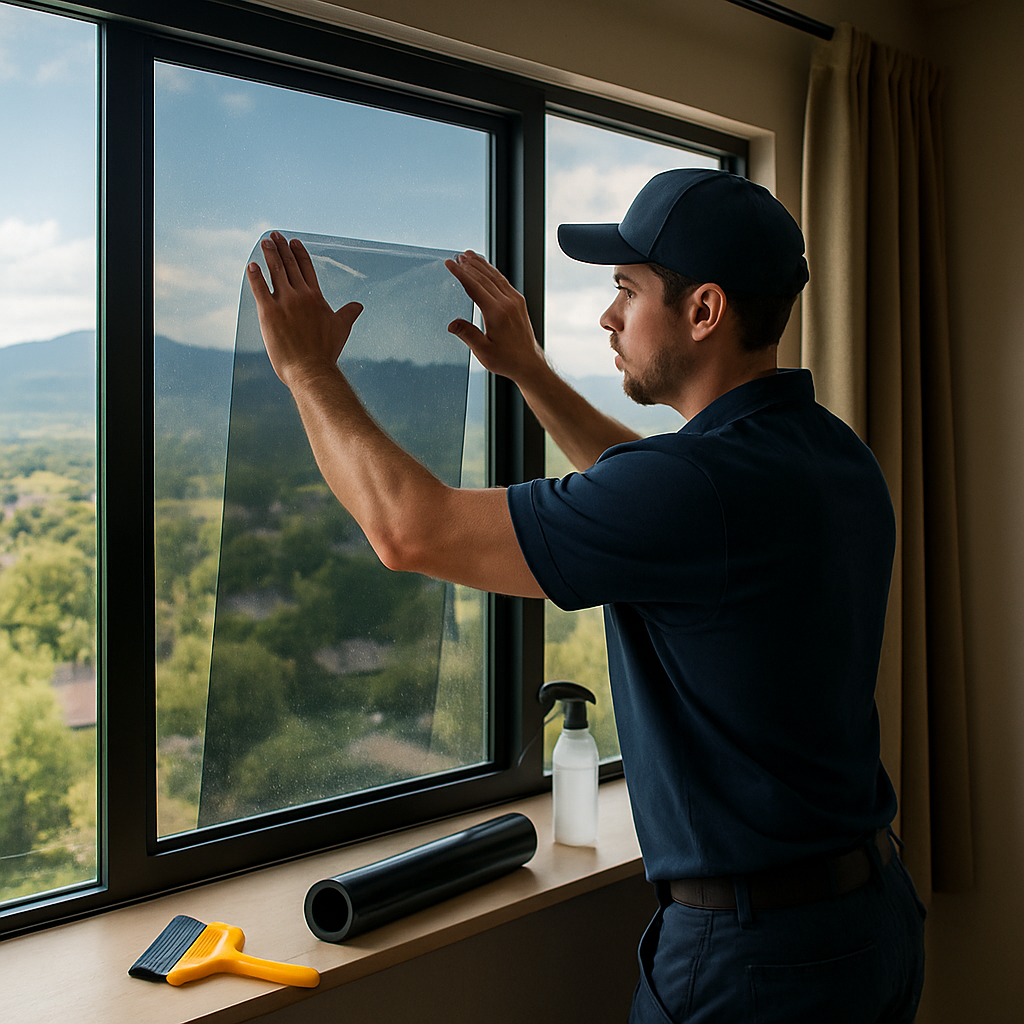
Concrete example: A south-facing living room with four 3 by 5 foot single-pane windows typically overheats in late afternoon. Installing a spectrally selective film such as 3M Prestige can reduce perceived glare and drop surface temperatures noticeably within days; occupants report less need to run whole-house air conditioning in the hottest hours. That same approach scaled to a storefront bay often reduces midday cooling spikes and flattens HVAC load.
Practical limitation and installer consideration: historic districts and some storefront design guidelines restrict reflective or heavily tinted looks. Also check window manufacturing warranties before applying film – some factory low-e or tempered products require written approval from the glass maker to preserve warranties. A qualified estimator will document glass type and get manufacturer confirmation when required.
Local judgment: for most Medford homes and small businesses the best balance is spectrally selective or ceramic films that prioritize heat reduction with minimal visible darkening. Avoid choosing films solely by price or by how dark they look in the showroom – those decisions cost money in comfort and resale value.
Film categories and recommended products with real examples
Pick the film by the problem you need to solve, not by how dark it looks. In Medford most decisions come down to three objectives: cut solar heat and glare, protect interiors from UV, or add safety/privacy. The film category you choose determines visible light transmittance (VLT), solar heat rejection, reflectivity, and cost — so ask for those three performance numbers when you get quotes.
Practical product map
| Category | Representative products (manufacturer) | Best use case | Key trade-off or limitation |
|---|---|---|---|
| Spectrally selective solar control | LLumar CTX and similar high-end lines | South or west glazing where you want high daylight with strong heat rejection | Higher cost than basic dyed films; performance depends on glass construction |
| Ceramic/metal-free films | Huper Optik ceramic | Automotive and residential installs where neutral tint and minimal signal interference matter | Premium price, but minimal color shift and long-term clarity |
| Low-e / insulating retrofit films | Solar Gard Ultra Performance and other low-e products | Owners wanting winter R-value gains plus summer control on dual-season buildings | Can interact with factory low-e coatings; verify IG warranty compatibility |
| Safety and security film | Madico and 3M Safety & Security lines | Ground-floor glazing, doors, and frameless storefronts to reduce glass hazards | Thicker films change edge detail and may require different mounting for maximized benefit |
| Decorative / privacy film | LLumar Frost, 3M Fasara | Office partitions, bathrooms, and retail branding where daylight retention and screening are needed | Provides privacy and design options but offers limited solar performance |
| Automotive high-performance | 3M Crystalline and high-end Huper Optik auto lines | Drivers who park in full sun and need heat rejection without darkening visibility | Must be specified to meet Oregon VLT and reflectivity rules |
Practical insight: spectrally selective and ceramic films deliver the best real-world balance in Medford — they reject infrared heat while preserving visible light. Cheap dyed films save money up front but fade faster and do little for longwave heat; metallic films can give good rejection but create reflective looks and possible radio interference for some vehicles.
Concrete example: A west-facing master bedroom in East Medford with afternoon glare swapped basic tinted film for a ceramic spectrally selective product. Within a week occupants reported cooler surfaces and maintained daylight for reading; the room no longer needed blackout curtains during peak sun, improving both comfort and usable daylight.
- Selection rule: always compare
VLT,SHGC, and emissivity numbers rather than judge by on-screen photos. - Warranty check: insist on manufacturer-backed written warranty and confirm transferability if you plan to sell the property.
- Compliance: for vehicles, request a compliance certificate showing VLT and reflectivity to match Oregon DMV rules; installers who avoid this are a red flag.
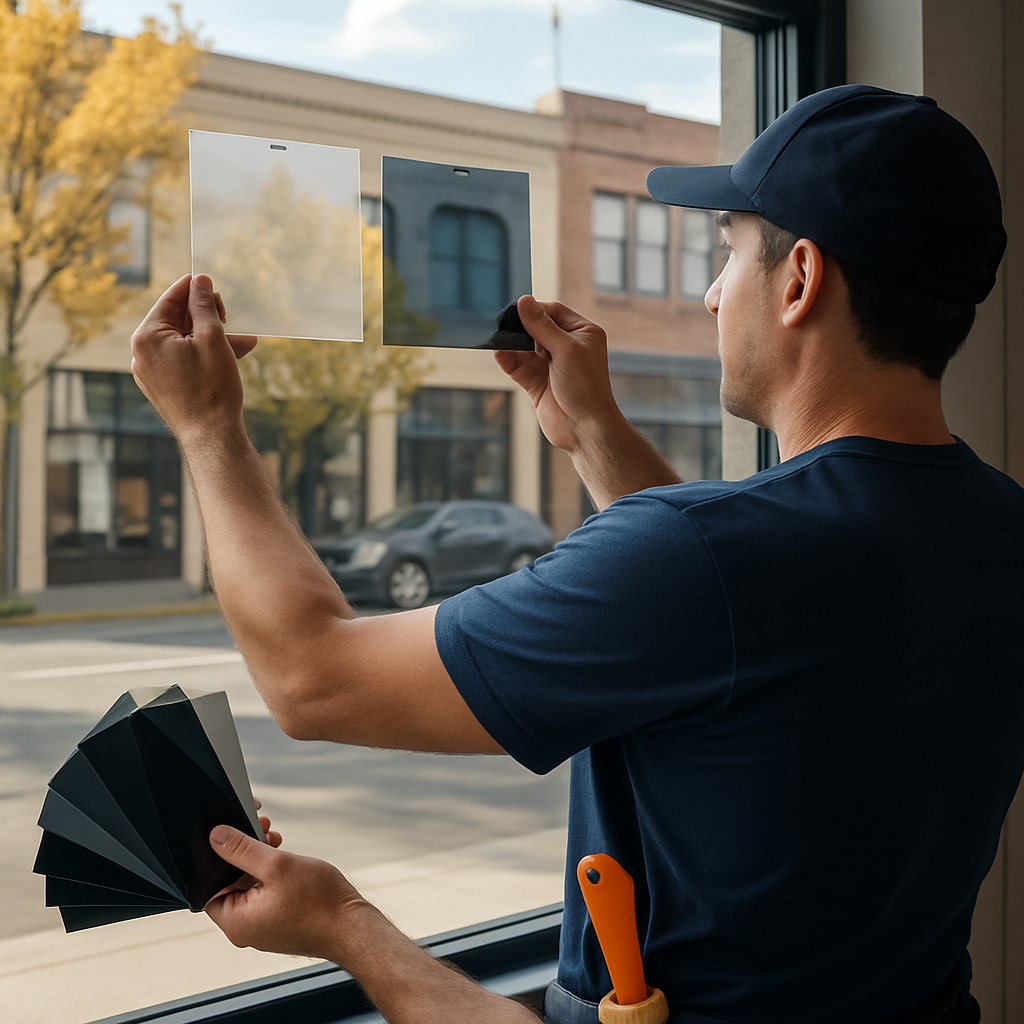
Next consideration: if you want help matching a film to a specific window type or vehicle, have the installer record glass age, coating type, and orientation during the site visit. For local, certified options see Tinting Oregon window film types or check manufacturer resources at 3M Window Films.
Realistic cost breakdown for Medford projects and a sample estimate
Budget by parts, not by a single number. Break every quote into film cost, installation labor, and complexity premiums (height, muntin removal, damaged glass). That approach keeps small jobs from looking cheaper than they are and prevents surprises when an installer adds site charges after the fact.
Common local price bands (Medford): basic dyed/entry solar films typically run about 5 to 12 per sq ft, mid-to-high performance spectrally selective or ceramic films generally land in the 12 to 25 per sq ft range, commercial storefront projects often sit between 8 and 18 per sq ft depending on scale, and automotive work ranges broadly from 150 to 600 per vehicle based on film and vehicle complexity. Expect variation — glass type, access, and warranty level move prices more than orientation alone.
Key cost drivers and practical trade-offs
What actually moves the price: square footage is the base, but plan for add-ons: multi-pane or laminated glass, removal of interior grilles, scaffolding or boom access, site protection (flooring/furniture), and post-install inspection or warranty registration. Small jobs hit a minimum fee; very large jobs unlock volume pricing and manufacturer project discounts.
Trade-off to accept: higher performance films cost more up front but they reduce peak cooling and glare without darkening the room as much. In practice, the premium pays back faster on west- and south-facing glazing in Medford; on small north-facing windows it rarely does.
| Scenario | Glass area | Film tier & unit rate | Estimated materials + labor |
|---|---|---|---|
| Four 3 x 5 ft living room windows | 60 sq ft | Basic solar @ 8 /sq ft | Material 480 + Labor 200 = 680 |
| Same living room with premium spectrally selective film | 60 sq ft | Premium ceramic @ 18 /sq ft | Material 1,080 + Labor 300 = 1,380 |
| Single-story storefront bay (typical small retail) | 120 sq ft | Commercial spectrally selective @ 14 /sq ft | Material 1,680 + Labor 600 = 2,280 |
| Standard sedan (complete side/rear glass) | N/A (vehicle) | Mid-range ceramic auto film | Package estimate 300–450 depending on openings and sensors |
Concrete example: replacing four 3 x 5 living-room panes with a premium spectrally selective film at 18 /sq ft will run roughly 1,380 installed in Medford. That price includes precision cutting, wet application, squeegeeing and a basic manufacturer warranty — but not permit fees or any required glass repairs. If your installer quotes 700 for the same film model, ask for a written line-item breakdown; that low number usually means a different film or omitted warranty.
Real-world judgment: for single-room comfort projects in Medford I usually recommend spending toward the lower-mid of the premium band rather than the cheapest option. The cheapest films fade and curl in under a decade; premium spectrally selective and ceramic films retain performance and clarity longer, which matters when you value daylight and resale.
When you are ready to move from ballpark to bid, gather photos of the windows, note orientation and approximate dimensions, and request a measured on-site estimate. For a local quote and manufacturer-backed options see Tinting Oregon contact or review residential product choices at Tinting Oregon residential window tinting. For energy impact guidance, consult the Energy Department.

Regulatory considerations and compliance for Oregon and Medford
Regulatory risk is practical, not academic. If you skip the rules you can end up with a ticket for your car, a denied storefront design approval, or a voided glass warranty — all expensive and avoidable outcomes.
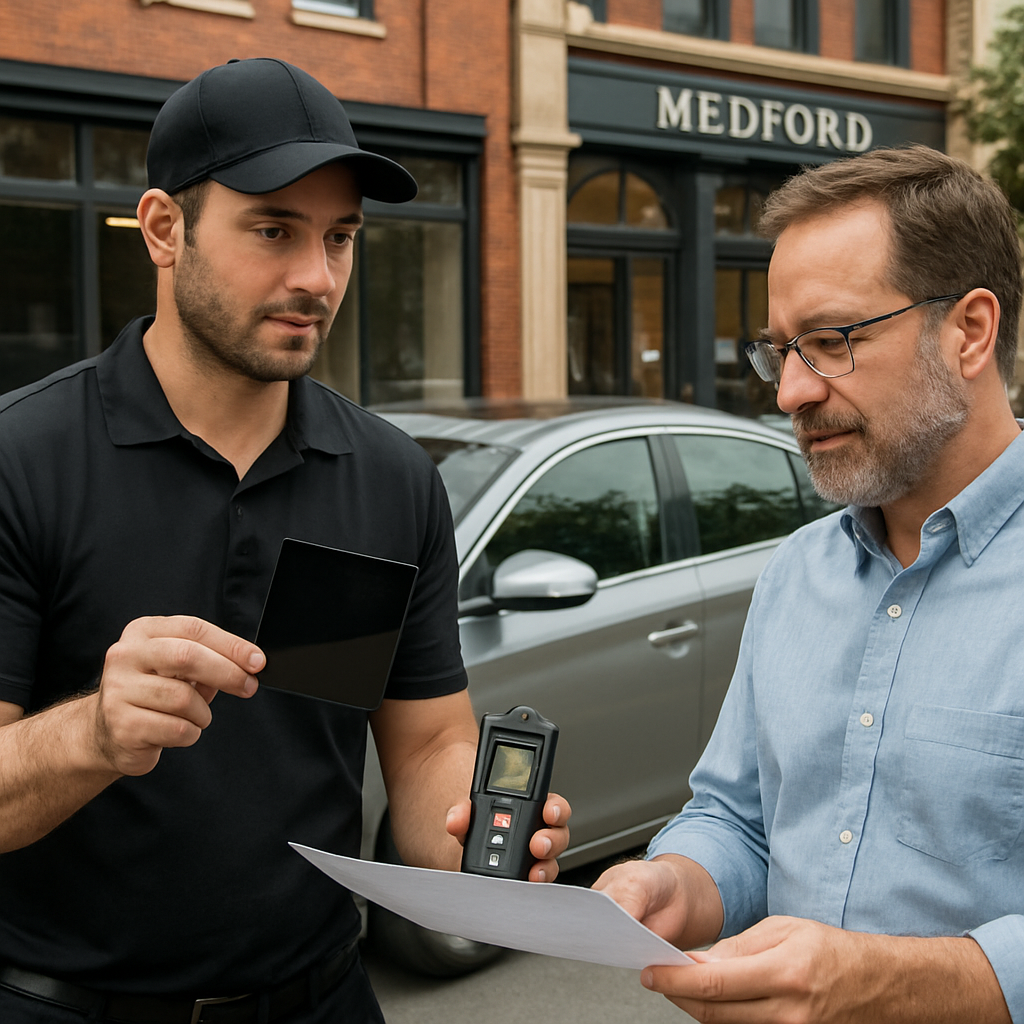
Automotive compliance matters first. Oregon sets visible light transmittance (VLT) and reflectivity limits for windshields and side/rear windows; medical exemptions exist but require paperwork. Always ask the installer for a signed VLT reading or certificate on their meter after the job so you have proof if an officer questions the tint. See Oregon DMV tinting guidance for the current legal thresholds.
Building and site constraints in Medford
Local design review and historic zones can restrict film appearance. Medford’s downtown and some older commercial corridors use design guidelines that limit reflective or dark finishes on storefronts. Before you sign a contract for commercial window film or decorative glazing, check with Medford Planning or bring your installer’s spec sheet to the planner — late changes to film type will cost you both time and money.
Warranty and glass compatibility are non-negotiable. Factory low-e coatings, tempered edge seals, and insulated glass units can have conditions that a film application might violate. Ask the installer to obtain written confirmation from the window manufacturer or to use a film that the manufacturer expressly lists as compatible. Verbal assurances are not enough.
- Three-step compliance check: Request the film model and manufacturer spec sheet, verify VLT/SHGC numbers, and demand a post-install VLT certificate for vehicles.
- Permits/design review: For storefronts or historic properties, confirm with Medford Planning whether a permit or administrative review is required before installation.
- Warranty proof: Insist on written warranty language and manufacturer compatibility confirmation for any coated or insulated glass.
Practical trade-off: Choosing the highest-performing film reduces heat and glare but increases the chance of a visible change that triggers design review or condo/HOA objections. If preserving appearance is essential, plan for spectrally selective or low-reflectance films and get written approvals up front.
Concrete example: A small retailer on Medford’s historic strip almost removed a high-reflective film after an architectural reviewer flagged it; the installer avoided rework by substituting a low-reflectance spectrally selective film and supplying the planner with the film’s visual and reflectivity specs. The alternative would have been a costly reinstall and several weeks of lost storefront visibility.
If a proposed film requires a design waiver, treat that as a project cost — factor in permit timing, potential public notice, and the possibility the reviewer will insist on a less reflective product.
How to choose a local installer in Medford and what to ask
Start with proof, not promises. For window tinting in medford oregon you want an installer who can show the film model, the performance sheet, and recent local work — not a lowball estimate and a vague timeline. A reliable installer turns ambiguous sales talk into three documents: a measured proposal, a manufacturer spec sheet, and a written service agreement that explains warranty registration and post-install inspection.
What to verify before you sign
- Certifications and training: confirm dealer/installer status with manufacturers such as 3M or LLumar and ask about any installer-level certifications or factory training.
- Insurance and local references: request proof of general liability insurance and at least two recent Medford-area projects with photos and client contactable references.
- Tools and meters: ensure they use a calibrated VLT meter for vehicles and can show calibration records on request.
- Glass compatibility plan: a written note about how they will verify IG/low-e compatibility or obtain manufacturer sign-off if needed.
Key trade-off: cheap upfront pricing often hides poor surface prep, old-film removal, or corner-cutting on edge sealing. Those shortcuts cost more later in curling, adhesive failure, or voided warranties. In my experience, paying 10–20% more to get a certified dealer who documents every step saves money over a 5–7 year horizon.
- Ask for the film model and spec sheet: have them point out VLT, SHGC, and IR rejection numbers on the manufacturer document.
- Request an itemized quote: separate material, labor, access fees, and any scaffold or safety charges so comparisons are apples to apples.
- Demand post-install tests: for vehicles ask for a signed VLT certificate; for buildings ask for a walkthrough at cure completion to check edges and registration of the warranty.
- Clarify warranty registration: who registers with the manufacturer, is the warranty transferable, and what conditions void coverage?
- Confirm curing expectations: get a clear timeline for drying/curing and any temporary optical changes in cool or damp weather common to Rogue Valley.
Practical indicator of quality: installers who offer on-site sample panels or temporary mockups and who photograph windows before and after installation usually have better workmanship and stand behind their work. Those who refuse a mockup often want to avoid accountability for color shift, alignment, or edge finish.
Concrete example: A Medford small-business owner required the installer to produce a 12-inch sample and the spec sheet before approving a storefront job. During the site visit the installer discovered the IG units had a slight low-e coating; they swapped to a compatible spectrally selective film and supplied the planner with reflectivity numbers, avoiding a rework and a denied design approval.
Next consideration: schedule the site visit for a weekday morning if possible — installers can usually run a full diagnostics set (measurements, film mockup, VLT check for vehicles) then and you will get the most accurate quote and timing for Medford seasonal curing constraints.
Installation process, timeline, and post-install care for Medford clients
Expect an evidence-driven install, not a quick spray-and-go. Professional crews in Medford will treat the job like a short construction project: document glass condition, create accurate templates, and stage the work to avoid rework that voids warranties.
Typical timeline and stages
Overview: a small automotive job finishes in hours, a single-room residential retrofit usually takes half a day to a full day, and multi-room or storefront installs are scheduled over one to three days depending on access and complexity. Curing and final optical stability are separate and can take days to weeks.
- Pre-install site check: measured templates, glass condition photos, and a noted plan for any IG/low-e compatibility issues. This is when the installer confirms the exact film model and documents any pre-existing seal failures.
- Preparation and cutting: films are precision-cut to templates off the glass when possible to reduce waste and seams on complex muntins.
- Wet application and squeegeeing: installers use a controlled solution and progressive squeegeeing to remove moisture and air; quality crews finish edges and check for trapped particulates.
- Immediate inspection: installer walks the customer through edge adhesion, alignment, and minor surface blemishes to sign off initial acceptance.
- Cure and final check: scheduled 7 to 30 days later depending on film chemistry and weather for a final walkthrough and warranty registration.
Practical trade-off: scheduling a job on a cool, damp day reduces installer speed and increases cure time; pushing a mid-winter install risks longer temporary haze and adhesive migration. If you need tight optical clarity immediately, plan for warmer, dry conditions or accept a delayed final acceptance.
Day-of expectations and what you should do
Customer prep: clear a 3 to 4 foot work zone, remove lightweight window treatments and fragile items, and leave access to power if installers need indoor lighting for templating. Do not expect heavy demolition or window repairs during the install unless pre-agreed.
Installer actions you will see: measurement templates, film laydown, methodical squeegeeing, labeled film scrap disposal, and photos for warranty records. Ask the installer to document glass serials or IG unit tags if you are worried about factory coatings and warranty interactions.
Post-install inspection: insist on a photographed close-up of every film edge and a signed checklist that covers adhesion, no visible pinholes, and the film model name. This documentation is what manufacturers expect when you register a warranty.
Concrete example: For a typical four-window living room in Medford, a certified crew arrived at 8:00 AM, completed templating and film cutting in the morning, applied film to two windows after lunch and the other two mid-afternoon, and finished initial inspection by 4:30 PM. The crew photographed edges, left care instructions, and scheduled a 14-day follow-up to confirm cure and register the warranty with the manufacturer.
Important care note: do not clean film for at least 7 days; in cool or damp conditions wait up to 30 days. Use only mild soap and a nonabrasive cloth; avoid ammonia-based cleaners and razor blades which permanently damage the film surface and adhesive.
Where to get window tinting in Medford and recommended next steps
Direct route: for reliable window tinting in medford oregon use a manufacturer-certified local dealer or a certified regional crew that documents film model and performance numbers. Certified dealers supply spec sheets, warranty registration, and post-install verification — all things you will need if you later sell the property or defend a vehicle stop.
Practical next steps to get an accurate quote
- Collect photos and notes: take clear photos of each elevation (interior and exterior), note orientation (south, west, etc.), and measure or estimate window sizes. This speeds up a first pass quote and filters out vendors who ask only for vague info.
- Request a measured site visit: insist that at least one quote include an on-site measurement and glass inspection. Remote quotes are fine for ballparks but they miss IG unit coatings, muntins, and access issues that change price.
- Standardize quotes: ask each installer to provide film model name, VLT, SHGC or %IR rejection, itemized material vs labor, warranty language, and any design-review or permit assumptions so you can compare apples to apples.
- Confirm vehicle compliance: for auto window work get a signed VLT reading on the installer letterhead after installation; demand it for peace of mind with Oregon DMV rules.
- Schedule with season in mind: plan residential and storefront work for spring or early summer when drying and cure times are shortest in Rogue Valley weather.
Trade-off to accept: saving by taking the fastest appointment often means accepting remote measurements, which increases the chance of an on-site change order. A modest premium for a measured visit commonly avoids a larger rework charge later and preserves warranty eligibility.
How to compare installers: prioritize proof over pitch — valued items are a printed manufacturer spec sheet, proof of dealer certification, photos of recent local jobs, insurance certificate, and a written warranty registration process. If any installer hesitates to put those items in writing, treat that as a red flag.
Concrete example: a Medford homeowner preparing for a living-room retrofit emailed five photos and rough dimensions to two certified dealers and one national franchise. The certified local crew returned a conservative remote estimate and scheduled a same-week site measure; their measured quote identified a low-e coated IG and adjusted the recommendation to a compatible spectrally selective film, avoiding a warranty conflict and a later re-installation.
Final consideration: if appearance approval from a planner or HOA could block the job, get that signoff on the chosen film before work begins; swapping films mid-project is expensive and slow. Prioritize documented compatibility and a clear warranty registration path over the cheapest headline price.
