
Searching for window tint nearby in Portland, Salem, Eugene, or Bend? This short guide gives a practical checklist to vet local window tinting contractors, compare films by VLT, TSER, and UV protection, and get apples-to-apples on-site estimates with clear warranty terms. Use these steps to avoid lowball quotes, poor installs, and surprises during warranty claims.
How to search for window tint nearby
Start with targeted queries, not just window tint nearby. A plain map search returns options, but your goal is a short, verifiable list of installers who serve your town, work on your project type, and show real examples of finished work.
Search strings and platforms that actually narrow the field
- Google Maps: window tint nearby Portland OR 97214 — includes ratings, hours, and directions.
- Yelp / Angi: car window tinting nearby or residential window tint nearby + city name — good for photos and complaint patterns.
- Facebook / Nextdoor: mobile window tinting near me or local window tinting — useful for recent local referrals and photos from neighbors.
- Manufacturer finder pages: search 3M Preferred Installer or LLumar authorized installers to confirm certifications before you call.
Filter quickly by three things that matter: service area covering Portland, Salem, Eugene, or Bend; clear before/after photos of similar jobs; and at least one recent review that mentions warranty handling or durability. If those three boxes are empty, move on.
Tradeoffs to accept up front
Tradeoff – speed versus verification. Aggregator listings and cheap phone quotes get you fast options but raise the risk of mis-specified films or unverified warranties. Local groups and site visits take longer but catch problems early – you pay a little time to avoid a bad install.
Concrete Example: A Portland homeowner searching for a solution for hot west-facing living room windows used the query west-facing residential window tint Portland 97205, found two installers, and compared their Google galleries. One installer provided project addresses and a 3M certification; the homeowner drove past two completed jobs in similar Victorian houses and felt confident requesting an on-site estimate.
Practical insight: Photos can be faked or staged. Insist on recent projects within a 20-mile radius and request at least one reference you can contact directly. If an installer hesitates, that is a useful signal.
Search locally, then verify manufacturer certification and recent local installs before you ask for a written quote.

Next consideration: Shortlist three installers that meet the basic checks and book on-site estimates; insist each quote the same film model or performance spec so you can compare apples to apples.
Verify installer credentials and reputation
Start with documentary proof, not claims. When an installer tells you they are certified, insured, or authorized, ask for verifiable artifacts: a current manufacturer certification, a copy of general liability insurance that names the business, and a local business license. These documents matter because they affect warranty validity, liability if something goes wrong, and whether the installer can legally work on commercial buildings or multi-unit properties in Oregon.
What to verify — practical checklist
- Manufacturer authorization: Request a photo of the certification and cross-check the installer on the manufacturer directory (for example 3M or LLumar). Certification reduces installation risk and is often required to activate full warranties.
- Insurance and license: Confirm current general liability and worker compensation; ask for policy numbers and insurer contact so you can verify. No insurance is a hard no for commercial or HOA projects.
- Recent local references: Ask for two jobs in your city or nearby ZIP code that match your project type. Call the property owner and ask about adherence to schedule, edge finishing, and any warranty service.
- Review patterns, not single stars: Look for recurring themes in Google, Yelp, and the BBB — repeated complaints about bubbling, missed deadlines, or poor cleanup are meaningful; isolated negative reviews are not decisive.
- Warranty registration proof: Ask how the warranty is registered (installer registers, owner registers, or manufacturer portal) and for a sample certificate or registration confirmation.
Tradeoff to accept: Certified installers usually charge more and book slower, but certification and proper insurance reduce the real risk of a failed claim later. If warranty coverage is critical for a large storefront or a fleet of vehicles, pay the premium for a certified installer.
Concrete Example: A small Salem cafe replaced four large storefront panes with solar control film. The owner required the installer to show a 3M authorization and local project references; during reference calls the owner discovered one installer consistently used poor edge sealing. They chose the installer who provided certification and a local reference that praised post-install warranty responsiveness.
Judgment you won't hear everywhere: Certification is a necessary filter but not sufficient. A certified crew that rushes jobs or skips surface prep still produces failures. Insist on recent photos of finished edges, ask about edge-sealing technique, and require the installer to note glass condition in the written estimate so warranty claims later are not contested as preexisting damage.
Quick takeaway: If an installer hesitates to provide certification, insurance, or a local reference, treat that as a decisive red flag—move to the next candidate and schedule an on-site estimate through Tinting Oregon service areas or another local provider.
Understand film selection and key performance metrics
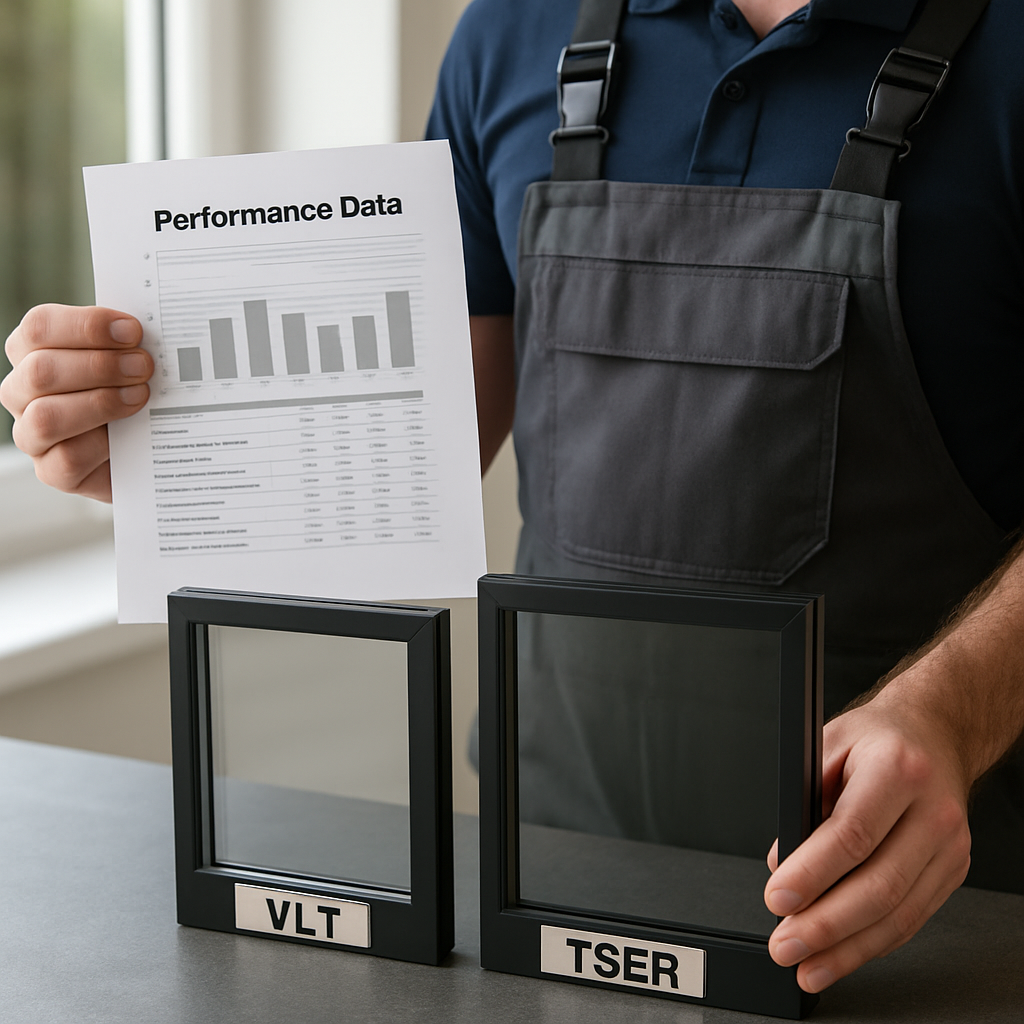
Start with the numbers, not how the film looks in a showroom. Visual appearance and marketing names are unreliable; the three performance numbers you must compare across bids are visible light transmission (VLT), total solar energy rejected (TSER) or solar heat gain coefficient (SHGC), and UV rejection. Those metrics tell you what the film will actually do for daylight, cooling load, and fading protection in your space.
What each metric means in practice
Visible Light Transmission (VLT): The percent of daylight that passes through the completed glazed assembly. Lower VLT darkens a room and improves privacy but can force more electric lighting. For living spaces prioritize higher VLT; for conference rooms or storefronts that need daytime privacy, accept lower VLT and plan for artificial lighting changes.
TSER / SHGC: These two are siblings — TSER is a lab-style percent of solar energy blocked, SHGC is the building-code-style fraction of solar heat transmitted. If your main objective is reducing cooling load on west- or south-facing glass, use SHGC/TSER to pick the film that delivers measurable energy savings rather than judging by darkness alone.
UV rejection and optical clarity: UV protection prevents fading; most modern films remove nearly all damaging UV. Optical clarity and color neutrality vary by film chemistry — ceramic films preserve view and color better than heavily metalized films and are preferable where maintaining a clear view matters.
Practical trade-off: You rarely get maximum heat rejection and maximum daylight at the same price point. High-VLT, high-TSER films exist (multi-layer nano-ceramic), but they cost more. If budget is limited, pick the metric that matters most for the space: TSER for cooling/electricity savings, VLT for occupant comfort and daylight, UV for furnishings protection.
| Film type | Typical cost vs entry | Effect on VLT | Best use | Typical trade-off |
|---|---|---|---|---|
| Dyed film | Lower | Reduces glare, may darken colors | Basic privacy and glare for homes on a budget | Less heat rejection, color fade over time |
| Metalized film | Mid | Varies; reflective look | Commercial storefronts where reflectivity is acceptable | Good heat rejection but can interfere with signals and alter appearance |
| Ceramic / multilayer nano | Higher | Can maintain higher VLT with strong heat rejection | High-visibility living rooms, premium storefronts, vehicle owners who want clarity | Costs more but minimizes color shift and signal interference |
Concrete example: A Bend homeowner had bright afternoon sun and strong glare but wanted to keep mountain views. They selected a mid-VLT ceramic film with a high TSER rating — the result reduced peak-room temperatures without making the room feel like a cave. The homeowner accepted the higher upfront cost because reduced AC cycling and preserved view matched priorities.
How to verify claims during quoting: Ask each installer for the manufacturer performance data sheet and for numbers measured with the same glazing type (single pane, double pane, low-e). Manufacturer sheets are lab values; expect real-world results to vary with orientation, frame, and existing glass. If an installer cannot produce a data sheet or refuses to state which glass the numbers assume, treat that as a reliability issue.
Focus bids on matching performance metrics, not brand names. Ask for VLT, TSER or SHGC, UV rejection, and the glazing context so you can compare real outcomes.
What to expect in an on-site estimate
On-site estimates convert a vague phone price into a verifiable scope. A proper visit should resolve what film is appropriate, what hidden conditions exist, and which performance numbers the installer will guarantee in writing.
Core items that belong on the written estimate
- Film specification: explicit model name plus VLT, TSER or SHGC, and UV rejection numbers so you can compare bids.
- Line-item pricing: separate costs for film, labor, removal of old film, edge sealing, scaffolding or traffic control, and any disposal fees.
- Exact scope: square footage, elevations (north/south/west), and which panes or rooms are included so there is no ambiguity later.
- Schedule and access notes: proposed start/end dates, crew size, expected cure time, and whether occupants need to vacate during work.
- Warranty and registration: whether warranty is manufacturer or installer-backed, registration process, and a sample certificate reference or URL.
- Site condition notes: visible glass damage, previous film condition, frame or seal problems observed, and any recommended repairs before installation.
Practical trade-off: a quick, low-priced visit that delivers a ballpark phone quote often misses glass condition and substrate issues. Accept a modest scheduling delay for a thorough site check if you want predictable pricing and a warranty that will hold up.
Hidden costs to watch for: installers can usually spot delamination or old film adhesion problems but cannot fully know removal difficulty until they begin work; laminated or tempered assemblies may change both film choice and cost. Mobile crews are convenient for homes but large storefronts sometimes need shop work, lifts, or daytime lane closures that increase price.
Concrete Example: A downtown Salem retailer received a low phone quote for reflective film. The on-site estimator found laminated safety glass and suggested a ceramic film with specific TSER numbers to protect displays. The written estimate rose accordingly, and the owner avoided a premature failure and a denied warranty claim by choosing the installer who documented glass condition and recommended a different film.
Insist the installer attaches a manufacturer data sheet and shows how the quoted TSER/SHGC values apply to your existing glazing. If they cannot, treat the estimate as provisional.
Pricing, warranties, and long term performance
Hard truth: the lowest sticker price is almost always a compromise — either thinner film, corner-cut installation, or a warranty that is effectively worthless. If you want reliability over time, evaluate cost alongside documented warranty mechanics and realistic life expectancy for the film in your specific climate and exposure.
Read the price as a lifecycle number, not a single line item
Labor complexity, glass type, and site access drive most cost variance, not just brand. Per-square-foot figures hide scaffolding, removal of old film, edge sealing, and traffic-control charges. Ask for an apples-to-apples breakdown and then translate that into an estimated useful life — a premium ceramic film that lasts 10+ years can be cheaper than two replacements of a budget film over the same period.
Practical trade-off: paying more up front buys you better optical clarity, less signal interference on metalized films, and reduced risk of early delamination. If your priority is visible daylight and preserved views in a living room or storefront, splurge on a higher-grade film and a certified installer. If the objective is short-term privacy for a rental unit, a lower-cost film may be acceptable knowing replacement will be sooner.
Warranty realities: manufacturer warranty covers material defects under specific conditions; installer warranty covers workmanship. Neither helps if the warranty registration process is sloppy, or if the policy has standard exclusions like preexisting glass flaws, improper cleaning, or mechanical damage. Insist on seeing the actual warranty certificate and the registration step before work begins.
- Contract clauses to require: a stated remedy (repair or replacement), a response window for claims, and clarity on who pays for removal if failure occurs.
- Warranty registration proof: a copy of the certificate or a screenshot of the manufacturer registration confirmation tied to your project.
- Maintenance directions in writing: acceptable cleaning products, allowed tools, and any temporary restrictions (do not wash for X days).
- Performance context: manufacturer data sheet attached to the contract showing VLT/TSER/SHGC values for the glazing type you have.
Concrete example: A commercial tenant in Salem accepted a low bid for reflective film. After the first winter the panes showed edge lifting because seal prep was skipped; the installer said the manufacturer voided the warranty because the film was never registered. The tenant ended up paying for removal and re-installation with a certified film and an installer who provided documented registration and a labor warranty. That outcome cost more and interrupted business operations.
A common misunderstanding is equating long warranty length with low risk. In practice, warranty enforceability matters more than years on paper. Ask how claims are handled, whether the installer will act as the first point of contact, and if the warranty transfers to a new owner. If the installer stalls, a registered manufacturer warranty gives you leverage; if they did not register the job, you do not have that leverage.
Before you sign: require the warranty certificate and the manufacturer data sheet be appended to the contract, and get cleaning/maintenance instructions in writing so you do not unknowingly void protection.

Local Oregon considerations and compliance
Start with rules, not preferences. Local compliance in Oregon changes what film you can use, where you can apply it, and how an installer must document the job. That matters for vehicles, for storefronts in historic districts, and for commercial retrofits that touch energy-code triggers. Don’t treat compliance as an afterthought — it changes both scope and cost.
Where compliance most commonly becomes a project risk
Vehicle tinting — demand objective verification. If you search for window tint nearby for an auto, insist the installer measure Visible Light Transmission (VLT) with a calibrated meter and provide a written VLT reading or certificate. Installers who guess by eye or rely on marketing names are the same ones that leave you with illegal, ticketable tint. If you plan to sell the vehicle later, undocumented dark tints create transfer headaches.
Historic districts and HOA rules are local gatekeepers. In downtown Salem or older Portland neighborhoods, you will frequently need approval before altering storefront glass or exterior-facing windows. The practical solution is to get a written pre-approval or a sample swatch on file with the local design review board or HOA. Installers familiar with local boards will submit photos and product specs as part of the service; if they do not offer that, you will handle the paperwork yourself.
Energy-code and permitting edge cases exist for commercial work. Some commercial retrofits trigger energy compliance documentation or require a building permit when they change SHGC at scale. Ask your installer whether the project will need a permit and whether their quoted film performance (attach the manufacturer data sheet) supports any code submission. For basic energy guidance see Energy Saver.
Climate and exposure change the enforcement and warranty story. High-UV exposure in higher-elevation Central Oregon and prolonged coastal humidity in the Willamette Valley affect aging and adhesive performance differently. Good installers adjust adhesive and edge-seal technique by microclimate; poor ones use a one-size approach that later surfaces as edge-lift claims.
Concrete example: A Bend condo owner wanted a dark privacy film. The chosen installer provided a product spec but failed to confirm the HOA design guidelines. The HOA denied the change and the owner paid removal and reinstallation with a lighter, approved film. If the installer had submitted a sample and permit paperwork up front this cost and delay would have been avoided.
Practical trade-off and judgment: If your project sits in a regulated context (vehicle, historic storefront, or commercial façade), pay more for an installer who handles compliance paperwork and offers documented VLT/TSER numbers. The extra fee buys avoidance of fines, permit-driven rework, and warranty disputes — problems that cost far more than the premium for a compliant installer.
When you call local shops for window tint nearby, ask specifically whether they provide VLT certificates for vehicles, submit samples for HOA/historic review, and attach manufacturer data sheets for permit submittals.
Questions to ask installers and common red flags to avoid
Demand facts, not sales patter. When you call an installer searching for window tint nearby, the conversation should move quickly from marketing to measurable items: film model and its performance numbers, proof of certification, and a clear written scope. If these are delayed or vague, treat that as a reliability issue.
Essential questions to get concrete answers
Ask these and write down the answers: Which exact film model will you use and what are its VLT and TSER/SHGC numbers for my glazing type; can you show the manufacturer data sheet now? Are you authorized by the film maker and can you send a copy of the certificate? How is the warranty registered and can I see a sample warranty certificate? Do you carry general liability and worker comp insurance and can I get policy details? Will you provide an itemized written estimate that lists film, labor, removal, edge-sealing, and timeline?
Operational follow-ups that matter: For vehicles request a pre- and post-install VLT reading with a calibrated meter. For commercial or HOA projects ask whether they will submit product specs or samples for approval. For mobile installs confirm the crew’s access needs and whether the quoted price assumes simple hand tools or requires lifts/shop time.
Red flags that should stop the process
If an installer does any of the following, move on: refuses to show a manufacturer data sheet or certification; gives only a verbal warranty promise; cannot or will not provide recent local references; delivers a phone quote without scheduling an on-site glass inspection; or insists you pick a product by appearance rather than sharing performance numbers.
A nuanced failure mode: Lowball quotes on the phone are common. The practical risk is not the low price itself but that the installer later claims hidden conditions justified extra charges or invalidated a warranty. Prefer transparency over the illusion of a bargain.
Concrete example: A Portland condo owner accepted a very cheap phone quote for car window tinting nearby. The mobile crew finished quickly but did not register the warranty with the manufacturer; when edge lifting appeared, the dealer refused to honor the warranty and the owner had to pay for removal and reinstallation. The lesson: insist on registration proof before payment.
Practical trade-off: Demanding documentation and references slows the process and may narrow your options, but it prevents the far more expensive scenario of rework, denied claims, or noncompliant vehicle tint. If you need help, schedule on-site estimates with at least two local contractors and compare the written scopes.

Final judgment: Paperwork is not bureaucracy — it is your leverage. An installer who resists crisp answers about film specs, warranty registration, or insurance often creates downstream problems. Prioritize installers who make documentation routine and transparent.
Why consider Tinting Oregon as your local installer
Local response and accountability matter more than slick marketing. A nearby installer who stocks films locally, schedules on-site measurements within days, and returns for warranty callbacks will save time and money compared with an out-of-area crew that bills travel and delays service.
What Tinting Oregon delivers that actually reduces project risk. They provide on-site estimates across Portland, Salem, Eugene, and Bend, maintain local project galleries and references, and run mobile crews for residential and fleet work so you get documented VLT readings for cars and site-specific film recommendations for buildings.
Practical tradeoffs to weigh
Tradeoff – speed versus specification. If you push for same-day installs you increase the chance the crew will pick a visible sample rather than match TSER/SHGC metrics to your glazing. Tinting Oregon can often deliver faster service because they stock common films locally, but for projects where energy performance or permit documentation matters they schedule a full site inspection first to avoid scope creep or warranty disputes.
Why local handling improves warranty outcomes. When failures happen the first 48 to 72 hours are critical. A local installer can inspect, document, and register a claim with the manufacturer promptly. That responsiveness does not replace proper registration and a solid written warranty, but it substantially increases the odds of a timely resolution.
Example field case: A Eugene property manager needed glare control for a storefront display before a weekend launch. Tinting Oregon scheduled a Saturday on-site estimate, confirmed a ceramic film with the required TSER numbers, and completed installation overnight to avoid business interruption. The job preserved storefront visibility, reduced peak glare, and avoided weekday downtime for the tenant.
- When Tinting Oregon is the sensible choice: they can provide fast mobile installs, local references in your city, and documented vehicle VLT readings if you search for
car window tinting nearby. - When to seek other bids: if you need a very specific premium film and the installer cannot produce the manufacturer data sheet on-site or cannot confirm registration before payment.
A realistic judgment: Local proximity is useful but not decisive. Verify that any local installer, including Tinting Oregon, attaches the manufacturer performance data sheet to the written estimate, shows proof of registration process, and documents glass condition. If they do, local availability becomes a real advantage rather than just convenience.
