
Storefront Window Film in Portland: Protect Merchandise, Reduce Glare and Improve Comfort
Faded merchandise, harsh glare on displays, and overheated storefronts are everyday problems for Portland retailers — and they have practical fixes. Storefront window film Portland, from UV-blocking and anti-glare films to solar-control and security options, can protect inventory, restore display visibility, and cut cooling load. This guide shows the performance metrics, realistic cost and installation trade-offs you need, plus how to arrange a local site survey with Tinting Oregon to move from evaluation to an informed install.
1. Why Portland storefronts need window film
South- and west-facing storefronts cause the predictable headaches. Midday sun through large display glass produces glare that kills product visibility, creates hot spots that stress HVAC systems, and accelerates material damage where displays sit in direct rays.
Portland's daylight is variable but decisive. Bright summer afternoons, low-angle winter sun, and reflective surfaces along the Willamette create intermittent but intense exposure windows — the kind that do damage over months, not years. That means small, repeated insults to fabrics, inks, and finishes rather than a single catastrophic event.
Practical implications for retailers and managers
- Prioritize by orientation and merchandise value. Start with south/west facades and display bays that hold higher-margin or light-sensitive stock.
- Balance VLT with display needs. A darker film lowers glare but can make window displays read as dim from the sidewalk; choose films or partial-coverage patterns that preserve sightlines.
- Consider targeted installations. Apply film to specific panes, upper or lower sections, or use decorative privacy film to protect sensitive items without darkening the whole storefront.
Trade-off to watch: reflective or very dark films can change curb appeal and may trigger local design review in historic districts.** If your storefront sits in a designated area of Portland, check with the Portland Bureau of Development Services before selecting high-reflectance finishes. Neutral, low-reflective options usually avoid those complications.
Concrete example: A downtown apparel boutique in the Pearl District moved mannequins 18 inches closer to the front glass after installing a neutral solar film on its west-facing windows. Staff stopped rotating stock mid-season due to sun streaking, and the store regained usable display depth while keeping natural daylight.
What people often underestimate: UV is only part of the problem; visible light and thermal cycling matter too.** Choosing film solely for UV rejection ignores glare and heat issues that affect customer comfort and HVAC costs. Specify films with the right combination of visible light transmission and solar control for your storefront, not just UV-blocking claims.
Next consideration: schedule a site survey to map orientations, glazing types, and display locations so you can compare targeted solutions and true installed samples — a measured approach avoids over-darkening displays and surprises during installation. For local installers and sample appointments see commercial window tinting.
2. How window film protects merchandise from fading
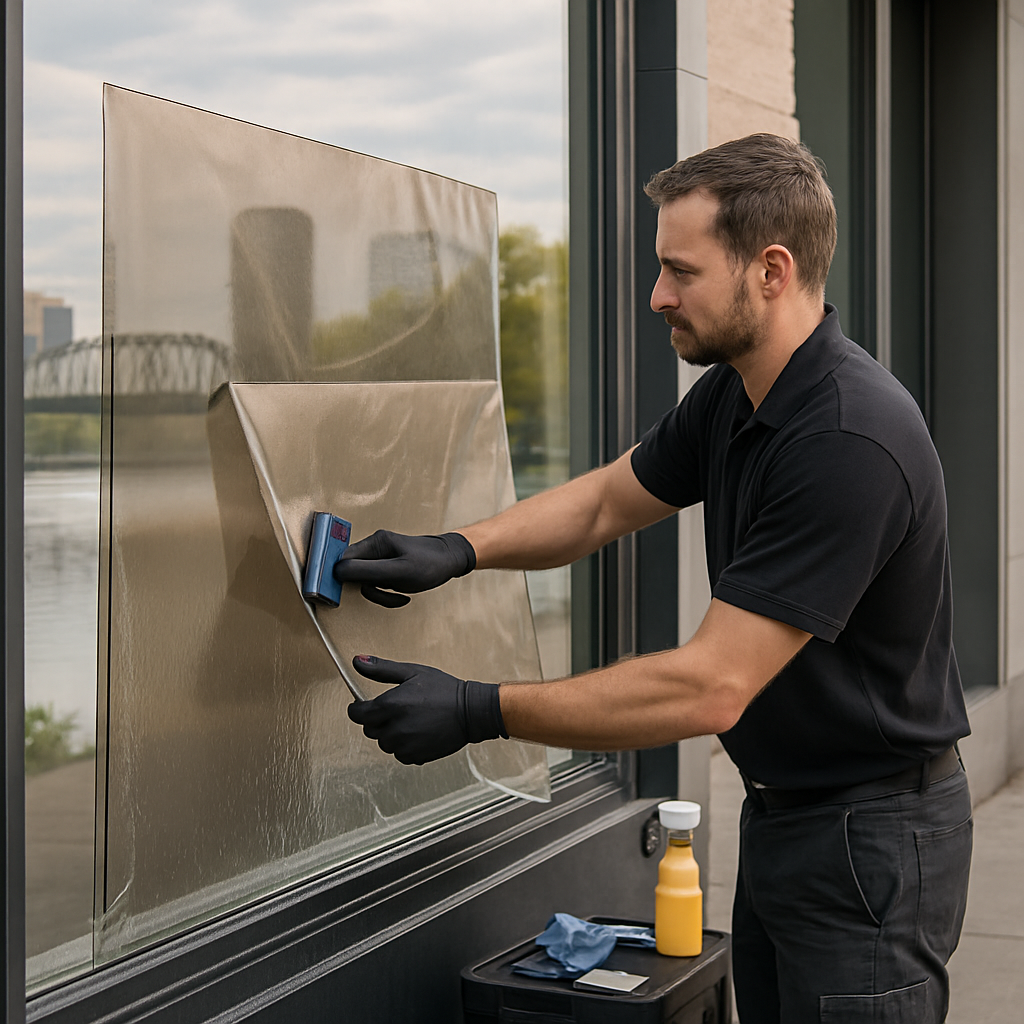
Immediate point: the single most reliable way storefront film slows fading is by removing the radiation that initiates chemical breakdown, not by changing how merchandise looks from the sidewalk. Commercial films specified for retail typically block up to 99 percent of ultraviolet (UV) radiation, which is the primary trigger for photochemical color loss in dyes and inks.
Mechanics that matter: UV knocks electrons loose in pigments; visible light carries energy that continues photobleaching; infrared and higher temperatures accelerate breakdown by speeding chemical reactions. That means the most effective protection combines high UV rejection with sensible solar control (reduced solar heat gain) and the right Visible Light Transmission (VLT) so displays stay true to color and brightness.
Material-specific guidance
| Merchandise type | Primary risk | Recommended film features |
|---|---|---|
| Fine textiles and dyed apparel | Color fade, weakened fibers | High UV rejection (~99%), VLT 50–70% to preserve daylight, low-reflectance finish |
| Printed materials and posters | Ink fading and contrast loss | UV-blocking film plus moderate solar control, VLT 60–80% for legibility |
| Leather and wood finishes | Drying, cracking, color shift | UV + heat reduction (lower SHGC), consider slightly higher VLT to maintain warmth |
| Perishables and glazing on food displays | Drying, discoloration, melt/quality loss | UV + strong heat reduction (solar control film), VLT tailored to display lighting needs |
Practical trade-off: a film that maximizes UV rejection and heat control often reduces VLT or changes the light spectrum slightly. That can make whites look cooler or reduce the warmth of wood tones. For high-margin visual merchandise, specify a neutral, low-color-shift film and test a single pane first — optical clarity matters more than headline UV numbers in store environments.
Concrete example: a Pearl District bakery with south-facing pastry cases installed a neutral, low-reflective solar film that blocks 99 percent of UV and trims solar heat gain. Within weeks staff reported fewer occurrences of melting glazes and less color darkening on croissants; management also reduced the frequency of product rotation under the window, saving labor and waste.
What people get wrong: many retailers buy UV-only film because it advertises 99 percent UV rejection and assume fading stops. In practice, visible light energy and heat still cause degradation. If your storefront gets direct sun for extended periods, insist on combined UV and solar-control metrics, not UV percentage alone. For technical background see International Window Film Association and practical installation options at commercial window tinting.
3. Reducing glare and improving display visibility
Core point: glare is not just annoying — it actively reduces the ability of passersby to read displays and see color, which cuts conversion. The right storefront window film reduces surface reflections and controls incoming light so displays read consistently from the sidewalk at common approach angles.
How to think about glare vs. daylight
Not all glare is the same. Disability glare washes out contrast and makes signage unreadable; discomfort glare makes customers avoid a display. Films that simply darken glass can reduce both, but they also change the mood and may hide product detail. A better approach is to choose films that target surface reflection and redistribute light rather than only dropping overall brightness.
- Low-reflective solar films: reduce mirror-like reflections while preserving translucency — good for fashion and furniture stores.
- Matte or frosted decorative films: diffuse harsh specular highlights where crisp storefront sightlines are less important, such as fitting areas or product backdrops.
- Selective coverage and graphics: use partial film placement or
custom window graphics Portlandto block problematic reflection angles without darkening entire windows.
Practical trade-off: reducing glare by increasing haze or using matte finishes will soften fine detail and can slightly reduce color saturation. For high-detail displays (electronics, eyewear, galleries) favor neutral, low-color-shift films that cut reflection without introducing visible haze.
Concrete example: An electronics retailer on Northeast Broadway had product labels and phone screens unreadable in late-afternoon sun. The installer applied a neutral, low-reflectance film to the single south-facing bay and added a narrow non-reflective lower band where screens sit. Customers stopped stepping past the window and in-store dwell time increased; staff reported fewer questions about screen visibility during peak hours.
A common misstep is treating glare as a glazing-only problem. Interior lighting, display angle, and window blinds matter. In practice, combining moderate VLT films with softened interior lighting and repositioned display lights gets better results than an aggressive, dark film alone. Ask your installer for side-by-side test panes under real store lighting before committing.
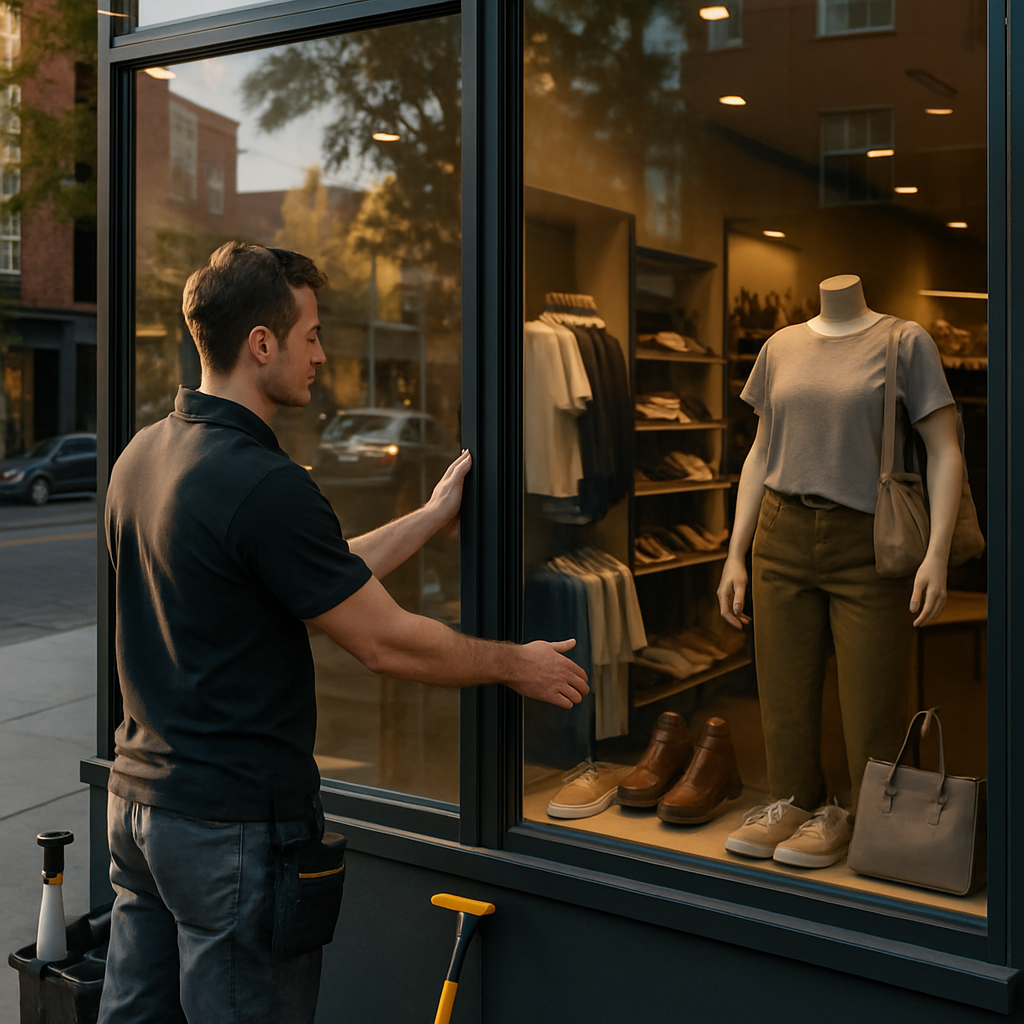
Next consideration: when you request samples from installers, insist on real-world demonstrations that include your storefront orientation and interior lighting plan. For local installers and performance-based comparisons see commercial window tinting and technical resources at IWFA.
4. Comfort and energy performance for storefront HVAC
Direct, sun-driven heat is a peak-load problem for storefront HVAC — not a year-round fix. On bright afternoons a sunlit bay can drive short, high-intensity cooling loads that force air conditioners to run longer, raise indoor temperatures near displays, and create hot spots staff notice first. Storefront window film Portland addresses that peak by lowering transmitted solar energy; HVAC benefits follow only if you match film selection to orientation and equipment characteristics.
How films change what your HVAC sees
Solar control films reduce solar heat gain coefficient (SHGC) and therefore the instantaneous heat entering through glass. That lowers peak cooling demand for south- and west-facing bays. Important limitation: most standard films do not materially change the glass U-factor for winter heat loss. If your goal is year-round thermal insulation, film helps on summer peaks but is not a substitute for insulated glazing or adding low-e units.
Practical trade-off: choosing a film with strong SHGC reduction often means lower Visible Light Transmission (VLT) or a slightly more reflective appearance. In Portland, where daylighting matters, you must balance peak load reduction against store brightness and product rendering — neutral, low-reflectance solar films usually give the best compromise for retail.
Sample peak-load calculation (conservative assumptions)
Concrete example: A 10 ft x 12 ft west-facing storefront (120 sq ft) on a sunny afternoon. Assume vertical solar irradiance of 200 Btu/hr·ft2, untreated double-pane SHGC = 0.60, and a high-performance solar film lowers SHGC to 0.30. Baseline solar gain = 200 0.60 120 = 14,400 Btu/hr. With film = 200 0.30 120 = 7,200 Btu/hr. That is an instantaneous reduction of ~7,200 Btu/hr (about 2.1 kW) during peak sun. Your actual savings will vary with orientation, overhangs, and cloud cover, but this shows why a single large bay can drive meaningful peak cooling demand.
Translate that to building impact carefully. For small storefronts with modest AC, a 2 kW peak reduction can shorten run cycles and improve temperature stability in the display zone. For larger HVAC systems with significant diversity, the same reduction may be absorbed without changing equipment runtime or demand charges. Always compare expected peak reduction to your HVAC capacity and utility billing structure before leaning on energy savings as the primary justification.
- Checklist before you buy: confirm film SHGC and VLT on the tech sheet; have the installer model peak cooling reductions (not annual averages); check whether your HVAC has hours-of-use sensitivity or demand charges that change payback math.
- Operational note: combine film with modest thermostat adjustments, timed shading, and display lighting tweaks for the best result — film reduces the load, but lighting and setpoint strategy determine real savings.
- Winter consideration: ask whether the chosen film offers any emissivity benefits; if winter heat loss is a concern, plan for glazing upgrades rather than relying on film alone.
Next consideration: if cooling load reduction is the primary objective, prioritize south/west-facing units and large uninterrupted glass areas first. Test a single bay, measure indoor temperature and AC runtime changes, then expand. That staged approach avoids overpaying for film where HVAC response is negligible.
5. Security, safety, and anti-graffiti options
Security film slows attackers; it does not make glass invulnerable. Security and safety films are designed to hold broken glass together and delay entry long enough for alarms, staff response, or police to arrive. They are a risk-reduction measure, not a replacement for shutters, laminated glazing, or active security systems.
How these films differ in practice. Security/safety films are thicker, multi-layer polyester laminates with aggressive adhesives and sometimes a clear abrasion-resistant topcoat. Anti-graffiti (sacrificial) films are thinner, removable layers meant to take spray paint and scratches and be peeled off and replaced quickly. The two serve different problems: one resists forced entry, the other preserves appearance and reduces glass-replacement cycles after vandalism.
Thickness, anchoring, and real-world trade-offs
- Common thicknesses: 7–8 mil for light commercial security, 12 mil for higher-resistance retrofit, and 20+ mil for heavy-duty or laminated-glass-equivalent performance. Thicker film gives more retention but increases cost and can slightly affect optical clarity.
- Perimeter anchoring matters more than thickness alone: film glued to glass but not anchored to the frame will slow shards but can still allow an intruder to push the whole pane inward. Ask about mechanical anchoring, channel clips, or wet-glaze retention details in your quote.
- Aesthetics vs performance: heavy safety films can introduce minor optical distortion or a faint color cast on very large panes. If your storefront relies on pristine optics (art galleries, high-end jewelry), insist on neutral optical-grade films and on-site samples.
Anti-graffiti strategy that actually saves money. Sacrificial films let you replace a scraped or spray-painted surface in 30–60 minutes for a fraction of the cost of ordering and fitting a new pane. For areas with recurring tagging, plan for scheduled replacements or keep pre-cut spare strips on hand. This is simple asset management: recurring small replacements beat an occasional full-glass bill and long storefront downtime.
Limits you need to know. Security film delays entry but does not stop tools or energetic, determined attackers indefinitely. For true smash-and-grab deterrence combine film with visible security elements: alarm contacts, reinforced mullions, or roll-down grilles. Anti-graffiti film prevents cosmetic damage but will not protect against etching tools that breach the film into the glass beneath.
Compatibility checks before you buy. Verify glass type (tempered vs annealed), frame clearance, and door hardware. Some retrofit scenarios require trimming or special edge treatments to avoid film lift from pressure washing or thermal stress. A qualified installer will document mounting details in the proposal; if your storefront is in a historic district, include finish samples for design review.
Concrete example: A 24-hour convenience store in Southeast Portland installed 8 mil security film plus perimeter channel clips on three street-facing panes after repeated smash attempts. Within weeks a new attempt shattered the outer layer but the film held the glass in the frame long enough for staff to trigger the alarm and for police to arrive. Management replaced the damaged film section overnight, avoiding a full-pane replacement and keeping the store open.
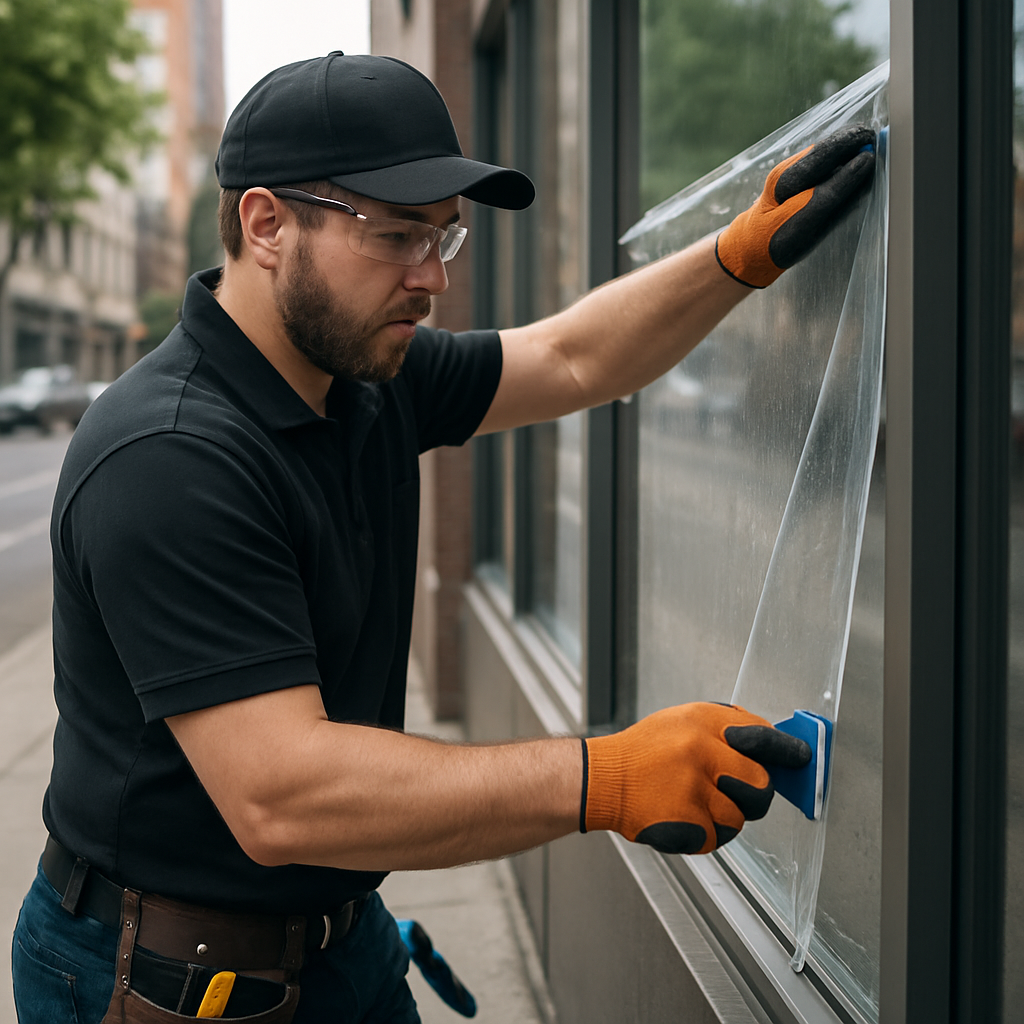
Next consideration: when security is the priority, ask installers for a short field test or reference at a similar business type and confirm warranty coverages for impact damage and adhesive failure before signing. If you need help organizing that checklist, start with a site survey and documented anchoring plan — those two items separate effective security installs from cosmetic ones.
6. Choosing the right film for your storefront
Pick the film that solves your specific problem, not the prettiest brochure. For most Portland stores the decision sits between protecting merchandise from photodamage, improving display visibility, reducing peak cooling from west/south exposures, and hardening glass against vandalism. Use the phrase storefront window film portland when you brief vendors so proposals include local orientation, sample panes, and install timing for our seasonal daylight patterns.
Decision steps: a short checklist to follow
- Define the single primary goal. State whether the priority is UV/anti-fade, glare reduction, heat reduction, security, or branding/wayfinding with custom storefront decals Portland or decorative window film Portland.
- Match metrics to the goal. Ask for VLT, SHGC (or solar energy rejection), UV rejection percent, visible reflectance, and film thickness for security films—no spec sheet, no buy.
- Request optical samples on-site. Insist on a taped test pane at the time of estimate so you can check color rendering, sidewalk sightlines, and interior lighting interaction during real store hours.
- Verify installer proof points. Confirm the installer’s experience with commercial window film Portland projects, ask for references in similar storefront types, and require written details on anchoring for security films.
Practical trade-off to accept up front: stronger solar control and thicker security films usually come with lower VLT or tiny optical distortion. In Portland you often get better overall outcomes from neutral, low-reflectance films that preserve daylight while providing measurable heat and UV reductions — they trade absolute peak performance for better customer-facing appearance.
| Primary objective | Recommended film family | What to verify on the quote |
|---|---|---|
| Protect high-value textiles and prints | UV-blocking + neutral solar films (anti-fade window film Portland) | UV rejection %, VLT 50–75%, visible color shift claims |
| Reduce glare and improve display legibility | Low-reflectance anti-glare films or selective matte bands (anti-glare window film Portland) | Side-by-side sample visibility, measured reflectance |
| Lower peak cooling on south/west bays | Solar control films with lower SHGC (energy-saving window film Portland) | Manufacturer SHGC, real-world peak reduction estimate |
| Delay forced entry or reduce fragmentation | Security/safety films 7–12+ mil with anchoring (safety and security films for stores in Portland) | Film thickness, anchoring method, expected hold-time |
| Branding or discreet privacy | Decorative/frosted films or custom graphics (frosted window film Portland / custom window graphics Portland) | Material samples, opacity %, and adhesion to tempered glass |
Real-world use case: A small Hawthorne District bookstore prioritized anti-fade and daylight for display windows. They had the installer apply a neutral UV + solar film to the upper two-thirds of the panes and a frosted privacy strip at eye level so customers still see displays but sensitive first-edition covers avoid direct rays. The result preserved product color without making the storefront look closed-off from the street.
Hard judgment I give most clients: the installer selection matters more than chasing the exact brand name. Optical clarity, edge preparation, and correct anchoring determine whether a film performs and lasts. Demand on-site samples, check NFRC or manufacturer labeling, and require the installer to document how the film will be edged and sealed for storefront tint installation Portland.
Next consideration: get written performance numbers and an explicit maintenance plan in the proposal. If you want help converting goals into a spec or arranging an on-site sample, see Tinting Oregon’s commercial options at commercial window tinting or request a site visit at contact.
7. Installation, maintenance, cost, and ROI
Straightforward reality: a good outcome depends as much on the install and scope as it does on the film brand. For Portland storefronts, the biggest source of complaints I see is not product failure but poor edge prep, incorrect anchoring, or unrealistic warranty expectations written into the quote.
Installation timeline and what actually happens
- Site survey and measurements: the installer documents glass type, frame clearance, and problem panes and usually applies a taped test sample so you can judge optical effects during real light conditions.
- Prep day: cleaning, minor repairs, and removing perimeter gaskets if needed – this is where poor adhesion problems are prevented.
- Install day: films are cut to size, wet-applied, squeegeed, and trimmed; expect a calm store day with short interruptions rather than a full-day lockdown.
- Cure and inspection: plan on 24-72 hours for adhesives to level and for the team to return for a final check; allow that window before testing alarms or aggressive cleaning.
Practical trade-off: fast installs look cheap but often skip edge sealing or anchoring required for security films. If an installer promises same-day, low-cost work on multi-pane storefronts, ask specifically how they will treat edges and whether perimeter clips or wet-glaze will be included in the price.
Maintenance, warranties, and failure modes to watch
Maintenance is simple but regimented. Clean with mild detergent and a soft cloth; avoid ammonia-based cleaners and abrasive pads. Pressure washing and aggressive scrubbing shorten useful life and often void warranty clauses.
Warranty fine print matters. Look for explicit coverage periods, what triggers voiding (pressure wash, sanding, adhesives from stickers), and whether the installer will replace failed film or just supply material. Require that warranty paperwork be attached to the quote.
Cost drivers and a realistic ROI example
Typical commercial price bands: for Portland storefronts expect film + install to fall roughly into these ranges: basic solar/UV films $8–$12 per sq ft, premium optical solar films $12–$18 per sq ft, and security/safety films $15–$35 per sq ft depending on anchoring and thickness. Major drivers are film grade, perimeter anchoring, glass condition, and access (lifts, scaffolding).
Concrete example: a mid-sized boutique with 200 sq ft of exposed display glass pays about $2,400 for a neutral, premium solar/UV film. If the store sees modest AC runtime reduction plus fewer markdowns and less product replacement, combine an annual energy savings estimate of $200–$500 with avoided merchandise loss or labor savings of $400–$1,000. That yields a practical payback window of about 2–6 years depending on actual local use and billing structure.
Judgment call I make for clients: don’t justify film strictly on energy savings unless your utility bills show peak cooling pain or demand charges. In Portland, the real short-term ROI usually comes from reduced product loss, decreased labor for re-curation, and fewer storefront repairs after vandalism. Treat energy savings as upside, not the core sell.
8. Local case examples and next steps with Tinting Oregon
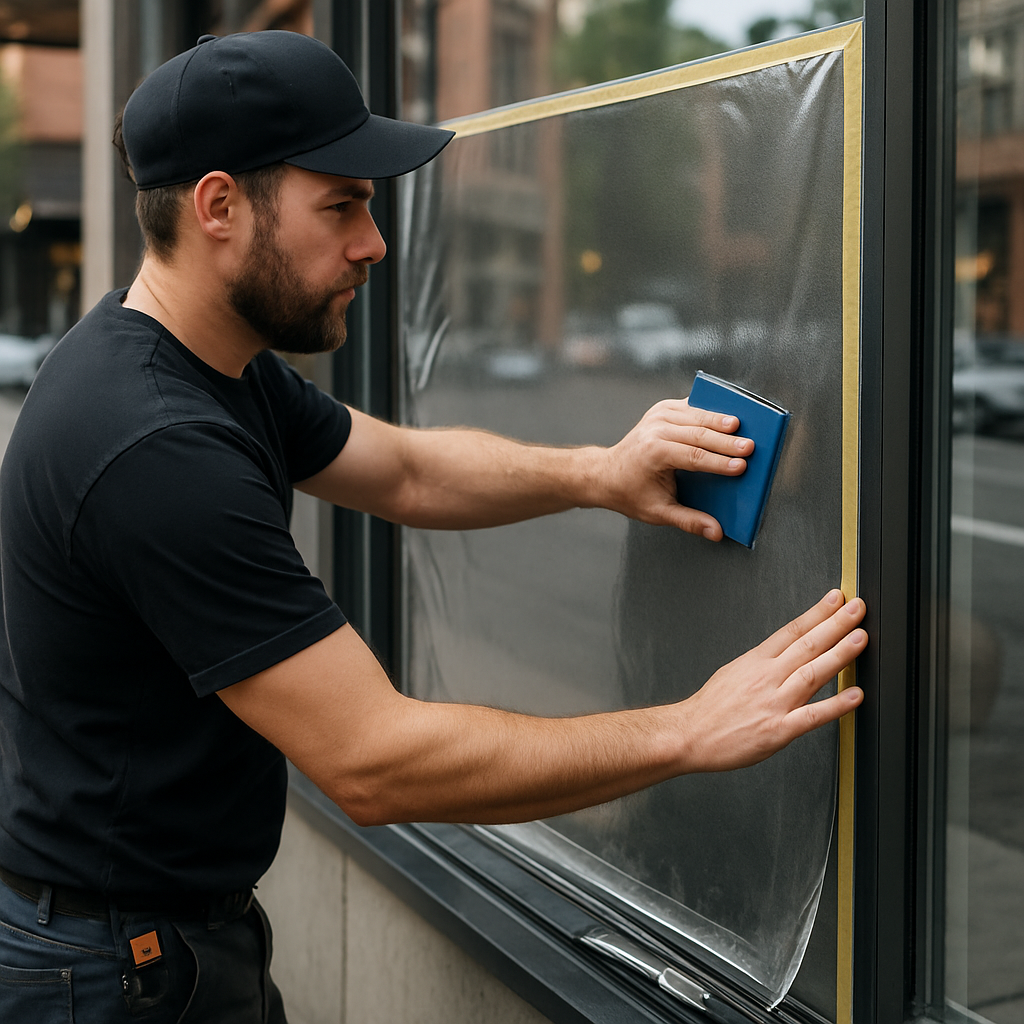
Real local wins are specific and narrow. Portland storefronts respond best to targeted pilots: treat the worst-exposed bay first, verify optical clarity during business hours, then expand in phases. The common mistake is buying wholesale coverage based on marketing copy rather than a short on-site trial that proves how a particular film interacts with your lighting and display angles.
Local case vignettes
Concrete example: An NW 23rd Avenue eyewear shop had repeated returns because customers thought frames looked different under street light. Tinting Oregon installed a neutral, low-color-shift anti-glare film on the single south-facing bay and left a 12-inch untreated band at eye level for true color checks. Within two weeks the manager reported fewer returns and clearer product photos for their online listings.
Concrete example: An Old Town storefront pharmacy faced weekend smash attempts. The team specified an 8 mil security film with perimeter channel clips and a sacrificial anti-graffiti strip on the lower pane. The combination delayed an attempted break-in long enough for staff to trigger the alarm and allowed same-day cosmetic repair without replacing glass, keeping the store open and reducing replacement invoicing.
Practical insight and trade-off: schedule pilot installs outside peak retail seasons and avoid hottest summer days. Adhesive curing and accurate assessment of VLT and color rendering are easier in moderate conditions. If you rush a full storefront install in midsummer, you risk premature edge lift or a visual result you cant meaningfully test until lighting changes.
Actionable next steps with Tinting Oregon
- Book a site survey: use Tinting Oregon contact and request an on-site taped sample pane during the estimate so you can view changes at real times of day.
- Prepare simple materials: photos, store hours, orientation of problematic panes, and examples of damaged or faded merchandise to focus the recommendation.
- Require performance data in writing: ask for
VLT, SHGC or solar energy rejection, UV rejection percent, film model number, and proposed anchoring details for security films. - Compare apples-to-apples quotes: request two model alternatives with install method and warranty. Check installer references for similar Portland projects and review the portfolio at Tinting Oregon portfolio.
- Schedule phased installation: start with one bay, measure comfort and display visibility for 30 days, then commit remaining panes. This reduces operational risk and gives a real-world payback signal.
- Document procurement items: require certificate of insurance, clear warranty language attached to the quote, and a maintenance care sheet before signing.
Final judgment: choose a measured, evidence-driven path. The film model matters, but installers who insist on test panes, document anchoring, and provide clear warranty terms are the difference between a one-year disappointment and a decade-long fix. When youre ready, request a performance-based estimate and sample install from Tinting Oregon via commercial window tinting.
