
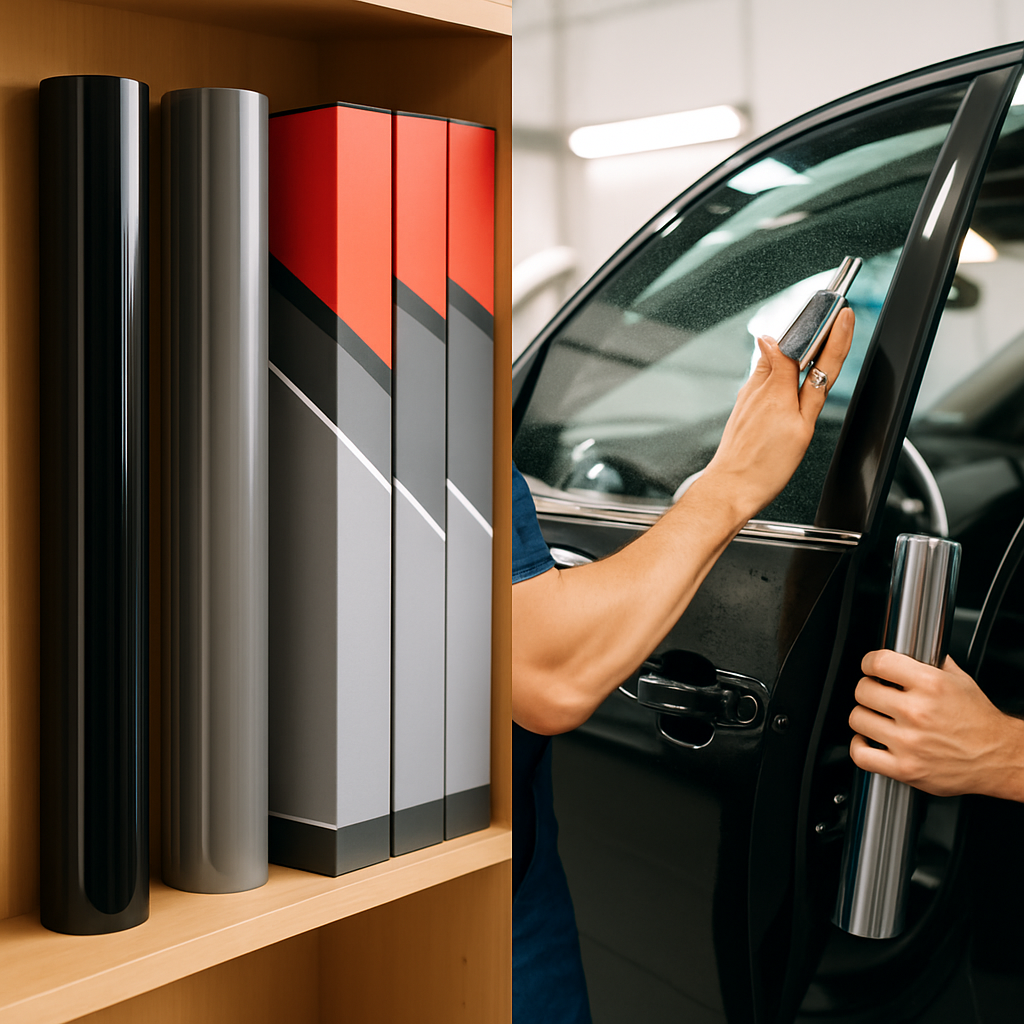
Where to Buy Window Tinting Film: Retail vs. Professional-Grade Options and Costs
If you need to buy window tinting film for a home or commercial property in Oregon, the choice between cheap retail rolls and professional-grade film with installation matters more than the sticker price. This guide shows where to purchase common DIY products and authorized pro brands, gives real price examples and installed-cost calculations, explains the measurable specs that matter – VLT, TSER, UV and IR rejection – and compares warranties and expected lifespans. Use the practical decision checklist to decide when a DIY kit is OK and when to hire a certified installer, with local considerations for Portland, Salem, Eugene and Bend.
1 Types of Window Film and How Performance is Measured
Key point: Window film falls into predictable technical buckets — dyed, metalized, ceramic/spectrally selective, safety/laminated, and decorative — and the right choice is determined by measurable specs, not marketing labels.
How performance is measured
Measure, then compare: The three numbers that matter when you buy window tinting film are Visible Light Transmission (VLT), Total Solar Energy Rejected (TSER), and UV rejection. VLT is how much visible light passes through the glass and film. TSER is the single best indicator of heat reduction because it combines reflected, absorbed, and transmitted solar energy. UV rejection is almost always high on modern films, but confirm the percentage on the technical data sheet.
- VLT: Expressed as a percentage; lower = darker. Relevant for compliance and daylighting.
- TSER: Expressed as a percentage; higher = more cooling benefit. Prioritize this for heat control.
- IR rejection: Some manufacturers report near-infrared rejection separately; this is the part of the spectrum that carries heat.
- NFRC or TDS data: Prefer films with NFRC labels or published technical data sheets from manufacturers like 3M Window Films or LLumar.
Type trade-offs and real use cases
Dyed films: Low cost, good for glare and privacy in small areas. Expect fading, limited IR rejection, and a 3 to 5 year practical life for exterior exposed windows. Example product to compare is Gila Advanced for privacy jobs sold at big box stores.
Metalized films: Better TSER than dyed at similar price. They can be reflective and may interfere with radio, GPS, or defroster lines on vehicles. Metalized retail options like some Coavas lines are fine for privacy but check interference risks before installation on automotive glass.
Ceramic and spectrally selective films: Higher cost, superior TSER and IR rejection with minimal change to appearance. In practice these are the best choice for west and southwest facing windows in Oregon where heat rejection and optical clarity matter. Look at 3M Prestige or LLumar SelectPro for professional-grade options.
Safety and laminated films: Different category entirely. These add thickness and hold shards on impact. Expect higher installed costs and building compliance considerations for commercial properties.
Concrete example: A homeowner in Bend with large west-facing living room windows will get more usable cooling from a spectrally selective film with TSER in the 50 to 75 percent range than from a dark dyed film with VLT 20 percent but TSER under 30 percent. The dyed film will reduce glare and provide privacy, but the ceramic film is the one that actually cuts afternoon heat and protects furnishings.
Judgment: For anything beyond a single decorative or privacy patch, plan your decision around TSER and IR rejection first, VLT second, and brand warranty third. If you are comparing online listings or deciding where to buy window tinting film, those numbers tell you whether a cheap retail roll will actually meet your performance goals.
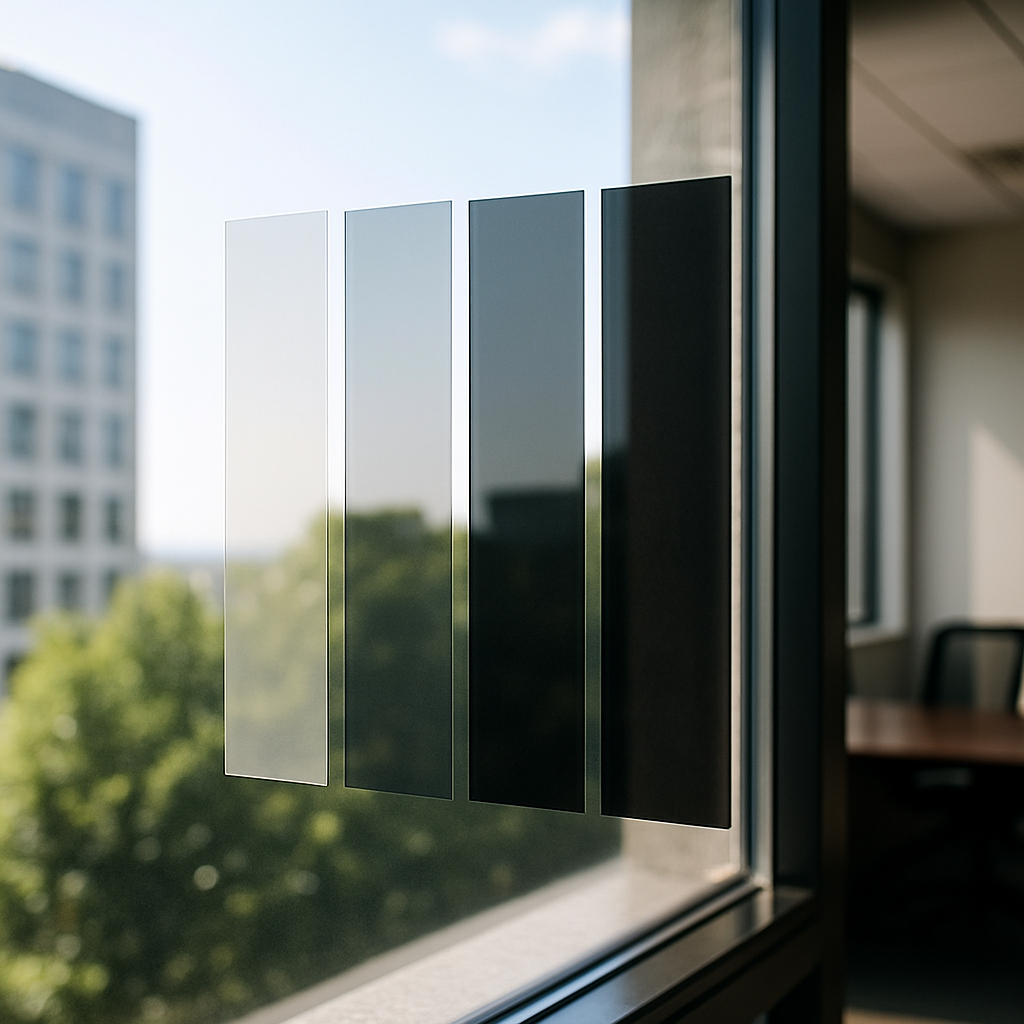
Next consideration: when you have TSER and VLT targets, use manufacturer dealer locators like 3M Window Films or LLumar to find authorized installers who can verify real-world performance.
2 Where to Buy Retail DIY Window Film and Typical Products
Straight answer: if your goal is cheap privacy, basic glare reduction, or a decorative finish, buy window tinting film from big box stores or online marketplaces — but expect limits on performance, warranty, and longevity. Retail films commonly save money up front and fail sooner than professional products.
Common retail channels and product examples
Big box retailers: Home Depot and Lowe's stock Gila Advanced and other privacy/solar films for $20 to $60 per roll depending on size. Online marketplaces: Amazon and Walmart carry Rabbitgoo, Coavas and SolarZone with many pre cut sizes and kit options priced roughly $15 to $150 per roll. Specialty auto kits: you can also buy car window tint kits online for specific models if you search buy car window tint or where to buy car tint film, but check legal limits first.
| Product / Channel | Typical retail price | Best short term use |
|---|---|---|
| Gila Advanced (Home Depot) | $20 – $50 per roll | Privacy, simple glare control |
| Rabbitgoo / Coavas (Amazon) | $15 – $80 per roll | Decorative film, quick DIY jobs |
| Pre cut automotive kits (various sellers) | $30 – $150 per vehicle | Small car panels, renter-friendly |
Practical limitation: retail rolls often omit independent NFRC test data and show only VLT or UV numbers. That means you cannot reliably compare IR or TSER performance across products, so assume weaker heat rejection compared with professional spectrally selective films.
- Static cling vs adhesive-backed: static cling is easier to remove and reposition, but it peels sooner and traps moisture at the edges. Adhesive-backed retail films may look better at first but use lower-grade adhesives that bubble or yellow over time.
- Installation difficulty: most retail films are sold without professional cutting or templating. Expect trimming, squeegeeing and re-trimming — and a nontrivial failure rate if windows are large, curved, or exterior-facing.
- Batch and color matching: run out risk is real. Buy enough film at once; retail rolls can vary by dye lot and show visible seams.
Concrete example: a homeowner in Salem bought Rabbitgoo 17.5 inch rolls for three living room windows to reduce afternoon glare. Material cost was about $60. Installation took two weekends, one window bubbled at the edge and needed rework, and after two summers the film started fogging where the adhesive failed. For the same windows a professional ceramic film would have cost more up front but likely avoided rework and provided measurable heat rejection.
If you buy retail for a larger or performance driven job, budget for replacement in 3 to 7 years and factor in likely imperfect optical results.
Judgment: retail DIY film is fine for small, temporary, or decorative jobs and for renters. For anything larger than a single window, or where heat control, optical clarity, or long life matter, retail is a false economy. Buy retail when budget and timeframe are short; otherwise get an authorized dealer quote and compare true installed cost and warranty value.
3 Where to Source Professional Grade Film and Authorized Dealers
Straight answer: professional-grade films are distributed through authorized dealer networks and wholesale distributors, not the big-box aisles. Brands you should look for are 3M Prestige, LLumar Platinum/SelectPro, Solar Gard, and Madico — those product lines are typically available only through certified installers or their supply channels, which is why you rarely find them sold in Home Depot or Amazon the same way as DIY rolls.
Where pro film is sold and why it matters
Manufacturer dealer locators: use the brand sites to find authorized shops — for example, check 3M's window film pages at 3M Window Films and LLumar's dealer locator at LLumar. Dealers supply factory warranty registration, NFRC/NRTL test data on request, and access to dealer-only product grades or custom roll sizes.
Trade-off to accept: buying through dealers raises material cost compared with retail rolls, but you get installation-quality film, custom cutting, and a warranty that usually requires certified installation to be valid. If you try to buy dealer-only film on the gray market and DIY it, you will commonly void warranty and still have the same installation risks that ruin optical clarity.
How to find and vet authorized dealers
- Start with brand locators: Confirm the shop appears on the manufacturer dealer list before you call.
- Ask for certification proof: Request dealer/installer numbers or certificates tied to the brand you want.
- Request NFRC/test data: Demand the technical data sheet that shows VLT and TSER for the specific series offered.
- Check local references and photos: Look for recent jobs in your city or similar building type.
- Clarify warranty conditions: Get written terms showing whether warranty requires professional installation and registration.
Concrete example: A midtown Portland landlord needed solar control on 1,000 square feet of west-facing storefront. The local authorized dealer supplied 3M Prestige, performed custom glass measurements, handled removal of old film, registered the job with the manufacturer, and supplied a 10-year dealer-backed warranty. The project cost more than a retail DIY approach but avoided the common outcome of crooked cuts, bubbles, and a voided warranty.
Practical judgment: for energy goals, safety glazing, or commercial storefronts — treat film as a building system, not a commodity. Engage a certified dealer early; they will provide NFRC numbers you can use to justify spec decisions and, importantly in Oregon, help navigate local code or historic-district constraints. To get started locally, compare certified shops and request a site quote from a regional installer such as Tinting Oregon.
4 Cost Comparison with Real Price Examples and Calculations
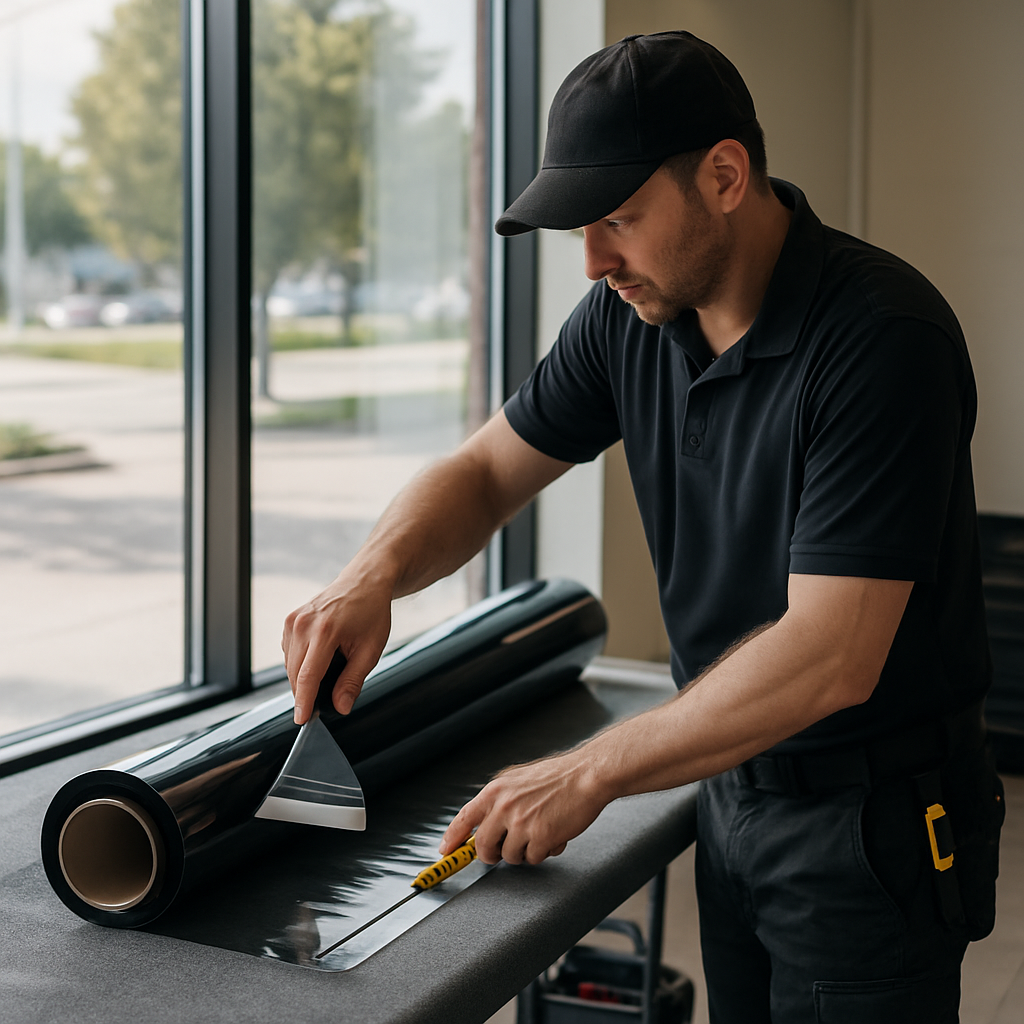
Start with reality: listed retail prices understate what you will actually pay for a usable job. Material price alone hides waste, tools, removal, difficult glass geometry and the cost of fixing a poor DIY install. Treat retail sticker prices as a baseline, not a finished bid.
Sample calculation: 12 windows, each 3 ft x 5 ft (180 sq ft total)
Retail DIY estimate: Typical retail rolls put the effective material cost at roughly $1.50–$3.00 per sq ft depending on product (Gila, Rabbitgoo, Coavas). Using a conservative $2.00/sq ft for good-quality retail film: 180 sq ft × $2.00 = $360 in film. Add consumables (spray, squeegees, blades) ~$40, and budget at least 20% extra material/waste for mistakes = $72. True out‑of‑pocket DIY cost ≈ $472 — and that assumes a clean install.
Professional installed estimate: Authorized dealers selling 3M, LLumar or Solar Gard typically charge in bands: $6–$15 per sq ft for standard residential films and $10–$25 per sq ft for high‑performance or safety films. Using mid-range $10/sq ft: 180 sq ft × $10 = $1,800 (this includes film, labor and a dealer-backed warranty). Expect low-end installs around $1,080 and higher performance jobs around $2,700 for the same area.
| Scenario | Unit cost per sq ft | Total for 180 sq ft | Notes |
|---|---|---|---|
| Retail material only (good retail film) | $2.00 | $360 | No tools, no waste allowance, limited warranty |
| Retail realistic (waste + supplies) | $2.62 | $472 | 20% waste + consumables; likely lower performance |
| Professional – low end | $6.00 | $1,080 | Basic dyed/metalized installed; dealer warranty |
| Professional – mid range (spectrally selective) | $10.00 | $1,800 | Better IR/TSER, clearer optics, dealer-backed warranty |
| Professional – high performance / safety | $15.00 | $2,700 | Safety laminates or top-tier ceramic-like films |
Practical trade-off: the gap between $472 and $1,800 is not just materials vs labor — it reflects measurable differences in heat rejection (TSER/IR), optical clarity, warranty terms, and the cost of risk. For south-facing glass in Central Oregon, a pro film with higher IR rejection can cut cooling load more than a cheap dyed film; that benefit shows up over years, not weeks.
Real-world example: A Portland homeowner with eight south-facing living-room panes bought retail film, spent $350 in materials, and after visible edge peeling paid a local dealer $1,300 to remove the poor film and install a professional spectrally-selective product. Net extra cost plus the hassle exceeded the price of choosing pro installation initially.
- Hidden extras to budget for: existing film removal ($100–$400), travel or rural surcharge for Central Oregon sites ($150–$500), multi‑story access equipment if needed (adds hundreds).
- Warranty value: manufacturer/dealer warranties on professional installs can cover adhesive failure and delamination — that coverage is rarely available or reliable for retail film.
- When retail can make sense: small decorative or temporary projects where optical perfection and long life are not priorities.
Judgment: buy window tinting film retail only when the job is small, temporary, or purely decorative. For anything affecting energy, comfort, or high-value glass, professional-grade film plus authorized installation is usually the better investment — even after the higher upfront cost. For performance specs and independent comparisons, check manufacturer data like 3M Window Films or the DOE guidance on window film benefits at Energy.gov.
5 Warranties, Certifications and Long Term Durability
Key point: Warranties and certifications are the practical dividing line between buying cheap retail film and investing in professional-grade products and installation. The warranty is not just paperwork — it is how you get a real fix when adhesive fails, edges lift, or the film discolors after a few seasons.
Warranty types to expect: Retail DIY films usually come with short, limited warranties from the brand or retailer that are often nontransferable and hard to enforce. Manufacturer warranties for professional films come in multi-year or lifetime formats but frequently require installation by an authorized dealer and registration of the job to be valid. Many pro warranties are prorated and exclude damage from improper installation, glass breakage, or environmental abuse.
Certifications and test data matter. Ask for NFRC labels or manufacturer test reports showing VLT, TSER and UV rejection numbers; ask to see the technical data sheet (TDS). Brands like 3M and LLumar publish NFRC and TDS data — see 3M Window Films and LLumar — and a certified dealer should supply those documents with the quote.
Durability in practice: Expect dyed retail films to last roughly 3–5 years before edge peeling or adhesive discoloration. Metalized DIY films often show corrosion, tint shift, or hazing in 5–7 years, especially near coastal or high-UV exposures. Ceramic and spectrally selective professional films commonly last 10–15+ years when installed correctly. That lifespan gap is real money: frequent replacements erase any upfront savings from a cheap roll of film.
Concrete example: A homeowner in Bend bought an inexpensive metalized roll for living-room windows and began seeing edge lift and silvering after three summers. They hired an authorized 3M dealer to remove the old film and install 3M Prestige; the dealer-backed 10-year warranty required professional removal and registration but covered delamination that appeared in year seven, saving the owner the full replacement cost.
| Feature | Retail DIY film | Professional-grade (dealer-backed) |
|---|---|---|
| Typical warranty length | 1–5 years (brand/retailer dependent) | 10 years to lifetime (product dependent) |
| Coverage highlights | Limited — usually visual defects; often excludes adhesive failure | Adhesive failure, delamination, discoloration, often transferable |
| Requires certified install? | No | Often yes — warranty conditioned on dealer install |
| Transferable on sale? | Usually no | Often yes, with registration |
| Common exclusions | Installation mistakes, outdoor exposure, improper cleaning | Glass breakage, vandalism, improper post-install care |
- Practical step: Always get the warranty in writing and confirm whether the job must be registered to activate coverage.
- Check exclusions: Ask what voids the warranty (existing film left in place, hard water stains, edge exposure from poor glazing) and get removal included in the estimate if needed.
- Verify the dealer: Request proof of manufacturer-authorized dealer status and a copy of the TDS or NFRC label with the quote; see Window Tinting Place Near Me: How to Vet Local Shops and Contractors.
Trade-off to accept: If you expect to keep the property long-term or need reliable energy and UV performance, buy a pro-grade film with documented test data and a dealer-backed warranty. If you need a short-term privacy fix in a rental, a retail film is defensible — but treat it as disposable.

Next consideration: Before you decide to buy window tinting film, ask the installer for the exact warranty certificate you'll receive, the registration process, and the expected service response timeline; if they cannot produce this, the warranty may not protect you when it matters.
6 Decision Checklist: When to Buy Retail DIY vs Choose Professional Installation
Direct rule: choose DIY when the job is small, temporary, or purely decorative; choose professional installation when performance, longevity, or risk matters more than the lowest upfront cost. Professional-grade films and certified installation solve problems retail film cannot reliably fix in real jobs—optical uniformity, IR rejection, warranty validation, and tricky access are common failures with DIY approaches.
Quick pass fail checklist
- Total area: if the project is over 50 to 100 square feet choose professional. Small cut pieces under that are reasonable DIY candidates.
- Performance target: if you need measurable heat reduction (TSER or IR rejection), numbered specs, or NFRC data, choose professional-grade film and a certified installer.
- Appearance and optical clarity: if the windows are large, high visibility, or high value, choose professional. Retail films often have slight haze and edge irregularities.
- Permanence and warranty: if you want service life beyond 3 years or a transferable warranty, choose professional. DIY usually has limited or no meaningful warranty.
- Access and complexity: if windows are multi story, curved, tempered, or behind blinds, choose professional because safety, scaffolding, and cutting accuracy raise cost and risk.
- Safety and security: if you need laminated or safety film for impact resistance, choose professional; DIY safety films do not meet commercial standards.
Practical tradeoff: retail film saves money up front but shifts risk to you. A cheap roll can look fine in a single bathroom window for a few years. When the job is visible to clients, an HOA, or affects HVAC bills, cheapness becomes false economy because poor adhesion, edge lift, and optical defects are not easy to fix and often require full removal and reinstallation.
Concrete example: a renter in central Portland needed privacy on a single sliding door for two years. Buying a retail privacy film from a big box store at about $40 was the right call because the need was temporary and access simple. By contrast, a small cafe in downtown Eugene replacing 12 storefront panes to reduce summer glare and protect merchandise should budget for professional-grade spectrally selective film and installer labor to keep glass visually uniform and to qualify for manufacturer warranties.
Common misjudgment: buyers focus on visible darkness instead of specs. Visible Light Transmission VLT and Total Solar Energy Rejected TSER tell you whether a film will actually reduce heat or just darken the room. Choosing by appearance alone produces disappointment when interior heat reduction is the real goal.
- Ask before you buy: How long do I need the film to last? 1 year or 10 years?
- Ask about access: Will the installer need lifts, scaffolding, or permits?
- Ask about warranty: Is installation required for the warranty to be valid?
- Ask about specifications: Can the seller provide VLT, TSER and UV rejection numbers?
- Ask about removal: Who pays if existing film needs removal?
- Ask about aesthetics: Do you require color stability and edge clarity on large panes?
Next step: For performance jobs, request written specs and installer certification. Use manufacturer dealer locators like 3M and LLumar and local quotes such as a professional estimate to compare real installed costs and warranty terms.
7 How to Vet Installers and Prepare Your Oregon Property for Installation
Start with proof, not promises. Ask every installer for manufacturer certification, proof of liability insurance, and at least three local references with contactable phone numbers. If they claim a 3M or LLumar install, get the exact film series and a copy of the dealer warranty registration or registration number.
Vetting checklist to use on calls and site visits
- Certification: Can you show dealer certification for the film model proposed and the installer who will perform the work?
- Warranty registration: Will you register the job with the manufacturer and supply proof? If no, expect limited coverage.
- Before and after photos: Provide photos of recent Oregon jobs with similar glass size and exposure.
- Insurance and WAIVER: Proof of general liability and worker compensation insurance before work starts.
- Removal policy: Do you remove failing existing film? If so, what are the extra costs and how do you handle damaged glass?
- Access and equipment: Do you need lifts, scaffolding, or a traffic control plan for street-front work?
- References: Local references with similar scope; call them and ask about cleanup, punctuality, and warranty responses.
Pre-install property prep matters more than most homeowners expect. Clear blinds and move furniture away from windows, arrange vehicle parking for the crew, and secure pets. For two story or commercial storefronts, confirm sidewalk access and power availability for lifts.
- Timing: Schedule exterior work outside heavy rain windows; Oregon winter and spring can increase adhesive cure times and cause edge lift.
- Temperature constraints: Many adhesives perform poorly under 50F. If your install is in early spring or late fall, expect rescheduling or a surcharge.
- Existing film: If older film is bubbled or discolored, removal is usually necessary. New film over old film is a common cause of delamination.
Concrete Example: A Bend homeowner with large west facing living-room windows hired a certified installer after a site visit showed old dyed film peeling at the edges. The installer quoted removal plus 3M Prestige installation, scheduled work for a two day window in August to avoid cold mornings, and registered the job with 3M so the owner received the manufacturer warranty paperwork the same week as completion.
Practical tradeoff: Lowest bids often skip removal, cut corners on edge prep, or use a lower grade film than quoted. Paying a few dollars more per square foot for a certified installer and documented registration almost always saves money over a 5 year horizon because you avoid rework and get real warranty coverage.
Important: require written confirmation that the job will be registered with the film manufacturer and ask for the registration number before final payment.
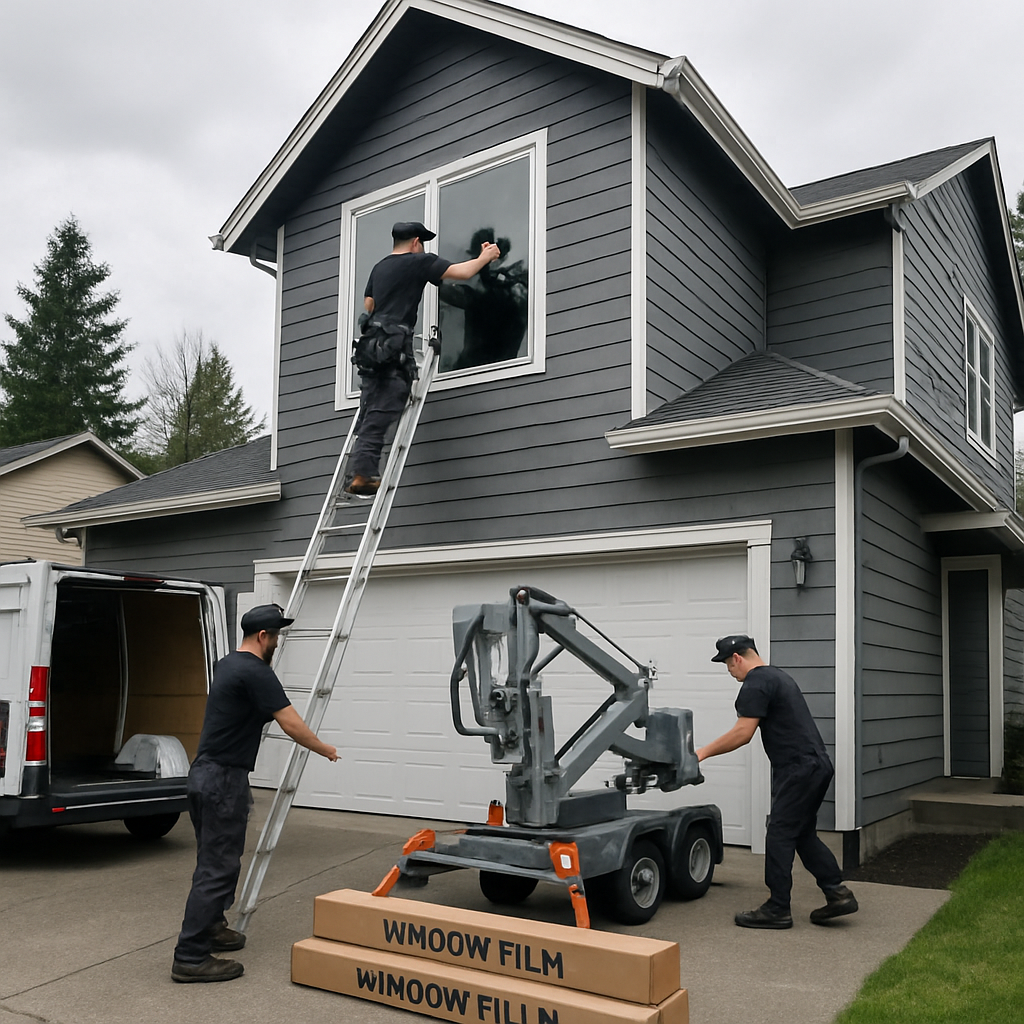
Final consideration: If an installer will not provide manufacturer technical data sheets showing VLT and TSER for the exact film model, walk away. Those specs are the objective basis for comparing performance and for enforcing warranty claims.
8 Local Considerations for Oregon Climate and Regulations
Key point: Oregon is not a single climate or regulatory environment — your choice to buy window tinting film should reflect whether you are in coastal Portland, wet Willamette Valley towns, or high‑desert Central Oregon.
Practical consequence: Film that works well in rainy, overcast Portland (low glare, low reflectivity) may underperform for heat and IR rejection in Bend, where high sun angles and stronger UV make spectrally selective or ceramic films worth the extra cost.
Local factors that should change what you buy and how you install
- Seasonal sun and orientation: West and southwest façades in Central Oregon get intense late‑day sun; prioritize TSER and IR rejection rather than only VLT.
- Moisture and edge seal: In wet valleys, trapped moisture behind poor DIY installations causes delamination — insist on sealed edges or professional installation for long life.
- Historic districts and HOAs: Many Portland historic neighborhoods and HOAs restrict exterior reflectivity or visible changes. Check your design review rules before you purchase window tint film or install reflective film.
- Commercial code and storefronts: Municipal permitting or storefront signage rules sometimes treat reflective film as an exterior finish — confirm with your building department for commercial work.
- Salt and coastal exposure: Near the coast, consider corrosion‑resistant edging and professional-grade adhesives; cheap retail films tend to fail faster in salty air.
- Vehicle tint legality: State laws apply to automotive film. If you plan to buy car window tint locally, verify DMV rules before installation to avoid fines or removal.
- Utility incentives: Some utilities and energy programs periodically offer rebates for energy‑efficient window upgrades; check local programs or the U.S. Department of Energy guidance on window films Energy Saver.
- Access and labor premiums: Remote Central Oregon locations may incur travel fees or higher labor rates — factor that into the buy vs. install decision.
Real-world example: A Bend homeowner with a large west‑facing living room bought an inexpensive retail film for glare. The film blocked visible glare but offered poor IR rejection, so the room still overheated in summer. Replacing it with a spectrally selective professional film reduced peak afternoon heat noticeably — the upgrade cost more but avoided repeated replacement and cut interior cooling load during hot spells.
| City/Region | Local priority when you buy window tinting film |
|---|---|
| Portland / West Willamette Valley | Low reflectivity, good optical clarity, mildew‑resistant edges, HOA/historic approvals |
| Eugene / Southern Valley | Balanced TSER and UV protection, consider humidity and fungal resistance |
| Bend / Central Oregon | High IR rejection, spectrally selective or ceramic films, rugged edge sealing |
Insight: If you value appearance and long life in Oregon, nonreflective spectrally selective films usually give the best balance — they cost more up front but avoid HOA issues and premature replacement in our mixed climates.
