
Office Glass Privacy Film Solutions: Balance Open Design with Confidentiality
Glass partitions keep workspaces bright and modern, but they also create real confidentiality, glare, and UV exposure problems that rarely justify full glass replacement. This practical buyer guide covers office glass privacy film solutions for Portland, Salem, Eugene, and Bend, explaining types like frosted, perforated, switchable, and anti-graffiti films, plus the tradeoffs for daylighting, installation, and cost. You will get clear selection criteria, what to ask installers, and when film is the smarter, more cost effective choice.
1. Why privacy matters in modern open plan offices
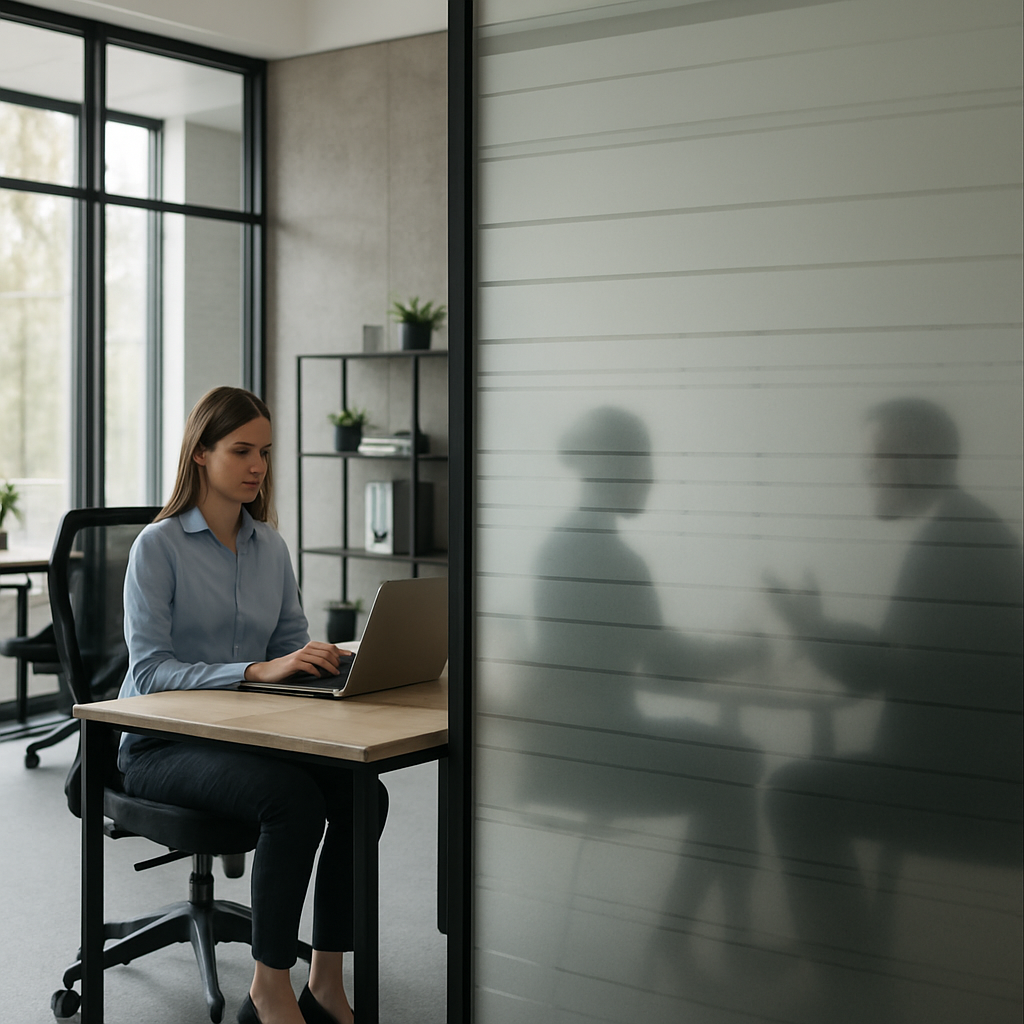
Straight fact: glass partitions change what you lose and what you keep. You get daylight, sightlines, and a sense of openness — but you also expose conversations, whiteboards, and laptop screens to anyone walking by. That exposure matters for client confidentiality, HR conversations, protected health or financial data, and any work requiring focus.
Visual vs acoustic privacy: glass privacy film tackles sightlines and glare but not sound transmission. Decision makers often treat a visual treatment as a multi-problem fix; in practice you will still need seals, door strategies, or acoustic panels for real speech privacy. Recognize this early so you budget correctly.
Specific privacy needs to map before choosing film
- Client interactions: conference rooms and reception areas need daytime sightline blocking without killing daylight.
- Focused work: low-level film or frosted bands can reduce distractions while keeping views and daylight for staff.
- Regulated information: rooms handling PHI, legal files, or proprietary drawings need higher opacity and often complementary controls like frosted sidelights plus restricted access.
Pacific Northwest nuance: because Portland, Salem, Eugene, and Bend prioritize daylight harvesting, the usual trade-off flips: preserve diffuse light first, reject glare second. A frosted or decorative film that diffuses light is often a better choice here than dark tints designed for heat rejection. See Energy Saver guidance and IWFA resources for performance context.
Practical limitation: films that look opaque at eye level can still reveal silhouettes at close range or under bright backlighting; one-way and perforated films often fail at night when interior lighting is higher than exterior. Plan for lighting control and sightline testing at different times of day before you commit to a full installation.
Concrete example: a Portland design studio applied frosted glass privacy film to conference room sidelights and full-height glazed office fronts. The result kept the corridor daylight while preventing passersby from reading meeting-room screens; however, staff still installed automatic door closers and acoustic seals because sensitive client calls leaked through the partition seams.
Judgment that matters: if your primary goal is continuous daytime privacy while preserving light, choose etched/frosted decorative films. If you need intermittent privacy or branding flexibility, budget for switchable film or combination solutions — but expect higher upfront cost and electrical integration. Don’t overvalue visual film as a substitute for physical access control or acoustic remediation.
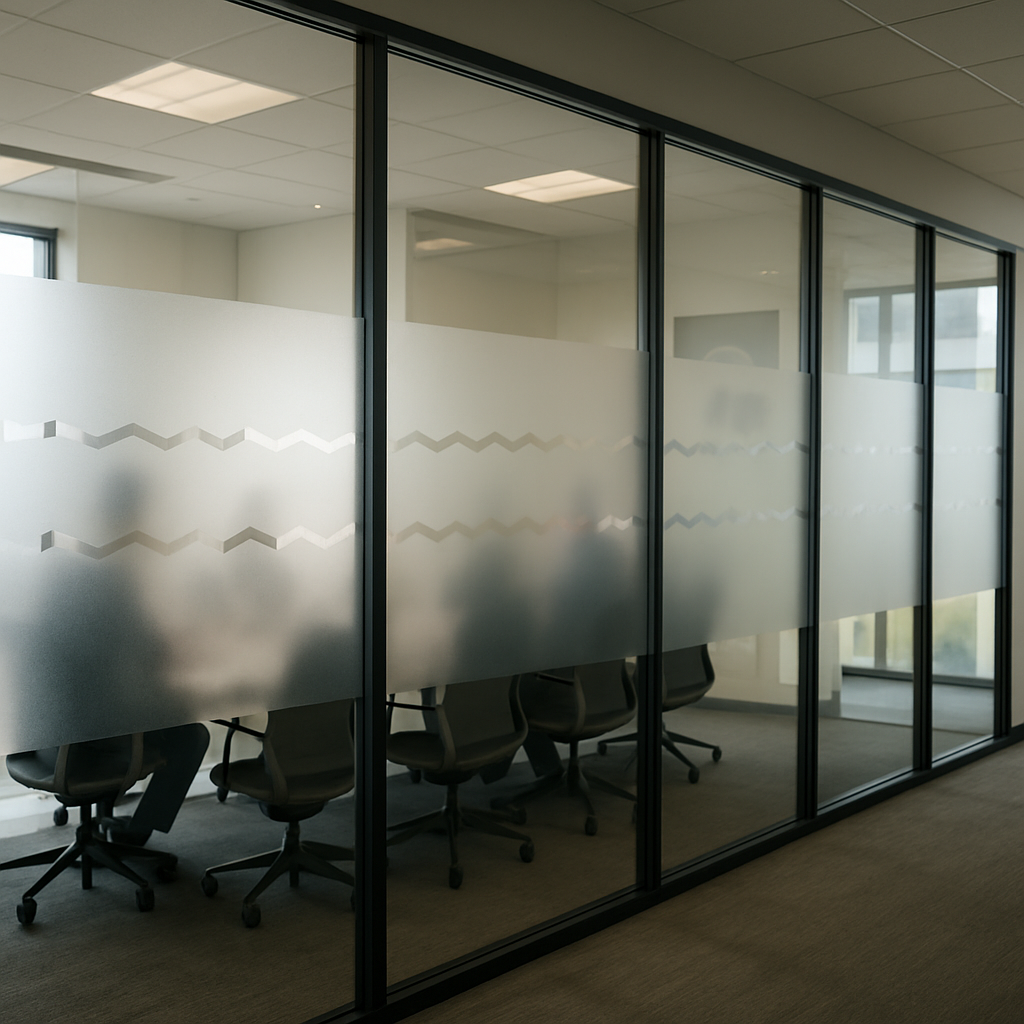
Next consideration: map every room by function and time-of-day light conditions before selecting an office glass privacy film solution — that map will drive film type, opacity, and whether you need complementary acoustic or lighting controls.
2. Frosted and decorative privacy films for continuous privacy
Direct point: Frosted and decorative films are the simplest, lowest-disruption way to get continuous visual privacy while preserving daylight and the sense of an open plan. These films obscure sightlines and diffuse light without requiring shades, mechanical controls, or glass replacement.
Common products: Manufacturers you will see in the field include 3M Fasara, LLumar frosted lines, and Madico decorative films. Printed and frosted films come as adhesive privacy film for permanent installs or removable versions for leased spaces, and they can be cut to fit sidelites, full partitions, or applied as vinyl-cut graphics for branding.
Practical selection checklist
- Opacity and pattern scale: choose a pattern that breaks outlines at seated and standing eye heights; micro-etch patterns hide movement better than wide bands.
- Adhesive type: permanent adhesive for long-term installs; removable for temporary tenancy or pop-up spaces.
- Light goals: verify samples on-site—frosted films diffuse light but reduce direct VLT depending on density and print coverage.
- Placement and sightlines: keep a clear top strip for daylighting if preserving views above partitions is important.
- Maintenance and abrasion: interior application lasts longer; exterior exposure accelerates edge lift and wear.
Trade-off to confront: Frosted decorative film does not fix acoustic issues. If confidentiality includes sound, you will still need secondary measures. In practice, designers treat frosted film as a visual solution and pair it with soft-surface furniture, door seals, or white-noise for real privacy.
Concrete Example: A mid-size Portland architecture firm applied 3M Fasara to conference room sidelites and the lower two-thirds of full-height glass fronts. The result obscured silhouettes during client meetings while keeping top-light for daylight harvesting; they added a removable privacy band on the door for temporary focus days.
| Film type | Strengths | Typical use / cost relative |
|---|---|---|
| Etched/frosted film | High diffuse daylight, minimalist aesthetic, low cost | Conference sidelites, open offices / low |
| Printed decorative film | Branding and wayfinding, custom patterns, higher visual impact | Lobby graphics, tenant identity / medium |
| Removable frost | Temporary, preserves lease flexibility | Pop-ups, staged offices / low to medium |
Key point: test a full-size sample on site. Photographs or small swatches mislead—pattern scale and daylight diffusion change with real windows and local light angles.
Next consideration: After you pick film style and adhesive, insist on a mockup and a written warranty covering edge lift and delamination. That is where the installer's skill and local experience with Pacific Northwest daylighting patterns matter most.
3. Perforated and one-way privacy films, exterior applications and storefront considerations
Direct point: Perforated one-way films work because they exploit a luminance difference – bright outside, dim inside – and that same dependence is their fundamental limitation. Use them when daytime outward visibility or exterior branding matters more than 24-7 privacy.
How perforated and one-way films behave in real use
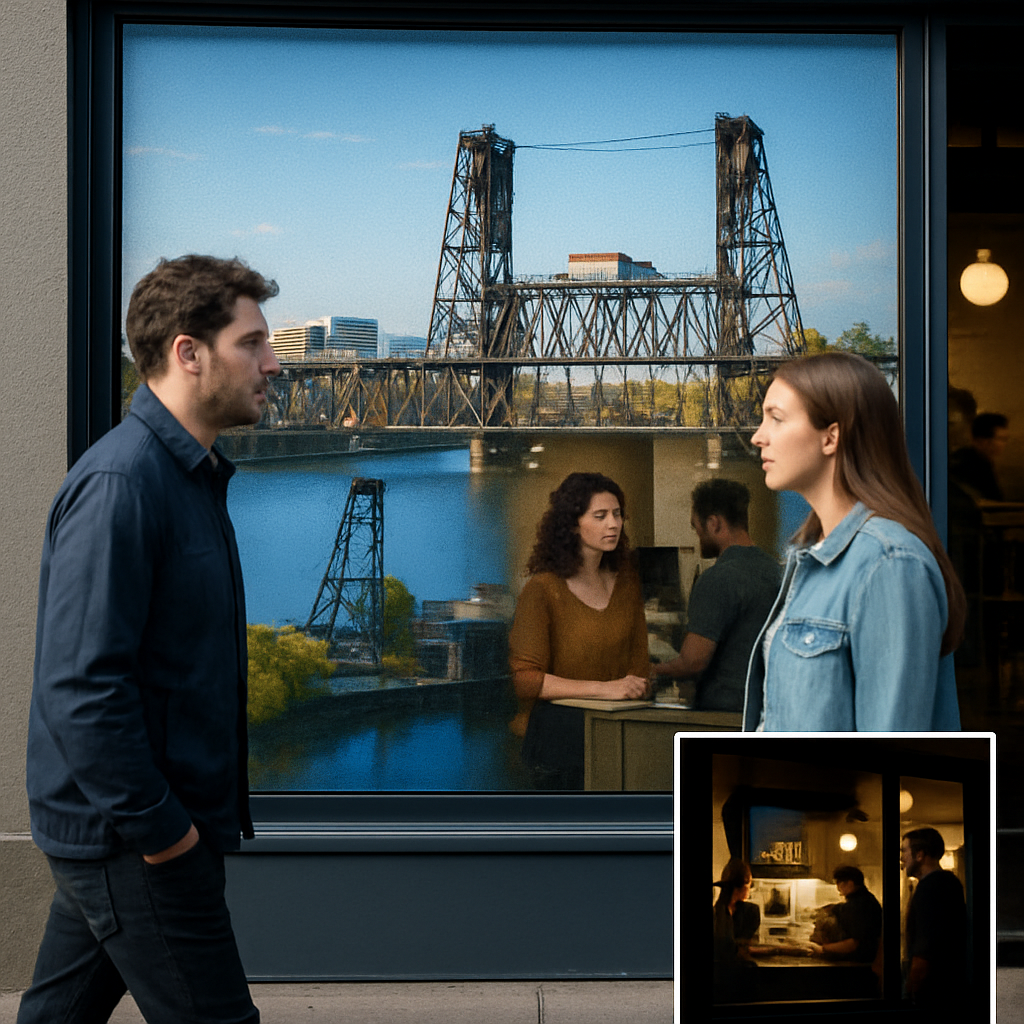
Performance note: Perforated films sit on an exterior or interior surface and provide a semi-reflective face to the bright side while allowing see-through from the darker side. At night, with interior lights on, the effect reverses and privacy is lost. That reality is why many projects combine perforated film with interior blinds or timed lighting controls.
- When to choose perforated film: For storefront branding, street-facing conference rooms where outward view must be retained, and transit-facing glazing where visual connection to the street is desirable.
- When not to choose it: For rooms that require reliable 24-7 confidentiality, regulated data environments, or executive suites where reversed visibility at night is unacceptable.
- Installation tradeoff: Exterior application exposes adhesives and perforation edges to weather and abrasion – use exterior-rated adhesive and consider pairing with anti-graffiti film for high-traffic facades.
Concrete example: A downtown Portland retail client installed printed perforated film on large storefront windows to display a promotional wrap while preserving customer sightlines inside during the day. After a few evenings they found interior displays visible from the street under spotlights, so they added low-profile interior roller shades and adjusted display lighting to restore intended privacy without losing daytime presence.
Practical installation considerations: Apply perforated film to clean, dry glass and match the print orientation to the exterior side when graphics matter. For exterior installations use a high-quality exterior adhesive and edge sealing; otherwise expect edge lift and shorter life. If vandalism or scratching is a concern, combine with anti-graffiti film – see Anti-Graffiti Window Film: A Cost-Effective Shield for Storefronts and Transit Areas | Tinting Oregon.
Judgment call: Perforated film is a cost-effective marketing tool that often gets mistaken for a privacy solution. In practice it is best treated as a daytime visibility control and branding surface, not a substitute for opaque privacy when confidentiality is required.
Next consideration: If you need dependable, switchable day-night privacy, examine switchable films or frosted decorative films instead and get a site mockup from a professional installer – see Office Window Tinting: Modern Solutions to Reduce Glare and Boost Productivity | Tinting Oregon.
4. Switchable and smart privacy films for instant control
Direct control is the point. Switchable films let you toggle between transparent and private glazing on demand, which changes how you design shared space and schedule meetings without adding blinds or opaque panels.
How the technologies differ
PDLC versus SPD. PDLC films change from clear to milky opaque when voltage is applied and give near-instant full privacy. SPD films change tint level and are better when variable light control is also required. PDLC is most common in interior retrofit work for conference rooms; SPD is more common where glare and daylight control are the priority alongside privacy.
Real tradeoffs that matter
Expect higher upfront cost and infrastructure needs. Switchable film requires power, a control interface, and often integration with building automation or AV systems. Include conduit runs, controllers, and potentially UPS protection in your budget and schedule.
- Visual quality: PDLC goes milky when opaque, which preserves diffuse daylight but does not produce total blackout. SPD can produce darker tint states but may not reach the same opaque privacy level as PDLC.
- Durability: Electronic components fail more often than passive film adhesives. Plan for controller replacement and check warranty terms for both the film and electronics.
- Retrofit limits: Switchable film is usually surface applied to interior glass or laminated into new glazing. Verify compatibility with tempered or heat-strengthened glass to avoid edge stress and thermal breakage.
Practical insight from jobs in the Pacific Northwest. In Portland and Eugene projects where daylight is valuable year round, teams use PDLC on sidelit conference rooms so the film is clear during collaborative work and opaque for client meetings. That preserves views and daylight while giving immediate confidentiality when needed.
Concrete example: A mid-size law firm in downtown Portland replaced roller shades in three conference rooms with PDLC film tied into the rooms AV touch panels. Staff reported fewer setup steps for confidential meetings and the firm avoided repeated blind maintenance. The project required a short electrical run for each door sidelite and a small dedicated controller rack.
What people underestimate. Many assume switchable equals maintenance free. In practice, the control electronics are the weak point. If the space will be used intermittently for privacy once or twice a week, passive frosted film is usually the better long term value. Switchable film pays when privacy is frequent, visibility needs to change quickly, or when the aesthetic of clear glass at all other times is a priority.
Next step. If you are evaluating switchable options, request an on site mockup and a control integration plan from your installer. See examples of office installations and scheduling considerations on the Tinting Oregon office window tinting page at Office Window Tinting: Modern Solutions to Reduce Glare and Boost Productivity. For technology background, review PDLC vendor documentation such as Gauzy.
5. Selection criteria: how to pick the right film for your office
Pick the film around the problem you need to solve, not the prettiest sample in the showroom. Price is easy to compare; daylight performance, durability, and compatibility with your glass and frames are where projects fail or succeed.
Primary decision factors
- Privacy level and visual impact: Choose measured visible light transmittance (VLT) and opacity values, not vague labels like low medium or high. Frosted decorative films diffuse light; perforated films give daytime privacy only.
- Daylighting vs glare control: In the Pacific Northwest daylight matters. If you need view retention and soft daylight, prefer frosting or clear privacy film that diffuses rather than blocks light. For desk-facing screens, pick films specified for anti-glare performance.
- Interior vs exterior installation: Exterior-grade films and adhesives are different. Exterior application resists weather but is more permanent; interior film is easier and safer for most partition glass.
- Glass type and safety concerns: Confirm compatibility with tempered or heat-treated glass. Some films increase thermal stress risk at edges; ask the installer for a heat compatibility review.
- Removability and lifecycle: If tenants change every few years, pick removable adhesive or temporary film options. Permanent adhesive can make future updates costly.
- Regulatory and egress issues: Films must not obscure required safety markings or compromise exit signage. Check local code and building management early.
Practical tradeoff to accept: Higher opacity gives more visual privacy but reduces usable daylight and makes spaces feel closed. For most conference rooms a medium-opacity frosted film keeps daylight while blocking sightlines; for frequent after-hours storefront privacy perforated film will fail without interior shades.
Concrete Example: A Portland marketing agency needed private client conversations without killing daylight. They installed a low-opacity 3M Fasara frosted film on conference room sidelights to preserve diffuse light, and applied adhesive removable film to the office front where they wanted temporary branding during product launches. The result retained daylight and allowed seasonal changes without replacing glass.
Vendor and product checklist before you buy
- Mockup and sample install: Require a sample panel on site under the actual light angles you care about.
- Measured performance data: Ask for VLT, UV rejection percentage, and glare or reflectance numbers; do not accept marketing claims alone.
- Warranty and expected lifetime: Get written terms including edge-lift, discoloration, and adhesive performance.
- Adhesive type and removability: Confirm removal procedure and whether residue will harm framing.
- Installation process and timeline: Verify surface prep, curing time, and disruption plan for occupied offices.
- Code and glass compatibility review: Ensure the installer checks tempered glass and egress markings.
Where to check next: Review professional guidance from the International Window Film Association for testing standards and U S Department of Energy for energy considerations. For local, install-focused questions schedule a mockup and site assessment with Tinting Oregon using the office tinting page Office Window Tinting: Modern Solutions to Reduce Glare and Boost Productivity.
Next consideration: Book an on-site mockup before buying. Nothing in a spec sheet replaces seeing the film under your office light and use patterns.
6. Installation, maintenance, and warranty realities
Start with a realistic site survey: the quality of the outcome rests more on preparation than on the film itself. Professional installers check glass type, framing, edge clearances, and sunlight angles at the hours you actually occupy the space. That pre-check catches compatibility issues that DIY kits miss and determines whether you need interior or exterior-grade adhesives, edge sealing, or anti-graffiti overlays like the ones described on the Tinting Oregon anti-graffiti page.
Typical installation workflow
Survey and mockup: measure, provide sample swatches, and a small mock installation to verify light and sightline impact during morning and afternoon glare periods. Surface prep: clean to industrial standards; even specks of silicone or drywall dust cause bubbles. Application: wet-set or dry-set depending on film; trim to edge tolerances and allow edges to wick and cure. Cure window: expect 24–72 hours of edge curing and adhesive set — schedule installations to avoid immediate heavy cleaning or moving partitions.
- Common pitfalls: dirty glass and poor trimming leading to bubbling or edge lift
- Thermal stress risk: dark or metalized films can raise surface temperature; installers must assess tempered glass to avoid stress cracks
- Warranty traps: manufacturer warranties frequently require professional installation and exclude physical abuse, so DIY can void protection
Maintenance is simple but specific: use pH-neutral cleaners and soft microfiber cloths; avoid ammonia, abrasive pads, or razor scraping near edges. For high-traffic storefronts or transit-facing glazing use anti-graffiti films to protect the privacy film underneath — removal and reapplication is far cheaper than replacing decorative film damaged by tagging.
Concrete example: on a downtown Portland retrofit, an operations team applied frosted film themselves to several sidelights. Within months edge lift appeared where silicone sealant residue had been left on the glass; the manufacturer refused warranty coverage because the film had been installed without a professional measure and prep. A professional crew re-prepped, installed anti-graffiti overlay where exposures required it, and provided a documented warranty that covered delamination for ten years.
Warranty realities — read the fine print: differentiate manufacturer and installer warranties. Manufacturer coverage typically addresses peeling, discoloration, and UV failure on a prorated schedule. Installer warranties cover workmanship; insist on a written commitment that includes response time for failures and removal/replacement terms. Ask whether warranty requires specific cleaning products or periodic inspections.
Practical trade-off: removable films are attractive for short-term needs but sacrifice the long-term durability and crisp finish of permanent adhesive films. For conference rooms and long-term privacy goals, pay for professional installation and documented warranty; for pop-up or temporary partitions, accept more frequent replacement and lower optical quality.
Next consideration: schedule a mockup during your busiest daylight hour to validate glare, sightlines, and curing logistics before committing to floor-by-floor installation. For a guided assessment, see Tinting Oregon office-window-tinting recommendations and the IWFA installation resources at IWFA.
7. Cost comparison and ROI: film versus glass replacement
Direct fact: Installing commercial privacy film is typically a fraction of the cost of replacing glazed panels, and that gap drives most ROI decisions in existing offices. Film buys privacy, branding, and UV protection with minimal disruption — but it does not always substitute for a glazing upgrade.
Typical installed cost ranges
| Product / Action | Typical installed cost (per sq ft) | Primary value delivered |
|---|---|---|
| Simple frosted/decorative glass privacy film | $8 – $18 | Continuous visual privacy, diffused daylight, branding options |
| Custom printed or textured decorative film | $18 – $40 | High-design finishes, logos, wayfinding |
| Anti-graffiti exterior-rated film | $12 – $30 | Surface protection, sacrificial layer for vandalism |
| Switchable PDLC privacy film (installed with controls) | $60 – $150 | On-demand privacy, electrical control, higher capex |
| Full glass replacement (interior partition glass panel) | $120 – $300 | New insulated units, laminated safety glass, changes frame interfaces |
Cost drivers to watch: film type and print complexity, total area, accessibility (scaffolding or confined spaces raises labor), electrical integration for PDLC, and whether old film must be removed. For glass replacement, framing modification, specialty low-e coatings, and building permits are the big unpredictable costs.
- Installation disruption: film installations usually finish in hours to a day per room; glass replacement often requires multiple trade crews, site protection, and possible schedule delays.
- Lifecycle and maintenance: quality interior films last 10–15 years; exterior or high-abrasion locations shorten that life. New insulated glass has longer service life but much higher upfront capital.
- Performance limits: film improves solar control and blocks UV but does not materially change acoustic isolation or U-factor like replacing with an insulated low-e unit would.
Concrete example: A conference room with 50 sq ft of sidelite glass: installing frosted commercial film at $12/sq ft is about $600 installed. Replacing those glass panels with new laminated or insulated units at $180/sq ft runs roughly $9,000. On hard cost alone the film pays back immediately when the goal is privacy and branding rather than thermal upgrades or structural safety changes.
ROI calculation approach: for retrofit decisions, compare the installed film cost against avoided capital expenditure plus annualized benefits: reduced furniture fading (UV reduction), fewer maintenance calls (anti-graffiti), and qualitative productivity gains from glare reduction. Use the U.S. Department of Energy guide to estimate energy-related savings if solar control film is in scope.
When to choose glass replacement despite the cost: select replacement when you need improved R-value (insulated units), higher security glazing (laminated to pass forced-entry criteria), or when the frame and sightlines must change. Also replace when glass substrate or edge conditions make film unsafe — professional assessment catches this.
Practical judgment: in the Pacific Northwest where daylight and glare management matter, most facilities get the best short-term ROI from decorative or solar-control privacy films and reserve replacement for targeted thermal upgrades. For a site visit, mockup, and written quote tailored to your space, request an assessment from Tinting Oregon — see their office tinting and anti-graffiti pages for service details: Office Window Tinting: Modern Solutions to Reduce Glare and Boost Productivity and Anti-Graffiti Window Film: A Cost-Effective Shield for Storefronts and Transit Areas.
8. Local considerations and how Tinting Oregon helps
Start with the climate reality: Pacific Northwest offices prioritize daylight retention and glare control over raw solar heat rejection, and urban locations raise different concerns — street-level vandalism, salt spray near the coast, and tenant build-out constraints in older buildings.
Key local trade-off: choose films that diffuse light without darkening the space excessively; high-opacity exterior perforated films can protect storefronts but will lose one-way privacy at night, while interior frosted films preserve consistent daytime privacy with minimal impact on daylighting.
On-site assessment and practical constraints
Practical step: Tinting Oregon begins with a measured site survey that maps light angles, reflection hotspots, and adjacency to pedestrian traffic. This matters. A film that looks fine on a sample swatch can create glare hotspots when applied to a north-facing full-height glass wall in the winter sun.
- Building constraints: confirm tempered versus laminated glass, spacer types, and whether adhesives will void storefront or storefront framing warranties.
- Operational timing: schedule installs off-hours to avoid conference room downtime and reduce airborne dust that causes edge lift.
- Mockups: install 2–3 small sample panels in-situ so stakeholders can judge daylighting and privacy before committing.
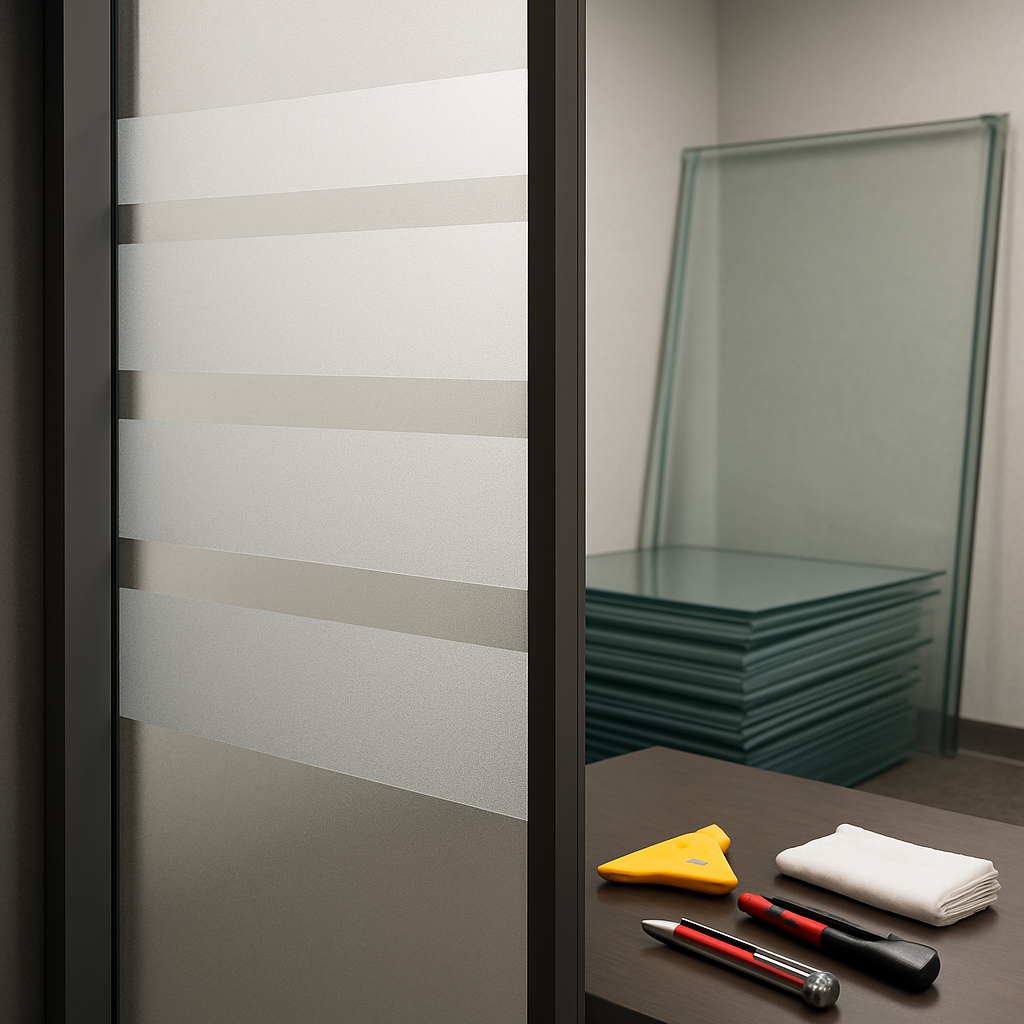
Concrete Example: A Portland marketing firm needed confidentiality for client pitches but kept an open-plan look. Tinting Oregon installed alternating frosted bands with custom branding on conference sidelites and applied a removable adhesive privacy film to an internal glass wall used temporarily during a tenant renovation. The job was completed overnight, minimizing lost meeting time and preserving daylit ambience the next morning.
Limitations to be realistic about: switchable privacy film offers great flexibility but requires wiring, control integration, and higher CapEx; anti-graffiti films protect street-level glazing but add a visible laminate line at edges and require replacement after severe vandalism rather than repair.
- How Tinting Oregon helps: full-service measure, sample mockups, written options with lifecycle costs and warranty terms.
- Coordination: we work with facility managers on phasing, after-hours installs, and compatibility with building automation.
- Local expertise: selection tuned to Portland/Salem/Eugene/Bend light patterns and common storefront abuse.
Final judgment: prioritize an in-place mockup and a professional survey over low-cost DIY kits; in Oregon light conditions, proper placement and material choice determine whether a film solution preserves daylighting or ruins useful sightlines.
