

Window Tinting Cost in Portland, OR: What to Expect and How to Budget
Before you call a contractor, understand window tinting cost Portland OR so your budget and expectations align. This practical guide gives realistic per square foot and per window price ranges for residential and commercial jobs across Portland, Salem, Eugene, and Bend, explains the main cost drivers like film type, access, and existing film removal, and provides a simple budgeting worksheet and quote checklist to avoid hidden fees.
Current Price Ranges for Window Tinting in Portland by Project Type
Start with the right unit: square foot and per-window pricing coexist. Contractors quote both ways; small jobs are often priced per window (with a minimum), large jobs by square foot. Knowing which unit your installer prefers prevents sticker shock when a quoted per-window price multiplies across many panes.
Typical Portland bands you will see
- Residential per sq ft: Expect lower-cost dyed and metalized films at the bottom end and ceramic or spectrally selective films at the higher end. Quality and solar performance rise with price.
- Commercial per sq ft: Retrofit and specialty films (security, anti-graffiti, decorative) sit higher due to handling, code needs, and larger-area labor.
- Per-window examples: Small double-hung windows are billed differently than floor-to-ceiling fixed glass; storefront glazing is almost always priced by area and may attract volume discounts.
Practical trade-off: Cheaper films reduce upfront cost but often reduce visible light or degrade faster. In practice around Portland, spending a bit more for ceramic or spectrally selective films buys better heat rejection with lower exterior reflectivity and longer warranties — which matters if you care about both comfort and resale value.
Access and job size change the math. Second-floor or multi-story work often adds lift or scaffold charges; a 1,000 sq ft job on a single-story house will have a lower per-sq-ft labor component than the same area across three stories. Expect installers to add equipment and safety line items for complex access.
Concrete example: A Portland bungalow with 12 standard double-hung windows (roughly 220 sq ft total glass) choosing a mid-tier ceramic film might see a quote that combines per-sq-ft material cost, a fixed installation labor fee, and a small-job minimum. On real projects we do, that mix often makes mid-tier ceramic the best value for comfort and UV protection compared with repeatedly replacing cheap dyed film.
Important: small jobs often incur a flat minimum or a trip charge; for a handful of windows that can make cheap per-window rates look worse than a bundled per-square-foot quote.
What installers in Portland quote separately: removal of existing film, glass repairs, scaffold or lift rental, and warranty upgrades. If an old film is present, insist the quote itemize removal — it is a common source of change orders and near-term failures when skipped.
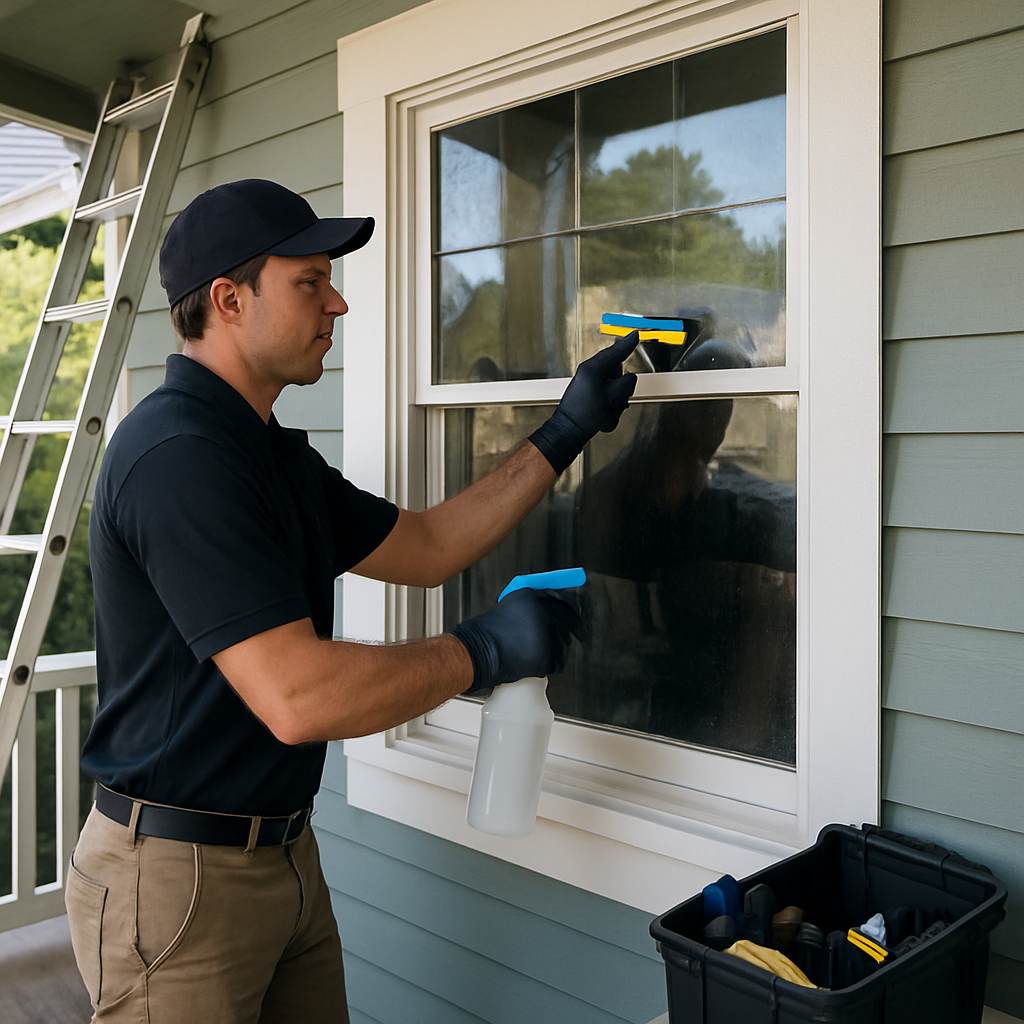
Judgment for decision-making: If your priority is energy performance and longevity, pay toward higher-grade films and a certified installer. If your priority is short-term privacy or glare control and budget is tight, accept shorter warranties and plan on replacement sooner. In Portland's climate the former usually yields better lifecycle value for owners planning to keep the property beyond five years.
How Film Type and Brand Affect Price and Performance
Direct point: the film you pick determines more of the final cost and occupant outcome than labor on a typical Portland job. Material technology dictates heat rejection, visible light clarity, exterior reflectivity, warranty scope, and how long the installation will remain problem free.
Film categories matter in different ways. Basic dyed films are inexpensive but age faster and offer marginal heat control. Metalized films drop heat at lower cost but can create a mirrored look and may interfere with GPS or cellular signals. Ceramic and spectrally selective films cost more up front and typically deliver the best balance of solar heat rejection, high visible light transmission, and color stability over time. Security and laminated films sit in a separate price tier because they are thicker, heavier to install, and often require compliance documentation for commercial properties.
- Performance tradeoff: Ceramic and spectrally selective films usually cost more but reduce HVAC load without darkening interiors as much as equivalent heat-rejection metalized films.
- Signal and appearance: Metalized films can cause interference and pronounced exterior reflectivity that landlords or design teams dislike.
- Durability and warranty: Brand reputation matters – manufacturer-backed warranties and certified installer networks reduce long-term failure risk.
- Installation sensitivity: Security and laminated films call for experienced crews and may increase scaffolding or handling charges on multi-story jobs.
Concrete example: A south-facing retail storefront in downtown Portland required glare control without a reflective facade. Choosing a spectrally selective film from 3M or Huper Optik added material cost versus a metalized option but avoided tenant complaints about mirror-like glass and delivered measurable afternoon comfort improvements. The decision increased the initial budget but prevented a midseason change order and tenant disturbance.
Practical judgment: brand premium is not wasted when replacement is costly or when aesthetics matter. For owner-occupied homes and high-traffic commercial space, invest in proven products from known manufacturers like 3M or Llumar and insist on installer certification. For short-term rental units or strictly cosmetic needs, mid-tier films can be a reasonable, budget-conscious choice.
Ask every installer for measured specs – VLT, TSER or SHGC equivalent, and UV block percentage – and compare those numbers rather than marketing names.
Concrete Cost Drivers Specific to Portland Projects
Direct point: local logistics and the condition of the existing glass often change an otherwise straightforward quote into a job with significant extras. Contractors price for predictable tasks — film and standard install — but most Portland projects run into one or two local factors that shift cost materially.
What actually adds budget on Portland jobs
Access and right-of-way costs. Downtown and inner-neighborhood installs frequently need street or curb permits, short-term parking zone permits, or commercial loading zone reservations. Those permit fees plus operator time for lifts or scaffolding can convert a small-window job into a half-day mobilization expense.
Multi-tenant coordination and hours. Apartment buildings, condos, and occupied offices require access windows to be scheduled, keys or escorts provided, and sometimes evening or weekend work to avoid business disruption. Time-of-day work and coordination are billed differently and often carry premium labor rates.
Glass condition and compatibility. Insulated glass unit seal failure, laminated assemblies, and some low-E coatings either disqualify film or require special adhesives and handling. The practical tradeoff: paying for glass repair or replacement up-front usually avoids accelerated edge failures or warranty disputes later — a classic false economy is tinting over marginal glazing and paying twice.
Removal difficulty and surface prep. Old film that has degraded or been exposed to adhesive cleaners can tack or shred during removal. Ask for a test strip removal during the site visit; an on-site sample lets installers quote actual removal hours rather than guessing and reduces surprise change orders.
Regulatory and design controls. Historic districts, design review boards, and landlord-specified color/reflectivity limits change film choices and narrow options to higher-cost, low-reflectance films. For storefronts with signage rules, you may need custom-cut or non-reflective films that cost more than off-the-shelf grades.
Supply and specialty films lead times. Custom tints, security laminate, and certain spectrally selective films sometimes ship with multi-week lead times. If you push for a compressed schedule, expect rush fees or higher labor costs to assemble crews on short notice.
Portland-specific advantage: Oregon has no general sales tax, so material costs are not inflated by state sales tax — a straightforward savings compared with out-of-state installs.
Practical insight and tradeoff. For occupied commercial spaces in Portland, I recommend budgeting for a site survey and a small prep allowance (about a single additional labor hour per access challenge) rather than a fixed lowball quote. That approach prevents mid-project scope creep and keeps the installer incentivized to solve vitrification, seal failure, or access problems without ongoing dispute.
Concrete example: A three-story Victorian in NW Portland needed sun control on the south elevation. The installer found failing IGU seals on two tall windows and a narrow sidewalk that required a temporary scaffold permit. The client chose to replace the two units before tinting; the project timeline extended two weeks, but the combined cost was lower than doing a film install that would have voided warranties and required rework when seals failed.
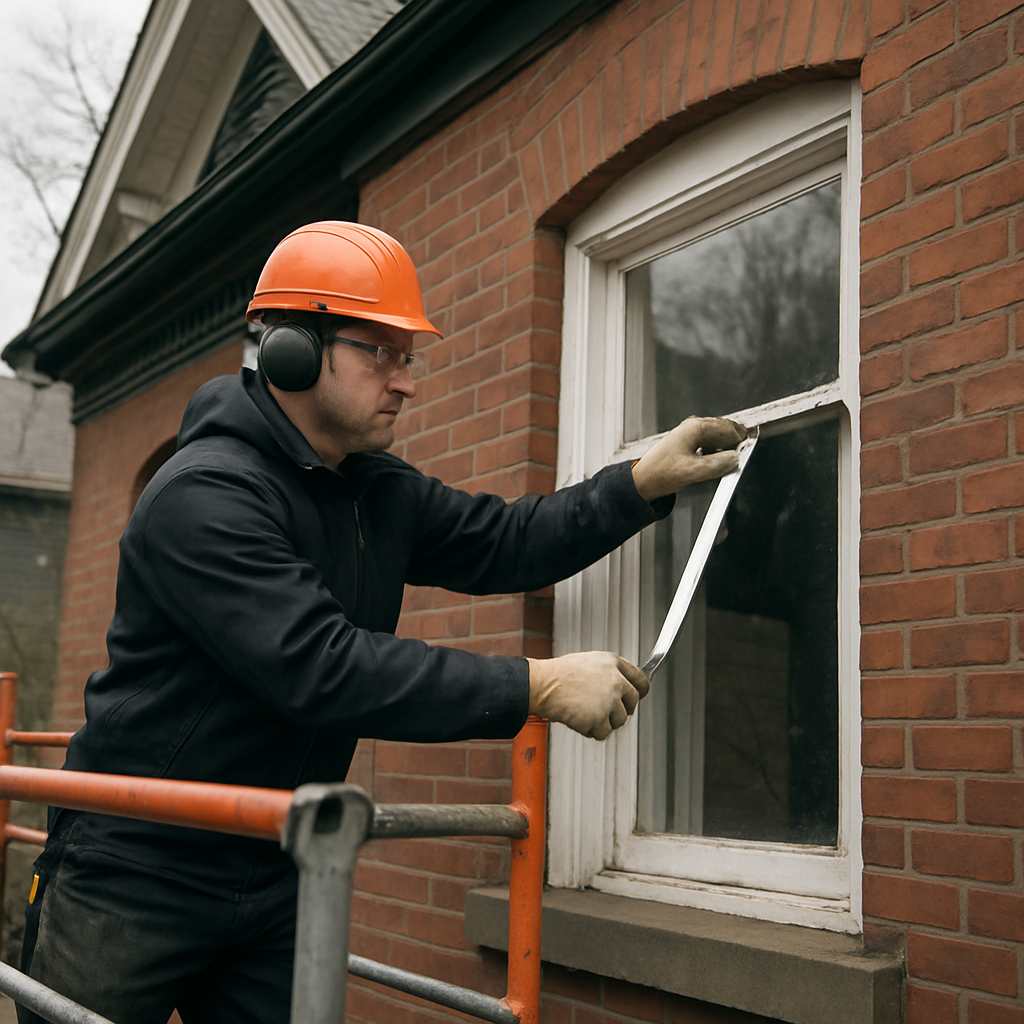
Final judgment: Treat the site visit as the single most cost-controlling event. A thorough inspection exposes permit needs, glass failures, and access constraints that are the main drivers of unpredictable charges on Portland jobs — identify them early, price them explicitly, and you will avoid the common hidden-cost outcomes most owners regret.
Step by Step Budget Worksheet and Sample Scenarios
Start with measurement as the budget hinge. Convert every window into square feet (height x width) and record glass orientation and exposure — south- and west-facing panes typically drive the largest value decisions because they deliver the biggest comfort and HVAC savings.
Five-step budgeting worksheet
- Measure and log: note each pane with dimensions, exposure (N/S/E/W), and whether it is fixed, operable, or floor-to-ceiling. This is your atomic unit for pricing and future comparisons.
- Pick the performance target and film model: require an exact film model on quotes and get the published specs (VLT, solar rejection, UV block). Performance drives material cost more than labor.
- Assemble cost components: estimate
materials(film cost by model),installation(labor hours),access(lifts/scaffolds/permits), andprep(old film removal, minor glass repair). Ask contractors to price these as separate line items. - Add contingency and timing premium: budget a contingency of about 10–15 percent of the subtotal for unknowns (difficult removals, hidden seal failures). If you need fast turnaround, add a rush premium rather than accept vague schedule promises.
- Normalize quotes for comparison: compute a simple
Total Cost / Total Glass Areanumber for each quote so you can compare offers on the same basis even if one quote is per window and another is per square foot.
Practical trade-off: allocating more of the budget to higher-grade film increases the material share of your budget but reduces the odds of early replacement and tenant complaints. In real projects, owners who under-invest in material often pay twice through rework and tenant disruption.
Three realistic sample scenarios (line-item style)
Concrete Example – Small Portland bungalow: 140 sq ft of glass, south-facing living room windows prioritized. Budget breakdown: materials 56%, installation 28%, removal/cleanup 6%, contingency 10%. Estimated project total about $3,200. In practice this buys a mid-grade solar control film and a one-day install; skipping the contingency in this case usually leads to a surprise charge for stubborn old film.
Concrete Example – Mid-size office retrofit: 800 sq ft of glazing across two floors with mixed exposures. Budget breakdown: materials 60%, labor 27%, access/permits 5%, contingency 8%. Estimated project total around $18,000. Real-world note: staging work by priority zones (high-glare areas first) lets managers spread cost and prove tenant acceptance before committing to the whole facade.
Concrete Example – Downtown storefront refresh: 350 sq ft of storefront glass with signage coordination and non-reflective finish required. Budget breakdown: materials 60%, labor 27%, custom cutting/signage coordination 5%, contingency 8%. Estimated project total roughly $7,500. Storefronts often need custom trim work or sign masking that shows up as a separate line — insist those costs be listed so you can shop sign or glazing trades if needed.
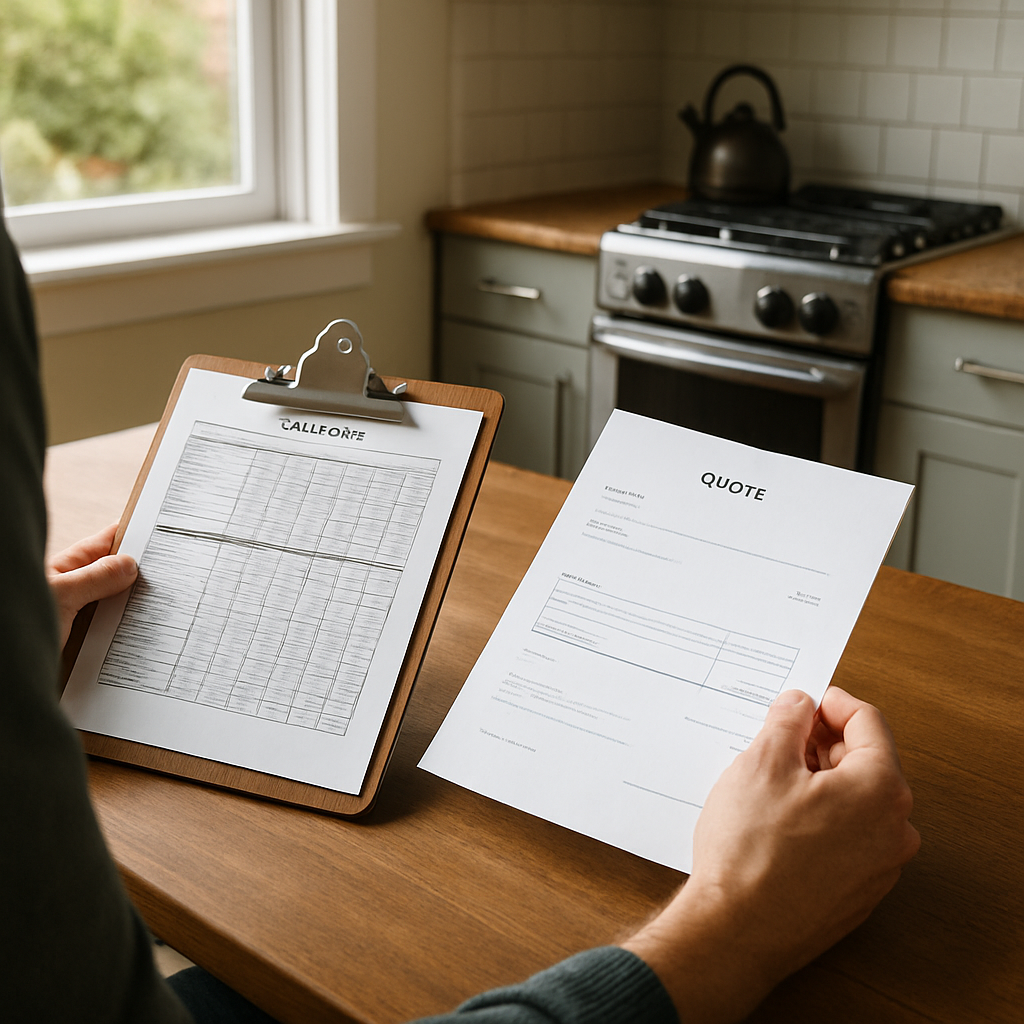
Key point: compare quotes using the same film model and the same normalization metric (Total Cost / Total Glass Area). If a vendor cannot provide the film model or a broken-out cost table, treat their quote as low-quality.
Next consideration: bring this worksheet to the site survey and ask for those line items verbatim on the written quote. If you need an on-site assessment from a local installer, start with Tinting Oregon contact to get a firm, itemized quote you can plug into this worksheet.
How to Compare Quotes and Avoid Hidden Costs
Start by converting every quote into a single comparable metric. Ask each contractor to give you a unit price expressed as cost per square foot plus a separate line for fixed charges (mobilization, lifts, permits, and removal). That one step collapses most bait-and-switch tactics and makes apples-to-apples comparison possible even when one bid is per window and another is per area.
A simple, repeatable quote-scoring rubric
- Film identification: Does the quote list the exact manufacturer and model? (Yes = pass).
- Performance evidence: Is a manufacturer datasheet or published spec attached (VLT, solar rejection, UV block)?
- Scope transparency: Are removal, glass prep, lift/scaffold, permits, and disposal each listed separately?
- Timing and schedule: Is there a committed start and finish date and a clear change-order policy?
- Warranty and workmanship: Are both manufacturer and installer warranties spelled out in writing, including duration and what they cover?
- References / local proof: Can the installer show recent Portland-area jobs of the same type with contactable references?
Practical insight: A quote that looks cheapest by raw numbers but fails two of these checks is almost always more expensive after change orders and callbacks. In practice, prioritize transparency and verifiable specs over small unit-cost savings.
Red flags and hidden-cost traps to watch for
- Vague material descriptions: No model number or vague brand names — this lets contractors substitute lower-grade film at install.
- Blank removal line: No price or
if neededlanguage for existing film removal — that usually becomes a surprise charge on day one. - Open-ended access costs: Quotes that say lifts or scaffolds as required without estimates leave you exposed to permit and equipment surcharges.
- All-or-nothing payment: Demand a reasonable holdback; full payment up front removes leverage to fix workmanship issues.
Trade-off to accept sometimes: If you need a compressed schedule for a commercial tenant, expect to pay a premium for crew mobilization. That premium is legitimate; the danger is when rush fees are applied retroactively — insist on documented rush rates in the contract.
Concrete example: A small property manager in Southeast Portland received two bids. Installer A quoted the lowest per-window price but listed no film model and proposed full payment on completion. Installer B was modestly higher per square foot, attached a manufacturer datasheet, itemized lift and removal charges, and agreed to a 5 percent holdback for 30 days to confirm adhesion. The manager chose Installer B despite the higher sticker price because the clear specs and holdback protected against premature failure and rework.
Insist on the film model, datasheet, and a written change-order policy before you sign — these three items prevent most post-install surprises.
Judgment: If a contractor resists putting standard items in writing, treat that as a reliability risk. You will spend more time and money fixing an undocumented scope than you save on a low bid — especially on Portland jobs where access and existing-glass condition usually produce one or two unavoidable extras.
Budgeting for ROI and Long Term Savings in the Portland Climate
Immediate point: Treat window film as a long-lived asset decision – the correct budget balances upfront cost against measurable yearly benefits and the likelihood you will hold the property long enough to capture them. In Portland that calculation is sensitive to glass orientation, existing glazing performance, and whether the project is driven by energy savings, tenant comfort, or security.
A practical ROI framework you can use
Core idea: Break ROI into energy benefits, non-energy benefits, and risk controls so you can compare film options objectively rather than by sticker shock. Ask for numbers not marketing claims.
- Establish the baseline: extract annual energy spend for heating and cooling from your utility bills and estimate the share attributable to windows – this is the pool of savings film can hit.
- Convert film specs into expected savings: use published solar heat rejection or SHGC-equivalent numbers from the film datasheet to estimate percent reduction in window heat gain for the affected panes.
- Monetize non-energy benefits: assign annual dollar values to UV damage reduction, reduced glare productivity gains, tenant retention, or lowered security incidents where appropriate.
- Compute simple payback and an annualized cost: divide net project cost by combined annual benefits to get a payback, and calculate a 5- or 10-year annualized cost to compare to replacement or alternative upgrades.
- Stress test for winter – heating tradeoffs: in heating months some films alter passive solar gain; model or ask the installer for seasonal net impacts rather than assuming film only saves cooling costs.
Limitation to watch: Energy model accuracy falls apart when windows are one of many weak links. If your building has poor insulation, leaky frames, or irregular HVAC zones, predicted savings from film will be overstated unless those factors are included. In practice, document the assumptions behind any savings estimate and expect real results to vary.
Concrete Example: A single-family owner in East Portland replaces film on four west-facing living room panes. The installer provides a datasheet showing a 38 percent reduction in peak solar gain; the owner estimates about 420 dollars per year in combined cooling savings and less-frequent replacement of sun-damaged flooring. Against a net project spend of 2,800 dollars after installation and removal, the simple payback works out to just over 6 years, and the owner uses that horizon to justify a mid- to high-performance spectrally selective film.
Judgment call: If you plan to sell within a couple of years, prioritize visible benefits – improved privacy, reduced glare, and neutral appearance – over maximum energy savings. Conversely, if this is a long-term hold or a high-use commercial space, prioritize higher-performing film and insist on manufacturer-backed performance figures. Avoid spending premium dollars on windows that are permanently shaded or already well-thermally buffered – those upgrades rarely repay.
Focus beyond first-year savings – amortize UV and comfort benefits and demand installer-supplied annual savings numbers so you can compare total cost of ownership across film choices.
Timeline, Maintenance, and Warranty Considerations That Impact Cost
Timing influences cost more than most owners expect. Specialty films and custom colors often carry multi-week lead times, and compressing that schedule drives legitimate rush charges. In Portland the calendar matters: wet, cold spells slow adhesive set and can require crews to schedule installs on clearer days, which may push a project into higher-priced labor windows or require a second mobilization.
Maintenance is an ongoing cost center, not a one-off afterthought. Proper cleaning, periodic edge inspections, and following manufacturer cleaning guidelines prevent early failures that look like installation defects but are user-caused. Cheap films without anti-scratch or durable topcoats generally demand gentler care and more frequent replacement; premium films reduce lifetime maintenance even when upfront cost is higher.
Warranty specifics that change the economics
Manufacturer versus installer coverage matters. Manufacturer warranties cover material defects; installer warranties cover workmanship. Read both carefully for exclusions: many warranties will exclude failures caused by prior glass damage, incorrect cleaners, or films applied over existing coatings. Also note whether the warranty requires product registration or pre-install photographs to be valid.
- What to verify in writing: exact film model, length of manufacturer and installer warranty, whether registration is required, and a clear claims process.
- Common exclusion traps: cellulose or solvent damage from improper cleaners, edge lift due to failed insulated glass seals, and substitutions of unspecified film at install.
- Transferability and proof: confirm if the warranty follows the building (useful for sales) and insist on installation photos and a signed work ticket to support future claims.
Trade-off to accept: longer warranties usually reflect better film chemistry and certified installation practices. If you plan to hold a property long-term, paying for a documented, transferable warranty is a defensible expense. If you expect to sell quickly, prioritize visible appearance and short-term remedies rather than the highest-tier warranty.
Concrete example: A downtown Portland café rushed a security film install ahead of a promotion. Wet weather and an unremoved older film layer caused partial adhesive failure. The installer charged for a rework window and the manufacturer later denied part of a warranty claim because the prior film had not been removed per the published requirements. The rush saved two weeks on the schedule but added repair cost and warranty friction that exceeded the original rush fee.
Register films, require installation photos, and get a written cure window — these three actions prevent the majority of warranty disputes.

Practical next step: ask bidders to list expected lead time, recommended first-year maintenance, and the exact warranty registration steps on the quote. If a contractor hesitates to provide those items in writing, treat that as a reliability risk and price the potential rework into your budget instead of accepting a low bid.
Local Resources and Next Steps for Portland Area Customers
Make the site visit your primary lever. A short, well-prepared inspection reduces surprises that drive cost overruns — permits, access complexity, and hidden glass problems are the usual culprits. Treat the on-site measurement and test strip as the moment that turns estimates into a firm budget.
Immediate local resources to consult
- Incentives and technical guidance: Check Energy Trust of Oregon and Portland General Electric pages for up-to-date incentives and program rules before you finalize a quote.
- Industry standards: Use the IWFA industry resources to understand published performance metrics so you can demand datasheets rather than marketing claims.
- Manufacturer tech sheets: If a bidder names a film, verify specs at the maker's site (for example 3M or Llumar) to compare VLT, solar rejection, and warranty coverage.
- Local contacts: Schedule an on-site assessment with a certified local installer; for a firm, itemized quote you can start with Tinting Oregon contact.
What to prepare for the site visit
- Document access constraints: photos of sidewalks, alley clearance, and parking; note any required curb or loading permits.
- Window inventory: simple sheet with pane dimensions, orientation (N/S/E/W), and whether panes are fixed or operable.
- Problem evidence: short video or photos showing glare, hotspots, or privacy trouble spots so the installer can prioritize zones.
- Building rules: HOA, landlord, or historic district restrictions, and any sign or reflectivity limits.
- Decision-maker availability: be present or have someone authorized to approve scope changes on site.
Practical trade-off to consider: Ask each bidder for two firm prices — one standard quote and one net quote contingent on known rebates. That keeps the installer accountable while protecting you if incentive programs change or your project fails to qualify.
Concrete example: A Mount Tabor homeowner emailed photos and a rough window list before the visit. The installer performed a quick test-strip during the appointment, found a failing IGU, and quoted a combined repair-plus-tint line-item. The prepared owner avoided a surprise removal charge and accepted a single, itemized contract instead of a later change order.
Next consideration: After you have an itemized quote, decide whether to prioritize aesthetics, energy performance, or security — that decision determines the film grade to budget for and whether paying a premium up front will avoid larger recurring costs.
