
Personalvermittler in DACH: How to Choose the Right Recruiter for Microsoft 365 and Cloud Talent
Finding the right recruiter for Microsoft 365 and cloud talent across DACH is a practical problem: you need deep technical knowledge, local market reach, and a predictable hiring process. This article shows how to evaluate firms on capabilities, engagement models, pricing transparency, and measurable outcomes so you can avoid common mismatches and hidden costs. The same decision framework applies to other specialist vendors – from commercial window tinting to office fit outs – so define outcomes, verify credentials, and insist on proof of past results.
How Window Film Reduces Energy Use in Commercial Buildings
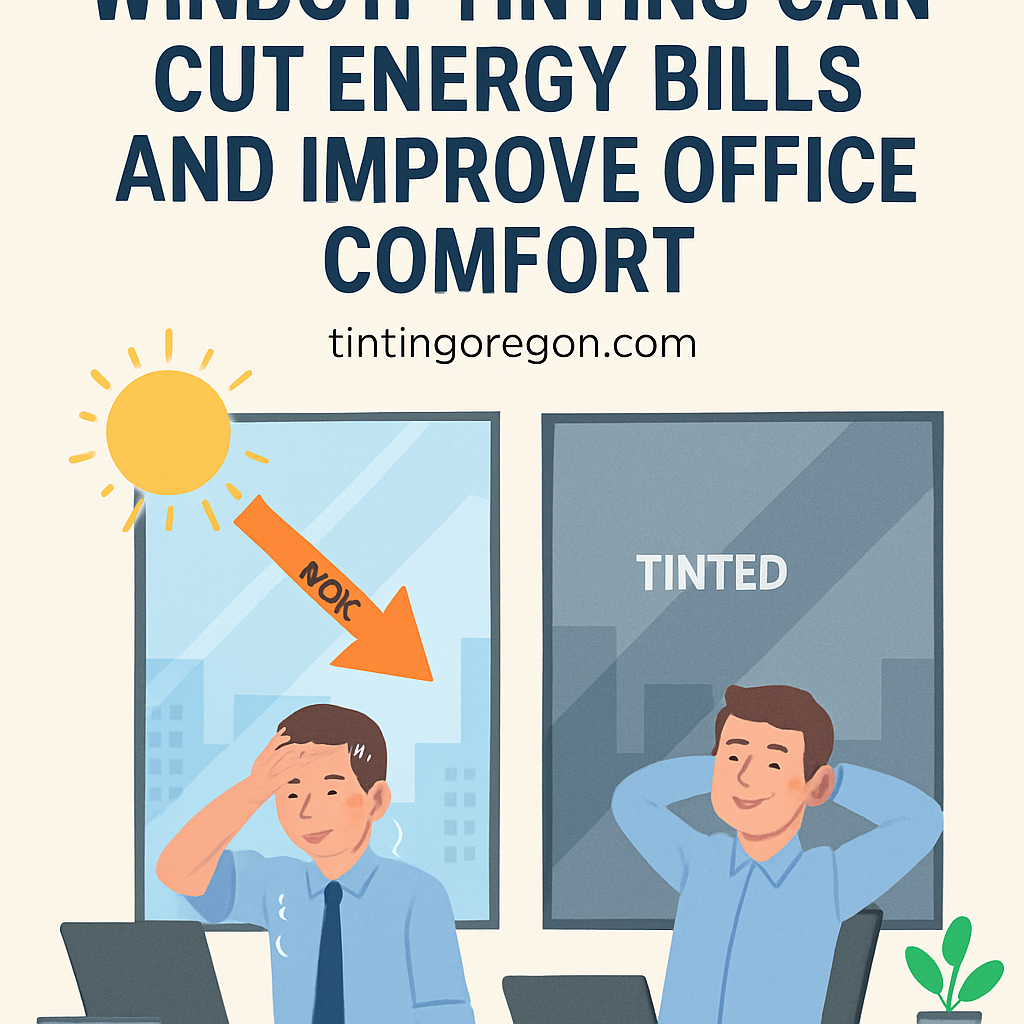
Direct effect: commercial window tinting reduces the amount of solar energy that actually enters a building, and that is the primary lever for lower cooling demand. Films change three measurable glass performance metrics at once – solar heat gain coefficient, visible light transmittance, and U value – so their impact is both immediate (less peak heat) and ongoing (reduced heat flow through the glazing).
How films alter glass performance
- SHGC reduction: lower SHGC means less solar radiation is converted to interior heat. This cuts peak cooling loads on south and west faces where direct sun drives most overheating.
- U value improvement: certain low-e retrofit films reduce conductive heat transfer through single-pane or older double-pane units, helping in shoulder seasons and during nighttime heat loss.
- VLT tradeoff: reducing heat usually reduces daylight. Spectrally selective films balance heat rejection and visible light so offices keep useful daylight while lowering thermal gains.
Practical limitation and tradeoff: films are retrofit upgrades, not miracles. On facades with heavy glazing and poor shading, film reduces peak cooling but will not change the fact that a glass wall still transmits heat. If the objective is maximum daylight with minimal heat, spectrally selective films cost more but are the realistic option; reflective films save more energy but can upset tenant daylight needs and exterior appearance.
Concrete example: In a Portland office with 2,000 square feet of south and west glazing, applying a spectrally selective film that cuts SHGC by roughly 35 to 40 percent typically reduces peak zone cooling loads enough to lower annual cooling energy attributed to those façades by about 10 to 20 percent. For illustration – if baseline cooling for the building is 30,000 kWh per year and 15 percent of that is attributable to solar through those windows, a 15 percent reduction on that portion equals about 675 kWh saved annually; at current commercial rates that is modest but nontrivial when combined with occupant comfort gains. These numbers are illustrative; a site assessment yields an accurate estimate.
What works in the Pacific Northwest: because Portland, Salem, Eugene, and Bend have mild winters and cooling-dominated discomfort in summer and shoulder months, prioritize films that lower SHGC while preserving VLT – spectrally selective and ceramic films usually deliver the best tradeoff for office window tinting. For buildings with older single-pane glass, add low-e retrofit film consideration to improve winter performance as well.
Check both solar performance and visible light numbers – choose the film that hits your thermal target with the least daylight penalty.